

Table of Contents
- Is Chiropractic Safe for Children? The Evidence
- How Pediatric Chiropractic Care Differs from Adult Treatment
- Pediatric Chiropractic Benefits and What Research Shows
- Chiropractic Adjustment Risks for Children
- When to See a Pediatric Chiropractor
- Safety Protocols and Informed Consent for Parents
- Integrating Pediatric Chiropractic with Primary Care
- Conclusion
Last Updated: August 14, 2026
Is Chiropractic Safe for Children? The Evidence
Is chiropractic safe for children? Parents asking this question are weighing legitimate concerns about spinal manipulation against the possibility of relief for their child’s musculoskeletal issues. The answer isn’t binary, it depends on the practitioner’s training, the techniques used, the child’s age and condition, and how carefully informed consent is handled before treatment begins.
At Moore Chiropractic in San Antonio, we understand that parents need honest, evidence-based information before deciding whether pediatric chiropractic care is right for their family. The safety of chiropractic adjustment for children hinges on several critical factors: the provider’s specific training in pediatric techniques, the absence of contraindications, proper diagnostic assessment, and transparent communication about both benefits and risks.
Research on pediatric chiropractic safety remains limited compared to adult studies, which creates legitimate uncertainty. However, adverse events from gentle pediatric adjustments are reported to be rare when practitioners follow established safety protocols. The key distinction is that pediatric chiropractic is not simply "adult chiropractic scaled down", it requires different techniques, lighter force, and age-specific clinical judgment.
This guide explores what the current evidence actually shows, what makes pediatric treatment different, which conditions may benefit from care, what risks exist, and how to make an informed decision with your child’s healthcare team.
How Pediatric Chiropractic Care Differs from Adult Treatment
Pediatric chiropractic care requires fundamentally different techniques than adult treatment. A child’s spine is still developing, with softer cartilage, more flexible ligaments, and bones that haven’t fully ossified. This anatomical reality means that the force, duration, and type of adjustment must be adapted to match the child’s developmental stage.
Licensed practitioners trained in pediatric techniques use gentler, more precise adjustments than those typically applied to adults. Rather than the audible "cracking" sound associated with adult spinal manipulation, pediatric adjustments often involve light finger pressure, gentle mobilization, or soft-tissue techniques. The goal remains the same, to address vertebral subluxation or restricted movement, but the method respects the child’s skeletal immaturity.
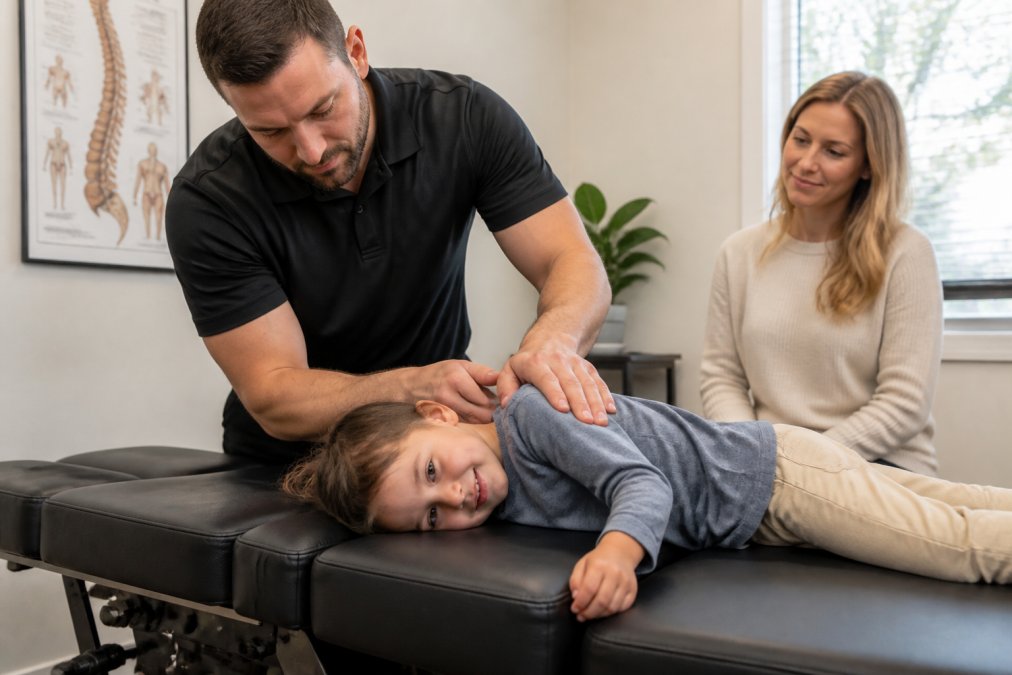
Age matters significantly in determining treatment approach. Infants and toddlers receive minimal force adjustments, often involving only fingertip pressure on specific spinal segments. School-age children may tolerate slightly more engagement, but still far less than adults. Adolescents approach adult treatment protocols, though experienced practitioners continue to account for ongoing skeletal development until the mid-20s.
The diagnostic process also differs. Pediatric chiropractors assess developmental milestones, postural patterns appropriate to the child’s age, and functional movement rather than relying solely on imaging. This developmental health perspective recognizes that what constitutes normal spinal alignment changes as children grow.
Moore Chiropractic’s approach to pediatric care emphasizes personalized, gentle techniques tailored to each child’s age and condition. The complimentary evaluation allows parents to discuss their child’s specific situation and understand exactly what treatment would involve before committing to care.
Pediatric Chiropractic Benefits and What Research Shows
Parents often seek pediatric chiropractic care for common childhood musculoskeletal conditions. The most frequently cited benefits include improved posture, relief from sports-related injuries, support for developmental health, and management of minor spinal misalignments that may affect movement or function.
Research on pediatric chiropractic benefits is sparse compared to adult studies, which creates an evidence gap. However, some practitioners report favorable outcomes in treating conditions like postural problems from excessive screen time, sports injuries in young athletes, and functional restrictions affecting daily activities. The therapeutic efficacy for specific conditions remains an area where more peer-reviewed literature is needed.
What research does exist suggests that gentle manual therapy may help address musculoskeletal restrictions and postural imbalances in children. Many parents report that their children experience improved mobility and reduced discomfort following appropriate chiropractic care. However, these observations don’t constitute rigorous clinical evidence, and individual outcomes vary considerably.
The distinction between evidence-based practice and clinical experience is important here. Some chiropractors claim benefits for conditions beyond the scope of current research support, such as immune function, ear infections, or developmental delays. These claims should be viewed skeptically without strong peer-reviewed literature backing them. Legitimate pediatric chiropractic focuses on musculoskeletal conditions and postural assessment where the evidence base, while limited, is more established.
When considering chiropractic care for your child in San Antonio, ask your practitioner specifically what research supports their recommendations for your child’s condition. A qualified provider will distinguish between conditions with evidence support and those where outcomes are based on clinical observation rather than rigorous study.
Chiropractic Adjustment Risks for Children
Adverse events from pediatric chiropractic care are reported to be uncommon, but they do occur. Understanding potential risks is essential for informed decision-making. The most serious documented adverse event is vertebral artery dissection, a rare but potentially severe complication that can result from cervical manipulation. This risk exists in both pediatric and adult populations, though the absolute incidence in children remains unclear due to limited reporting.
Other reported adverse events include temporary discomfort, mild soreness, or transient neurological symptoms following adjustment. Most resolve without intervention. However, certain conditions contraindicate chiropractic manipulation entirely, including bone diseases, spinal cord compression, severe osteoporosis, or acute infection. A thorough diagnostic evaluation should identify these contraindications before treatment begins.
Cervical manipulation carries higher risk than manipulation of other spinal regions. Many pediatric chiropractors minimize or avoid cervical adjustments in young children, instead using gentler mobilization techniques for the neck. This conservative approach reflects an appropriate risk-benefit analysis for developing spines.
The risk profile also depends heavily on the practitioner’s training and adherence to safety protocols. Practitioners with specific pediatric certification and experience in developmental anatomy apply techniques with greater precision and lower force, reducing complication likelihood. Conversely, practitioners applying adult-level force to children’s spines significantly increase risk.
Parents should ask potential providers about their specific training in pediatric techniques, their approach to cervical spine care in children, and what contraindications would prevent them from treating a particular child. A practitioner who cannot articulate clear safety protocols or who dismisses concerns about risk may not be the appropriate choice for your family.
When to See a Pediatric Chiropractor
Determining whether your child would benefit from chiropractic evaluation requires understanding which conditions may respond to this form of care and which warrant other interventions. Common scenarios where parents consider pediatric chiropractic include sports injuries, postural problems, restricted movement, and general wellness support.

Sports injuries represent a frequent reason families seek pediatric chiropractic care in San Antonio’s active community. Young athletes experiencing acute strains, sprains, or functional restrictions may benefit from evaluation. A qualified pediatric chiropractor can assess whether the injury involves musculoskeletal misalignment amenable to adjustment or whether orthopedic consultation is more appropriate.
Postural problems, particularly those emerging from prolonged screen time, poor desk ergonomics, or sports-specific positioning, may warrant chiropractic assessment. A practitioner trained in developmental health can evaluate whether postural deviations represent normal variation or functional restrictions affecting movement.
When to consult a pediatrician first is equally important. If your child experiences neurological symptoms, unexplained pain, fever, weight loss, or symptoms suggesting serious underlying disease, pediatric medical evaluation takes priority. Chiropractic care complements rather than replaces primary care for systemic conditions.
Red flags that should prompt pediatric consultation rather than immediate chiropractic care include sudden onset severe pain, loss of bowel or bladder control, progressive neurological symptoms, or trauma suggesting fracture risk. These warrant imaging and medical evaluation before any manual therapy.
The initial consultation with a pediatric chiropractor should include a thorough history, observation of your child’s posture and movement, and clear explanation of what evaluation findings suggest. A reputable practitioner will recommend chiropractic care only if assessment supports it and will refer to other providers when appropriate.
Safety Protocols and Informed Consent for Parents
Informed consent in pediatric chiropractic requires that parents understand what treatment involves, what benefits are realistic, what risks exist, and what alternatives are available. This process should occur before any adjustment, not as a formality but as genuine dialogue.
A practitioner committed to patient safety will explain their specific training in pediatric techniques, describe the exact adjustment they propose to perform, clarify what sensations your child might experience, and discuss realistic outcomes for your child’s particular situation. They should address your concerns directly rather than dismissing them.
Standard of care for pediatric chiropractic includes taking appropriate diagnostic imaging when indicated, documenting contraindications, obtaining informed consent from parents, and maintaining detailed treatment records. Practitioners should also establish clear communication protocols with your child’s primary care physician, allowing coordination rather than parallel, disconnected care.
Ask your potential provider about their credentials in pediatric chiropractic, their continuing education in child development and spinal anatomy, and their protocols for rare complications. A practitioner with nothing to hide will provide this information readily. They should also explain their criteria for determining when a child’s condition requires referral to another specialist rather than chiropractic management.
Informed consent also means understanding the proposed treatment frequency and duration. Some practitioners recommend extensive treatment packages upfront; others recommend shorter initial courses with reassessment. Both approaches can be appropriate, but the rationale should be clear. You should understand what measurable improvements would indicate that care is working and what timeline is realistic for your child’s specific condition.
Integrating Pediatric Chiropractic with Primary Care
The safest approach to pediatric chiropractic involves integration with your child’s primary care physician rather than chiropractic care operating in isolation. This coordination ensures that your child’s overall health picture informs treatment decisions and that any complications are identified promptly.
Before starting chiropractic care, inform your pediatrician. Provide them with the chiropractor’s assessment and proposed treatment plan. A pediatrician familiar with your child’s medical history can identify potential contraindications or interactions with other treatments. They can also help determine whether chiropractic care is the most appropriate intervention or whether other therapies might be more effective.
Pediatricians increasingly recognize that some musculoskeletal conditions may benefit from manual therapy when provided by appropriately trained practitioners. However, the standard of care still centers on medical evaluation and diagnosis. Chiropractic care works best as a complement to, not replacement for, pediatric medical care.
Communication between providers matters significantly. Ideally, your child’s chiropractor and pediatrician exchange information about diagnosis, treatment provided, and progress. This integration prevents contradictory advice and ensures that if complications develop, all providers are aware.
Red flags that suggest you should pause chiropractic care and consult your pediatrician include worsening symptoms, new neurological signs, persistent pain despite treatment, or your child’s reluctance or fear about appointments. A good practitioner welcomes this communication and will recommend medical evaluation when appropriate.
Moore Chiropractic’s approach emphasizes working alongside your child’s healthcare team. During your complimentary evaluation, discussing how chiropractic care would coordinate with your child’s existing medical care helps ensure that treatment serves your family’s overall wellness goals.
Conclusion
Is chiropractic safe for children? The honest answer is that when provided by a licensed, appropriately trained practitioner using evidence-based safety protocols and proper informed consent, pediatric chiropractic care carries low risk for most children. However, safety requires careful selection of your provider, clear understanding of what treatment involves, and integration with your child’s primary medical care.
The evidence base for pediatric chiropractic benefits remains limited, particularly for conditions beyond musculoskeletal issues. Parents should maintain realistic expectations and ask practitioners to distinguish between conditions with research support and those based on clinical observation alone.
If you’re considering chiropractic care for your child in San Antonio, Moore Chiropractic offers a complimentary evaluation to discuss your child’s specific situation, answer your questions, and explain our personalized, gentle approach to pediatric care. This consultation allows you to assess whether our practitioners’ training, techniques, and philosophy align with your family’s needs before committing to treatment. Contact us to schedule your child’s evaluation and take the first step toward informed, safe care.
Frequently Asked Questions
Is it safe for children to see a chiropractor?
Pediatric chiropractic care can be safe when performed by a licensed practitioner trained in age-appropriate techniques. The key is informed consent from parents, proper diagnostic imaging when indicated, and adherence to established safety protocols. Licensed chiropractors use gentler adjustments for children than adults, and many focus on postural assessment and developmental health rather than high-force manipulation. Always consult your pediatrician before starting chiropractic care for your child.
What are the potential risks of chiropractic adjustments for children?
While serious adverse events are rare, potential risks include temporary soreness, muscle strain, and in very uncommon cases, more significant complications from cervical manipulation. Infants and very young children require extra caution due to developmental considerations. Contraindications such as certain bone conditions, infections, or neurological disorders may make chiropractic care inappropriate. A thorough risk-benefit analysis with a qualified practitioner and your child's pediatrician helps determine whether care is suitable for your child's specific situation.
When should I take my child to a pediatric chiropractor?
Consider pediatric chiropractic care if your child has musculoskeletal complaints like back or neck pain, postural problems, sports-related injuries, or recurring headaches. Common conditions treated include poor posture from desk work or backpack strain, athletic injuries, and general developmental health support. However, consult your pediatrician first to rule out underlying medical conditions. A licensed practitioner will perform a postural assessment and diagnostic evaluation to determine if manual therapy is appropriate.
How do I know if a chiropractor is qualified to treat children?
Look for a licensed chiropractor with specific training in pediatric care and evidence-based practice. Ask about their credentials, experience with children, and whether they follow established clinical guidelines for pediatric patients. Qualified practitioners should explain their diagnostic approach, discuss contraindications openly, and encourage integration with your child's primary care physician. A reputable practitioner will provide informed consent documentation and be transparent about what to expect during treatment.
This article was written using GrandRanker