
HERNIATED DISC TREATMENT IN SAN ANTONIO
Herniated Disc Treatment in San Antonio, TX
A herniated disc can contribute to back pain, neck pain, radiating discomfort, numbness, tingling and difficulty with everyday movement. At Moore Chiropractic, we provide personalized evaluations and conservative chiropractic care for patients dealing with disc-related symptoms in San Antonio.
- Personalized Disc Pain Evaluation
- Conservative Chiropractic Care
- Experienced San Antonio Chiropractor
Request an Appointment
Complete the form below, then choose an available appointment time that works best for you.
Your information is private & secure.
UNDERSTANDING DISC PAIN
What Is a Herniated Disc?
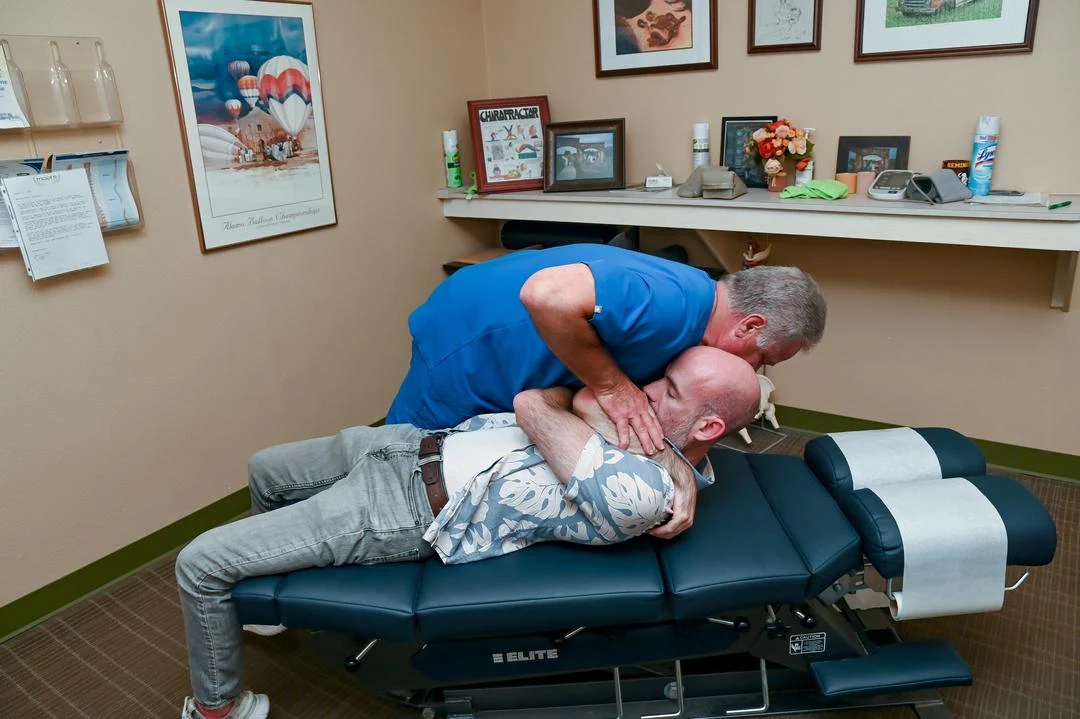
A herniated disc occurs when material from the softer inner portion of a spinal disc pushes through or irritates a weakened area of its tougher outer layer. Spinal discs sit between vertebrae, where they help absorb forces and allow movement.
Disc changes do not always cause symptoms. Symptoms are more likely when nearby tissues or nerve structures become irritated or compressed and may include localized back or neck pain, pain traveling into an arm or leg, numbness, tingling, weakness, pain with certain positions, or reduced mobility.
DISC TERMINOLOGY
Herniated Disc vs. Bulging Disc: What's the Difference?
Bulging Disc
A bulging disc extends outward beyond its normal boundary, often across a broader portion of the disc. A bulge seen on imaging may or may not be related to symptoms.
Herniated Disc
A herniation involves inner disc material pushing through or into a weakened area of the outer disc. Like a bulge, it does not automatically mean that the imaging finding is the source of pain.
COMMON SIGNS
Common Symptoms of a Herniated Disc
Symptoms depend partly on the location of the affected disc and whether nearby nerve structures are irritated.
Back Pain
Localized discomfort may occur in the lower or mid back.
Neck Pain
Cervical disc irritation may contribute to neck discomfort and stiffness.
Radiating Leg Pain
Pain may extend from the lower back or buttock into the leg.
Radiating Arm Pain
Cervical nerve irritation may produce symptoms into the shoulder or arm.
Numbness or Tingling
Nerve involvement may cause altered sensation in an arm or leg.
Muscle Weakness
Weakness can occur and deserves appropriate evaluation.
Pain With Sitting
Some people notice symptoms worsen with prolonged seated positions.
Bending or Lifting Pain
Certain loaded movements may aggravate disc-related symptoms.
LUMBAR DISC PAIN
Lumbar Herniated Discs and Lower Back Pain
Lumbar disc problems can be associated with lower back pain, buttock pain, leg pain, numbness, tingling or weakness. When nerve structures contributing to the sciatic nerve are irritated, symptoms may travel into the leg.
Learn more about lower back pain care and sciatica symptoms.
CERVICAL DISC PAIN
Cervical Herniated Discs and Neck Pain
Cervical disc problems can contribute to neck pain, upper-back or shoulder discomfort, arm pain, numbness, tingling or weakness. Not every arm or shoulder symptom originates in the shoulder itself.
See our pages on neck pain and shoulder pain.
CONTRIBUTING FACTORS
What Causes a Herniated Disc?
Age-Related Changes
Discs can change over time and become less tolerant of certain loads.
Bending & Lifting
Repeated or heavy lifting can increase mechanical stress on spinal tissues.
Twisting Under Load
Combined bending, twisting and load may contribute to disc stress.
Injury
Sports injuries, work injuries, falls or motor vehicle accidents can be associated with disc symptoms.
Symptoms can also develop gradually without one identifiable event.
CONSERVATIVE CARE
Can a Chiropractor Help With a Herniated Disc?
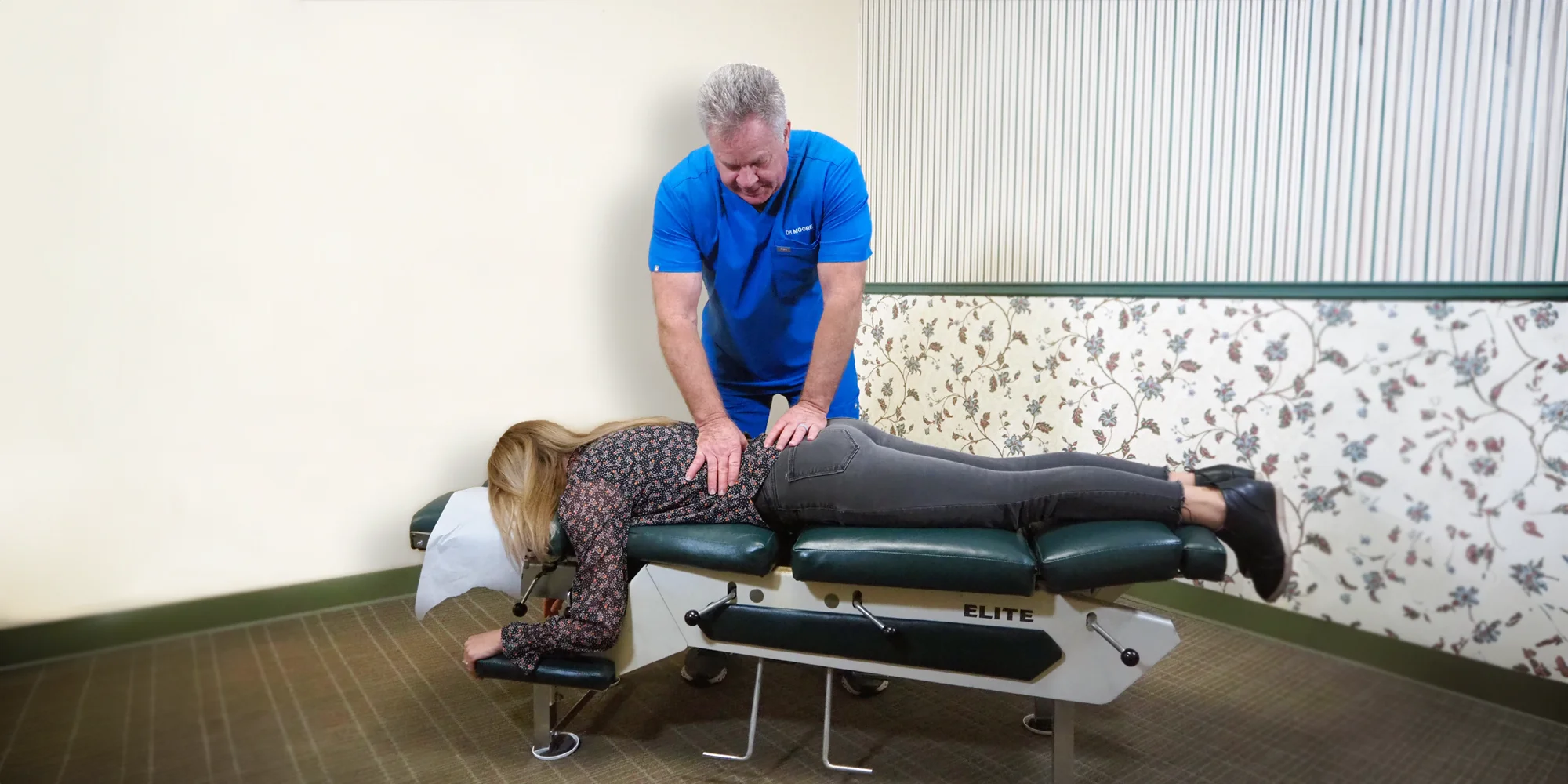
Chiropractic care does not put a disc back into place. A chiropractor can evaluate spinal movement, joint mobility, posture, movement patterns and other musculoskeletal factors that may contribute to discomfort.
For appropriate patients, conservative chiropractic care may help improve mobility, reduce mechanical stress and support more comfortable movement. Recommendations depend on the individual examination and symptoms. Some patients require imaging, medical evaluation or referral rather than chiropractic treatment alone.
Learn about chiropractic care at Moore ChiropracticRADIATING LEG SYMPTOMS
Can a Herniated Disc Cause Sciatica?
Yes. A lumbar herniated disc can irritate or compress nerve structures that contribute to sciatic nerve symptoms. Pain may travel from the lower back or buttock into the thigh, calf or foot, sometimes with tingling, numbness or weakness.
Sciatica describes a pattern of symptoms rather than a single diagnosis. Learn more about sciatica care in San Antonio.
AFTER AN INJURY
Herniated Disc Symptoms After an Injury
Disc-related symptoms may follow car accidents, sports injuries, work injuries, lifting injuries or falls. Symptoms can appear immediately or develop after the event.
Related care: car accident treatment, sports injury care, and work injury care.
YOUR EVALUATION
How We Evaluate Herniated Disc Symptoms
Health History
We discuss symptoms, onset, injuries, prior diagnoses and what aggravates or relieves symptoms.
Physical Evaluation
We evaluate posture, movement, spinal mobility and relevant musculoskeletal findings.
Neurological Screening
When appropriate, findings such as sensation, strength or reflexes may be assessed.
Personalized Care Plan
We discuss whether conservative care is appropriate or additional evaluation or referral may be needed.
PATIENT EXPERIENCES
What Patients Say About Moore Chiropractic
SYMPTOM DURATION
Acute vs. Chronic Herniated Disc Symptoms
Acute symptoms have developed recently, while chronic symptoms have persisted or repeatedly returned over a longer period. Duration alone does not determine severity. New neurological changes, significant weakness or rapidly worsening symptoms deserve prompt evaluation regardless of how long pain has been present.
RECOVERY
Can a Herniated Disc Heal on Its Own?
Symptoms associated with disc herniation can improve over time in many people, and some herniations can decrease in size naturally. Recovery varies. Persistent neurological symptoms require evaluation, and chiropractic care should not be described as repairing or regenerating the disc.
IMPORTANT MEDICAL GUIDANCE
When Herniated Disc Symptoms Need Medical Attention
Seek prompt medical evaluation for new or progressive weakness, severe symptoms after significant trauma, rapidly worsening difficulty walking, progressive neurological symptoms, fever with severe spinal pain, unexplained weight loss with persistent severe pain, or a history of cancer with new unexplained severe spinal pain.
Loss of bladder or bowel control, numbness in the saddle or groin area, or rapidly progressive weakness can indicate a medical emergency and requires immediate evaluation.
WHY MOORE CHIROPRACTIC
Why Choose Moore Chiropractic for Disc-Related Pain?
30+ Years of Experience
Dr. Moore has more than three decades of chiropractic experience.
Personalized Evaluation
Recommendations are based on your history, symptoms and examination findings.
Conservative Approach
Care is selected according to what is appropriate for the individual patient.
San Antonio Location
Convenient care at 8507 McCullough Ave Suite A-1.
Movement-Focused Care
Evaluation considers mobility and movement patterns related to your symptoms.
Clear Recommendations
When additional evaluation or referral is appropriate, that should be part of the care plan.
MEET YOUR SAN ANTONIO CHIROPRACTOR
Experienced Chiropractic Care From Dr. Andrew Moore
Dr. Andrew “Andy” Moore, D.C. graduated from Parker Chiropractic in 1988 and has more than three decades of chiropractic experience.
Before becoming a chiropractor, Dr. Moore worked as an exercise physiologist. He has also maintained a longtime interest in running, swimming and triathlons.
Meet Dr. Moore
COMMON QUESTIONS
Herniated Disc FAQs
What is a herniated disc?
A herniated disc occurs when material from the softer inner portion of a spinal disc pushes through or into a weakened area of its tougher outer layer. It may or may not cause symptoms.
What is the difference between a herniated disc and a bulging disc?
A bulging disc generally extends outward over a broader area, while a herniation involves inner disc material pushing through or into a weakened portion of the outer disc. Either finding can exist without symptoms.
What does a herniated disc feel like?
Symptoms can include localized back or neck pain, radiating arm or leg pain, numbness, tingling, weakness, or discomfort with certain positions and movements.
Can a herniated disc cause sciatica?
Yes. A lumbar herniated disc can irritate or compress nerve structures that contribute to sciatic symptoms such as pain, tingling, numbness, or weakness traveling into the leg.
Can a herniated disc cause numbness or tingling?
Yes. When a disc problem irritates nearby nerve structures, numbness or tingling can occur in an arm, hand, leg, or foot depending on the location involved.
Can a herniated disc cause muscle weakness?
It can. New, significant, or progressive weakness should be evaluated promptly because it may indicate neurological involvement.
Can a chiropractor help with a herniated disc?
For appropriate patients, conservative chiropractic care may help improve mobility, reduce mechanical stress, and support more comfortable movement. Whether it is appropriate depends on the examination and symptoms.
Can chiropractic care put a herniated disc back into place?
No. A herniated disc is not simply a disc that has slipped out of place, and chiropractic care should not be described as putting it back in.
Do herniated discs heal on their own?
Symptoms can improve over time in many people, and some disc herniations can decrease in size naturally. Recovery varies, and persistent neurological symptoms require evaluation.
How long can herniated disc symptoms last?
The duration varies widely based on the individual, the tissues involved, symptom severity, activity, and other factors. Persistent or worsening symptoms should be evaluated.
Can a herniated disc cause leg pain?
Yes. A lumbar disc problem can irritate nerve structures and contribute to pain that travels from the lower back or buttock into the thigh, calf, or foot.
Can a neck herniated disc cause arm pain?
Yes. A cervical disc problem can irritate nerve structures and contribute to pain, numbness, tingling, or weakness extending into the shoulder, arm, or hand.
Does every herniated disc cause pain?
No. Disc changes are common and may be present on imaging without causing symptoms. Examination findings and symptoms need to be considered together.
Do I need an MRI for a herniated disc?
Not everyone needs an MRI. Imaging may be considered when examination findings, significant trauma, persistent symptoms, or neurological signs indicate that additional information is needed.
Is walking good for a herniated disc?
Gentle walking is often tolerated by many people, but the right activity level depends on your symptoms and examination. Stop and seek guidance if an activity significantly worsens symptoms.
Can sitting make herniated disc symptoms worse?
For some people, prolonged sitting or certain seated positions can aggravate disc-related symptoms. Changing position and avoiding long periods in one posture may be helpful.
Can lifting cause a herniated disc?
Heavy or repeated lifting, especially with bending or twisting, can contribute to disc stress. Herniations can also develop gradually without one identifiable lifting event.
When should I see a doctor for a herniated disc?
Seek evaluation when pain is severe, persistent, follows significant trauma, or is accompanied by numbness, tingling, weakness, or other neurological symptoms.
What are emergency warning signs of a herniated disc?
Loss of bladder or bowel control, saddle or groin numbness, or rapidly progressive weakness can signal a medical emergency and require immediate evaluation.
Where can I get evaluated for herniated disc symptoms in San Antonio?
Moore Chiropractic evaluates musculoskeletal and disc-related symptoms at 8507 McCullough Ave Suite A-1 in San Antonio. Call (210) 525-9063 or request an appointment online.
VISIT OUR OFFICE
Herniated Disc Care in San Antonio, TX
Moore Chiropractic
8507 McCullough Ave Suite A-1
San Antonio, TX 78216
Phone: (210) 525-9063
Hours:
Mon-Thu: 7:00 AM-6:00 PM
Fri: 7:00 AM-12:00 PM
Sat-Sun: Closed
READY TO GET STARTED?
Schedule Your Herniated Disc Evaluation in San Antonio
If back pain, neck pain, radiating discomfort, numbness or tingling is interfering with your daily life, schedule an evaluation with Moore Chiropractic to determine what may be contributing to your symptoms and whether conservative chiropractic care is appropriate.