

Table of Contents
- Are Chiropractic Adjustments Safe for Seniors?
- Benefits of Chiropractic Care for Older Adults
- Gentle Chiropractic Techniques for Seniors
- Chiropractic Adjustment Risks for Older Adults
- Chiropractic Care for Seniors with Back Pain
- Chiropractic Adjustments and Osteoporosis
- How to Prepare for Your First Senior Chiropractic Visit
- Frequently Asked Questions
Last Updated: October 10, 2026
Are Chiropractic Adjustments Safe for Seniors?
Are chiropractic adjustments safe for seniors? Yes, when performed by a trained professional who understands age-related conditions and uses gentle techniques tailored to individual needs. Chiropractic care can be adapted safely for older adults, though it requires a thoughtful approach that accounts for bone density, medication use, and existing health concerns. (Source: National Institute on Aging)
Many seniors experience chronic back pain, neck stiffness, and reduced mobility. At Moore Chiropractic in San Antonio, we work with older patients regularly, adjusting our methods to match their specific situation.
Benefits of Chiropractic Care for Older Adults
Chiropractic care offers real benefits for seniors when delivered with the right approach.
Common benefits include:
- Pain relief. Many seniors report reduced back pain and neck pain after treatment.
- Better movement. Gentle adjustments and manual therapy can improve range of motion and flexibility.
- Improved balance. Enhanced spinal alignment helps with stability and reduces fall risk.
- Greater independence. Relief from pain allows seniors to stay active and manage daily tasks without limitation.
- Reduced stiffness. Regular care addresses joint stiffness that comes with age.
A trained chiropractor assesses your individual condition before recommending treatment. Some seniors benefit most from spinal manipulation; others respond better to gentler mobilization or soft tissue work. The goal is restoring function and mobility, which supports long-term health and independence.
Gentle Chiropractic Techniques for Seniors
Older adults require modified techniques that respect bone density and joint health.
Low-force adjustments use controlled pressure instead of sudden movements. The chiropractor applies slow, steady force to move joints gently into better alignment. This method reduces impact on fragile bones.
Spinal mobilization involves moving joints through their range of motion without the quick thrust of a traditional adjustment.
Manual therapy focuses on soft tissue, muscles, ligaments, and connective tissue. Hands-on techniques reduce tension and improve blood flow without stressing the spine itself.
Instrument-assisted adjustments use specialized tools to deliver precise force. These devices let the chiropractor control the depth and speed of adjustment, making them ideal for seniors with osteoporosis or other bone concerns.
Stretching and mobility work complement adjustments. A qualified chiropractor teaches exercises that seniors can do at home to maintain gains between visits.
Chiropractic Adjustment Risks for Older Adults
Chiropractic adjustments carry some risk for seniors, though serious complications are uncommon when care is appropriate and contraindications are screened carefully.
Common, temporary side effects:
- Mild soreness or stiffness. Discomfort after adjustment typically resolves within 24-48 hours (pubmed.ncbi.nlm.nih.gov).
- Mild headache. Neck or upper-spine adjustments occasionally trigger brief headaches, usually resolving within hours.
- Temporary fatigue. Some patients report mild tiredness as the body responds to treatment.
If soreness worsens after 48 hours or new symptoms emerge, contact your chiropractor.
Serious but rare complications:
Stroke associated with neck manipulation is extremely rare (estimated at 1 in 5.3 million manipulations), but remains a documented risk in patients with undiagnosed vertebral artery disease or uncontrolled high blood pressure.
Absolute contraindications, when adjustment should not proceed:
- Suspected or confirmed fracture. Adjustment must wait until healing is confirmed or ruled out.
- Severe osteoporosis with high fracture risk. Bone density scores (T-score below −2.5) contraindicate high-velocity manipulation; low-force or mobilization-only approaches may be safe.
- Unstable spine or recent spinal surgery. Requires clearance from your surgeon before any manipulation.
- Anticoagulant or antiplatelet medications. Blood thinners increase bleeding risk from manipulation. Your chiropractor must know your medication list before proceeding.
- Spinal cord compression or myelopathy. Progressive weakness, loss of bowel/bladder control, or gait disturbance require imaging and specialist evaluation before any adjustment.
- Vertebral artery disease or recent stroke. Neck manipulation carries heightened stroke risk in these patients.
- Certain cancers affecting bone. Metastatic cancer to the spine or multiple myeloma contraindicate manipulation due to fracture risk.
- Severe, uncontrolled high blood pressure. Systolic pressure above 180 mmHg warrants medical management before chiropractic treatment.
- Acute infection or fever. Spinal or systemic infection requires medical clearance.
Relative contraindications, conditions requiring modified technique or specialist input:
- Moderate osteoporosis. Low-force, instrument-assisted, or mobilization-only techniques are often safe.
- Rheumatoid arthritis with cervical involvement. Imaging assessment is prudent before neck manipulation.
- Diabetes with neuropathy. Sensation loss may mask pain signals; inform your chiropractor.
- Recent major surgery (non-spinal). Wait 4-6 weeks post-op and obtain surgeon clearance.
- Severe degenerative disc disease or spinal stenosis. May benefit from mobilization or soft tissue work but can worsen with high-force adjustment.
- Medications affecting bone metabolism. Bisphosphonates, long-term corticosteroids, and some cancer drugs alter bone quality; inform your chiropractor.
How to prepare your chiropractor to screen for contraindications:
Before your first visit, bring:
- A list of all current medications, including over-the-counter drugs and supplements.
- Recent imaging reports (X-rays, MRI, CT scans, bone density scans).
- A summary of past surgeries, especially spinal procedures.
- Any diagnoses of cancer, heart disease, or neurological conditions.
- A note of any recent falls, trauma, or unexplained pain.
Your chiropractor should ask detailed questions and should not proceed with manipulation if you have any absolute contraindications.
Red flags during or after treatment:
Stop treatment immediately and seek emergency care if you experience:
- Sudden severe headache or neck pain.
- Dizziness, vision changes, or difficulty speaking.
- Weakness, numbness, or tingling in arms or legs.
- Loss of bowel or bladder control.
- Chest pain or difficulty breathing.
- Severe pain that does not improve within 48 hours.
These symptoms may indicate stroke, nerve damage, or other serious complications and require urgent medical evaluation, not continued chiropractic care.
The safety of chiropractic adjustments for older adults depends heavily on the skill, training, and judgment of the practitioner.
Chiropractic Care for Seniors with Back Pain
Back pain is one of the most common complaints among older adults. Chiropractic care can address mechanical pain, related to joint position, muscle tension, or spinal alignment, effectively.
How chiropractic helps back pain:
Gentle adjustments restore proper alignment to vertebrae, reducing irritation and allowing healing. Manual therapy releases tight muscles that pull the spine out of alignment. Improved mobility lets seniors move without pain and perform daily activities more easily.
When chiropractic is most effective:
Back pain from poor posture, minor misalignment, and muscle-related tension or strain respond well to chiropractic care.
When to consider other options:
Severe arthritis, spinal stenosis, herniated discs, and nerve pain may require imaging, medication, or specialist care. A good chiropractor recognizes these limits and refers you appropriately. At Moore Chiropractic in San Antonio, we evaluate your condition thoroughly before recommending treatment.
Chiropractic Adjustments and Osteoporosis
Osteoporosis is common in older adults, especially women past menopause, and requires special care during chiropractic treatment.
Why osteoporosis matters:
Weak bones fracture more easily. A forceful adjustment that would be safe for someone with normal bone density could crack a rib or vertebra in someone with osteoporosis. Chiropractic adjustments and osteoporosis can coexist safely, but the approach must be modified.
Safe approaches for seniors with osteoporosis:
Low-force techniques, spinal mobilization, instrument-assisted methods, and manual therapy reduce fracture risk and support joint health without stressing fragile bones.
Important screening:
Tell your chiropractor if you have osteoporosis or suspect you might. If uncertain about your bone health, ask your primary care doctor before starting chiropractic care. A qualified chiropractor takes osteoporosis seriously and modifies technique accordingly.
How to Prepare for Your First Senior Chiropractic Visit
Preparation makes your first chiropractic visit smoother and helps your chiropractor deliver better care.
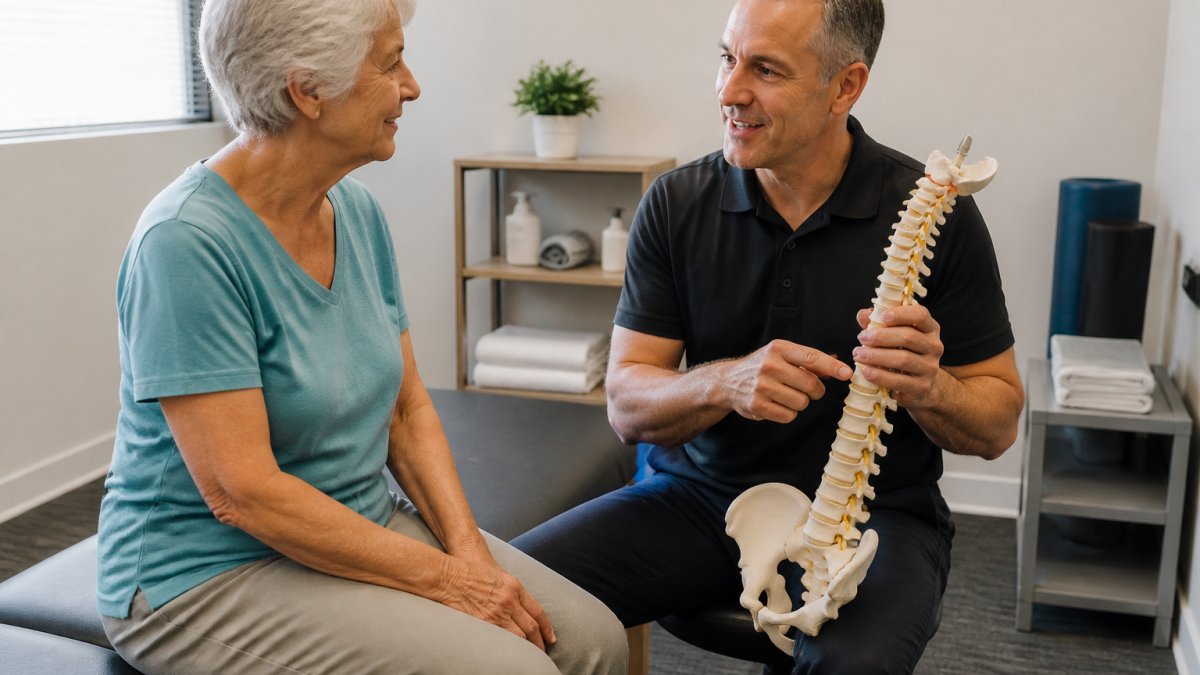
Before your appointment: Records and information to gather
- Complete medication list. Include prescription drugs, over-the-counter medications, and supplements. Bring the bottles if possible.
- Recent imaging and test results. Bring copies of X-rays, MRI, CT scans, or bone density scans from the past 2-3 years.
- Surgical history. List all surgeries, especially spinal procedures, with approximate dates and any hardware implanted.
- Diagnoses and ongoing conditions. Write down osteoporosis, arthritis, diabetes, heart disease, high blood pressure, cancer history, or neurological conditions.
- Allergy and adverse reaction history. Note any drug allergies or past reactions to treatments.
- Primary care doctor’s contact information. Your chiropractor may want to communicate with your main healthcare provider, especially if you have complex medical history.
Before your appointment: Questions to prepare
- How many seniors do you treat, and what is your experience with my specific condition?
- What techniques do you use, and which would you recommend for me based on my age and health?
- How will you screen for contraindications like osteoporosis, blood thinners, or recent surgery before treating me?
- If you find something that needs specialist care, will you refer me to my doctor or another provider?
- How many visits do you typically recommend, and what should I expect to feel after each one?
- Do you communicate with my primary care doctor?
- What is your fee structure, and does my insurance cover your services?
- What should I do if I feel worse after treatment, and how will you modify my plan if needed?
During your first visit: What to expect and how to communicate
- Expect a thorough evaluation. Your chiropractor should spend 20-30 minutes on history and physical examination before any treatment.
- Be honest about your concerns. A good chiropractor will address them directly and may suggest alternative techniques or additional testing.
- Describe your pain clearly. Use words like sharp, dull, burning, or aching. Mention if pain radiates down your arm or leg.
- Ask about the treatment plan before it begins. You should understand and agree before any hands-on work starts.
- Communicate your preferences. If you prefer gentler techniques or need to move slowly due to arthritis, say so.
- Ask for a written plan. Request a summary of recommended visits, techniques, and home care.
After your first visit: What is normal and what warrants concern
Normal responses:
- Mild soreness or stiffness for 24-48 hours.
- Slight fatigue as your body adjusts.
- Mild improvement in pain or mobility.
Follow-up actions:
- Apply ice or heat as directed.
- Do prescribed stretches or exercises.
- Move gently; avoid heavy lifting for 24 hours after adjustment.
- Stay hydrated.
- Track your symptoms.
Concerning symptoms (contact your chiropractor or doctor):
- Pain that worsens after 48 hours.
- New pain in areas not treated.
- Numbness, tingling, or weakness in arms or legs.
- Persistent or worsening headache.
- Dizziness or balance problems.
Choosing the right chiropractor in San Antonio
- Verify licensure. Your chiropractor should hold a current Texas chiropractic license.
- Look for experience with seniors. Ask how many patients over age 65 they treat.
- Check that they coordinate with your primary care doctor. Ask whether they communicate with your physician.
- Observe the clinic environment. Is it clean, organized, and welcoming?
- Trust your instincts. If you feel rushed, dismissed, or pressured into treatment, look elsewhere.
A practical first-visit checklist
☐ Medication list (or bring bottles)
☐ Recent imaging reports
☐ Surgical history summary
☐ List of current diagnoses
☐ Insurance card and photo ID
☐ Written list of questions
☐ Contact information for your primary care doctor
☐ A list of activities or movements that cause pain
☐ Your goals for treatment
At Moore Chiropractic in San Antonio, we specialize in personalized care for patients at every age. We offer a complimentary evaluation and consultation so you can see whether our approach is right for you. We’ll answer your questions, explain our techniques, and discuss how we coordinate with your primary care doctor to ensure safe, integrated care.
Frequently Asked Questions
Is it safe for someone with osteoporosis to get a chiropractic adjustment?
Seniors with osteoporosis can receive chiropractic care, but it requires a trained professional who understands bone density concerns. Your chiropractor must know your medical history and bone density status before treatment. Low-force techniques and spinal mobilization are safer options than traditional high-velocity adjustments for patients with osteoporosis. Always disclose your diagnosis and any bone-related medications during your initial consultation.
What should seniors tell a chiropractor before an adjustment?
Provide a complete medical history including arthritis, osteoporosis, past spinal surgery, medications, and recent falls. Mention any balance issues, joint stiffness, or pain patterns. Discuss age-related conditions like diabetes or hypertension. Be honest about your flexibility and mobility limitations. This information helps your chiropractor choose appropriate techniques and avoid contraindications that could cause adverse events.
What are the potential benefits of chiropractic adjustment for older adults?
Seniors often experience improved range of motion, reduced back pain and neck pain, better balance, and increased flexibility after chiropractic care. Manual therapy and spinal mobilization can relieve joint stiffness and arthritis discomfort. Many older adults report enhanced mobility and independence, reduced fall risk, and better function in daily activities. These benefits support healthy aging and quality of life when delivered by a qualified chiropractor.
When should an older adult avoid a chiropractic adjustment?
Avoid adjustments if you have severe osteoporosis with fracture risk, recent spinal surgery, certain cancers affecting the spine, or severe arthritis affecting stability. Do not pursue chiropractic care if you have neurological conditions affecting balance or sensation without professional assessment. If you are on blood thinners, have a history of stroke, or experience sudden severe pain, consult your physician first. A qualified chiropractor will identify contraindications during your individual assessment.