Last Updated: October 28, 2026
Quick Summary
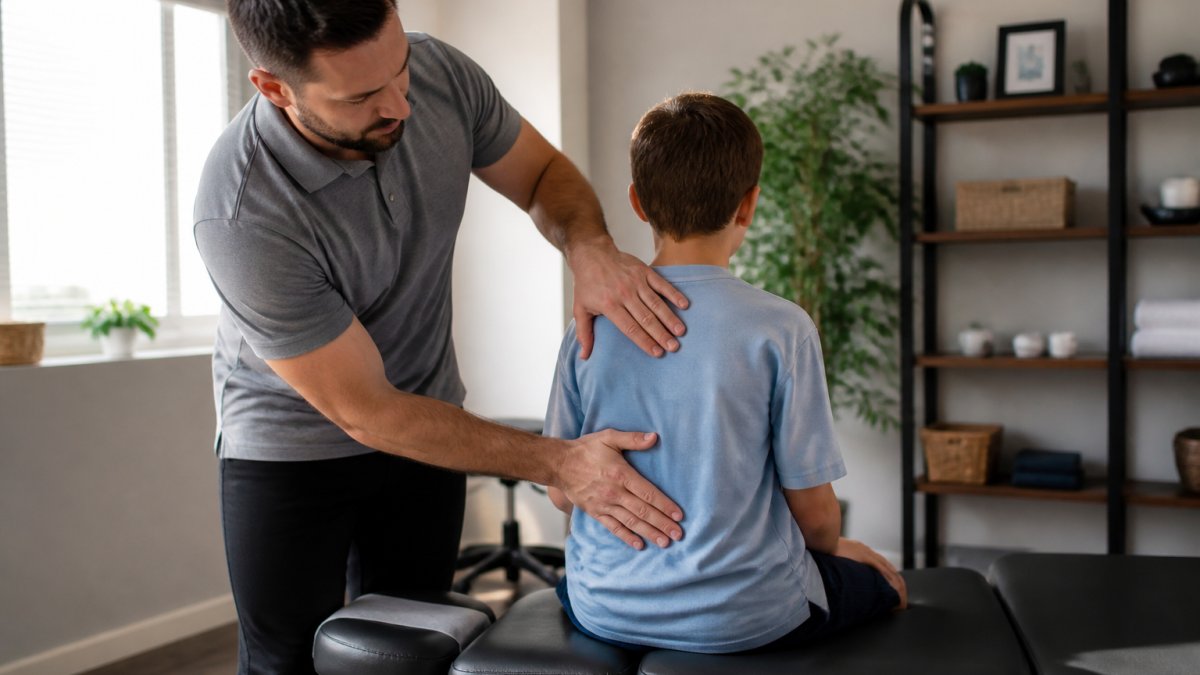
Chiropractic care may support childhood posture through gentle adjustments that help joints move freely, so muscles relax and work together better. A pediatric posture assessment checks alignment, movement, and habits like screen time, then sets a reassessment point to judge progress. Care uses light, controlled forces adapted to a child’s size and stage of growth.
- A posture assessment is gentle and painless, and parents stay in the room the whole time.
- Ask for the reassessment date before leaving the first visit to keep care plan-based.
- Set a 20-minute rule: every 20 minutes, stand and stretch for a minute.
- Avoid high-velocity thrust techniques on young children; use light, controlled forces instead.
- See a pediatrician first for severe pain, numbness, a visible spinal curve, or sudden posture changes.
Table of Contents
- Why Poor Posture in Children Is Worth Addressing Early
- How Chiropractic Adjustments May Support Childhood Posture
- What a Posture Assessment for Kids Looks Like
- Screen Time and Posture in Children: What Parents Can Change
- Child Posture Exercises and Daily Habits That Help
- Safety, Evidence, and When to See a Pediatrician
- Booking a Gentle Pediatric Evaluation in San Antonio
- Frequently Asked Questions
Why Poor Posture in Children Is Worth Addressing Early
Most parents notice the slouch before the problem behind it. A child may lean over a tablet, hunch at a school desk, and settle into habits that shape how their spine moves over time. Poor posture in children is rarely one dramatic event, it builds quietly, one screen session and one heavy backpack at a time.
Children’s spines are still developing. Parents who notice a posture concern can discuss it with a qualified health professional.
Common posture challenges parents notice
Parents usually describe what they see, not a diagnosis. Here are the patterns we hear about most:
- A rounded upper back or forward-rolling shoulders
- One shoulder sitting higher than the other
- The head drifting forward over the body
- A tilted or uneven pelvis
- Complaints of neck or lower back aches after school
- Tiredness or fidgeting during long sitting periods
These signs don’t always mean something is wrong. Many are simple habits that respond to better daily routines. But they’re worth watching, because habits set in childhood tend to follow a person into adulthood.
How growing bodies adapt to daily habits
That’s why timing matters. A growing body is more flexible than an adult’s, so it can shift either direction. The goal is to help it shift toward healthy alignment before a habit becomes a default, the core idea behind pediatric chiropractic care: gentle support for growing bodies, not a cure-all.
How Chiropractic Adjustments May Support Childhood Posture
In plain terms: when a joint moves freely, the muscles around it relax and work together better, helping a child stand, sit, and move with less strain. For a closer look, see our guide to Kids and Chiropractic: Helping Your Child Thrive in San Antonio. Many parents tell us their child seems more comfortable and balanced after care, though results vary.
Spinal alignment, spinal motion, and nerve function
The spine protects the spinal cord and supports the nervous system, which carries signals between the brain and body.
For a closer look, see our guide to chiropractic for posture improvement.
What a Posture Assessment for Kids Looks Like
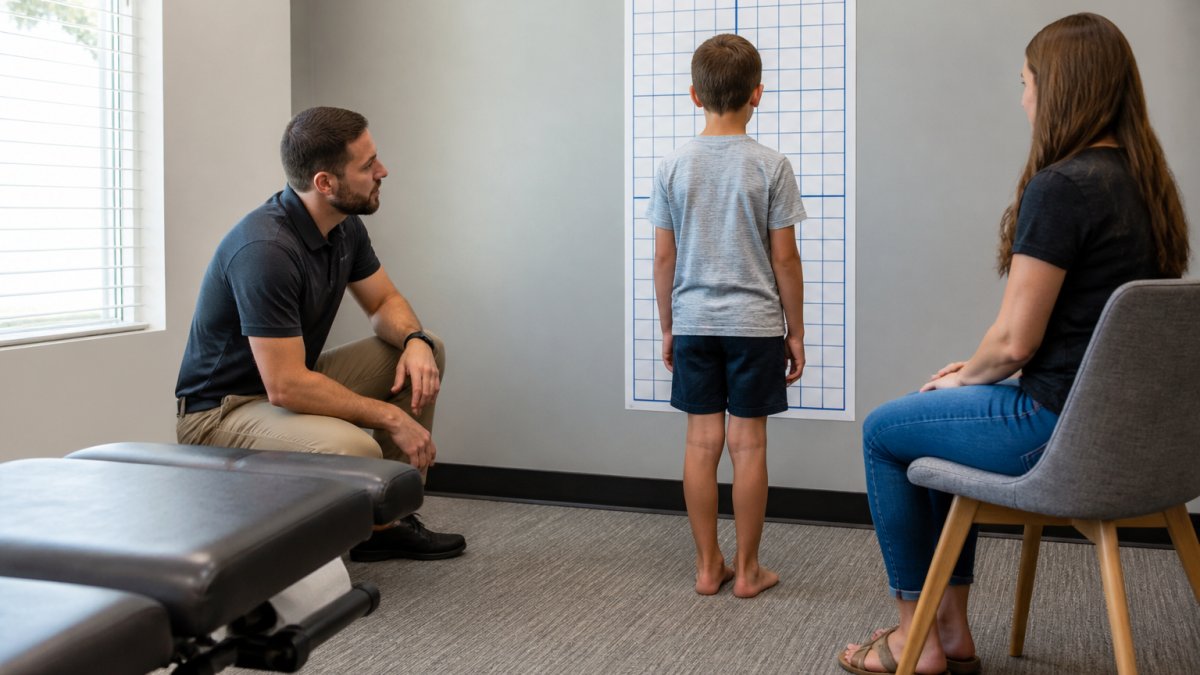
A posture assessment for kids is a gentle, visual and hands-on check of how a child stands, sits, and moves, looking for alignment concerns, uneven shoulders or hips, and limited movement.
Step by step: from intake to care plan
- Intake and history. We ask about screen time, sports, backpack weight, sleep position, past injuries, and any aches. Bring any relevant medical records or imaging.
- Consent and expectations. Before any hands-on work, we explain what we will do, why, and what alternatives exist. You can pause or stop at any point, and older children are included in the conversation.
- Visual posture check. Your child stands and sits while we note shoulder, hip, and head position. This is observation, not diagnosis.
- Movement screen. We watch your child bend, reach, and turn to see how the spine moves and where motion seems limited.
- Gentle palpation. We feel for areas of stiffness or tension along the spine, using light pressure adapted to the child’s size.
- Findings and plan. We explain what we see in plain language, whether care makes sense, what technique we would use, and how many visits we would suggest before reassessing. If chiropractic is not the right fit, we say so and refer out.
- Reassessment. We set a specific check-in point, often after a short initial course of care, to decide together whether to continue, change approach, or stop.
How technique is selected for a child
Ask your provider to describe the technique plainly and explain why it fits your child.
Measuring alignment and movement over time
Posture work is a process, not a one-visit fix. We recheck alignment and movement at set points so you can see whether things are improving, a clear postural assessment gives us a baseline to compare against. Useful markers include comfort during daily activities, willingness to sit or play without fidgeting, and observed changes in standing and sitting position. If a child isn’t responding, we change the plan or refer out rather than repeating the same approach.
Ask for the reassessment date before you leave the first visit. A clear check-in point is the difference between a plan and an open-ended schedule.
How to verify a provider’s credentials
Before booking, confirm the provider is licensed in Texas and trained in pediatric care. Check licensure through the Texas Board of Chiropractic Examiners, and ask directly about pediatric training, continuing education, and experience with children your child’s age.
Here is the step-by-step path a pediatric posture assessment follows, from the first conversation to the reassessment. (Source: CDC’s data on childhood obesity and related health issues)
| Step | What happens |
|---|---|
| Intake and history | Ask about screen time, sports, backpack weight, sleep, injuries, aches |
| Consent and expectations | Explain what will be done, why, and alternatives |
| Visual posture check | Child stands and sits; note shoulder, hip, head position |
| Movement screen | Watch child bend, reach, and turn to see motion limits |
| Gentle palpation | Feel for stiffness or tension using light pressure |
| Findings and plan | Explain findings, technique, and suggested number of visits |
| Reassessment | Set a check-in point to continue, change, or stop |
Screen Time and Posture in Children: What Parents Can Change
Screen time and posture in children are tightly linked. The fix isn’t banning screens. It’s changing how and how long kids use them.
Small changes add up:
- Set a 20-minute rule: every 20 minutes, stand and stretch for a minute
- Raise screens to eye level so the head stays over the shoulders
- Use a chair with back support and feet flat on the floor
- Keep screens out of the bedroom during homework time
- Swap one screen hour for outdoor play when you can
The American Academy of Pediatrics offers family media guidance that can help you set limits that fit your child’s age (How to Make a Family Media Plan). The point is consistency, not perfection.
Child Posture Exercises and Daily Habits That Help
- Chin tucks: pull the head straight back, hold a few seconds, repeat
- Wall angels: stand with the back to a wall and slide the arms up and down
- Shoulder blade squeezes: pinch the shoulder blades together and hold
- Bird dogs: on hands and knees, extend one arm and the opposite leg
- Plank holds: short holds to build core support
Keep sessions short and fun, a bored child won’t stick with a routine, and consistency beats intensity.
Backpack use, school sitting, and sports recovery
Backpack use.
School sitting.
Sports recovery. Sports-related aches are common in active kids. Rest, hydration, and gentle stretching after play help young bodies recover. If aches linger, that’s a reason to get things checked.
Safety, Evidence, and When to See a Pediatrician
Parents ask two questions first: is this safe, and does it work? Both deserve straight answers, what the evidence supports, what it doesn’t, and when a pediatrician, not a chiropractor, should be your first call.
What the evidence actually shows
A useful way to set expectations: think in terms of function (comfort, ease of movement, willingness to be active) rather than a corrected angle on an X-ray. If a provider guarantees a specific postural change, ask what evidence that promise is based on.
Specific risks and situations that require caution
- Mild soreness or tiredness after a visit is the most commonly reported short-term effect and usually settles within a day.
- Avoid high-velocity thrust techniques on young children; care should use light, controlled forces adapted to the child’s size and stage of growth.
- Delay or modify care if the child has an acute injury, fever, or unexplained pain that has not been medically evaluated.
- Extra caution is required with conditions such as known spinal abnormalities, bone or connective-tissue disorders, bleeding disorders, or recent trauma, these need medical clearance first.
- Informed consent is a process, not a signature. Ask what will be done, why, what alternatives exist (including doing nothing and watching), and what would make the provider stop or refer out. For older children, include them in the conversation so they can say no.
Red flags: when to see a pediatrician first
- Severe or worsening back pain, or pain that wakes them at night
- Numbness, weakness, tingling, or changes in bowel or bladder function
- A visible curve in the spine, uneven shoulders or hips that seem progressive, or a rib hump when bending forward
- Trouble walking, balancing, or a change in gait
- Pain after a fall, sports injury, or other trauma
- Fever, unexplained weight loss, or pain accompanied by systemic symptoms
Questions to ask before consenting to care
- What are you finding, and how did you reach that conclusion?
- What technique will you use, and how is it adapted for my child’s age?
- What are the alternatives, including watchful waiting?
- How will we measure whether care is helping, and when will we reassess?
- What would make you stop care or refer us elsewhere?
- What are the possible short-term effects, and what should I watch for at home?
If you want more detail on safety, read our guide on whether chiropractic is safe for children.
Booking a Gentle Pediatric Evaluation in San Antonio
At Moore Chiropractic, new patients can receive a complimentary evaluation and consultation.
Our care is built around personalized plans and gentle techniques.
If you’re ready to learn more, contact Moore Chiropractic. You can also read Why Children in San Antonio Should See a Chiropractor to book a pediatric evaluation.
Frequently Asked Questions
What causes poor posture in children?
Poor posture in children usually comes from repeated daily habits rather than one single event. Long periods of school sitting, studying with a rounded back, and screen time spent looking down all encourage the head and shoulders to drift forward. Heavy or one-shoulder backpack use can add to the strain. Growth spurts also change how a child’s muscles and joints coordinate, so posture can shift quickly during those periods. A posture assessment for kids can help identify which habits are contributing most.
Can chiropractic adjustments help improve a child’s posture?
Chiropractic adjustments are sometimes used to support spinal alignment and spinal motion in growing bodies, which may help children move more comfortably. Evidence in this area is limited, so think of care as one part of a broader plan that includes child posture exercises, better screen time habits, and regular reassessment. A gentle pediatric evaluation can tell you whether care is appropriate for your child. No approach can guarantee a specific posture outcome.
Are chiropractic adjustments safe for children?
When performed by a qualified provider using gentle, age-appropriate techniques, chiropractic care for children is generally considered low risk. Adjustments for kids are typically much lighter than adult adjustments, and comfort is a priority throughout the visit. That said, chiropractic care is not right for every situation. Tell the provider about any medical conditions, recent injuries, or diagnoses, and keep your pediatrician informed. If your child has red-flag symptoms such as severe pain, numbness, or changes in bowel or bladder control, see a pediatrician first.
What exercises or daily habits can help support better posture in children?
Simple habits make a real difference. Set screen time limits and encourage breaks where kids stand and roll their shoulders back. Check that backpacks are worn with both straps and weigh no more than about 10 to 15 percent of the child’s body weight. At homework time, feet should rest flat and the screen should sit near eye level. Child posture exercises such as chin tucks, wall angels, and gentle shoulder-blade squeezes can build muscle coordination and balance. Ask your provider which exercises fit your child’s age and needs.