Table of Contents
- Understanding Sciatica and Why You Might Want to Avoid Medication
- Sciatica Exercises for Pain Relief and Mobility
- Physical Therapy for Sciatica: A Structured Approach
- Home Remedies for Sciatica Pain Without Medication
- Chiropractic Care for Sciatica: A Non-Invasive Option
- Complementary Therapies and Other Relief Methods
- When to Seek Professional Care and Red Flags to Watch
- Conclusion: Building Your Non-Medication Pain Management Plan
- Frequently Asked Questions
Last Updated: October 8, 2026
Understanding Sciatica and Why You Might Want to Avoid Medication
Sciatica causes sharp, burning, or tingling pain that radiates down the leg from the lower back when the sciatic nerve is compressed or irritated.
Many people reach for pain medication first, but alternatives to pain medication for sciatica offer real relief without the side effects of long-term drug use.
Medication masks pain but doesn’t fix the underlying problem, and over time your body may need higher doses.
Sciatica Exercises for Pain Relief and Mobility
Exercise reduces inflammation, strengthens supporting muscles, and takes pressure off the sciatic nerve. Start gently and progress gradually.

Gentle Stretching Routines
Stretching improves flexibility and reduces nerve tension. Hold each stretch 20-30 seconds without bouncing, 1-2 times daily.
Key stretches for sciatic pain:
- Hamstring stretch: Lie on your back, pull one knee toward your chest, straighten the leg slowly
- Piriformis stretch: Sit with one ankle crossed over the opposite knee, lean forward gently
- Knee-to-chest stretch: Lie on your back, pull both knees toward your chest, hold for 30 seconds
Start with 2-3 stretches per session. Add more as your flexibility improves. Consistency matters more than intensity.
The best time to stretch is after light activity when muscles are warm. Stretching cold muscles can increase tension rather than reduce it.
Strengthening Exercises
Weak core and glute muscles force your lower back to work harder; strengthening them reduces pressure on the sciatic nerve.
Core strengthening routine (3 times per week):
- Glute bridges: Lie on back, bend knees, push hips up, hold 2 seconds, lower slowly (3 sets of 10)
- Bird dogs: On hands and knees, extend opposite arm and leg, hold 2 seconds (3 sets of 8 per side)
- Planks: Hold a straight line from head to heels, breathe steadily (3 sets of 20-30 seconds)
- Clamshells: Lie on side, knees bent, lift top knee while keeping feet together (3 sets of 12 per side)
- Single-leg stands: Stand on one leg for 30 seconds, switch sides (2 sets of 5 per leg)
These exercises build the muscles that support your spine, reducing strain on the sciatic nerve and improving pain control.
Stop any exercise that increases pain. Sharp or shooting sensations mean you’ve gone too far. Back off and try a gentler version.
Physical Therapy for Sciatica: A Structured Approach
Physical therapy addresses sciatica at its source: a therapist teaches movements that reduce nerve compression and restore function, targeting your specific problem rather than a generic pain pattern.
Most programs run 6-12 weeks with 2-3 sessions per week, combining hands-on treatment, guided exercises, and posture education. The goal is to make you independent with home exercises.
What to expect in physical therapy:
- Initial assessment to identify what’s causing your sciatica
- Manual therapy to reduce muscle tension and improve joint mobility
- Progressive exercise program tailored to your condition
Patients who do home exercises between sessions recover faster.
The difference between quick relief and lasting relief is addressing the root cause. Physical therapy does this by restoring movement patterns and muscle balance.
Home Remedies for Sciatica Pain Without Medication
You don’t need a clinic to start managing sciatica. Simple home remedies reduce pain and inflammation, but work best combined rather than alone.
Heat and Cold Therapy Techniques
Cold reduces swelling and numbs sharp pain; heat relaxes muscles and improves blood flow. Use them based on your symptoms.
Cold therapy (first 48 hours after pain starts):
- Apply ice pack for 15 minutes, rest 45 minutes, repeat up to 3 times daily
- Wrap ice in a towel, never apply directly to skin
- Use for acute pain, swelling, or recent flare-ups
Heat therapy (after 48 hours or for chronic pain):
- Apply heating pad for 15-20 minutes, several times daily
- Take a warm bath or shower to relax muscles
- Use for muscle tension and stiffness
Contrast therapy (alternating heat and cold):
- Apply cold for 5 minutes, then heat for 5 minutes
- Repeat cycle 3-4 times
- This technique reduces inflammation while improving circulation
Most people find relief within 15-20 minutes. Experiment to see which works best for your pain pattern.
Rest, Posture, and Daily Adjustments
How you sit, stand, and sleep directly affects sciatica pain; small daily adjustments compound into significant relief.
Posture improvements:
- Sit with your back against the chair, feet flat on floor, knees at 90 degrees
- Use a small pillow or lumbar roll behind your lower back
- Avoid slouching or leaning forward
Sleep position matters:
- Sleep on your side with a pillow between your knees to keep your spine aligned
- Avoid sleeping on your stomach, which twists your spine
- Use a firm mattress that supports your lower back
Daily movement habits:
- Bend at your knees, not your back, when picking up objects
- Avoid twisting while holding heavy items
- Keep your core engaged when standing or walking
These adjustments take no extra time but prevent pain from worsening.
Chiropractic Care for Sciatica: A Non-Invasive Option
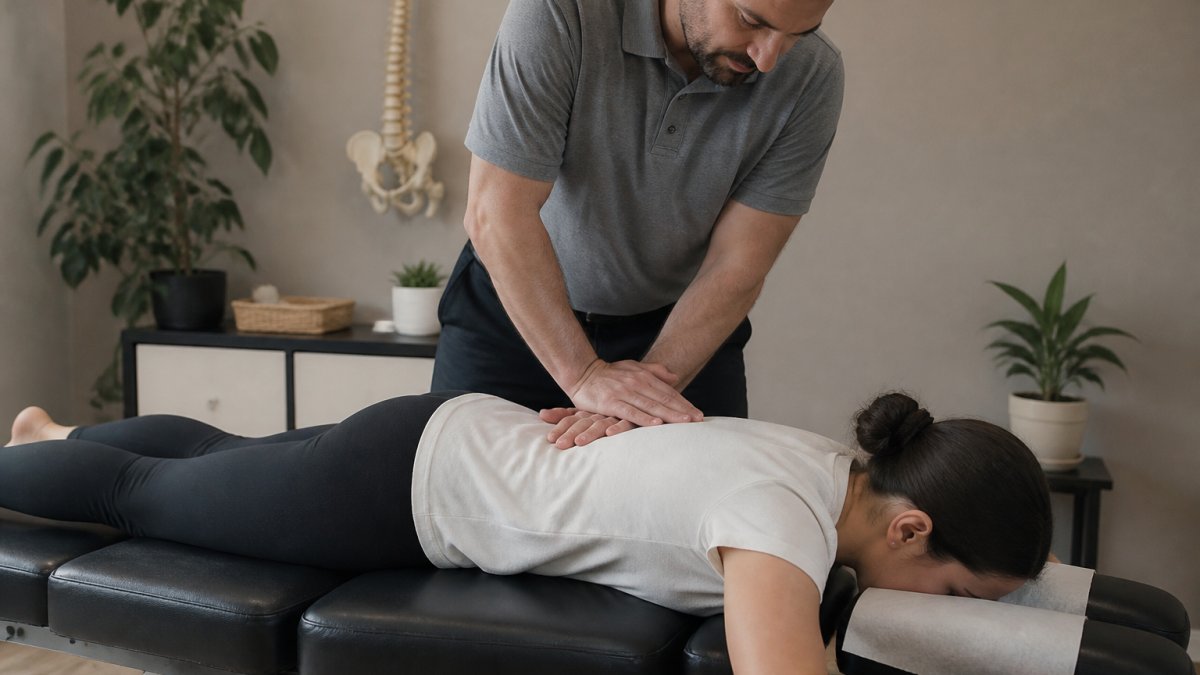
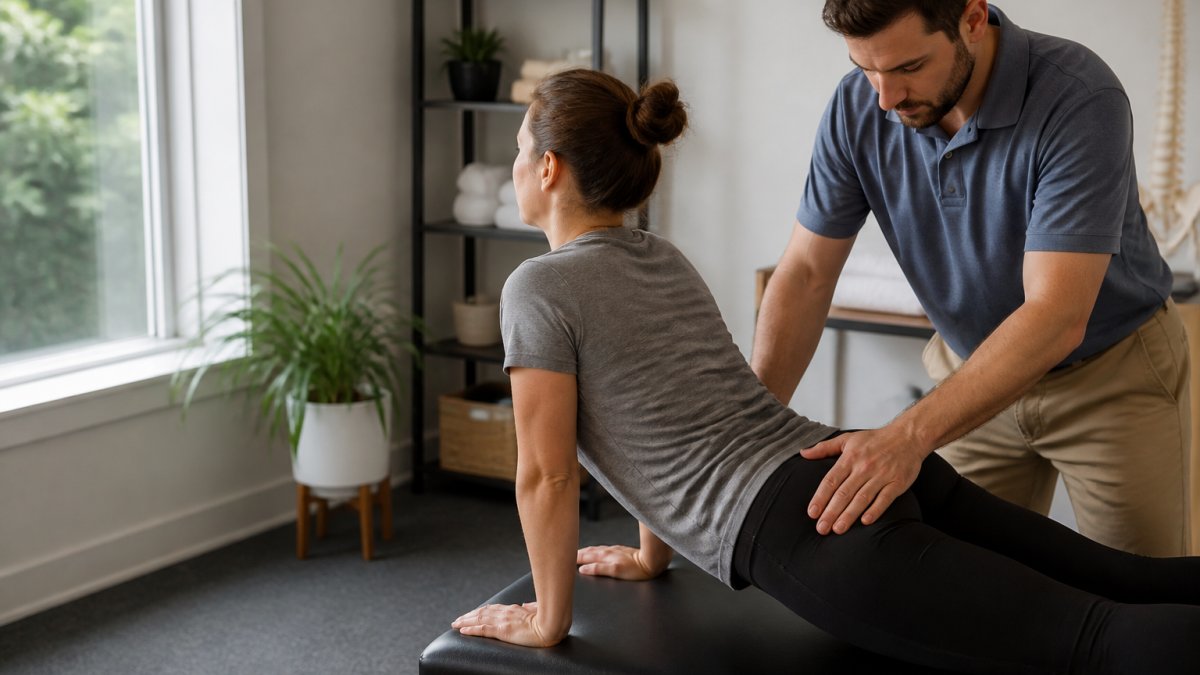
Chiropractic care addresses sciatica by realigning the spine and reducing nerve compression: misaligned vertebrae irritate the sciatic nerve, and adjustments restore alignment to relieve pressure and pain.
Moore Chiropractic uses gentle, personalized techniques, combining spinal adjustments with exercises and lifestyle advice for lasting relief.
How chiropractic helps sciatica:
- Realigns vertebrae that compress the sciatic nerve
- Reduces muscle tension around the nerve
- Improves spinal mobility and function
Many San Antonio patients choose chiropractic care because it’s non-invasive and addresses the cause by correcting the underlying misalignment.
People who want non-medication relief and are willing to commit to a treatment plan. Chiropractic works best when combined with home exercises and posture changes.
Complementary Therapies and Other Relief Methods
Beyond exercise and chiropractic care, several complementary therapies are used for sciatica. Most have modest, mixed evidence for radiating leg pain and work best as add-ons to active care rather than stand-alone fixes. Below is what the evidence supports, what to expect, and how to access these services in San Antonio.
Acupuncture
Acupuncture uses thin needles placed at specific points to modulate pain signaling, and in U.S. practice is most often used for chronic low back and leg pain rather than acute flares.
- Evidence quality: Mixed. Some trials suggest modest short-term pain reduction for chronic low back pain; evidence specific to sciatica (radicular leg pain) is thinner. The American College of Physicians lists acupuncture as one option for chronic low back pain when non-drug approaches are preferred (American College of Physicians issues guideline for treating nonradicular low back pain).
- What to expect: A typical course is 6-12 sessions, often 1-2 per week. Many people who respond notice change within the first 3-4 sessions; if there is no meaningful change after about 6 sessions, it is reasonable to stop.
- Safety and contraindications: Generally low-risk when performed by a licensed practitioner using sterile, single-use needles. Tell your provider if you take blood thinners, are pregnant, have a bleeding disorder, or have a pacemaker or other implanted electrical device.
Laser Therapy (Low-Level Laser Therapy / Photobiomodulation)
Low-level laser therapy (LLLT), or photobiomodulation, uses focused light to reduce inflammation and modulate pain. It is non-invasive and takes 10-15 minutes per session.
- Evidence quality: Weak to moderate for sciatica specifically. Some studies show short-term pain reduction for musculoskeletal and neck/back pain; results for radicular leg pain are inconsistent.
- What to expect: A course often runs 6-12 sessions over several weeks. Some patients report improvement within 2-3 sessions, but this is not a reliable predictor for everyone.
- Safety and contraindications: Generally well tolerated. Avoid direct application over the thyroid, over active cancer, or over a pregnant abdomen. Eye protection is standard.
Massage and Myofascial Release
Massage and myofascial release target muscle tension in the lower back, glutes, and legs that contributes to nerve irritation. They don’t change a disc herniation or spinal stenosis, but can reduce the muscular guarding that makes sciatica feel worse.
- Evidence quality: Modest. Massage has some support for short-term relief of low back pain; evidence for sciatica specifically is limited. Myofascial release is less studied.
- What to expect: Many people feel looser after one session, with effects lasting days. Lasting change usually requires combining it with strengthening and mobility work.
- Safety and contraindications: Avoid deep pressure directly over an acutely inflamed nerve, over areas with blood clots, fractures, or skin infection, and over recent surgical sites. Tell your therapist if you have osteoporosis, a bleeding disorder, or are on blood thinners.
Self-Massage and Foam Rolling at Home
These are low-cost adjuncts, not treatments for the nerve itself.
- Use a foam roller on your glutes and thighs for 1-2 minutes per area.
- Use a massage ball on the calf and the bottom of the foot.
- Apply gentle finger pressure to tight spots in the lower back, but avoid pressing directly into a spot that reproduces sharp, shooting leg pain.
None of these therapies treat a medical emergency. If you develop loss of bowel or bladder control, saddle numbness, or rapidly worsening leg weakness, skip complementary care and seek urgent evaluation.
Treat complementary therapies as accelerators, not replacements. Pair them with active care, set a realistic trial window (about 4-6 sessions), and stop if you are not seeing meaningful change. Before starting, ask your clinician whether the therapy is safe given your medications and health history.
When to Seek Professional Care and Red Flags to Watch
Most sciatica improves with conservative care, but when to escalate matters. Use the tiers below, and treat the red-flag list as non-negotiable.
Seek emergency care immediately if you have:
- Loss of bowel or bladder control
- Numbness in the saddle area (groin, inner thighs, genitals)
- Rapidly progressive weakness in one or both legs
These can signal cauda equina syndrome, spinal infection, fracture, or another condition that needs urgent evaluation. Do not wait for a routine appointment.
Schedule a prompt evaluation (within days) if you have:
- Pain lasting more than 4 weeks without improvement
- Pain severe enough to interfere with work, sleep, or daily activities
- Numbness or tingling that is spreading
A clinician can distinguish a disc herniation, spinal stenosis, piriformis syndrome, and other causes, each has a different treatment path.
A practical decision pathway
Use symptom severity, duration, and mobility to choose your next step:
- Mild, recent (under 2 weeks), still mobile: Start with relative rest, heat/cold, gentle stretching, and posture changes. Reassess in 7-10 days.
- Moderate, 2-6 weeks, mobility limited: Add structured physical therapy. This is the window where guided exercise and manual therapy tend to produce the most change.
- Persistent beyond 6 weeks or worsening despite conservative care: Ask about imaging and interventional options (for example, epidural steroid injections) and discuss whether a referral to a spine specialist is appropriate.
- Any red flag at any time: Escalate immediately, regardless of how long symptoms have been present.
Medication alternatives vs. stopping medication
This article is about alternatives to pain medication, not about abruptly stopping medication you have been prescribed. Non-drug approaches can complement medication and may allow a clinician to reduce doses over time, but that decision belongs to your prescriber. Stopping certain medications suddenly can cause withdrawal or rebound symptoms, so talk to your clinician before making any change.
Cost, insurance, and access in San Antonio
- Physical therapy: Often covered by insurance with a physician referral, though visit limits vary. Cash-pay rates in San Antonio typically run lower at independent clinics than at hospital systems; ask about self-pay packages if you are uninsured.
- Chiropractic: Many plans cover a limited number of visits per year. Medicare covers manual manipulation for certain spinal conditions. Ask upfront about exam fees and per-visit costs.
- Acupuncture and massage: Frequently cash-pay. Community acupuncture and massage schools in San Antonio offer lower-cost sessions.
If cost is a barrier, ask each provider for a self-pay rate, a payment plan, or a sliding-scale option. Federally qualified health centers in San Antonio can also be a lower-cost entry point for evaluation and referral.
Never ignore progressive weakness, saddle numbness, or loss of bowel/bladder control. These can indicate serious nerve compression that requires prompt treatment to prevent permanent injury.
Match the intensity of your response to the severity and duration of your symptoms. Start conservative, escalate if you are not improving, and treat red flags as an emergency, not a wait-and-see.
Conclusion: Building Your Non-Medication Pain Management Plan
Managing sciatica without medication is possible when you combine the right approaches. Exercise, physical therapy, chiropractic care, and complementary therapies work together to address pain and prevent future flare-ups.
Start with stretching and posture changes, they cost nothing and deliver quick results. Add heat or cold therapy for acute pain.
The path to lasting relief doesn’t require medication. At Moore Chiropractic in San Antonio, we specialize in personalized, gentle care that targets the root cause of your sciatica.
Frequently Asked Questions
How can I get rid of sciatic nerve pain without medication?
Multiple non-medication approaches can reduce sciatic nerve pain. Physical therapy exercises that target the lower back and hip muscles help reduce nerve compression. Heat and cold therapy applied to the affected area can decrease inflammation and muscle tension. Stretching routines performed daily improve mobility and nerve function. Chiropractic adjustments address underlying spinal misalignment that may be causing sciatic pain. Many people find relief through a combination of these methods rather than relying on a single approach. A consultation with a qualified healthcare provider can help you identify which alternatives work best for your specific situation.
Can exercise or stretching really help sciatica?
Yes, exercise and stretching are among the most evidence-supported alternatives to pain medication for sciatica. Targeted stretches reduce muscle tension pressing on the sciatic nerve, while strengthening exercises stabilize the lower back and pelvis. Consistent stretching, performed 2-3 times daily, can improve pain within days to weeks. Key stretches include the pigeon pose, hamstring stretches, and glute stretches. Strengthening exercises that target the core and gluteal muscles provide long-term relief by preventing nerve compression. The key is performing movements correctly and progressing gradually to avoid aggravating the condition.
Can chiropractic care help with sciatica?
Chiropractic care addresses sciatica by correcting spinal misalignment and reducing pressure on the sciatic nerve. Gentle adjustments restore proper vertebral alignment, improving nerve function and reducing radiating pain. Many people experience relief after the first few visits, though the number of visits needed varies by individual. Chiropractors also provide guidance on exercises, posture, and daily habits to prevent recurrence. Unlike medication, chiropractic care treats the underlying cause rather than just masking symptoms, making it a practical alternative for those seeking long-term relief without medication.
What should I do if sciatica pain is so bad I can’t walk?
Severe sciatic pain that limits mobility requires prompt professional evaluation to rule out serious underlying conditions. Immediate steps include applying ice to reduce inflammation, resting the affected leg, and avoiding movements that worsen pain. Over-the-counter anti-inflammatory medications may provide temporary relief while you seek professional care. A healthcare provider can determine whether you need interventional treatments like epidural steroid injections, spinal decompression, or other options. Physical therapy and chiropractic care can begin as soon as acute pain subsides. Contact a qualified professional immediately if you experience loss of bowel or bladder control, severe weakness, or progressive numbness, as these may indicate a serious condition requiring urgent care.