Last Updated: October 24, 2026
Quick Summary
Chiropractic adjustments for shoulder pain in athletes restore normal joint motion in the shoulder and upper spine, easing pain and helping you move freely again. At Moore Chiropractic in San Antonio, Texas, we treat the whole chain, since restricted motion in the neck or mid-back often forces the shoulder to overwork.
- Shoulder pain in athletes rarely starts at the shoulder itself, so we check the neck and mid-back too.
- A chiropractic evaluation maps your pain, movement, and history before any treatment begins.
- Adjustments use gentle, targeted pressure, and a popping sound is gas releasing, not damage.
- Shoulder mobility exercises like wall slides and band pull-aparts keep the gains from an adjustment.
- Return to sports should be gradual, guided by how you move rather than by a calendar.
Table of Contents
- Why Athletes Get Shoulder Pain and How Chiropractic Adjustments Fit In
- What a Chiropractic Evaluation for Shoulder Pain Involves
- Step-by-Step: What Happens During Chiropractic Adjustments for Shoulder Pain
- Shoulder Mobility Exercises for Athletes to Support Adjustments
- Return to Sports After Shoulder Injury: A Gradual Approach
- Common Mistakes Athletes Make with Shoulder Pain
- When to Seek Professional Help for Shoulder Pain
- Book Your Complimentary Evaluation at Moore Chiropractic
- Frequently Asked Questions
Why Athletes Get Shoulder Pain and How Chiropractic Adjustments Fit In
Chiropractic adjustments for shoulder pain in athletes are a hands-on treatment approach that restores normal joint motion in the shoulder and upper spine, easing pain and helping you move freely again. At Moore Chiropractic in San Antonio, Texas, we see this often: a thrower, swimmer, or lifter whose shoulder simply stops cooperating. The shoulder is the most mobile joint in the body, and that mobility comes at a cost. It relies on a team of muscles and tendons to stay stable. Overhead sports, heavy lifting, and repeated arm swings wear that team down.
Here is what most guides miss. Shoulder pain in athletes rarely starts at the shoulder itself. Restricted motion in the neck or mid-back forces the shoulder to overwork. A chiropractor looks at the whole chain, not just the sore spot.
Adjustments fit in as one part of recovery. Learn more about how a Sports Chiropractor San Antonio can help accelerate sports injury recovery. They aim to:
- Restore motion in stiff joints
- Reduce pain and muscle guarding
- Help you move through a fuller, safer range
The American Academy of Orthopaedic Surgeons notes that shoulder problems in active people often involve soft tissue and joint motion together, which is why a full assessment matters.
What a Chiropractic Evaluation for Shoulder Pain Involves
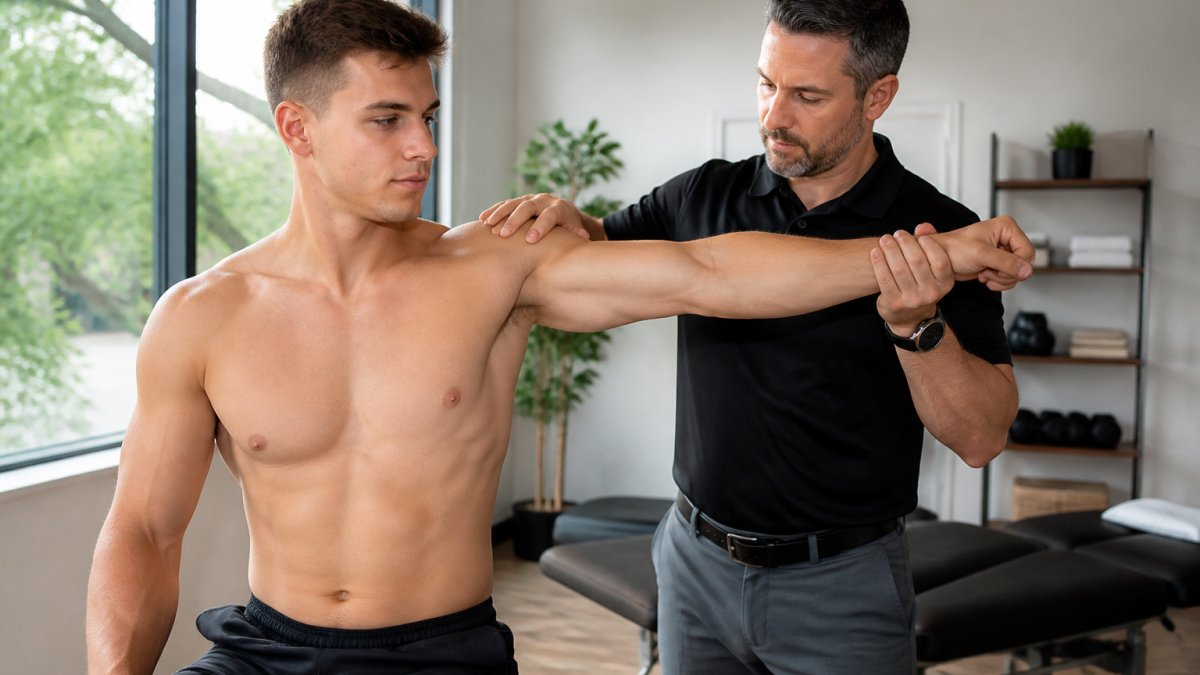
A chiropractic evaluation for shoulder pain is a focused exam that maps your pain, movement, and history before any treatment begins. First, we ask how the pain started. Was it a single moment, like a hard throw, or a slow build over weeks? Next comes a physical exam. We check range of motion, strength, and which movements bring the pain. We also look at your neck and upper back, since shoulder function depends on them.
Then we watch you move. Simple tasks like reaching overhead or rotating your arm show us where things break down.
Expect a few key questions:
- What sport do you play, and how often?
- Does the pain wake you at night?
- Have you had imaging, like an X-ray or MRI?
If something points to a tear, fracture, or nerve problem, we say so and refer you to the right specialist. A good evaluation tells you the truth, even when the answer is “this is not a chiropractic case.”
Step-by-Step: What Happens During Chiropractic Adjustments for Shoulder Pain
Most visits follow a simple pattern, and knowing it in advance eases the nerves. If you have ever wondered how a chiropractic adjustment works, the short version is this: controlled, gentle movement of a joint to restore its normal motion.
Before the Adjustment
We start with a quick check of how you feel that day. We re-test movement and note any change since last time. Then we explain what we plan to do and why. You can ask questions here. Nothing happens without your okay.
During the Adjustment
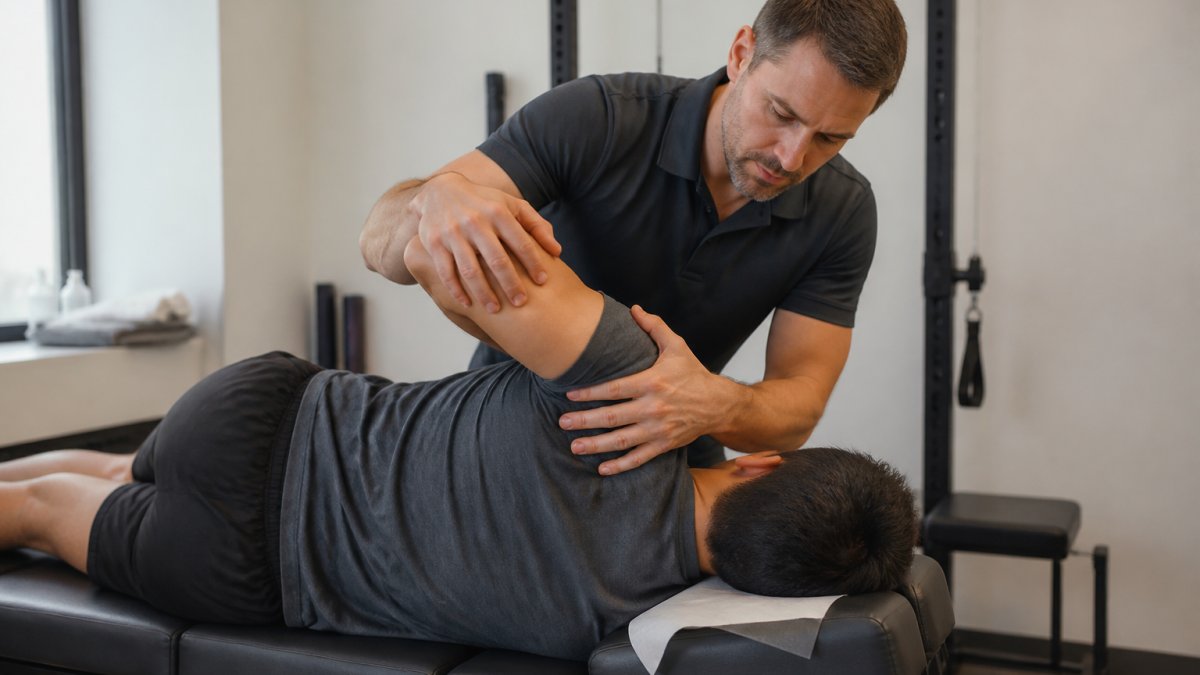
You lie or sit in a comfortable position. We use gentle, targeted pressure or a light thrust to nudge a stiff joint back into motion. Some people hear a small pop. That sound is gas releasing in the joint, not a sign of damage. It is not required for the adjustment to work. If you are worried about “cracking,” tell us. We adjust the force and technique to match your comfort.
After the Adjustment
We re-check your movement right away. Most athletes notice easier motion, though some feel mild soreness for a day. We finish with a short plan: what to do at home, and when to come back.
| Phase | What Happens | What You Feel |
|---|---|---|
| Before | Re-test, explain plan | Informed and ready |
| During | Gentle, targeted adjustment | Light pressure, possible pop |
| After | Re-check motion, home plan | Easier movement, mild soreness |
Shoulder Mobility Exercises for Athletes to Support Adjustments
Shoulder mobility exercises for athletes keep the gains from an adjustment from slipping away. Adjustments open the door. Exercise keeps it open. We give our patients a short daily routine, and consistency matters more than duration.
Try these, gently, within comfort:
- Wall slides: Stand with your back to a wall, slide arms up and down.
- Doorway stretch: Place forearms on a doorframe, step through to stretch the chest.
- Band pull-aparts: Hold a light band, pull it apart across your chest.
- Pendulum swings: Let the arm hang and swing in small circles.
- Sleeper stretch: Lie on your side, gently press the top hand down.
Stop any move that causes sharp pain. Soreness is fine. Sharp pain is not. If you want to understand how care and movement work together, read more on improving mobility and range of motion.
Return to Sports After Shoulder Injury: A Gradual Approach
Return to sports after shoulder injury should be gradual, guided by how you move, not by a calendar. The biggest mistake we see is rushing back the moment pain fades. Pain often leaves before the joint is ready for full load. That gap is where re-injury happens.
We use a step-by-step ramp:
- Pain-free daily motion. Reach, lift, and rotate without pain.
- Light strengthening. Bands and bodyweight work.
- Sport-specific drills. Throwing or swinging at low effort.
- Full practice. Normal intensity, watched closely.
- Game play. Cleared only when strength and motion match the other side.
Each step takes as long as your body needs. Some athletes move through in a couple of weeks. Others need longer. There is no prize for hurrying.
Common Mistakes Athletes Make with Shoulder Pain
The most common mistake is training through pain and hoping it settles. It usually does not. Here are the others we see often:
- Skipping the warm-up. Cold shoulders handle load poorly.
- Ignoring the neck and mid-back. The shoulder pays for stiffness above it.
- Overdoing one exercise. Too much pressing, too little pulling.
- Stopping care too early. Feeling better is not the same as being ready.
- Self-diagnosing. A “strain” can hide a tear.
A common mistake is treating rest as a full fix. Rest calms pain, but it does not rebuild motion or strength. You need both.
When to Seek Professional Help for Shoulder Pain
Seek professional help when shoulder pain lasts more than a week or two, keeps you from your sport, or comes with weakness, numbness, or a click that sticks. Those signs deserve a proper look. For a broader view of ongoing cases, our chronic shoulder pain guide walks through long-term management.
Watch out: sharp pain after a fall, a visible deformity, or an inability to lift the arm at all means get seen right away, not next month.
Other reasons to book an evaluation:
- Pain that wakes you at night
- Swelling that will not settle
- A drop in throwing speed or strength
- Numbness or tingling down the arm
At Moore Chiropractic, we tell you honestly whether chiropractic care fits your case. If it does not, we point you to the right provider. That honesty is the whole point of a good evaluation.
Book Your Complimentary Evaluation at Moore Chiropractic
If shoulder pain is holding you back, stop guessing and get a clear answer. Our team offers a complimentary evaluation and consultation for new patients. We look at your movement, explain what we find, and build a personalized plan around your sport and goals. Our care is gentle, and our approach is tailored to you.
We help athletes across San Antonio get back to the activities they love. If you are searching for a sports injury chiropractor near me, book your evaluation and take the first step.
Frequently Asked Questions
Can chiropractic adjustments help shoulder pain in athletes?
Chiropractic adjustments can help some athletes with shoulder pain by improving joint motion and reducing tension in surrounding muscles. However, results depend on the cause of the pain. A chiropractor will evaluate your shoulder to determine if adjustments are appropriate or if you need another type of care. Many athletes combine adjustments with mobility exercises for the best outcome.
What happens during a chiropractic evaluation for shoulder pain?
A chiropractic evaluation for shoulder pain typically includes a health history, a physical exam of the shoulder and surrounding areas, and sometimes orthopedic tests. The chiropractor will check your range of motion, strength, and joint movement. Based on the findings, they will explain whether chiropractic care is suitable and outline a personalized plan.
Are chiropractic adjustments safe for sports-related shoulder pain?
When performed by a licensed chiropractor, adjustments are generally safe for many sports-related shoulder issues. However, they are not right for every condition, such as fractures or certain ligament tears. A thorough evaluation helps identify any red flags. Always tell your chiropractor about your training load and any previous injuries so they can adapt the approach.
How long does it take for an athlete’s shoulder pain to improve?
Improvement varies by injury and individual. Some athletes notice changes within a few visits, while others need weeks of consistent care. Factors include the severity of the issue, how long it has been present, and whether you follow home exercises. Your chiropractor can give you a realistic timeline after the initial evaluation.
Your shoulder does not have to sideline you. At Moore Chiropractic, we combine gentle techniques, personalized care plans, and a clear path back to sport. Get started with Moore Chiropractic and regain the mobility and performance you have been missing.