

Table of Contents
- Why Chiropractic Care Matters After a Car Accident
- How Long to See a Chiropractor After Car Accident
- Common Car Accident Injuries Treated by Chiropractors
- What to Tell Your Chiropractor After Car Accident
- What to Expect During Your First Chiropractic Visit
- Personal Injury Settlement and Chiropractic Care Documentation
- Post-Treatment Home Care and Long-Term Recovery
- Is Chiropractic Care Safe After a Collision?
Last Updated: August 9, 2026
Why Chiropractic Care Matters After a Car Accident
Car accidents cause injuries that aren’t immediately obvious. Whiplash, soft tissue damage, and spinal misalignment often develop over hours or days after impact. Many accident victims experience symptoms weeks or months later, stiffness, persistent pain, or reduced range of motion, that could have been prevented with early intervention.
At Moore Chiropractic in San Antonio, we’ve seen how prompt evaluation following a collision prevents long-term complications. The body’s natural healing response can lock in misalignments if left unchecked. Early chiropractic care realigns the spine, reduces inflammation, and restores proper joint mechanics before compensation patterns develop.
Your nervous system enters heightened alert after trauma. Muscles tighten to protect the spine, restricting blood flow and delaying recovery. A chiropractor trained in post-collision care interrupts this cycle through manual manipulation, trigger point therapy, and targeted rehabilitation. The goal is restoring full function and preventing years of recurring problems.
Many people wait until pain becomes unbearable to seek care. By then, scar tissue has formed, movement patterns have shifted, and recovery extends significantly. Addressing musculoskeletal injuries early creates better long-term outcomes and reduces chronic pain risk.
How Long to See a Chiropractor After Car Accident
Schedule a chiropractic evaluation within 24 to 72 hours of a car accident, even if you feel fine. Some injuries don’t produce immediate symptoms because adrenaline masks pain and inflammation builds gradually.
The first 72 hours represent a critical window. Your body hasn’t yet developed compensatory movement patterns or significant scar tissue. A chiropractor can identify subluxations or soft tissue damage and begin treatment while your body is in acute-response mode.
Waiting longer than a week complicates treatment. Inflammation becomes chronic, muscles develop trigger points, and your spine may shift into misaligned positions. Recovery time extends and long-term complication risk increases substantially.
If you’re experiencing any of these symptoms, don’t delay:
- Neck stiffness or pain
- Lower back pain or soreness
- Headaches or dizziness
- Numbness or tingling in arms or hands
- Reduced range of motion
- Muscle tension or spasms
A chiropractor performs orthopedic and neurological tests to detect damage that standard medical imaging might miss.
Insurance companies often recognize the importance of early [chiropractic care](/best-chiropractic-care-in-san-antonio-2026-guide/). Many policies cover treatment initiated within 30 days of the accident. Starting treatment quickly protects both your health and your claim documentation.
Common Car Accident Injuries Treated by Chiropractors
Car accidents produce predictable injury patterns based on impact direction, vehicle speed, and body position at collision. Chiropractors specialize in recognizing and treating these specific musculoskeletal injuries.
Whiplash and Cervical Spine Injuries
Whiplash occurs when the head snaps forward and backward rapidly during impact. The cervical spine absorbs enormous force in a fraction of a second, causing ligament stretching, muscle strains, and vertebral misalignment that can persist for months without proper treatment.
Whiplash symptoms often develop 12 to 48 hours after the accident: neck pain, stiffness, headaches at the skull’s base, or pain radiating into shoulders and upper back. Some people develop neurological symptoms like tingling in the arms or difficulty concentrating, indicating nerve compression.
A chiropractor performs cervical spine adjustments to restore proper alignment. Manual manipulation realigns vertebrae that shifted during impact, reducing nerve compression and allowing blood flow to return to damaged tissues. Soft tissue therapy addresses muscle and ligament damage that imaging often doesn’t reveal.
Without intervention, the spine may heal in a slightly misaligned position, creating chronic pain and reduced mobility for years.
Soft Tissue Damage and Inflammation
Soft tissue injuries, damage to muscles, ligaments, and tendons, are the most common car accident injuries. These structures don’t always show up on X-rays or MRI scans, which is why many accident victims are told "nothing is broken" and sent home without treatment.
Soft tissue damage triggers inflammation that restricts movement and compresses nerves. If left unmanaged, scar tissue binds muscle fibers together, permanently reducing flexibility and creating trigger points that refer pain to other body parts.
Chiropractors treat soft tissue damage through trigger point therapy, myofascial release, and therapeutic massage. These techniques break up scar tissue formation, restore normal blood flow, and reduce inflammation without medication. Many accident victims experience delayed-onset muscle soreness peaking 24 to 72 hours after impact. Early chiropractic treatment during this window accelerates healing and prevents pain from becoming permanent.
Spinal Misalignment and Pinched Nerves
Impact forces can shift vertebrae out of proper alignment, a condition chiropractors call subluxation. Even small misalignments restrict nerve function and cause referred pain throughout the body. A pinched nerve in the cervical spine might produce pain or tingling in the hand. A lumbar subluxation might cause pain radiating down the leg.
Spinal adjustments realign vertebrae and decompress nerves. Joint mobilization restores normal range of motion. As nerve compression releases, pain typically decreases and neurological symptoms resolve.
Untreated spinal misalignment leads to arthritis, chronic pain, and progressive nerve damage. Early chiropractic intervention prevents these long-term consequences.
What to Tell Your Chiropractor After Car Accident
Providing accurate information about your accident helps your chiropractor identify injuries you might not realize you have.
Describe the accident clearly: Which direction did the impact come from? How fast were both vehicles traveling? Did your vehicle spin or hit multiple objects? Were you wearing a seatbelt? Did airbags deploy? The direction and force of impact determine which body parts absorbed the most trauma.
Report your symptoms specifically. Don’t just say "my neck hurts." Describe the exact location, whether it’s sharp or dull, constant or intermittent, and what movements make it worse. Mention any neurological symptoms: tingling, numbness, weakness, headaches, or dizziness.
Mention any previous injuries or chronic conditions. A pre-existing back problem might have been aggravated by the accident. Previous whiplash injuries increase re-injury risk.
Share your medical history from the accident. Did you go to an emergency room? What did they find? Bring copies of any imaging reports. Chiropractors often detect soft tissue and alignment issues that standard emergency protocols miss.
Describe your recovery so far. Have symptoms improved, stayed the same, or worsened? What activities make pain worse? Are you sleeping normally?
The more detailed information you provide, the more precisely your chiropractor can target treatment. Specific symptoms enable customized care.
What to Expect During Your First Chiropractic Visit
Your initial chiropractic appointment typically lasts 45 to 60 minutes. The chiropractor performs a comprehensive evaluation before beginning any treatment.
The visit starts with a detailed health history and accident description. Your chiropractor asks about symptoms, medical history, previous injuries, and current medications.
Next comes the physical examination. Your chiropractor observes your posture, range of motion, and how you move. They perform orthopedic tests designed to identify injury patterns and neurological tests to check nerve function, reflexes, and sensation. Palpation involves feeling your spine and surrounding muscles to detect misalignments, muscle tension, and inflammation.
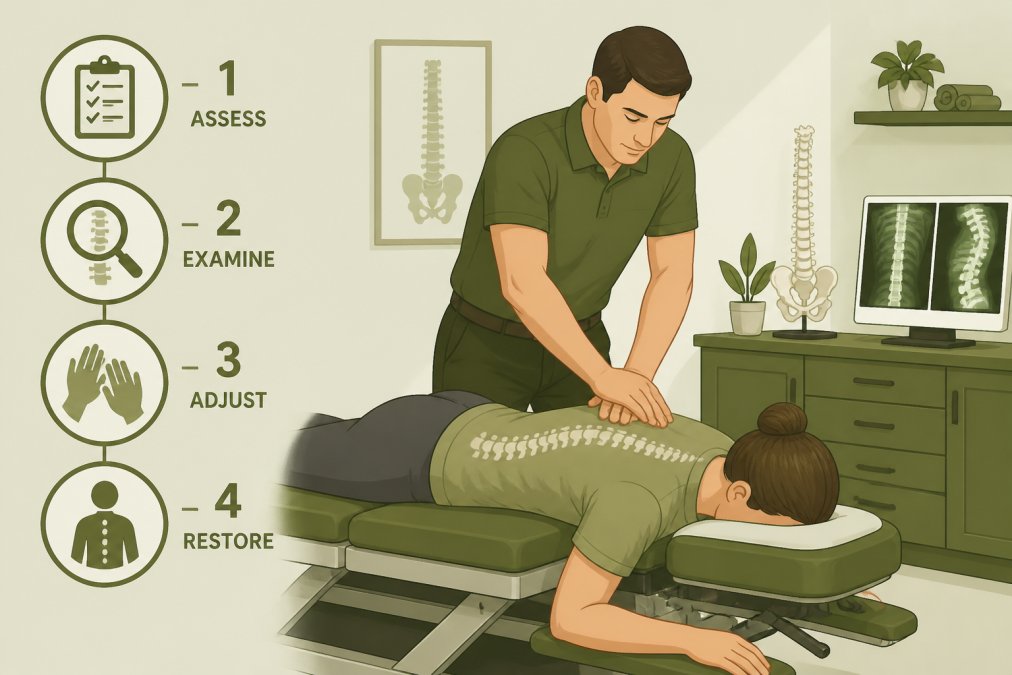
Once the evaluation is complete, your chiropractor explains their findings in plain language. They describe what injuries they’ve identified, the recommended treatment approach, what chiropractic care can and cannot do, the expected timeline for improvement, and how many visits treatment typically requires.
Moore Chiropractic offers a complimentary evaluation and consultation for new patients. This initial assessment determines whether chiropractic care is appropriate for your specific injuries and establishes a personalized treatment plan.
Personal Injury Settlement and Chiropractic Care Documentation
If the accident wasn’t your fault, you may pursue a personal injury claim against the at-fault driver’s insurance. Proper chiropractic documentation strengthens your claim and ensures fair compensation for treatment costs.
Your chiropractor maintains detailed records of every visit: examination findings, treatments provided, your response to treatment, and progress notes. Insurance companies and attorneys use these records to establish injury severity and treatment necessity.
Be consistent with your appointments. Gaps in treatment suggest injuries weren’t severe. Regular appointments create a continuous recovery record.
Communicate openly with your chiropractor about your symptoms and progress. Honest documentation is more credible than overstating or understating your condition.
Keep all receipts, invoices, and insurance paperwork related to your chiropractic care. These documents support your claim for reimbursement. Understand your insurance coverage before starting treatment to prevent unexpected bills.
If your case goes to litigation, your chiropractic records become legal evidence. Courts consider medical records from licensed chiropractors as credible documentation of injury and treatment. Detailed, consistent records strengthen your case significantly.
Avoid exaggerating symptoms or misrepresenting your condition in chiropractic records. Insurance companies and opposing counsel scrutinize medical records for inconsistencies. False statements undermine your credibility and can result in claim denial or legal consequences.
Post-Treatment Home Care and Long-Term Recovery
Chiropractic treatment addresses structural damage, but your home care determines whether improvements stick. Your chiropractor provides specific exercises and stretches targeting your injuries. These are essential to recovery, strengthening muscles supporting the spine, improving flexibility, and preventing re-injury.
Posture becomes critical after a car accident. Poor posture reverses alignment improvements your chiropractor achieves. Slouching compresses the spine, restricts blood flow, and reactivates muscle tension. Sit upright with shoulders relaxed and spine neutral.
Most people work desk jobs or spend hours in cars, compressing the spine and tightening muscles. After an accident, these positions become even more problematic. Take frequent breaks to stand, stretch, and move. Change positions every 30 minutes. Use ergonomic supports like lumbar pillows or neck rolls to maintain proper alignment.

Ice and heat therapy manage inflammation and muscle tension at home. Ice reduces acute inflammation in the first 48 to 72 hours. Heat relaxes tight muscles and improves blood flow after the acute phase.
Sleep quality affects healing significantly. Invest in a supportive pillow that maintains cervical spine alignment. Sleep on your back or side, never your stomach. A supportive mattress reduces pressure on injured areas.
Avoid activities that aggravate your injuries during recovery. High-impact exercise, heavy lifting, and repetitive motions can re-injure healing tissues. Your chiropractor advises which activities to avoid and when you can safely return to normal movement.
Manage stress intentionally through meditation, gentle yoga, or breathing exercises. Stay hydrated and maintain good nutrition. Your body requires adequate water, protein, and nutrients to repair damaged tissues. Anti-inflammatory foods like fatty fish, berries, leafy greens, and nuts support healing.
Recovery isn’t linear. Consistent chiropractic care combined with home care produces steady improvement over weeks or months.
Is Chiropractic Care Safe After a Collision?
Chiropractic care, when performed by a licensed professional, is a safe and effective treatment for post-accident injuries. Chiropractors receive extensive training in recognizing contraindications, situations where treatment isn’t appropriate. They perform thorough evaluations before treating accident injuries. If imaging reveals fractures, severe disc damage, or other conditions requiring medical intervention, a chiropractor refers you to a physician.
Gentle chiropractic techniques are particularly appropriate for post-accident injuries. Moore Chiropractic specializes in personalized, gentle care designed for patients recovering from trauma. Some people experience temporary soreness after treatment, similar to muscle soreness after exercise, which typically resolves within 24 hours.
Serious complications from chiropractic care are extremely rare. Chiropractors are trained to recognize red flags indicating serious conditions requiring emergency medical attention. The biggest risk isn’t chiropractic treatment itself, it’s delaying proper care. Untreated car accident injuries develop into chronic conditions, chronic pain, arthritis, and permanent disability.
Discuss any concerns with your chiropractor directly. They explain their treatment approach, answer questions about safety, and address anxiety about manipulation.
Car accident injuries demand prompt, professional attention. Chiropractic care addresses the musculoskeletal damage that standard emergency medicine often misses. Early evaluation, consistent treatment, and diligent home care create the best outcomes for accident recovery.
If you’ve been in a car accident in San Antonio, contact Moore Chiropractic for a complimentary evaluation. Our team specializes in post-collision injuries and provides personalized, gentle chiropractic care designed to restore your mobility and prevent long-term complications. Schedule your consultation today and begin your recovery with expert care focused on your long-term wellness.
Frequently Asked Questions
How soon after a car accident should I see a chiropractor?
Many injuries from car accidents don't show symptoms immediately. Whiplash, soft tissue damage, and spinal misalignment can develop over hours or days. Scheduling a chiropractic evaluation within 72 hours of your accident allows your chiropractor to perform a diagnostic evaluation and catch injuries early, which improves recovery outcomes and creates proper documentation for any personal injury claim.
Can a chiropractor detect injuries that an ER doctor might miss?
Chiropractors specialize in musculoskeletal injuries and use specific diagnostic techniques to identify joint mechanics problems, pinched nerves, and spinal misalignment that may not appear on standard emergency room imaging. An ER visit focuses on ruling out life-threatening conditions; a chiropractic evaluation focuses on identifying soft tissue damage and vertebral subluxation that require rehabilitation and long-term wellness planning.
What should I tell my chiropractor about my car accident?
Provide details about the collision: the direction of impact, vehicle speeds, where you were seated, and which body parts felt immediate pain. Describe any symptoms that developed after the accident, including stiffness, headaches, or neurological symptoms. This information helps your chiropractor understand the forces involved and develop an accurate recovery plan. Also mention any prior injuries or health conditions affecting the same areas.
Will chiropractic care increase my personal injury settlement?
Proper documentation of your chiropractic treatment is essential for personal injury claims. Your chiropractor's diagnostic evaluation, treatment records, and progress notes create a medical record that supports your injury documentation. However, settlement amounts depend on many factors including the severity of injury, liability, and insurance policy limits. Consult with a personal injury attorney about how treatment documentation strengthens your specific case.
Is chiropractic care safe after a car accident collision?
Yes, when performed by a qualified chiropractor after proper diagnostic evaluation. Chiropractors use non-invasive treatment methods like spinal adjustment, joint mobilization, and trigger point therapy specifically designed for post-collision recovery. Moore Chiropractic uses gentle techniques tailored to your injury severity. However, if you have severe neurological symptoms or suspect a fracture, seek emergency care first. Your chiropractor can work alongside your medical team for comprehensive care.
How long does recovery take after a car accident injury?
Recovery time varies based on injury severity and individual healing. Whiplash and soft tissue injuries typically require 4-12 weeks of chiropractic care, though some patients see significant improvement in 2-3 weeks. More complex cases involving spinal misalignment or chronic pain may require longer rehabilitation. Your chiropractor will develop a personalized recovery plan and adjust treatment as your mobility and pain relief improve.
This article was written using GrandRanker