
Table of Contents
- Runner’s Knee: Why It Happens and What It Feels Like
- How Chiropractic Adjustments for Knee Pain Work
- The Real Benefits of Chiropractic Care for Runners
- How Long Does Runner’s Knee Take to Heal?
- Exercises for Runner’s Knee Recovery That Support Care
- What Chiropractic Care Costs and Is It Worth the Investment?
- When Chiropractic Care Might Not Be the Right Choice
- Conclusion: Your Path to Pain-Free Running
- Frequently Asked Questions
Last Updated: September 9, 2026
Runner’s knee, clinically known as patellofemoral pain syndrome, is one of the most common overuse injuries among runners, affecting the joint where the kneecap meets the thigh bone (peer-reviewed research). For San Antonio runners asking whether chiropractic care runner’s knee treatment is worth it, the answer depends on understanding what causes the pain and how chiropractic care for runner’s knee addresses the root of the problem. At Moore Chiropractic, we treat the entire kinetic chain rather than just the symptom. This guide breaks down how chiropractic adjustments work for runner’s knee, what recovery looks like, and whether the investment makes sense for your situation.
The key insight most runners miss is that knee pain rarely starts at the knee. Mechanical stress from the hips, pelvis, and feet transmits directly through the joint during every stride, and muscle imbalances in the kinetic chain can pull the kneecap off its natural tracking path. Chiropractic care for runner’s knee focuses on restoring joint alignment and function throughout the lower body to relieve that pressure.
Runner’s Knee: Why It Happens and What It Feels Like
Runner’s knee produces a dull, aching pain around or behind the kneecap that often worsens when climbing stairs, squatting, or sitting with knees bent for extended periods. The discomfort typically builds gradually during a run rather than appearing suddenly, which leads many runners to push through the pain and worsen the underlying issue.
Patellofemoral pain syndrome is the medical term for this condition, and it develops when the kneecap fails to glide smoothly over the femur during joint movement. Common contributors include weak hip abductors, tight hamstrings or iliotibial bands, overpronation of the feet, and sudden increases in training volume. A 2024 review in the Journal of Orthopaedic & Sports Physical Therapy emphasizes that addressing these biomechanical factors matters more than simply resting the knee.
How Chiropractic Adjustments for Knee Pain Work
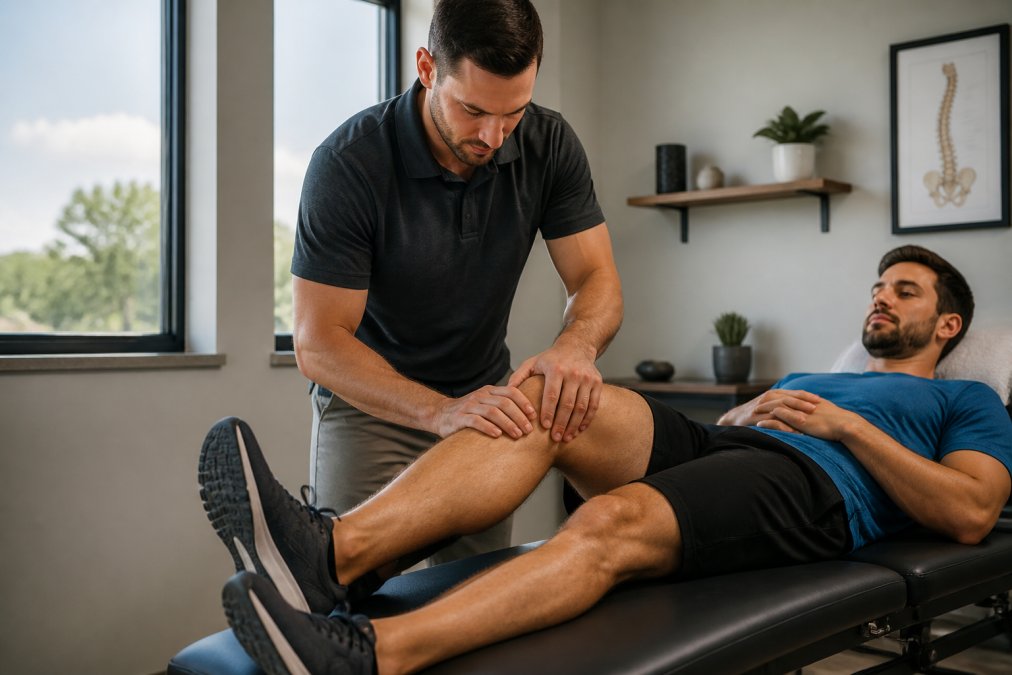
Chiropractic adjustments for knee pain focus on restoring proper joint mechanics throughout the lower body, not just manipulating the knee itself. A chiropractor assesses how your foot strikes the ground, how your hips move during a stride, and whether your pelvis sits level, then applies targeted spinal adjustment and extremity manipulation to correct misalignments.
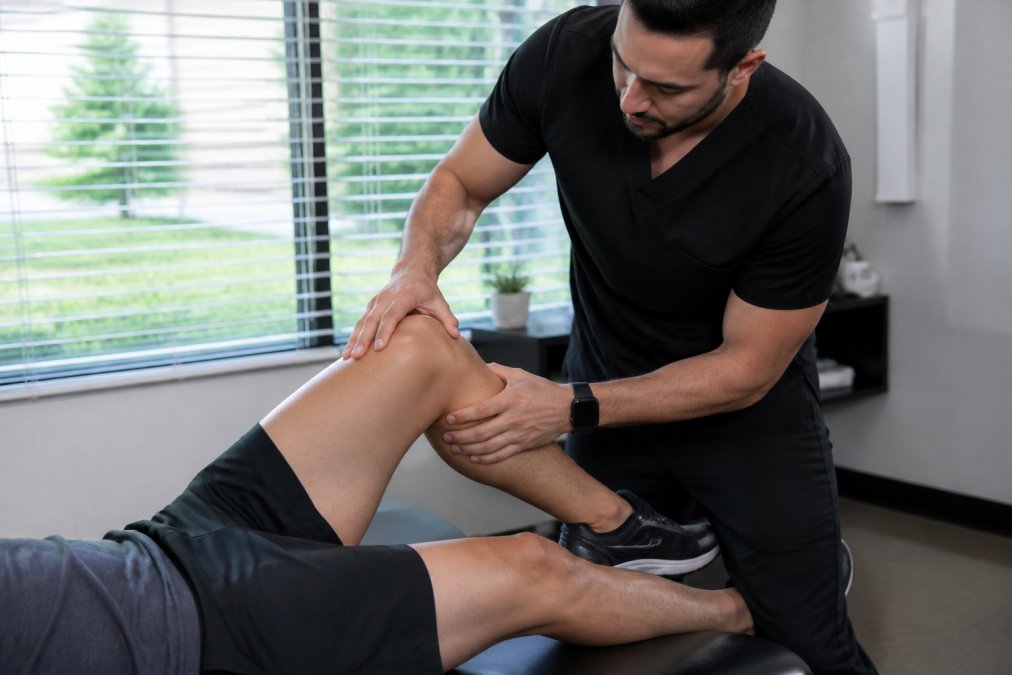
During a typical session, the practitioner may combine gentle adjustments with soft tissue manipulation to release tension in the muscles surrounding the knee. This non-surgical treatment approach addresses the mechanical stress that drives patellofemoral pain syndrome while supporting the body’s natural healing response.
The Real Benefits of Chiropractic Care for Runners
The primary advantage of chiropractic care runner’s knee patients experience lies in its focus on root causes rather than temporary symptom relief. Many runners find that combining adjustments with therapeutic exercise produces more lasting results than rest and anti-inflammatory medication alone.
Restoring Alignment in the Kinetic Chain
The kinetic chain connects your foot, ankle, knee, hip, and pelvis as a single functional unit during running. When one segment misaligns, every joint above and below compensates, often concentrating excessive force on the kneecap. Chiropractic adjustments help correct pelvic alignment and hip mobility issues that commonly drive knee pain, reducing the strain placed on the patellofemoral joint with each foot strike.
Reducing Inflammation and Improving Joint Movement
Joint dysfunction creates localized inflammation as tissues become irritated from abnormal friction and pressure. By restoring normal joint movement, chiropractic adjustments help reduce inflammation and improve range of motion in the affected knee. This allows runners to maintain functional movement during recovery rather than completely stopping activity, which often leads to muscle weakness and prolonged recovery time.
How Long Does Runner’s Knee Take to Heal?
Recovery time for runner’s knee varies based on the severity of the condition, how long symptoms have persisted, and whether biomechanical issues are properly addressed. Many runners notice meaningful improvement within several weeks of consistent chiropractic care combined with appropriate exercise modifications.
| Recovery Factor | Typical Impact | What It Means for You |
|---|---|---|
| Severity of tissue irritation | Mild cases respond faster | Early treatment shortens recovery |
| Consistency of adjustments | Regular visits support healing | Follow your care plan |
| Exercise compliance | Strength work accelerates progress | Do prescribed exercises at home |
| Training modifications | Reduced mileage prevents aggravation | Cross-train during recovery |
Most practitioners recommend a structured care plan that gradually decreases in frequency as symptoms improve. Runners who continue strength training and maintain proper gait mechanics tend to experience fewer recurrences than those who return to previous training patterns immediately.
Exercises for Runner’s Knee Recovery That Support Care
Chiropractic adjustments work best when paired with targeted exercises that strengthen the muscles supporting your knee. A common approach involves focusing on hip strength, since weak hip abductors allow the knee to collapse inward during running.
Clamshells, side-lying leg raises, and glute bridges strengthen the hip musculature that stabilizes your knee through the gait cycle. Calf stretches and hamstring releases address tightness that increases mechanical stress on the patellofemoral joint. A physical therapist or chiropractor can design a therapeutic exercise program tailored to your specific muscle imbalances and running mechanics.
Perform strengthening exercises consistently for at least six weeks before expecting significant changes in knee pain. Muscle adaptation requires progressive overload, and inconsistent training is a common reason runners plateau during recovery.
What Chiropractic Care Costs and Is It Worth the Investment?
Deciding if chiropractic care is worth it for runner’s knee requires looking past the per-visit fee and understanding the full financial picture: your insurance coverage, the expected number of visits, and the cost of doing nothing. Here is a breakdown of what runners in San Antonio can typically expect.
Typical Session Costs and Insurance Coverage
The out-of-pocket cost for a chiropractic visit depends on the clinic’s location, the practitioner’s experience, and whether you are paying cash or using insurance.
Most major health insurance plans, including many PPOs and HMOs offered by Texas-based employers, provide some level of chiropractic coverage. However, the specifics matter:
- Copays and Coinsurance: Your plan may require a copay per visit, or you may be responsible for a percentage of the allowed amount until you meet your deductible.
- Visit Limits: Many plans cap coverage at a certain number of visits per year. Since runner’s knee often requires a course of several visits over several weeks, it’s important to check your plan’s limits.
- In-Network vs. Out-of-Network: Staying in-network dramatically reduces your costs. Before your first appointment, call the number on your insurance card and ask specifically: “What is my chiropractic copay?” and “How many visits are covered per calendar year?”
For runners without insurance, many San Antonio clinics, including Moore Chiropractic, offer cash-pay options. Always ask about these options during your initial consultation.
The Cost of Doing Nothing
To determine if the investment is worthwhile, compare it against the financial and personal cost of untreated runner’s knee. A 2024 study in the Journal of Orthopaedic & Sports Physical Therapy notes that patellofemoral pain can persist for years if biomechanical causes are not addressed. The real-world consequences for a runner include:
- Lost Race Fees: A single half-marathon entry in Texas costs $80 to $150. If you defer or miss a race due to injury, that money is gone.
- Extended Time Off Work: For runners whose jobs require standing or walking, chronic knee pain can lead to reduced productivity or missed days. At an average hourly wage, even a few lost days can exceed the cost of a full course of chiropractic care.
- Secondary Injuries: Compensatory gait patterns from knee pain frequently lead to hip, lower back, or opposite-side knee problems. Treating a second injury often doubles your total healthcare expenses.
A Realistic Recovery Timeline and Investment
A typical course of care for runner’s knee may involve:
| Phase | Visit Frequency | Typical Duration | Goal |
|---|---|---|---|
| Intensive Care | 2-3 visits per week | 2-4 weeks | Reduce pain, restore joint mobility, and begin corrective exercises |
| Rehabilitation | 1-2 visits per week | 4-6 weeks | Strengthen hip and core musculature, correct gait imbalances |
| Maintenance | 1 visit every 2-4 weeks | Ongoing | Prevent recurrence and monitor biomechanics |
A typical course of care involves several sessions. When you compare that to the cost of a single MRI, a surgical consultation, or months of physical therapy, chiropractic care can be a cost-effective first-line treatment for biomechanical runner’s knee.
Before your first visit, call your insurance provider and your chosen clinic to get an estimate of your total out-of-pocket cost. This removes financial uncertainty and lets you focus on recovery.
Ultimately, the “worth it” calculation for San Antonio runners comes down to this: chiropractic care offers a non-invasive, drug-free path to address the root cause of your knee pain, with a total cost that can be less than the combined expense of lost race fees, missed work, and secondary injuries from untreated biomechanical dysfunction.
When Chiropractic Care Might Not Be the Right Choice
Chiropractic care is not appropriate for every case of knee pain, and recognizing contraindications protects your health. If you experience significant swelling, joint instability, locking, or an inability to bear weight, seek evaluation from a medical professional before pursuing chiropractic treatment.
Conditions such as fractures, severe ligament tears, or advanced joint deterioration require different interventions. Chiropractors are trained to recognize red flags and refer patients to appropriate specialists when necessary. A thorough examination during your first visit should include screening for these conditions before any adjustments are performed.
Do not attempt to self-diagnose the cause of your knee pain. Sharp pain, visible deformity, or swelling following an acute injury warrants immediate medical evaluation rather than chiropractic adjustment.
Conclusion: Your Path to Pain-Free Running
Deciding whether chiropractic care is worth it for runner’s knee comes down to addressing the biomechanical causes of your pain rather than masking symptoms. For runners in San Antonio, the answer is shaped by the unique demands of our local running environment.
What San Antonio Runners Should Consider
San Antonio’s running landscape presents specific challenges that can contribute to or exacerbate patellofemoral pain syndrome:
- Trail Conditions: The hard-packed limestone and uneven terrain along the Salado Creek Greenway and the hilly sections of McAllister Park force your knees to absorb constant micro-impact and adapt to changing foot strike angles. Runners who log most of their miles on these trails need stronger hip stabilizers than those who stick to flat pavement.
- Heat and Hydration: With average summer highs exceeding 95°F, San Antonio runners often train in the early morning or late evening. Heat stress leads to fatigue, and fatigued runners develop sloppy mechanics, dropped hips, overstriding, and inward knee collapse, that directly load the patellofemoral joint.
- Concrete vs. Asphalt: Much of the city’s sidewalk and road running happens on concrete, which is significantly harder than asphalt. The increased ground reaction forces transmit more shock up the kinetic chain, making alignment issues at the hip and foot more consequential.
A chiropractor who understands these local factors can tailor your treatment and exercise prescription accordingly. For example, if you train on the rocky sections of the Friedrich Wilderness Area, your care plan might emphasize ankle mobility and proprioceptive work in addition to hip strengthening.
Your Next Step in San Antonio
At Moore Chiropractic, we offer personalized care plans that address the full kinetic chain contributing to your knee pain, with specific attention to the demands of San Antonio running. Our gentle chiropractic techniques and expertise in both traditional and advanced methods help restore mobility and support long-term health maintenance.
New patients receive a complimentary evaluation and consultation to determine whether chiropractic care fits their situation. During this visit, we will discuss your training routes, recent mileage changes, and any upcoming races on the San Antonio calendar, from the Rock ‘n’ Roll Marathon to local 5Ks at Brackenridge Park, so your recovery plan aligns with your goals.
American Chiropractic Association patient resources provide additional guidance on what to expect from treatment. For San Antonio runners ready to move past knee pain and get back to the trails, the path forward starts with understanding your body’s mechanics and making a plan that fits both your knees and your running schedule.
Frequently Asked Questions
Can a chiropractor fix runner’s knee?
Chiropractors don’t ‘fix’ runner’s knee in one visit, but they can address the underlying biomechanical issues that cause it. By realigning the knee joint, hip, and pelvis, chiropractic adjustments reduce the abnormal stress on your patella. This approach, combined with soft tissue work and corrective exercises, helps your body heal naturally. Most runners see meaningful improvement within a few weeks of consistent care, though results depend on how long you’ve had the injury and what’s driving it.
Is chiropractic care for runner’s knee covered by insurance?
Many health insurance plans in the United States cover chiropractic care, but the extent of coverage varies widely. Some plans include a set number of visits per year, while others require a referral or have specific deductibles. It’s best to call your insurance provider directly to confirm your benefits. Moore Chiropractic in San Antonio also offers a complimentary evaluation and consultation, which is a good opportunity to ask about treatment plans and payment options before committing.
How soon after a runner’s knee injury should I see a chiropractor?
See a chiropractor as soon as you notice persistent knee pain that doesn’t improve with a few days of rest. Early intervention can prevent the injury from becoming chronic. The initial evaluation will identify whether the problem stems from the knee itself or from issues higher up the kinetic chain, like hip mobility or pelvic alignment. Starting care early often means a shorter recovery time and a faster return to your training schedule.
Should runners get chiropractic adjustments even without pain?
Yes, many runners use chiropractic care as a preventative strategy, not just for injury recovery. Regular adjustments can help maintain proper joint alignment and muscle balance, which reduces the mechanical stress that leads to overuse injuries like runner’s knee. Think of it as a tune-up for your musculoskeletal system. By catching minor imbalances before they become painful, you can stay consistent with your mileage and avoid unplanned training breaks.
Knee pain from running does not have to end your training season. The team at Moore Chiropractic in San Antonio specializes in helping athletes recover from sports-related musculoskeletal injuries through gentle, personalized care that restores peak physical performance. Contact us to schedule your complimentary evaluation and discover how chiropractic care for runner’s knee can get you back on the trail.