

Table of Contents
- Understanding Desk Job Neck Pain and Tech Neck
- How Chiropractic Treatment Works for Neck Pain
- Setting Up an Ergonomic Desk Setup for Neck Pain
- Stretches for Office Workers Neck Pain: Daily Routines
- How Long Does Chiropractic Treatment Take for Neck Pain
- What to Expect During Your First Chiropractic Visit
- Long-Term Maintenance and Prevention Strategies
- Conclusion
Last Updated: August 13, 2026
Understanding Desk Job Neck Pain and Tech Neck
Desk job neck pain stems from prolonged sitting combined with poor posture, creating sustained tension in the cervical spine and upper trapezius muscles. When you spend eight hours hunched over a keyboard, your neck bears the weight of your head, which averages 10-12 pounds, at an angle that multiplies the load on your cervical spine. Every inch your head moves forward from neutral adds roughly 10 pounds of pressure; at three inches forward (a common desk position), your cervical spine manages 30 pounds of extra stress. Over weeks and months, this creates inflammation, muscle stiffness, and cervicogenic headaches.
Unlike acute neck injuries, desk job neck pain develops gradually. By the time you notice you can’t turn your head fully or feel sharp pain shooting down your shoulder blade, neuromuscular tension has built up significantly and vertebral misalignment has progressed enough to affect joint function and nerve pathways. Chiropractic therapy addresses the underlying musculoskeletal issues, spinal misalignment, tight muscles, and the biomechanics that created the problem, rather than treating only symptoms.
How Chiropractic Treatment Works for Neck Pain
Chiropractic treatment for neck pain focuses on restoring proper spinal alignment and joint function. A spinal adjustment applies precise force to vertebrae that have shifted out of alignment, restoring normal joint function, reducing nerve compression, and allowing surrounding muscles to relax. For desk workers, this breaks the pattern of forward head posture that has locked joints in a compromised position.
Beyond adjustments, chiropractic care includes soft tissue massage and manual therapy targeting the upper trapezius and other muscles tightened from overuse. At Moore Chiropractic in San Antonio, gentle chiropractic techniques use controlled force and progressive treatment to restore spinal health without causing additional trauma.
Treatment plans typically include education about the behaviors and postures that created the problem, with specific guidance to prevent recurrence. This preventative wellness approach separates chiropractic from purely symptomatic treatments.
Setting Up an Ergonomic Desk Setup for Neck Pain
An ergonomic desk setup is essential for resolving desk job neck pain and preventing recurrence by keeping your cervical spine in neutral alignment throughout the workday.

Position your monitor so the top sits at or slightly below eye level when sitting upright. A monitor that’s too low forces you to lean forward; one that’s too high causes you to crane backward. Raising your monitor 3-6 inches often solves half the problem immediately.
Your keyboard should sit at a height where your elbows bend at roughly 90 degrees and your wrists stay neutral. A keyboard tray helps if your desk height is fixed. Your mouse should be close to your keyboard to prevent rotational neck strain.
Chair height and lumbar support are foundational. Your feet should rest flat on the floor with knees at 90 degrees. A chair with adjustable lumbar support maintains your lower back’s natural curve, reducing compensatory stress on your cervical spine.
Take breaks every 30-45 minutes to stand, walk, and do gentle neck stretches. This interrupts static posture and prevents inflammation from developing.
Stretches for Office Workers Neck Pain: Daily Routines
Daily stretching counteracts desk job neck pain by addressing muscle stiffness and neuromuscular tension. These stretches should be done throughout the day, not just once in the morning.
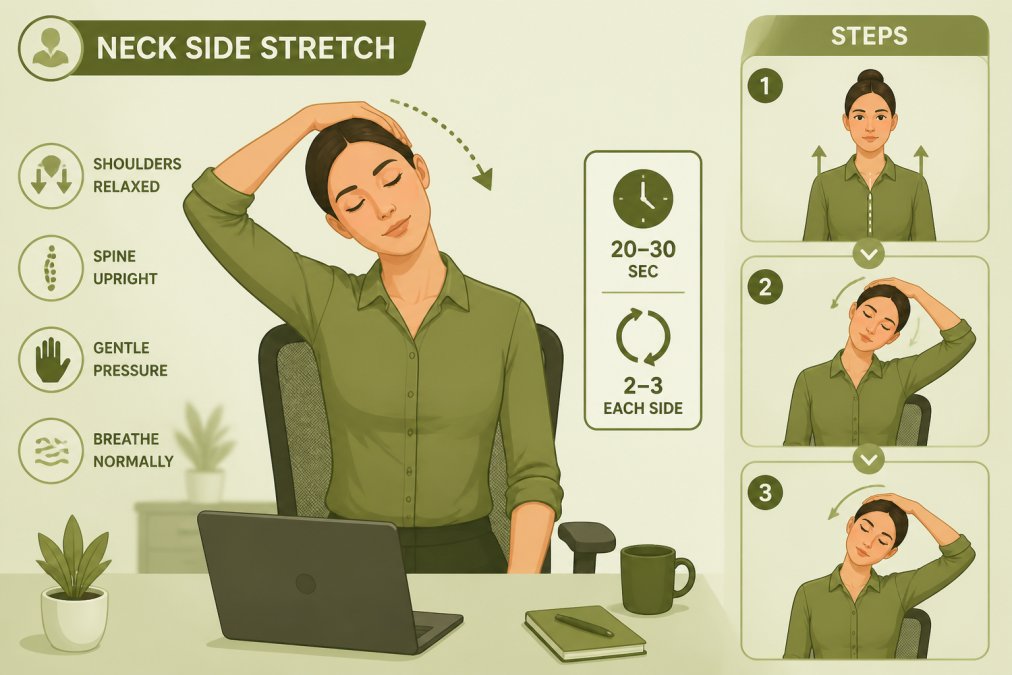
Neck Flexion Stretch: Sit upright and slowly lower your chin toward your chest, feeling a gentle stretch along the back of your neck and upper trapezius. Hold for 20-30 seconds, repeat three times several times per day.
Lateral Neck Stretch: Tilt your head slowly to the right, bringing your right ear toward your right shoulder with shoulders down. Hold for 20-30 seconds, then repeat on the left side.
Neck Rotation: Turn your head slowly to the right, looking over your shoulder. Hold for 15-20 seconds, then repeat on the left.
Shoulder Rolls: Roll your shoulders backward slowly, five to ten times, to engage muscles supporting your cervical spine.
Thoracic Mobility Work: Place your hands behind your head and gently arch your upper back backward, opening your chest. Hold for 10-15 seconds and repeat five times.
Perform these stretches every two to three hours during your workday. Many office workers see noticeable improvement in neck stiffness and range of motion within one to two weeks of consistent stretching.
How Long Does Chiropractic Treatment Take for Neck Pain
The timeline for chiropractic treatment varies based on how long the condition has existed and severity of spinal misalignment. Acute cases often show improvement within two to four weeks; chronic cases typically require eight to twelve weeks for substantial improvement.
Most chiropractors recommend an initial intensive phase of two to three visits per week for four to six weeks, allowing consistent adjustments and monitoring of progress. After this phase, many patients transition to maintenance visits once or twice per month.
Improvement typically follows this pattern: temporary relief in the first week or two, lasting relief between visits by week three to four, and significantly decreased baseline pain by week six to eight. Factors extending treatment timelines include poor ergonomic habits continued during treatment, high stress levels, and underlying conditions like arthritis.
Long-term maintenance prevents recurrence. Regular visits, typically once or twice per month, keep your cervical spine realigned and your muscles recovered, a far more cost-effective approach than waiting until pain becomes severe again.
What to Expect During Your First Chiropractic Visit
Your first visit follows a predictable structure designed to assess your condition and establish a baseline for treatment.
The appointment begins with a detailed consultation about your medical history, pain onset, what makes it worse or better, and your daily habits. Be specific about your desk setup and computer hours.
Next comes a physical examination where the chiropractor assesses your range of motion, tests muscle strength, and palpates your cervical spine to identify misalignment or muscle tension. Many chiropractors order X-rays to visualize your cervical spine and confirm the extent of misalignment.
The chiropractor will explain their findings in plain language, describing what they found, why it’s causing your pain, and what the treatment plan involves. The first adjustment may happen during this visit or at a follow-up appointment. Many patients feel immediate relief, though some experience mild soreness within 24-48 hours as muscles adjust to the new alignment.
At Moore Chiropractic, the complimentary evaluation and consultation allows you to meet the chiropractor, ask questions, and understand the treatment approach before committing to care.
Long-Term Maintenance and Prevention Strategies
Resolving your current desk job neck pain requires ongoing attention to posture, ergonomics, and spinal health. Maintenance visits once or twice per month keep your spine in proper alignment and catch minor misalignments before they develop into pain.
Your daily habits matter most for long-term prevention. The ergonomic desk setup must remain in place; reverting to poor posture will gradually shift your cervical spine back into misalignment. Stretching should become a permanent routine, done three to five times per week to prevent stiffness from developing.
Stress management affects spinal health significantly. High stress causes muscle tension, especially in the neck and shoulders. Regular exercise, adequate sleep, and stress reduction techniques help keep your muscles relaxed. Many office workers find that yoga or Pilates provide additional support for spinal health.
Awareness of your posture throughout the day is the final piece. Notice when you’re leaning forward, slouching, or tensing your neck. Small corrections throughout the day prevent cumulative damage. Many office workers set hourly phone reminders to check their posture.
Desk job neck pain doesn’t have to be permanent. The combination of chiropractic adjustment, ergonomic improvements, and daily maintenance creates lasting relief and prevents recurrence. Moore Chiropractic in San Antonio provides personalized care plans with gentle chiropractic techniques and expert guidance on long-term prevention. Schedule your complimentary evaluation to discover how chiropractic care can restore your mobility and eliminate the pain limiting your workday. Contact Moore Chiropractic today to begin your journey toward optimal spinal health and sustained relief.
Frequently Asked Questions
How can chiropractic care help with desk job neck pain?
Chiropractic treatment addresses the root causes of desk job neck pain by correcting cervical spine alignment and reducing muscle stiffness. Through spinal adjustments, soft tissue massage, and personalized care plans, chiropractors restore range of motion and reduce inflammation. Many office workers experience relief from tech neck symptoms and improved posture within a few weeks of consistent treatment.
What ergonomic desk setup for neck pain should I use?
Position your monitor at eye level, about an arm's length away. Keep your elbows at 90 degrees and feet flat on the floor. Your chair should support your lower back curve. Take breaks every 30 minutes to stand and stretch. These adjustments reduce postural strain and neuromuscular tension that accumulates during prolonged sitting, complementing chiropractic care.
How long does chiropractic treatment take for neck pain relief?
Treatment timelines vary based on the severity of your condition and how long the pain has persisted. Acute cases may show improvement in 2-4 weeks, while chronic desk job neck pain often requires 6-12 weeks of consistent care. Your chiropractor will develop a personalized plan during your complimentary evaluation and explain expected outcomes and visit frequency.
Is it safe for a chiropractor to adjust your neck?
Yes, when performed by a qualified chiropractor, neck adjustments are a safe, non-invasive treatment for cervicogenic headaches and postural strain. Chiropractors use gentle techniques tailored to your condition. During your first visit, your chiropractor will assess your spinal health and discuss any concerns before beginning treatment, ensuring your comfort and safety throughout care.
This article was written using GrandRanker