Table of Contents
- What Is Sciatica and How Chiropractic Care Addresses It
- How Chiropractic Treatment Works for Sciatic Nerve Pain
- What to Expect During Your First Chiropractic Visit
- How Long Does Sciatica Last With Chiropractic Care
- Chiropractor vs Physical Therapy for Sciatica Relief
- Sciatica Nerve Pain Relief Exercises You Can Do at Home
- Is Chiropractic Care Safe for Sciatica? What You Should Know
- Conclusion
Last Updated: August 30, 2026
What Is Sciatica and How Chiropractic Care Addresses It
Sciatica occurs when the sciatic nerve becomes compressed or irritated, typically in the lower back or buttocks, causing pain that radiates down one leg. The sciatic nerve is the longest nerve in your body, running from your lower spine through your buttocks and down each leg. When vertebrae shift out of alignment, herniated discs bulge, or surrounding muscles tighten, they compress this nerve and trigger pain, numbness, tingling, or weakness. (Source: the American Chiropractic Association’s clinical guidelines)
Chiropractic care treats sciatica by restoring proper spinal alignment and reducing inflammation around the nerve pathway. Unlike approaches that rely on painkillers or injections, chiropractic adjustments address the mechanical problem causing your symptoms, providing lasting relief rather than temporary pain masking. According to the American Chiropractic Association’s clinical guidelines, spinal adjustment and manual therapy are recognized approaches for managing radiculopathy and nerve-related pain conditions.
A common misconception is that sciatica always requires surgery. Most cases respond well to conservative care like chiropractic adjustment, soft tissue therapy, and targeted exercises, especially when treatment starts early.
How Chiropractic Treatment Works for Sciatic Nerve Pain
Chiropractic treatment for sciatic nerve pain combines several techniques designed to decompress the nerve, reduce inflammation, and restore normal spinal function. Your treatment plan depends on what’s causing your compression: a misaligned vertebra, a herniated disc, tight muscles, or a combination of factors.
The first step is a thorough assessment. Your chiropractor performs orthopedic and neurological tests, reviews your medical history, and often uses diagnostic imaging to pinpoint exactly where the nerve is being compressed. At Moore Chiropractic, this diagnostic information creates a personalized plan tailored to your specific condition.
Spinal Adjustment and Nerve Decompression
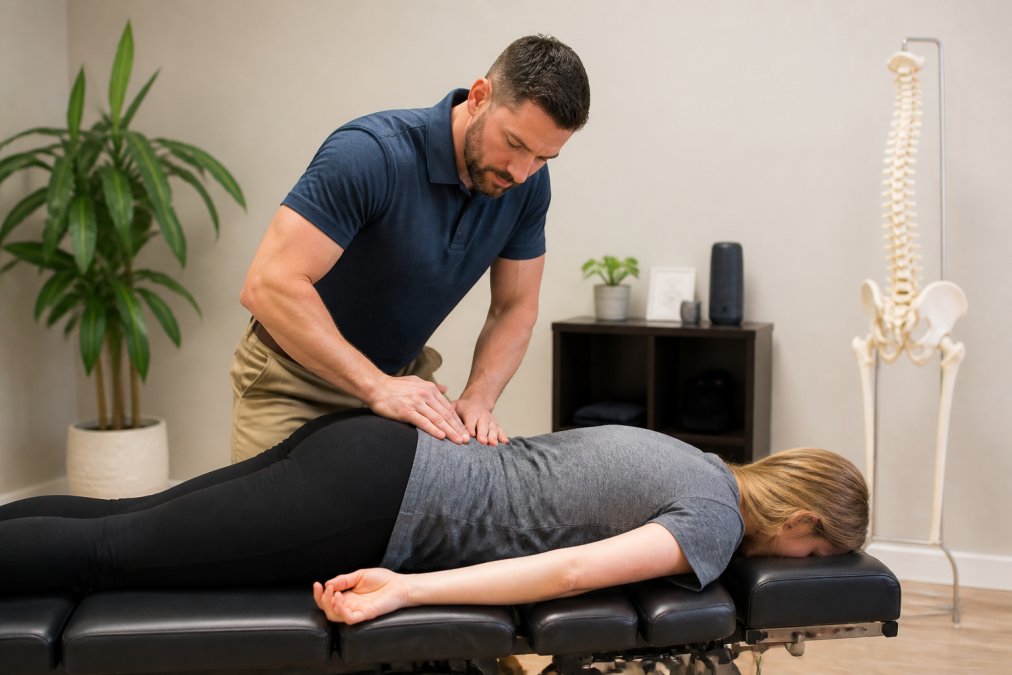
Spinal adjustment is the core of chiropractic care for sciatica. When a vertebra is misaligned, it narrows the space where the sciatic nerve exits the spine. A chiropractic adjustment moves that vertebra back into proper position, immediately reducing pressure on the nerve.
Your chiropractor uses specific hand techniques or specialized instruments to apply force in the exact direction needed to restore alignment. You might hear a popping sound, that’s simply gas bubbles releasing from the joints as they move back into place. Many patients feel relief within the first few visits as nerve compression decreases and inflammation begins to subside. When your vertebrae stay in the correct position, the sciatic nerve stays decompressed, providing longer-lasting relief than temporary solutions.
Research from the Journal of the Canadian Chiropractic Association indicates that spinal manipulation combined with other therapies shows measurable improvements in radiculopathy symptoms and patient function.
Soft Tissue Therapy and Inflammation Reduction
While spinal adjustment addresses vertebral misalignment, soft tissue therapy tackles the muscles and connective tissues surrounding the sciatic nerve. When a nerve is compressed, nearby muscles often tighten in response, a protective mechanism that actually makes the problem worse by increasing pressure on the nerve.
Soft tissue techniques include massage, trigger point therapy, and myofascial release. These methods break up muscle tension, improve blood flow to the affected area, and reduce inflammation. By reducing inflammation and releasing muscle tightness, soft tissue therapy creates space for the nerve and allows it to heal. Many patients find that combining adjustment with soft tissue work produces faster, more complete relief than either approach alone.
The most effective sciatica treatment combines spinal adjustment to restore alignment with soft tissue therapy to reduce inflammation and muscle tension. This dual approach addresses both the structural and muscular causes of nerve compression.
What to Expect During Your First Chiropractic Visit
Your first visit to a chiropractic office typically lasts 45 minutes to an hour. The chiropractor begins by asking detailed questions about your pain: when it started, what makes it worse or better, whether you’ve had any injuries, and how it’s affecting your daily life. Next comes the physical examination, where your chiropractor checks your posture, range of motion, and spinal alignment. They perform orthopedic tests to identify which nerve is involved and where compression is occurring. If needed, X-rays or other imaging may be ordered.

Once the chiropractor understands your condition, they explain what they found and how they plan to treat it. The chiropractor describes the adjustment, what you’ll feel, and what results to expect. The actual treatment during the first visit may include a spinal adjustment, soft tissue work, or both, depending on your condition. Some patients feel immediate relief; others notice improvement over the next few days as inflammation decreases. Your chiropractor discusses how many visits you’ll likely need, what to do at home, and when to return. A good chiropractor also discusses prevention, including ergonomic adjustments, specific exercises, or lifestyle changes to avoid re-injury.
How Long Does Sciatica Last With Chiropractic Care
The timeline for sciatica relief depends on what’s causing your compression, how long you’ve had it, and how well you follow your treatment plan. Acute sciatica often responds quickly, sometimes within 2 to 4 weeks of consistent chiropractic care. Chronic sciatica typically requires longer treatment, often 6 to 12 weeks or more.
The first few visits usually bring noticeable improvement as spinal alignment improves and inflammation decreases. However, complete healing takes longer as your body stabilizes the corrected alignment and nerve irritation fully resolves. Many patients experience the most dramatic improvement in the first 4 weeks, then continue to improve more gradually.
Frequency matters. Regular visits during the acute phase (typically 2 to 3 times per week) produce better results than sporadic appointments. As you improve, visits can decrease in frequency. Your commitment outside the office also affects recovery time, doing prescribed stretches and exercises, maintaining good posture, and avoiding activities that aggravate your pain accelerate healing.
Stopping treatment too soon is a common reason sciatica returns. Even after pain disappears, the underlying misalignment may not be fully corrected. Premature discharge can lead to re-injury within weeks or months.
Chiropractor vs Physical Therapy for Sciatica Relief
Both chiropractic care and physical therapy can help sciatica, but they approach the problem differently. Chiropractic care focuses on spinal alignment and nerve decompression through adjustment. Physical therapy focuses on strengthening muscles, improving flexibility, and restoring function through exercises and stretches.
Chiropractic care is better at providing fast relief from acute pain because it immediately reduces nerve compression. Physical therapy is better at preventing recurrence because it builds the muscular support system that keeps your spine aligned long-term. Many patients benefit from both: starting with chiropractic care to reduce acute pain, then transitioning to physical therapy to build strength and prevent the problem from returning.
| Approach | Best For | Timeline | Focus |
|---|---|---|---|
| Chiropractic | Acute pain, nerve compression | 2-4 weeks for noticeable relief | Spinal alignment, nerve decompression |
| Physical Therapy | Long-term stability, prevention | 6-12 weeks for strength gains | Muscle strength, flexibility, function |
| Combined | Complete recovery, low recurrence | 8-16 weeks | Both alignment and stability |
Sciatica Nerve Pain Relief Exercises You Can Do at Home
Home exercises are essential for sciatica recovery. They reduce muscle tension, improve flexibility, and strengthen the muscles that support your spine. Start slowly and stop immediately if any exercise increases your pain. Consistency matters more than intensity, doing gentle exercises daily is more effective than occasional intense workouts.
Gentle Stretches for Daily Relief
The piriformis stretch targets the muscle that often compresses the sciatic nerve. Lie on your back with both knees bent. Cross one ankle over the opposite knee, then gently pull the bottom leg toward your chest. Hold for 20-30 seconds and repeat 3 times on each side.
The hamstring stretch releases tension in the back of your thigh. Lie on your back and loop a towel or strap around one foot. Gently pull your leg toward your chest, keeping it relatively straight. Hold for 20-30 seconds and repeat 3 times on each side.
The spinal twist gently mobilizes your lower back. Lie on your back with both knees bent and feet flat. Gently lower both knees to one side while keeping your shoulders flat on the ground. Hold for 20-30 seconds and repeat on both sides.

Do these stretches daily, ideally in the morning and evening. Many patients find that consistent stretching reduces pain significantly within the first week.
Strengthening Exercises for Long-Term Support
The glute bridge strengthens the muscles that support your lower back. Lie on your back with knees bent and feet flat. Push through your heels to lift your hips toward the ceiling, squeezing your glutes at the top. Hold for 2-3 seconds and lower slowly. Start with 2 sets of 10 repetitions and gradually increase.
The bird dog exercise improves core stability. Start on your hands and knees. Extend your right arm forward and left leg backward, creating a straight line from fingertips to heel. Hold for 2-3 seconds and return to start. Alternate sides. Do 2 sets of 10 repetitions per side.
The dead bug exercise strengthens your core without stressing your spine. Lie on your back with arms extended toward the ceiling and knees bent at 90 degrees. Slowly lower your right arm overhead while straightening your left leg, hovering just above the floor. Return to start and alternate sides. Do 2 sets of 10 repetitions per side.
Start strengthening exercises only after acute pain has improved. Your chiropractor will tell you when it’s safe to begin.
Is Chiropractic Care Safe for Sciatica? What You Should Know
Chiropractic care is generally safe when performed by a licensed, qualified chiropractor. The most common side effects are mild, temporary soreness or stiffness similar to what you might feel after exercise, typically resolving within 24 to 48 hours. Serious complications from chiropractic adjustment are extremely uncommon. According to research published in Spine Journal, the risk of serious adverse events from spinal manipulation is very low, particularly when performed by licensed practitioners using proper technique and patient screening.
Your safety depends on proper patient assessment. A qualified chiropractor screens for contraindications, conditions where adjustment isn’t appropriate, such as severe osteoporosis, certain types of cancer, spinal infections, or unstable fractures. Tell your chiropractor about any medications you take, previous surgeries, chronic conditions, and recent injuries.
Pregnancy is a special case. Many women seek chiropractic care during pregnancy because hormonal changes and weight shifts strain the lower back. Prenatal chiropractic care, performed by a chiropractor experienced with pregnant patients, is safe and can reduce pain. Children can also benefit from chiropractic care for sports injuries and postural problems, using gentler techniques appropriate for developing spines.
The combination of chiropractic care with other treatments is safe when coordinated properly. Inform all your healthcare providers about your chiropractic treatment to ensure coordinated care.
Do not delay seeking medical attention if you develop cauda equina syndrome symptoms: severe pain, loss of bladder or bowel control, numbness in the saddle area, or progressive weakness in both legs. These require emergency medical evaluation, not chiropractic care.
A good chiropractor explains your condition clearly, sets realistic expectations for recovery, and adjusts your treatment plan as you improve. If you’re not seeing progress after 4 weeks of consistent care, a good chiropractor will discuss alternative approaches or refer you to another provider.
Moore Chiropractic provides a complimentary evaluation and consultation for new patients in San Antonio. This initial visit lets you discuss your sciatica with a chiropractor, understand your condition, and learn what treatment would involve, with no pressure or obligation.
Sciatica doesn’t have to be permanent or require invasive treatment. Chiropractic for sciatica addresses the mechanical cause of your nerve compression through spinal adjustment, soft tissue therapy, and targeted exercises. Many patients experience significant relief within weeks when they work with a qualified chiropractor who takes time to understand their specific condition. If you’re in San Antonio and dealing with sciatic nerve pain, Moore Chiropractic offers personalized care designed to restore your mobility and get you back to the activities you enjoy. Contact us for your complimentary evaluation and discover how gentle, effective chiropractic care can provide lasting relief.
Frequently Asked Questions
How long does it take chiropractic care to improve sciatica?
Recovery timelines vary based on the severity of nerve compression, underlying causes, and your body's response to treatment. Some patients experience relief within a few weeks of regular adjustments, while others with chronic sciatica may require several months of consistent chiropractic care combined with at-home exercises. Your chiropractor will develop a personalized treatment plan and monitor your progress through follow-up assessments to adjust the approach as needed.
What's the difference between chiropractic care and physical therapy for sciatica?
Chiropractic care focuses on spinal alignment and nerve decompression through manual adjustments and soft tissue therapy to relieve pressure on the sciatic nerve. Physical therapy emphasizes strengthening muscles and improving flexibility through guided exercises and stretches. Many patients benefit from combining both approaches: chiropractic adjustments reduce acute pain and inflammation while physical therapy builds long-term stability and prevents recurrence. Your healthcare provider can recommend which approach suits your specific condition.
Is chiropractic treatment safe if I have a herniated disc causing my sciatica?
Chiropractic care can be safe and effective for sciatica caused by a herniated disc, but it depends on the severity and location of the disc herniation. Your chiropractor will perform diagnostic imaging and a thorough assessment before treatment. Gentle techniques like spinal decompression and soft tissue therapy are often used instead of aggressive adjustments. Always disclose your full medical history and any previous imaging results so your chiropractor can tailor treatment safely and avoid contraindications.
Can I do sciatica relief exercises at home while receiving chiropractic treatment?
Yes, at-home exercises complement chiropractic care and accelerate recovery. Gentle stretches like figure-four stretches, piriformis releases, and hamstring stretches help reduce nerve pressure between appointments. Strengthening exercises for your core and glutes provide long-term support to prevent sciatica from returning. Your chiropractor will recommend specific exercises suited to your condition and show you proper form to avoid injury. Consistency with these exercises often leads to faster pain relief and better outcomes.
This article was written using GrandRanker