
Last Updated: October 23, 2026
Quick Summary
Daily exercises to prevent chronic back pain work best as a 15-minute routine done five to seven days a week: five minutes of gentle mobility, five minutes of stretching, and five minutes of core strengthening. Consistency beats intensity, so add time or reps only when the current dose feels easy and pain-free for two sessions.
- Start with pelvic tilts, cat-cow, and walking in place for 8-10 slow reps each.
- Hold knee-to-chest, hamstring, and spinal twist stretches for 20-30 seconds per side.
- Begin planks at 15-20 seconds and add 5 seconds per week only when controlled.
- Stop if pain climbs more than 2 points on a 0-to-10 scale or lasts past the next morning.
- Get up and walk every 30 to 45 minutes when sitting to reduce stiffness.
Table of Contents
- Why a Daily Routine Beats Occasional Workouts for Chronic Back Pain
- Back Exercises in 15 Minutes a Day: The Daily Template
- Lower Back Stretches for Pain Relief: Pelvic Tilts, Knee-to-Chest, and Cat-Cow
- Core Strengthening Exercises for Back Pain: Planks, Partial Crunches, and Wall Sits
- How to Exercise Safely with Back Pain: Stop Criteria and Modifications
- Your Week-by-Week Progression Plan
- Making It Stick: Posture, Ergonomics, and Daily Movement in San Antonio
- Conclusion
- Frequently Asked Questions
Why a Daily Routine Beats Occasional Workouts for Chronic Back Pain
Daily exercises to prevent chronic back pain work because they retrain muscles and joints a little at a time, not all at once. Here is the simple reason. Your spine is built for frequent, low-level motion.
Below, we’ll show you a 15-minute daily template you can do at home. It covers gentle mobility, lower back stretches for pain relief, and core strengthening exercises for back pain.
Consistency beats intensity. Fifteen minutes of gentle movement every day does more for chronic back pain than one long workout per week.
Back Exercises in 15 Minutes a Day: The Daily Template
The best back exercises in 15 minutes a day follow a simple order: warm up with gentle movement, stretch what is tight, then strengthen what is weak.

Here is how the 15 minutes break down, with starting doses most beginners can tolerate:
| Minutes | Focus | Sample Moves | Starting Dose |
|---|---|---|---|
| 1-5 | Gentle mobility | Pelvic tilts, cat-cow, walking in place | 8-10 slow reps each; 2-3 minutes of walking |
| 6-10 | Stretching | Knee-to-chest, hamstring stretch, spinal twist | 2 reps per side, 20-30 second holds |
| 11-15 | Core strengthening | Planks, partial crunches, wall sits | 2 sets of 15-20 seconds or 8-10 controlled reps |
Minutes 1-5: Gentle Mobility
Start with gentle movement to warm the muscles around your spine. Pelvic tilts and cat-cow stretches are ideal here. Move slowly and breathe. The goal is not a stretch. It is to reduce stiffness before you load the spine.
- Pelvic tilts: Lie on your back with knees bent and feet flat. Gently flatten your lower back toward the floor, hold 3-5 seconds, then release. Do 8-10 slow reps.
- Cat-cow: On hands and knees, alternate arching and rounding your spine with your breath. Move through the full range you can control, not the full range you can force. Do 8-10 cycles.
- Walking in place: 2-3 minutes at an easy pace. This raises tissue temperature and gives you a read on how your back feels today before you add load.
Minutes 6-10: Lower Back Stretches for Pain Relief
Next, move into lower back stretches for pain relief. Knee-to-chest and hamstring stretches target the muscles that most often pull on the lower back. Hold each stretch for about 20 to 30 seconds. Stop before you feel sharp pain.
- Knee-to-chest: Pull one knee toward your chest until you feel a gentle stretch, hold 20-30 seconds, then switch sides. Do 2 reps per side.
- Hamstring stretch: Lie on your back with one leg looped in a towel or strap, and straighten the leg toward the ceiling until you feel the back of the thigh lengthen. Hold 20-30 seconds per side.
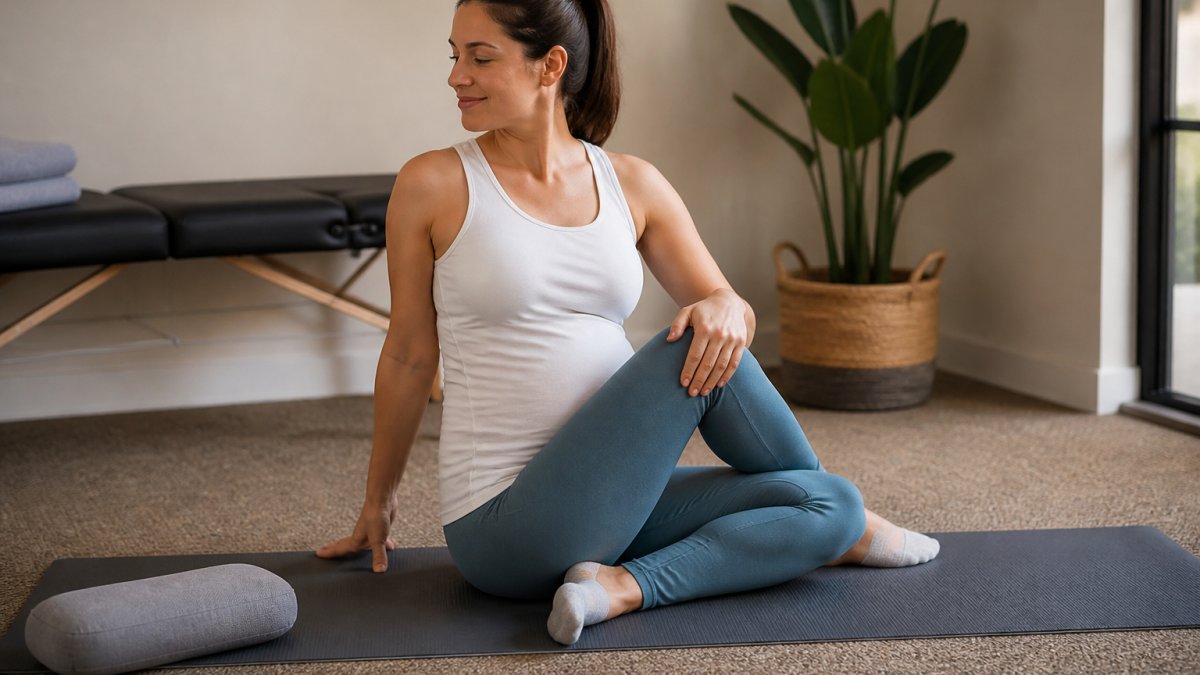
- Spinal twist: Lie on your back with knees bent, let both knees fall to one side, and hold 20-30 seconds before switching. Keep the movement small if twisting aggravates your back.
Minutes 11-15: Core Strengthening Exercises for Back Pain
Finish with core strengthening exercises for back pain. Planks, partial crunches, and wall sits build the muscles that support your spine. Keep the effort moderate. Good form matters far more than how many repetitions you complete.
- Planks: Hold a straight line from head to heels. Start with 15-20 seconds and add 5 seconds per week only when the current hold feels controlled. Do 2 sets.
- Partial crunches: Lift your head and shoulders only slightly off the floor. Keep the motion small and controlled. Do 8-10 reps for 2 sets.
- Wall sits: Slide down a wall until your thighs are near parallel, then hold 15-20 seconds. This builds leg and core endurance for standing and walking. Do 2 sets.
If you want a full at-home routine to follow alongside this template, see our guide to back pain relief exercises.
Dose beats drama. Two controlled sets of each move, done five to seven days a week, outperforms a single long session. Add time or reps only when the current dose feels easy and pain-free for two consecutive sessions.
Lower Back Stretches for Pain Relief: Pelvic Tilts, Knee-to-Chest, and Cat-Cow
Three stretches cover most of what a stiff lower back needs: pelvic tilts, the knee-to-chest stretch, and the cat-cow stretch. Each one is low-impact and easy to modify. Together they improve spinal mobility and ease muscle tightness without loading the spine.
- Pelvic tilts: Lie on your back with knees bent. Flatten your lower back gently against the floor, hold for a few seconds, then release. Repeat 8 to 10 times.
- Knee-to-chest stretch: Pull one knee toward your chest, hold, then switch sides. This eases tension in the lower back and hips.
- Cat-cow stretch: On hands and knees, slowly arch and round your spine with your breath. This is one of the best moves for spinal mobility.
For a wider collection of stretches to expand this routine, read our list of stretches for lower back pain relief.
Core Strengthening Exercises for Back Pain: Planks, Partial Crunches, and Wall Sits
Core strengthening is the part most people skip, and it is the part that protects you from reinjury. A strong core supports good posture and reduces strain during bending, twisting, and lifting. Three moves do most of the work: planks, partial crunches, and wall sits.
- Planks: Hold a straight line from head to heels. Start with 15 to 20 seconds and build up.
- Partial crunches: Lift your head and shoulders only slightly off the floor. Keep the motion small and controlled.
- Wall sits: Slide down a wall until your thighs are near parallel, then hold. This builds leg and core endurance for standing and walking.
Keep repetitions low at first. A common mistake is chasing numbers instead of control. Two sets of each is plenty for most people starting out.
How to Exercise Safely with Back Pain: Stop Criteria and Modifications
Stop exercising immediately if you feel sharp pain, numbness, tingling, or weakness in your legs, or if pain shoots below the knee. Those signals mean you should check with a qualified professional before continuing. Soreness that fades within a day is normal. Pain that gets worse is not.
Urgent warning signs: stop and seek care the same day
Most back pain is not an emergency, but a small set of symptoms warrants same-day medical assessment. Seek urgent care or call your doctor if you notice any of the following:
- Loss of bladder or bowel control, or new numbness in the groin or inner thighs (saddle area).
- New weakness in one or both legs that makes walking or standing difficult.
- Back pain after a significant fall, car crash, or other trauma.
These are uncommon, but they are the reasons a clinician should evaluate your back before you continue an exercise routine.
A simple triage rule for everyday sessions
Use a 0-to-10 pain scale before and after each session. A common pattern practitioners see is that mild soreness up to 2 points above your baseline, fading within 24 hours, is acceptable. Pain that climbs more than 2 points, lasts past the next morning, or travels down the leg is your cue to cut the dose in half or skip the move that triggered it.
Modifications for different abilities and pain triggers
Modifications keep the routine safe for different abilities and pain triggers:
- If bending forward hurts, favor pelvic tilts and wall sits over crunches. Swap floor crunches for dead-bug-style leg lowers only if they stay pain-free.
- If extension or arching hurts, skip cat-cow’s arch phase and emphasize the rounding phase, or do seated pelvic tilts instead.
- If lying on the floor is uncomfortable, do standing pelvic tilts, wall sits, and standing hamstring stretches with a foot on a low step.
If stop criteria keep appearing, or you want guidance on a personalized plan, explore chiropractic care for back pain relief in San Antonio. A professional can assess movement dysfunction and tailor a structured conditioning plan to your body.
Pushing through sharp pain “to loosen it up” is the fastest way to turn a mild flare-up into a week of downtime. Stop, rest, and reassess. If you have any of the urgent warning signs above, contact a clinician the same day rather than waiting to see if it settles.
Your Week-by-Week Progression Plan
Progress slowly over four weeks. Sudden jumps in volume are a leading cause of flare-ups, so add time and repetitions in small steps. This progression works for most beginners.
| Week | Time per Session | Focus | Frequency |
|---|---|---|---|
| Week 1 | 10 minutes | Gentle mobility only | 5 days |
| Week 2 | 15 minutes | Add stretches | 5-6 days |
| Week 3 | 15 minutes | Add light core work | Daily |
| Week 4 | 15-20 minutes | Full routine, more reps | Daily |
Track how you feel each day on a simple scale of 0 to 10. If pain tolerance drops for two days in a row, repeat the prior week. This is how you build a routine that lasts instead of one you abandon.
Making It Stick: Posture, Ergonomics, and Daily Movement in San Antonio
Posture retraining and ergonomics matter as much as the exercises themselves. Your back spends far more hours sitting, standing, and lifting than it does exercising. Small fixes in daily activities add up to big gains in pain prevention.
- Sitting: Support your lower back with a lumbar support or a rolled towel. Get up and walk every 30 to 45 minutes.
- Standing: Shift weight between feet and keep your screen at eye level.
- Lifting: Bend at the hips and knees, keep the load close, and avoid twisting while carrying.
San Antonio summers make outdoor movement harder, so plan walks for early morning and use indoor walking or gentle movement during the hottest part of the day. For a broader guide to daily habits, read how to manage chronic back pain at home.
Set a phone reminder to stand and walk for two minutes every half hour. Most people find this single habit reduces afternoon stiffness more than any stretch.
Conclusion
Chronic back pain rarely improves through occasional effort. It improves through small, steady daily movement, done with good form and clear stop criteria. If you want a personalized plan built around your body and your goals, Moore Chiropractic offers gentle chiropractic techniques, personalized care plans, and a complimentary evaluation and consultation for new patients. Our team serves San Antonio and the surrounding area.
Frequently Asked Questions
What daily exercises can help prevent chronic back pain?
A practical daily routine combines gentle mobility, stretching, and core work. Start with pelvic tilts and cat-cow movements to warm up the spine, then move into knee-to-chest and hamstring stretches for lower-back pain relief. Finish with core strengthening exercises for back pain such as partial crunches, planks, and wall sits. Ten to fifteen minutes a day, done consistently, supports spinal mobility and muscle tightness better than occasional long workouts. A chiropractor or physical therapist can tailor the sequence to your specific pain triggers.
How long should I exercise each day to help prevent back pain?
Fifteen minutes a day is a realistic target for most people. The routine can be split into short blocks if needed, such as five minutes of stretching in the morning and ten minutes of core work in the evening. Consistency matters more than duration. If you are new to exercise or recovering from a flare-up, start with five to ten minutes and build up gradually. Stop if pain worsens, and check with a clinician before increasing intensity.
Should I exercise if my back already hurts?
Gentle movement often helps during mild flare-ups, but the type and intensity matter. Low-impact exercise such as walking, pelvic tilts, and supported stretching can ease muscle tightness and support pain relief. Avoid heavy lifting, deep twisting, or high-impact activity while pain is active. If pain is sharp, radiates down the leg, or comes with numbness or weakness, stop and seek medical advice before continuing. A chiropractor can help you decide which movements are safe for your situation.
When should I stop exercising and seek medical advice for back pain?
Stop exercising and contact a healthcare professional if you notice sharp or worsening pain, pain that travels down the leg, numbness or tingling, muscle weakness, or loss of bladder or bowel control. These signs can point to nerve involvement and need prompt evaluation. For milder soreness that fades within a day or two, gentle movement is usually fine. If pain lasts more than a few weeks or keeps returning, a consultation can help identify movement dysfunction and guide a structured conditioning plan.