Table of Contents
- Start With a Preseason Physical and Medical Clearance
- Implement Sports Warm-Up Exercises for Kids Before Activity
- Teach Proper Technique and Invest in Qualified Coaching
- Address Overuse Injuries in Young Athletes Through Smart Training
- Prioritize Sports Hydration for Kids in Hot Weather Conditions
- Build Strength, Flexibility, and Recovery Into the Training Plan
- Know When to See a Doctor for a Youth Sports Injury
- Create a Safe Playing Environment and Use Protective Equipment
- Frequently Asked Questions
Last Updated: October 12, 2026
Start With a Preseason Physical and Medical Clearance
A preseason physical is the foundation to prevent sports injuries youth athletes face. Before your child joins a team or begins training, schedule an appointment with their primary care doctor to check heart health, bone development, and overall fitness, and to review past injuries and family health history.
During the exam, the doctor will:
- Check vital signs and heart function
- Test flexibility and strength
- Review injury history
At Moore Chiropractic, we work with young athletes after medical clearance, assessing movement patterns and addressing structural issues that might lead to injury.
Implement Sports Warm-Up Exercises for Kids Before Activity
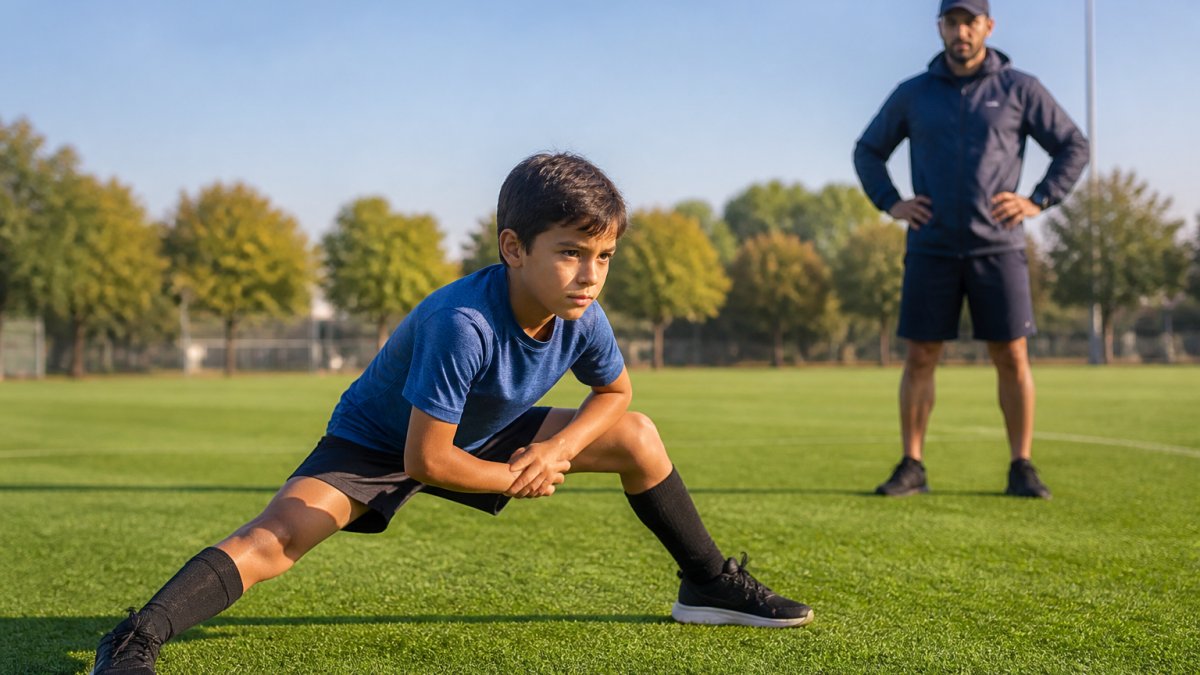
Every practice and game should start with a 10-minute warm-up that prepares muscles and joints, raises heart rate, and focuses your young athlete.
Skipping warm-ups leads to pulled muscles and sprains; young athletes who warm up properly experience fewer injuries and perform better.
Dynamic Stretching and Movement Preparation
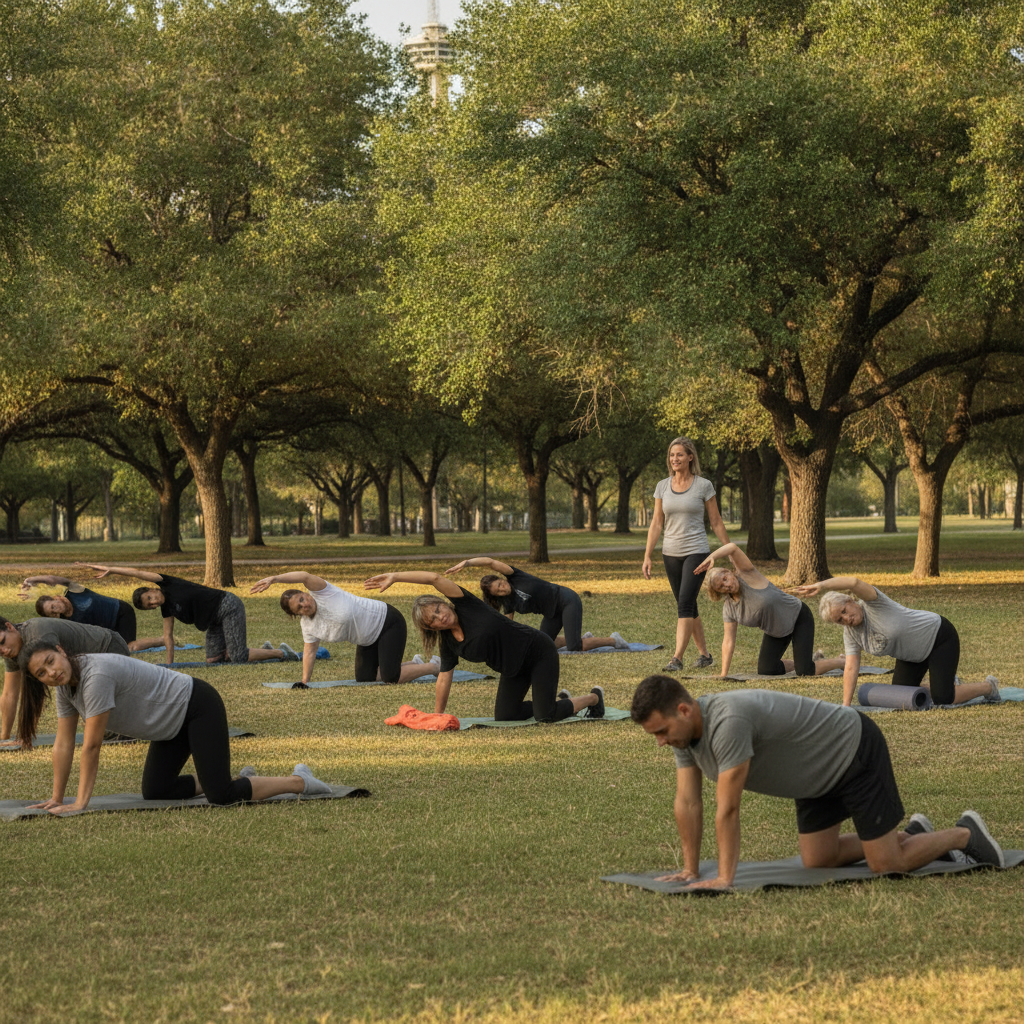
Dynamic stretching moves joints through their full range of motion. Unlike static stretching, it keeps moving, activating muscles while stretching them, ideal before sports.
Good dynamic stretches for youth athletes include:
- Arm circles (forward and backward, 10 each direction)
- Leg swings (forward-back and side-to-side, 10 each)
- Walking lunges with a twist (10 per leg)
Sport-Specific Activation Drills
After dynamic stretching, add sport-specific drills, light dribbling for soccer, half-speed throwing for baseball, layup drills for basketball.
These drills activate the right muscles in the right patterns, reducing injury risk when practice begins at full intensity.
Teach Proper Technique and Invest in Qualified Coaching
Improper technique is one of the biggest causes of youth sports injuries.
Qualified coaches teach correct form from day one, correcting problems before they cause injury and progressing difficulty without overloading young bodies.
Look for coaches who:
- Have formal training in your child’s sport
- Teach proper technique before increasing intensity
- Know how to modify exercises for young athletes
Poor coaching or self-taught technique is a risk factor. Invest in quality instruction early. It prevents injuries and builds better athletes.
Address Overuse Injuries in Young Athletes Through Smart Training
Overuse injuries happen when young athletes do too much too soon. A child’s developing bones, muscles, and tendons can’t handle adult-level training loads, yet many push too hard out of love for the sport or pressure to excel.
The result is tendinitis, stress fractures, and muscle strains that sideline young athletes for weeks or months.
Recognize Signs of Overtraining
Watch for these warning signs that your young athlete is doing too much:
- Complaining of pain that doesn’t go away after rest
- Performing worse instead of better despite more training
- Showing less enthusiasm for their sport
Pain is a signal that something is wrong. Never push through pain in youth sports.
Manage Training Load and Cross-Training
Training load is the total work your child does, practice, games, strength training, and conditioning. Too much causes overuse injuries.
Smart training follows these principles:
- Increase training load by no more than 10% per week
- Include rest days (at least 1-2 per week)
- Vary activities (cross-training prevents overuse)
Cross-training means doing different sports or activities, a soccer player might swim or do yoga.
Many young athletes specialize in one sport too early, increasing injury risk.
Prioritize Sports Hydration for Kids in Hot Weather Conditions
San Antonio summers routinely push the heat index above 100°F, and youth practices often start in the late afternoon when heat stress peaks. That makes heat illness the most preventable risk a young athlete here faces, and the one generic “drink water” advice fails to address.
Acclimatize Before the Season Starts
Young athletes do not tolerate heat like adults. Children produce more heat per pound, sweat less efficiently, and take longer to acclimatize, so treat the first two weeks of summer practice as a ramp, not a test.
A practical acclimatization schedule:
- Week 1: 20-30 minutes of light activity in the heat, with full water breaks every 15 minutes
- Week 2: 40-45 minutes, adding sport-specific drills but keeping intensity moderate
- Week 3 onward: normal practice length, but keep break frequency high through the first month
Do not schedule the hardest conditioning session of the week on the first hot day. Build the heat tolerance first.
Use the Heat Index, Not the Thermometer
Air temperature alone is misleading in San Antonio because humidity is high. The heat index, what it actually feels like, is what matters for practice decisions.
A widely used youth-sports guideline:
- Heat index under 95°F: normal practice with regular water breaks
- 95-104°F: mandatory water breaks every 15-20 minutes, longer rest periods, reduce equipment
- 104-110°F: limit intense activity, move to shade or indoor space for conditioning
Coaches and parents can check the National Weather Service heat index for San Antonio before each session. If an excessive heat warning is forecast, treat outdoor practice as unsafe.
Hydration Timing That Works in the Heat
Thirst is a late signal. By the time a young athlete feels thirsty in San Antonio heat, they are already behind on fluids.
A workable plan:
- 2-3 hours before practice: 16-20 ounces of water
- 15-20 minutes before practice: another 8-10 ounces
- During practice: 6-8 ounces every 15-20 minutes, even if the athlete is not thirsty
Weighing your child before and after a hot practice is the simplest way to know how much fluid they need. A two-pound drop means roughly 32-48 ounces of replacement fluid.
Electrolytes and Sports Drinks
For most youth practices under 60 minutes, water is enough. When activity lasts longer than an hour, or an athlete sweats heavily in San Antonio heat, a sports drink with sodium and potassium replaces what sweat takes out; plain water alone during a two-hour August practice can dilute sodium levels and cause cramping (9 Facts About Hydration & Electrolytes).
Avoid energy drinks and heavily caffeinated beverages. They worsen dehydration.
Shade, Breaks, and Cooling Strategies
Hydration is only half the heat-safety equation. The other half is reducing heat load:
- Schedule practices before 10 a.m. or after 6 p.m. when possible
- Provide shade tents or covered areas for rest periods
- Remove helmets and heavy pads during water breaks
Know the Warning Signs
Heat illness escalates quickly in children. Stop activity and cool the athlete immediately for:
- Dizziness, lightheadedness, or confusion
- Nausea or vomiting
- Headache that worsens
If confusion, loss of consciousness, or a dangerously hot body temperature occurs, call 911. Heat stroke is a medical emergency.
In San Antonio, the difference between a safe practice and a dangerous one is often a 30-minute scheduling change. Check the heat index before every outdoor session during May through September.
A Local Resource for Parents
San Antonio Metro Health and the National Weather Service San Antonio office publish heat advisories parents and coaches can monitor. When an advisory is active, treat outdoor practice as modified or canceled, not normal.
Build Strength, Flexibility, and Recovery Into the Training Plan
Strong muscles protect joints. Flexible muscles move better and get injured less often. Recovery allows the body to adapt and get stronger. All three are essential to prevent sports injuries youth athletes face.
Age-Appropriate Strength Training
Young athletes can do strength training safely if done correctly. Strength training doesn’t mean lifting heavy weights. It means building muscle endurance and stability.
For kids under 12:
- Use bodyweight exercises (push-ups, squats, lunges)
- Focus on proper form and control
- Do 2 sessions per week
For teens 12-18:
- Add light weights or resistance bands
- Increase to 2-3 sessions per week
- Keep form perfect before adding weight
Strength training prevents injuries by stabilizing joints and supporting good movement patterns.
Cool-Down, Stretching, and Rest Days
Every practice should end with a 5-10 minute cool-down.
Rest days are when the body actually gets stronger, muscles repair and adapt. Without rest, young athletes get weaker and more injury-prone.
Every week should include at least 1-2 complete rest days with no intense activity; light walking or easy swimming is fine.
Know When to See a Doctor for a Youth Sports Injury
Most youth sports injuries are minor and heal with rest, ice, and time, but some need professional evaluation and a few need emergency care. Knowing the difference prevents complications that worsen when an injury is ignored.
When to Use Emergency Care vs. Routine Evaluation
Call 911 or go to an emergency department immediately if your young athlete has:
- Loss of consciousness, even briefly
- Severe confusion, repeated vomiting, or worsening headache after a head impact
- A visibly deformed limb or joint
For non-emergency concerns, a same-week appointment with a primary care doctor, sports medicine clinic, or chiropractor is appropriate. In San Antonio, urgent care centers handle after-hours sprains, strains, and minor injuries that do not meet emergency criteria.
Signs an Injury Needs a Doctor Visit
See a doctor if your young athlete has:
- Pain that does not improve after 48 hours of rest
- Swelling that gets worse instead of better
- Inability to move a joint through its normal range
Early evaluation prevents small problems from becoming season-ending ones.
Concussion Recognition and Immediate Response
Concussions are brain injuries that happen in football, soccer, basketball, cheer, and many other youth sports. You do not need to lose consciousness to have one.
Common symptoms to watch for:
- Headache or pressure in the head
- Feeling dazed, foggy, or “not right”
- Difficulty concentrating or remembering
If you suspect a concussion:
- Remove the athlete from play immediately. Do not let them return that day.
- Do not leave them alone. Monitor for worsening symptoms.
- Seek medical evaluation the same day.
- Follow the provider’s return-to-learn and return-to-play plan.
A young athlete should never return to sports while still having symptoms. Returning too soon, especially after a second impact, can cause lasting damage.
The Return-to-Play Process
Return-to-play is a staged progression from rest to full competition, with each stage symptom-free before the next. A common framework:
- Symptom-limited rest. No sports, limited screen time, and reduced physical and mental exertion until symptoms resolve.
- Light aerobic activity. Walking, stationary cycling, or light jogging for 10-15 minutes.
- Sport-specific drills. Running, skating, or sport-specific movement without contact.
- Non-contact practice. Full practice drills with no contact or collision.
- Full-contact practice. Normal practice with contact, after medical clearance.
- Return to competition. Full game participation.
Each stage typically takes at least 24 hours. If symptoms return, the athlete goes back a stage and rests again.
Medical Clearance Before Full Return
A doctor or qualified provider should clear your young athlete before full participation, especially after a concussion, fracture, or any injury that required time off. The evaluation checks:
- Pain-free movement in all directions
- Strength matching the uninjured side
- Balance and coordination
Rushing this step is the most common reason young athletes re-injure themselves. The body needs time to rebuild strength and trust the repaired tissue.
Local Care Options in San Antonio
San Antonio families have several options for youth sports injury evaluation:
- Primary care pediatrician for initial assessment and referrals
- Sports medicine clinics affiliated with local health systems
- Urgent care centers for after-hours sprains and strains
If your child’s injury involves a head impact, a suspected fracture, or loss of function, skip the routine appointment and seek emergency care.
When in doubt, get it checked. A same-day evaluation is almost always faster and cheaper than weeks of lost playing time from an injury that was ignored.
Create a Safe Playing Environment and Use Protective Equipment
The environment where your child plays affects injury risk.
Check these safety factors:
- Fields are free of holes, debris, and hazards
- Goals and equipment are properly anchored
- Sidelines have adequate space away from obstacles
Protective equipment prevents injuries when used correctly.
Common protective equipment:
- Helmets (football, baseball, hockey, cycling)
- Mouthguards (football, hockey, basketball, lacrosse)
- Padding (elbows, knees, wrists for contact sports)
Equipment must fit properly. Ill-fitting gear doesn’t protect well.
Sports injuries in young athletes are preventable.
At Moore Chiropractic, we help young athletes stay healthy and perform their best.
Frequently Asked Questions
What should parents do to help prevent sports injuries in young athletes?
Parents play a critical role by ensuring their child gets a preseason physical, encouraging proper warm-ups before every practice and game, monitoring for signs of overtraining, and promoting rest days. Equally important: make sure your child stays hydrated, wears proper protective equipment, and learns correct technique from a qualified coach. Watch for pain, swelling, or behavioral changes that signal injury, and don’t pressure children to specialize in one sport too early, cross-training reduces overuse injury risk.
How can you tell if a young athlete is overtraining and at risk for overuse injuries?
Signs of overtraining include persistent fatigue, declining performance despite increased practice, irritability or mood changes, frequent minor injuries, trouble sleeping, loss of appetite, and repeated complaints of pain in the same joint or muscle. Young athletes who specialize in one sport year-round face higher risk. If you notice these symptoms, reduce training intensity and volume, add rest days, and consider cross-training in different sports. Consult a healthcare provider if symptoms persist.
What are the first steps to take when a young athlete reports pain during sports?
Stop the activity immediately, continuing through pain worsens injury. Apply ice to the area for 15-20 minutes if swelling is present. Assess whether the child can move the affected body part without sharp pain. If pain is severe, there’s visible deformity, or the child cannot bear weight, seek immediate medical evaluation. For mild discomfort, rest the area for 24-48 hours and monitor. See a doctor if pain persists beyond a few days or worsens, as early diagnosis prevents long-term damage.
When should a young athlete see a doctor for a sports injury?
Seek immediate medical attention for severe pain, inability to move a joint, visible deformity, loss of consciousness or confusion, persistent headache after a head impact, or any suspected fracture or severe sprain. Also see a doctor if pain lasts more than a few days, swelling doesn’t improve with ice and rest, or the child cannot return to normal activity within one week. A healthcare provider can diagnose the injury, rule out serious damage, and guide safe return-to-play.