

Table of Contents
- Is Chiropractic Safe During Pregnancy? What the Evidence Shows
- Benefits of Chiropractic During Pregnancy: What Patients Actually Notice
- The Webster Technique in Pregnancy: How It Works and Why It Matters
- Trimester-by-Trimester: How Prenatal Chiropractic Adjustments Change
- When to Avoid Chiropractic Care While Pregnant: Key Contraindications
- What to Expect During a Prenatal Chiropractic Visit at Moore Chiropractic
- Integrating Prenatal Chiropractic Care With Your OB-GYN
- Finding a Prenatal Chiropractor: Credentials, Insurance, and Cost
Last Updated: August 3, 2026
Many pregnant women wonder whether chiropractic is safe during pregnancy, and the short answer is: for most healthy pregnancies, yes, with the right practitioner and techniques. At Moore Chiropractic in San Antonio, we work with expecting mothers at every stage of pregnancy. Below, we cover the evidence, techniques, contraindications, and practical details, including how prenatal chiropractic fits alongside your OB-GYN care, what to expect trimester by trimester, and how to find a qualified practitioner.
Is Chiropractic Safe During Pregnancy? What the Evidence Shows
Prenatal chiropractic care is generally considered safe for uncomplicated pregnancies when performed by a trained, certified practitioner using modified, pregnancy-appropriate techniques. The American Pregnancy Association recognizes chiropractic care as a legitimate option for managing musculoskeletal symptoms during pregnancy, noting that no known contraindications exist for routine chiropractic care in healthy pregnancies. According to American Pregnancy Association guidance on chiropractic care, all licensed chiropractors receive training in caring for pregnant patients, though some pursue advanced certification specifically in prenatal and postnatal care.
When a chiropractor uses pregnancy-specific protocols, including avoiding prone positioning in later trimesters and using tables with belly cutouts, the mechanical risk to the fetus is negligible. The real risk is choosing a practitioner who does not modify their techniques for pregnancy, which is why credentials matter more here than in any other chiropractic context.
How Relaxin Hormone and Joint Laxity Change the Picture
Pregnancy fundamentally changes the biomechanics of the musculoskeletal system. The body produces relaxin, a hormone that loosens ligaments and joints in preparation for childbirth. This joint laxity is necessary and normal, but it also means the spine, pelvis, and hips are more vulnerable to misalignment and instability.
An experienced prenatal chiropractor accounts for this by reducing the force of adjustments, avoiding high-velocity thrusts in certain positions, and focusing more on pelvic alignment than on general spinal manipulation. The goal shifts from correction to support: keeping the pelvis level and the spine balanced as the body changes week by week.
Benefits of Chiropractic During Pregnancy: What Patients Actually Notice
The benefits of chiropractic during pregnancy are most clearly felt in the second and third trimesters, when postural changes and the growing weight of the baby place increasing strain on the lumbar spine and pelvis. Many patients report meaningful relief as early as the first trimester, particularly for nausea associated with spinal nerve irritation and hip pain.
Back Pain, Hip Pain, and Sciatic Nerve Pain Relief
Back pain is the most common complaint chiropractors treat in pregnant patients. The shift in the body’s center of gravity as the belly grows creates a pronounced lumbar curve, which compresses facet joints and strains supporting muscles. Hip pain follows a similar pattern: as the pelvis widens and tilts, the hip flexors and piriformis muscle tighten, often irritating the sciatic nerve.
Sciatic nerve pain during pregnancy can range from a dull ache in the buttock to sharp, shooting pain down the leg. Chiropractic adjustments that restore pelvic alignment take direct pressure off the sciatic nerve, which is why many patients notice relief within a few visits.
Pelvic Alignment and Round Ligament Pain
Pelvic alignment is arguably the most important structural goal of prenatal chiropractic care. A misaligned pelvis restricts the space available for the growing baby and can affect fetal positioning in the weeks before delivery.
Round ligament pain, the sharp, stabbing sensation on one or both sides of the lower abdomen, responds well to gentle chiropractic care. When the pelvis is uneven, the round ligaments supporting the uterus are pulled asymmetrically, creating pain with sudden movements. Restoring pelvic symmetry reduces that uneven tension significantly.
The Webster Technique in Pregnancy: How It Works and Why It Matters
The Webster Technique is a specific chiropractic analysis and adjustment protocol developed for use during pregnancy, focused on reducing sacral subluxation and balancing pelvic muscles and ligaments. It is the most widely recognized and studied technique in prenatal chiropractic care.
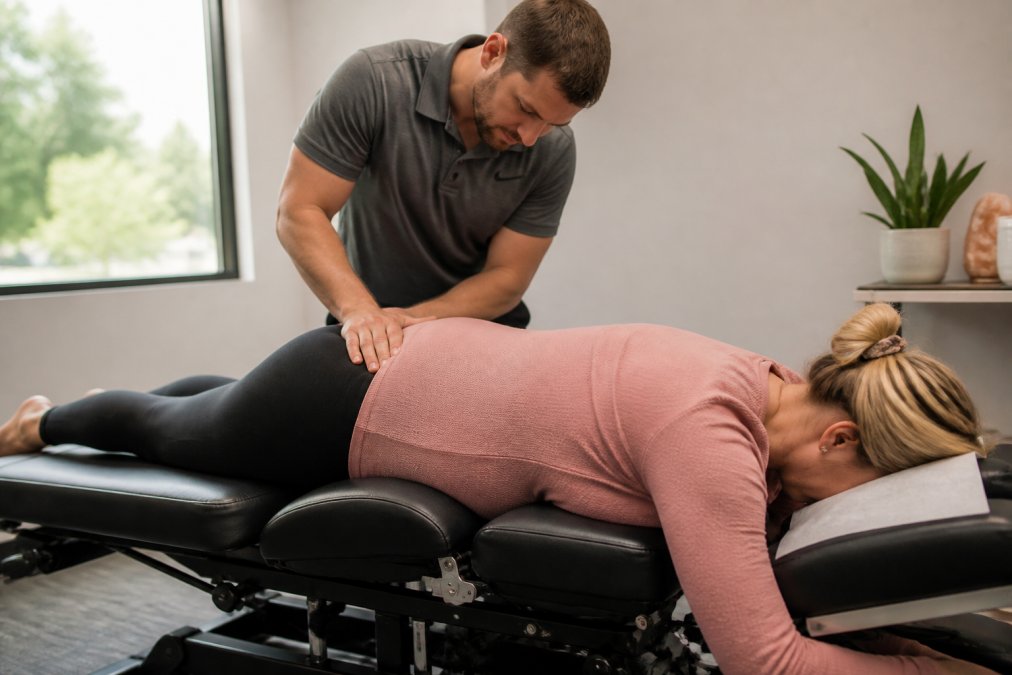
The technique involves a gentle adjustment to the sacrum combined with soft-tissue release of the round ligaments. The goal is not to manually turn a breech baby, a distinction frequently misunderstood. Rather, the Webster Technique creates optimal pelvic biomechanics so the baby has the best possible environment to move into a head-down position naturally. According to International Chiropractic Pediatric Association on the Webster Technique, certification in the Webster Technique requires specific postgraduate training beyond standard chiropractic licensure.
When searching for a prenatal chiropractor, ask two questions directly: Are you Webster certified? And do you have a table with a pregnancy cutout or drop piece? Both answers should be yes.
Trimester-by-Trimester: How Prenatal Chiropractic Adjustments Change
Prenatal chiropractic is not a static protocol. The techniques, positioning, and goals shift meaningfully across the three trimesters.
First Trimester Considerations
The first trimester is when many women are most cautious about any intervention. Chiropractic adjustments in the first trimester are typically the gentlest of the entire pregnancy. The belly is not yet large enough to require modified positioning, relaxin levels are rising but have not yet produced significant joint laxity, and the primary focus is usually on addressing pre-existing misalignments before they become more problematic.
Nausea is a common first-trimester complaint that some patients find improves with upper cervical adjustments, since irritation of the vagus nerve can contribute to nausea. This should be discussed with both your chiropractor and your OB-GYN.
Second and Third Trimester Protocols
The second trimester is generally the most comfortable time for chiropractic care. The risk of miscarriage has decreased, the belly is not yet unwieldy, and many musculoskeletal symptoms are just beginning to intensify. This is the ideal window to establish pelvic alignment before the third trimester’s added weight makes corrections harder.
By the third trimester, positioning becomes the central concern. Most practitioners use a specialized table with a drop piece or cutout that allows the patient to lie face-down safely, or they perform adjustments with the patient on their side. The Webster Technique is most commonly applied between weeks 32 and 36, when fetal positioning becomes clinically relevant. Adjustments become gentler as delivery approaches, and visit frequency often increases.
| Trimester | Primary Focus | Positioning | Key Techniques |
|---|---|---|---|
| First | Pre-existing misalignment, nausea | Standard table | Gentle spinal adjustments |
| Second | Pelvic alignment, hip pain | Standard or modified table | Webster Technique begins |
| Third | Fetal positioning, sciatic relief | Side-lying or drop table | Webster Technique, soft tissue |
| Postpartum | Pelvic floor recovery, posture | Standard table | Full assessment, gentle correction |
When to Avoid Chiropractic Care While Pregnant: Key Contraindications
Knowing when to avoid chiropractic care while pregnant is as important as knowing when it helps. A responsible practitioner will screen for contraindications before beginning care.
The following conditions are generally considered contraindications for prenatal chiropractic care:
- Placenta previa: When the placenta covers the cervical opening, any mechanical intervention near the pelvis carries risk.
- Vaginal bleeding of unknown cause: Active or unexplained bleeding requires medical evaluation before any manual therapy.
- Preeclampsia: This serious pregnancy complication requires medical management, not chiropractic intervention.
- Ectopic pregnancy: An ectopic pregnancy is a medical emergency, not a chiropractic case.
- Severe preterm labor risk: Patients with a history of preterm labor or cervical incompetence should consult their OB-GYN before beginning chiropractic care.
- Moderate to severe osteoporosis: Bone density concerns require modified or avoided spinal adjustments.
Never begin prenatal chiropractic care without informing your OB-GYN or midwife. If your provider identifies any of the above conditions, chiropractic care should be postponed until those conditions are resolved or cleared. A practitioner who does not ask about your obstetric history before adjusting you is a red flag.
What to Expect During a Prenatal Chiropractic Visit at Moore Chiropractic
A prenatal chiropractic visit at Moore Chiropractic begins with a thorough intake covering your obstetric history, current symptoms, and any conditions flagged by your OB-GYN. This directly shapes the adjustment protocol used for your visit.
The adjustment itself is gentle by design. Pregnancy-specific techniques prioritize low-force, targeted corrections rather than high-velocity adjustments. The practitioner uses controlled, sustained pressure to specific joints and positioning aids to keep you comfortable throughout.
Most visits run 20 to 30 minutes. You will spend part of that time on a pregnancy-specific table and part in a side-lying position, depending on your trimester and the areas being addressed. Many patients report feeling immediate relief from lower back and hip tension after their first visit.
Safe At-Home Stretches to Support Your Adjustments
Chiropractic adjustments hold longer when supported by daily movement. The following stretches are generally well-tolerated during pregnancy, but confirm each one with your provider before starting:
- Cat-cow stretch: On hands and knees, alternate arching and rounding the back slowly. Reduces lumbar tension and promotes spinal mobility.
- Seated piriformis stretch: Sit in a chair, cross one ankle over the opposite knee, and gently lean forward. Relieves sciatic nerve pressure.
- Pelvic tilts: Standing or lying on your back with knees bent, gently tilt the pelvis forward and back. Strengthens the pelvic floor and reduces lumbar strain.
- Side-lying hip opener: Lying on your side with knees stacked, open the top knee like a clamshell. Addresses hip pain without loading the spine.
At-home stretches extend the benefit of your adjustments, but they are not a substitute for professional care. Think of them as maintenance between visits, not treatment.
Integrating Prenatal Chiropractic Care With Your OB-GYN
The most effective prenatal care is collaborative, and chiropractic should be one part of a coordinated team, not a parallel track that your OB-GYN does not know about.

Many OB-GYNs and midwives actively refer patients to chiropractors for back pain, pelvic alignment issues, and breech presentation support. Bring your chiropractic intake notes to your OB appointments, and ask your chiropractor to communicate directly with your obstetric provider if any significant findings arise.
At your next OB-GYN appointment, mention that you are considering prenatal chiropractic care and ask whether your provider has any concerns given your specific obstetric history. Most providers will support it for uncomplicated pregnancies. According to American College of Obstetricians and Gynecologists on musculoskeletal pain in pregnancy, evidence supports a multimodal approach to managing low back pain during pregnancy.
Finding a Prenatal Chiropractor: Credentials, Insurance, and Cost
Finding a qualified prenatal chiropractor requires looking beyond general chiropractic licensure. Look for practitioners who hold Webster Technique certification through the International Chiropractic Pediatric Association, or who have completed postgraduate coursework in prenatal and postnatal care.
Questions to ask before booking:
- Are you Webster certified?
- Do you have a pregnancy-specific table with a belly cutout or drop piece?
- How many pregnant patients do you currently treat?
- Will you coordinate with my OB-GYN if needed?
- What is your protocol for patients with obstetric complications?
On insurance and cost: Chiropractic care is covered by many health insurance plans, including some Medicaid plans, though coverage for prenatal-specific visits varies by plan and state. Contact your insurance provider directly to ask whether chiropractic care is covered under your current plan and whether any referral is required. For current pricing information specific to Moore Chiropractic, contact the office directly, as visit costs depend on your treatment plan and insurance situation.
Moore Chiropractic offers a complimentary evaluation and consultation for new patients, a genuine opportunity to have your specific situation assessed before committing to a care plan. If chiropractic is not the right fit for your pregnancy, that conversation should happen before your first paid visit.
Back pain, pelvic misalignment, and sciatic nerve pain during pregnancy are not conditions you simply have to endure for nine months. Moore Chiropractic provides personalized, gentle chiropractic care in San Antonio, with techniques specifically adapted for expecting mothers at every trimester. Dr. Andrew Moore D.C. and the Moore Chiropractic team offer complimentary evaluations for new patients so you can get a clear picture of your options before committing to care. Contact us to schedule your evaluation and start moving through your pregnancy with greater comfort and confidence.
Frequently Asked Questions
Is it safe to see a chiropractor while pregnant?
For most pregnancies without complications, chiropractic care is generally considered safe when provided by a practitioner trained in prenatal techniques. Chiropractors use gentle, modified adjustment protocols and specialized tables designed to accommodate a growing belly. As with any healthcare decision during pregnancy, you should discuss it with your OB-GYN first, particularly if you have any high-risk conditions. A qualified prenatal chiropractor will also screen for contraindications before beginning care.
What are the benefits of chiropractic during pregnancy?
Pregnant patients commonly seek chiropractic care for back pain, hip pain, sciatic nerve pain, and round ligament discomfort, all of which intensify as postural changes and relaxin hormone increase joint laxity throughout pregnancy. Maintaining pelvic alignment may also support optimal fetal positioning as the due date approaches. Some patients report improved sleep and reduced discomfort during daily activity. Results vary by individual, so a personalized assessment helps set realistic expectations.
What is the Webster technique and how is it used in pregnancy?
The Webster technique is a specific chiropractic analysis and adjustment protocol focused on the sacrum and pelvis. It is designed to reduce sacral misalignment and associated soft tissue tension, which may restrict the space available for fetal movement and positioning. It is commonly used in the third trimester when breech presentation is a concern. Practitioners certified in the Webster technique through the International Chiropractic Pediatric Association (ICPA) have completed specialized training in this protocol.
When should you avoid chiropractic care while pregnant?
Chiropractic care is typically contraindicated if you have been diagnosed with placenta previa, vaginal bleeding, preeclampsia, ectopic pregnancy, or moderate to severe toxemia. Women with high-risk pregnancies or those who have experienced preterm labor should consult their OB-GYN before scheduling any manual therapy. Always disclose your full pregnancy history to your chiropractor so they can tailor or pause care based on your current clinical picture.
How late into pregnancy can you see a chiropractor?
Many patients continue receiving prenatal chiropractic adjustments right up to their due date, provided no new contraindications develop. Techniques are progressively modified as the pregnancy advances, with specialized positioning equipment used in the third trimester to ensure comfort and safety. Your chiropractor and OB-GYN should communicate as you approach full term, especially if you are pursuing Webster technique adjustments for fetal positioning in the final weeks.
Does insurance cover prenatal chiropractic care, and what does it cost?
Coverage varies widely by plan. Many private health insurance plans in the United States include some chiropractic benefits, though prenatal-specific visits may be subject to deductibles, visit limits, or prior authorization requirements. Medicaid coverage for chiropractic also differs by state. Contact your insurer directly to confirm your benefits before your first visit. For current pricing at Moore Chiropractic, reach out to the practice directly, as costs depend on your individual care plan.
This article was written using GrandRanker