A knee can hurt for a dozen different reasons, but the frustration often feels the same: stairs become a calculation, getting out of the car takes longer, and the activities that usually keep you feeling like yourself start to feel out of reach. Laser therapy for knee pain is a noninvasive option that may help reduce discomfort and support the healing process without injections, surgery, or a long recovery period.
At Moore Chiropractic, care begins with listening. Knee pain is not something to treat as a single symptom, because the source may involve the joint itself, the surrounding muscles and tendons, old injuries, movement habits, or even the way the hips, feet, and lower back are working together. Laser therapy can be a valuable part of a personalized plan, but it works best when it is matched to the right problem and combined with a clear path back to healthy movement.
What Is Laser Therapy for Knee Pain?
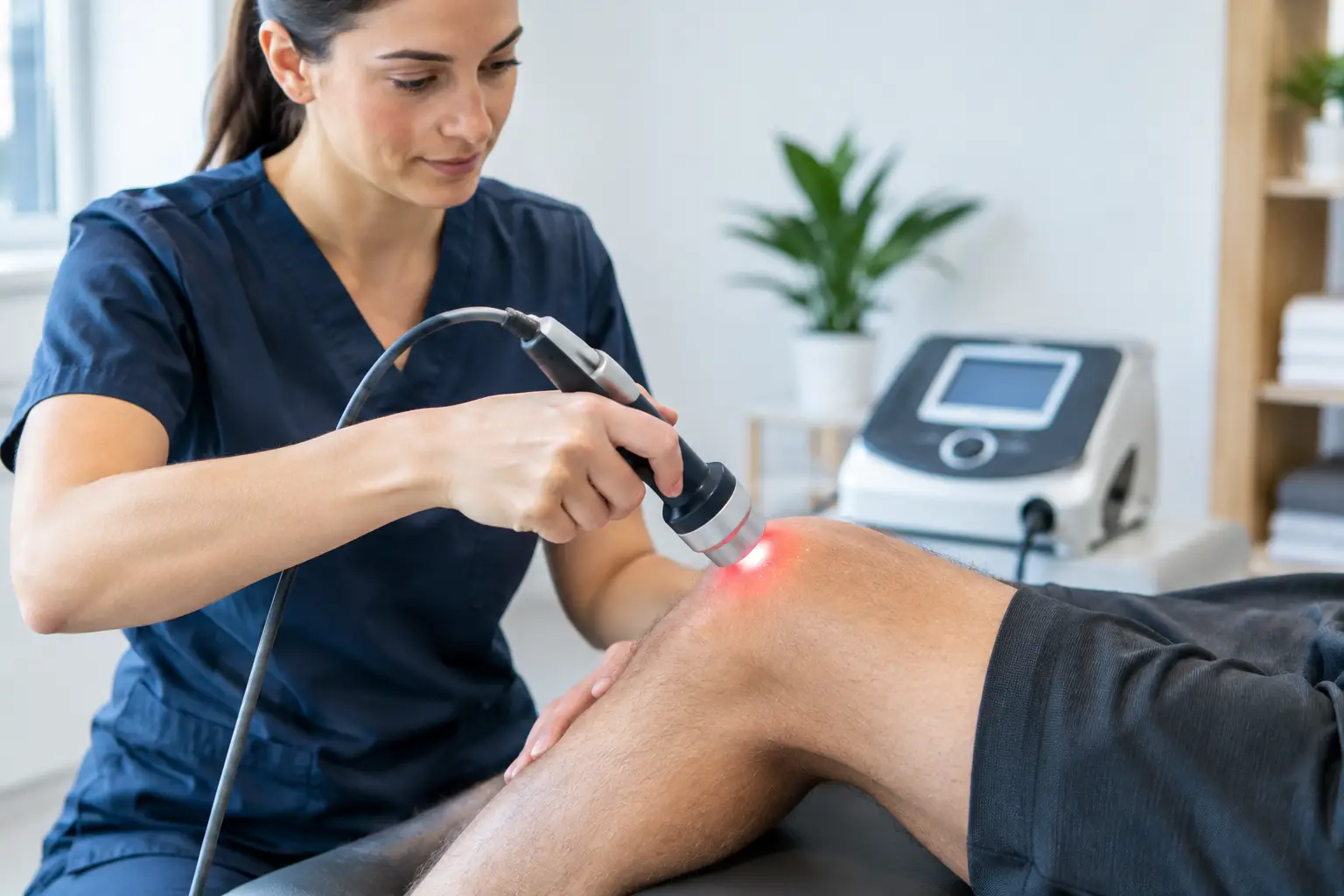
Therapeutic laser treatment, often called low-level laser therapy or photobiomodulation, uses specific wavelengths of light delivered to targeted tissues. Unlike a surgical laser, it does not cut or burn tissue. The treatment is designed to deliver light energy into the area being treated, where it may support cellular activity, circulation, and the body’s natural repair response.
For knee pain, a provider may apply the laser around the front, sides, or back of the knee depending on where symptoms are located. The goal is not to force a damaged joint to heal overnight. It is to help calm irritated tissue, reduce pain sensitivity, and create a better environment for movement and recovery.
Many patients describe the session as comfortable and relaxing. You may feel gentle warmth, although the sensation varies by device and treatment settings. There is no downtime, so most people can return to their normal day immediately after an appointment.
When It May Be Worth Considering
Knee pain can come on suddenly after a sports injury or build gradually from work demands, training, arthritis, or years of compensating for another problem. Laser therapy may be considered for people dealing with inflammation, stiffness, overuse-related soreness, tendon irritation, mild-to-moderate joint discomfort, or pain that makes exercise and daily activity difficult.
It may also be helpful during recovery from certain injuries when a provider determines that light-based therapy is appropriate. For example, an active adult with a sore knee from repetitive running or squatting may need support for irritated soft tissue. Someone with osteoarthritis may be looking for a conservative way to manage discomfort while working to maintain leg strength and mobility.
The key is getting the knee assessed first. Pain under the kneecap, pain on the inner side of the joint, swelling after a twist, and pain that travels from the low back can each point to different underlying concerns. A treatment that makes sense for one type of knee pain may not be the best choice for another.
It Is Not a Replacement for a Proper Evaluation
Laser therapy is not meant to replace a diagnosis when one is needed. A knee that is severely swollen, visibly deformed, unable to bear weight, hot and red, or painful after a significant fall or collision should be evaluated promptly. Sudden calf swelling, fever, numbness, or symptoms that are rapidly worsening also deserve timely medical attention.
For less urgent but persistent pain, an evaluation can help identify whether limited joint motion, muscle weakness, poor mechanics, or an older injury is keeping the knee from settling down. That information guides a safer, more useful care plan.
How Laser Therapy May Support Recovery
Pain often causes people to move less, and moving less can make the muscles that protect the knee weaker and tighter. That cycle can be hard to break. By helping reduce discomfort for some patients, laser therapy may make it easier to participate in the active parts of recovery, such as corrective exercises, walking, mobility work, or gentle chiropractic care when appropriate.
The possible benefits can include less stiffness, improved comfort with daily activities, and better tolerance for rehabilitation. Results vary. A person with a recent overuse flare-up may notice changes sooner than someone with longstanding arthritis or a more complex injury. The severity of tissue damage, overall health, activity level, and consistency with care all matter.
That is why it helps to view laser treatment as part of the plan rather than the entire plan. Stronger hips and thighs, better ankle mobility, improved movement patterns, appropriate rest, and gradual return to activity can all influence how the knee feels over time.
What a Treatment Plan Can Look Like
Before treatment, your provider should talk with you about your symptoms, health history, daily activities, and goals. Are you trying to get through a work shift with less pain? Return to pickleball? Walk comfortably around your neighborhood? Keep up with your children or grandchildren? Those goals matter because they shape the treatment approach.
A laser session itself is typically brief. The provider positions the device over selected areas around the knee and uses settings based on the condition being treated and the depth of the tissue involved. Protective eyewear may be used, and the process is generally painless.
The number of visits depends on the condition and your response. Acute pain may call for a different schedule than chronic knee discomfort. Some people benefit from a series of treatments close together at first, followed by reassessment. Others may use periodic care as part of a broader wellness or performance plan. Your provider should be able to explain why a particular frequency is recommended and how progress will be measured.
Why a Whole-Body Approach Matters for Knee Pain
The knee sits between the hip and the foot, so it often takes on stress created elsewhere. Tight hips can change the way the leg tracks. Weak glute muscles can allow the knee to collapse inward during walking, running, or squatting. Limited ankle motion can alter how force moves through the leg. Even low-back or nerve-related issues can affect leg strength and coordination.
This does not mean every knee problem starts in the spine or that every patient needs the same treatment. It means a thoughtful exam should look beyond the painful spot. A whole-person approach helps answer practical questions: What movements aggravate the knee? What does your gait look like? Are you avoiding one side? Which muscles need support so the joint is not doing all the work?
When appropriate, a plan may combine laser therapy with gentle chiropractic care, targeted exercise recommendations, soft-tissue work, and guidance on activity modification. The goal is to help you move with more confidence, not simply chase temporary relief.
Setting Realistic Expectations
Laser therapy is generally well tolerated, but no treatment works exactly the same way for every person. It may reduce pain and improve function for some patients, while others may need a different strategy or additional medical care. Significant structural injuries, advanced joint degeneration, or conditions that require orthopedic treatment cannot be corrected with laser therapy alone.
A good care plan includes honest checkpoints. If your knee is not responding, symptoms are worsening, or your function is declining, the next step may be imaging, referral, or a change in treatment. You deserve straightforward guidance, not pressure to continue a service that is not helping.
For people who are good candidates, the value of laser therapy may be that it offers a gentle way to support comfort while they do the meaningful work of restoring strength, mobility, and resilience. If knee pain is changing how you work, exercise, sleep, or enjoy time with your family, a personalized evaluation can help you understand what may be contributing and what a practical path forward could look like.