Last Updated: November 7, 2026
Quick Summary
Managing growing pains starts with simple home care: gentle massage, warm compresses, slow stretching, regular activity and a calm bedtime routine. Growing pains are generally harmless muscle aches most common in children ages 3 to 12, and they usually ease by morning. See your child’s doctor first if pain is one-sided, daytime, or comes with swelling, fever or limping.
- Growing pains usually affect both legs, often the calves or behind the knees.
- Apply gentle heat for about 15 to 20 minutes, never while your child sleeps.
- Hold slow stretches about 20 seconds and repeat two to three times.
- Track when pain hits, where, and what helped, then bring notes to appointments.
- Moore Chiropractic offers a complimentary evaluation and consultation for new patients.
Table of Contents
- Understanding Growing Pains in Children
- Growing Pains Symptoms Every Parent Should Recognize
- When to See a Doctor for Child Leg Pain
- How Pediatric Chiropractic Care Supports Growing Bodies
- How to Relieve Growing Pains in Kids at Home
- What to Expect During a Gentle Chiropractic Visit
- Book a Complimentary Evaluation at Moore Chiropractic
- Frequently Asked Questions
Understanding Growing Pains in Children
Most parents hear “growing pains” and assume the name explains itself. It doesn’t. Growing pains are a common pattern of muscle aches in children, usually felt in the legs, and they are not caused by bones actually stretching (Growing Pains Are Normal Most Of The Time).
Here’s the reassuring part: growing pains are generally harmless. They tend to show up in the evening or at night, and many children feel fine by morning.
The pattern matters more than any single episode.
- Usually felt in both legs, often the calves or behind the knees
- Most common in children roughly ages 3 to 12
- Comes and goes, often in clusters over weeks
- Does not cause limping, swelling, or fever
Growing pain discomfort is a real experience for a child, even when the cause is not serious. The American Academy of Pediatrics guidance on growing pains notes that these aches typically respond to simple comfort measures at home.
That’s where most parents start. And it’s where the right information makes the biggest difference.
Growing Pains Symptoms Every Parent Should Recognize
Growing pains symptoms follow a predictable pattern. Kids describe a dull ache, not a sharp pain. The discomfort usually hits both legs at once, most often in the late afternoon or evening.
Watch for these signs:
- Aching in the calves, thighs, or behind the knees
- Pain that appears after a day of active play
- Discomfort that eases with massage, warmth, or stretching
- No redness, swelling, or warmth around a joint
- Normal energy and activity the next day
Some children also complain of headaches or belly aches alongside the leg discomfort. Others sleep right through it.
What most guides miss is the timing. Growing pains are a nighttime and evening complaint. A child who hurts mid-morning or during sports deserves a closer look. Parents noticing posture or alignment issues should also review 7 childhood posture problems chiropractic can address to see which patterns may benefit from an evaluation.
When to See a Doctor for Child Leg Pain
Knowing when to see a doctor for child leg pain comes down to one question: does this look like a typical growing pain pattern, or does something stand out? Most leg aches in children are harmless. A few signs are not, and they deserve a pediatrician’s review before any hands-on care.
Growing pains are a diagnosis of pattern, not a diagnosis of exclusion made at home. A pediatrician can rule out conditions that mimic growing pains, including juvenile idiopathic arthritis, infection, bone tumors, and referred pain from the hip or back. That is why parents should call their child’s doctor when leg pain is persistent, one-sided, or accompanied by other symptoms.
Get medical attention if your child has:
- Pain in only one leg, every time
- Swelling, redness, or warmth at a joint
- Fever along with the leg pain
- Limping or refusal to walk
- Pain that wakes them and does not ease with comfort measures
- Weight loss, fatigue, or unexplained bruising
- Pain that persists during the day or during sports
- A history of injury or a fall before the pain started
These red flags point toward causes that need a pediatrician’s review, not a chiropractor’s table. A pediatrician can order imaging or blood tests if needed and can refer to a pediatric rheumatologist or orthopedic specialist when appropriate.
If something feels off, start with your child’s doctor. Chiropractic care can work alongside that relationship, never instead of it. Bring your symptom notes to the pediatric visit, ask what has been ruled out, and share the pediatrician’s findings with any chiropractor you consult. That coordination keeps care safe and avoids duplicated or conflicting advice.
How Pediatric Chiropractic Care Supports Growing Bodies
Pediatric chiropractic care is generally described as a gentle, non-invasive approach that focuses on how a child’s spine, joints, and muscles move together.
Active children load their growing bodies every day. Sports, playgrounds, heavy backpacks, and long hours at a desk all shape movement patterns. Sometimes muscle tension builds up in the back, hips, or legs.
A pediatric evaluation looks at:
- Posture and spinal alignment
- Joint mobility and range of motion
- Muscle tension and muscle strain patterns
- How your child walks, bends, and moves
One honest note: clinical evidence on chiropractic for childhood growing pains is limited and mixed. Parents who want pediatric-specific detail on safety and choosing a provider can read what you should know about pediatric chiropractic for neck pain. Families who want the bigger picture can explore how kids chiropractic supports child wellness in San Antonio.
How to Relieve Growing Pains in Kids at Home
Most growing pain relief happens at home. The goal is to ease muscle tension, support sleep, and keep the child moving comfortably.
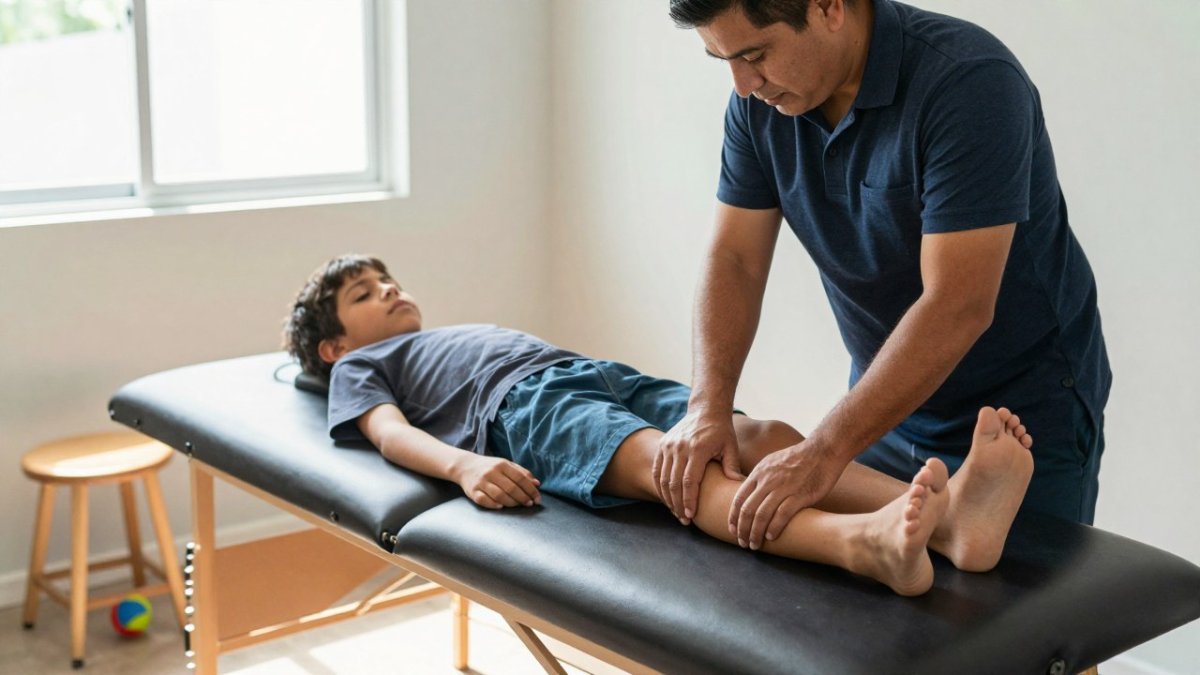
- Massage the area gently. Use slow, firm strokes on the calves or thighs for a few minutes. Gentle massage increases blood flow and relaxes tight muscle tissue. Stop if your child says it hurts.
- Apply gentle heat. A warm compress or warm bath before bed relaxes muscle tension. Keep the heat warm, not hot, and limit it to about 15 to 20 minutes. Never apply heat to a child’s skin for long stretches or while they sleep.
- Stretch together. Slow calf and hamstring stretches ease tightness. Hold each stretch for about 20 seconds and repeat two to three times. Stretch gently and never bounce.
- Keep kids active. Regular physical activity supports healthy movement patterns. Rest is not the answer for typical growing pains, but avoid pushing through sharp pain.
- Build a calm bedtime. A consistent wind-down routine helps sleep, and sleep helps recovery. Limit screens before bed and keep the room cool and dark.
- Track the pattern. Note when pain hits, where, what helped, and how long it lasted. Bring these notes to any appointment. A simple notebook or phone note works fine.
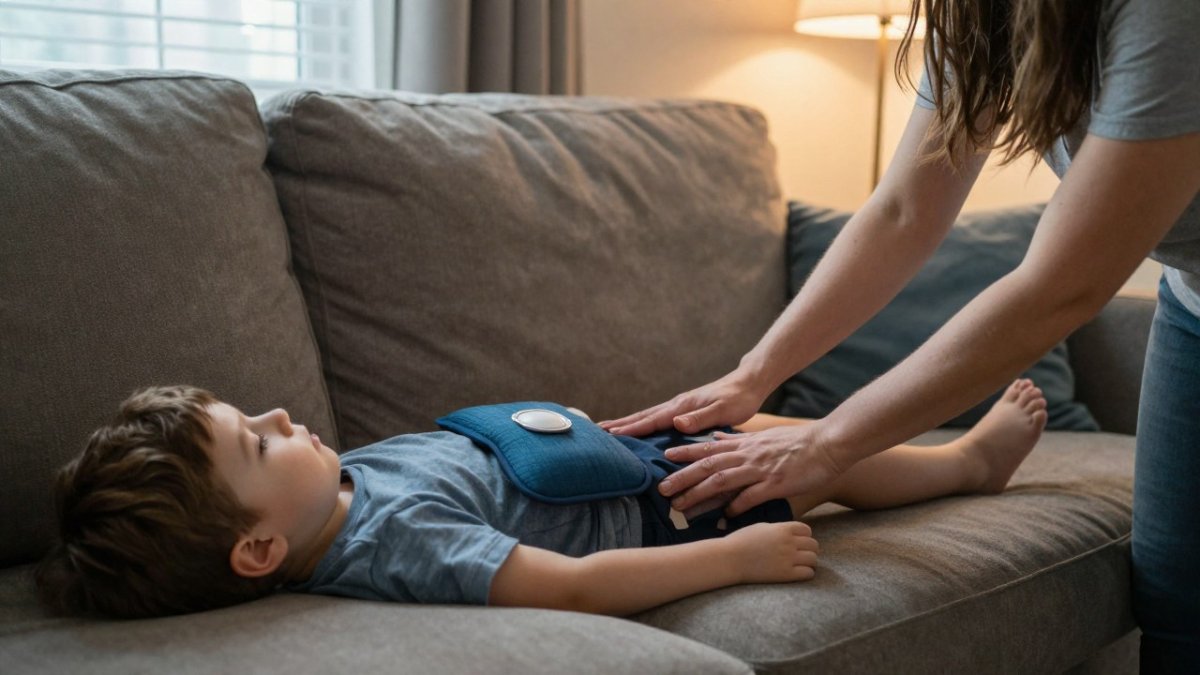
Watch out: heat should feel warm, never hot, and should never be applied to a child’s skin for long stretches or while they sleep. When in doubt, use a towel between the compress and the skin.
Home care is not a substitute for medical evaluation. If home measures stop working, if pain becomes one-sided or daytime, or if your child develops swelling, fever, or limping, that is your signal to get a professional opinion. Persistent symptoms deserve a pediatrician’s review.
Most growing pain relief happens at home, and these simple measures are the ones the article recommends.
| Home measure | How to do it | Time or frequency |
|---|---|---|
| Gentle massage | Slow, firm strokes on calves or thighs | A few minutes |
| Gentle heat | Warm compress or warm bath before bed | About 15 to 20 minutes |
| Stretching | Slow calf and hamstring stretches, never bouncing | Hold about 20 seconds, repeat two to three times |
| Keep kids active | Regular physical activity, avoid pushing through sharp pain | Regular |
| Calm bedtime | Consistent wind-down routine, limit screens, cool dark room | Nightly |
| Track the pattern | Note when pain hits, where, what helped, how long | Bring notes to appointments |
What to Expect During a Gentle Chiropractic Visit
A first visit for a child typically starts with conversation about the pain pattern, activity level, sleep, and medical history.
A physical exam typically checks posture, movement, and muscle tension.
If care is appropriate, here’s what a gentle visit typically involves:
- Light spinal adjustments using low-force techniques
- Soft-tissue work on tight muscles
- Stretching and simple therapeutic exercises
- A short home plan for between visits
Curious what “gentle” really means in practice? Read what gentle chiropractic means in San Antonio before your visit.
Book a Complimentary Evaluation at Moore Chiropractic
If your child’s leg pain follows the growing pains pattern, a gentle evaluation can tell you whether chiropractic care fits. If it doesn’t fit, we’ll say so.
Moore Chiropractic offers a complimentary evaluation and consultation for new patients. Families searching for a pediatric chiropractor can contact the office to learn more.
Ready to get answers? Learn how to book your free chiropractic consultation and what to bring to your first visit.
Growing pains are common, but they still deserve a careful look. Moore Chiropractic provides gentle chiropractic techniques and personalized care plans for San Antonio families, with a complimentary evaluation and consultation to start. Get started with Moore Chiropractic and give your child comfortable, confident movement.
Frequently Asked Questions
Can pediatric chiropractic care help manage growing pains?
Pediatric chiropractic care is sometimes used to address muscle tension and joint stiffness that can accompany growing pains. Research on chiropractic for growing pains is limited, mostly case series, so results vary. A chiropractor should assess your child first and coordinate with your pediatrician, especially if symptoms are unusual or persistent.
How can I tell growing pains apart from an injury or another condition?
Growing pains typically occur in both legs, often at night, and ease by morning. They usually affect the calves, thighs, or behind the knees, not the joints themselves. An injury tends to be one-sided, follows a specific event, and may involve swelling, bruising, or limping. Seek medical evaluation if pain is in a joint, causes limping, comes with fever, or wakes your child every night.
When should I take my child to a doctor for leg pain?
See a doctor if leg pain is severe, persistent, or one-sided; if there is swelling, redness, or warmth; if your child limps or refuses to walk; or if pain comes with fever, weight loss, or fatigue. Pain that occurs during the day or limits activity also warrants a check. Growing pains are usually mild and predictable, so anything outside that pattern deserves a professional look.
What happens during a pediatric chiropractic visit?
A pediatric chiropractic visit typically begins with a health history and a physical assessment of posture, movement, and muscle tension. Care should be coordinated with your pediatrician when needed.