Last Updated: October 22, 2026
Quick Summary
Common signs of spinal misalignment in high school athletes include focal back pain that stays in one spot, morning stiffness, one shoulder sitting higher than the other, reduced range of motion, and slower recovery between practices. Two or three signs that stick around for weeks are worth a closer look. Posture and movement patterns can suggest spinal misalignment, but only a clinician can confirm it.
- Morning stiffness that eases after ten to fifteen minutes of movement is a listed sign.
- Take a photo of your athlete from behind once a month to track postural changes.
- Soreness lasting longer than two weeks or returning every week deserves a closer look.
- Back pain with fever, numbness, weakness, or bowel or bladder changes needs prompt medical assessment.
- Moore Chiropractic offers a complimentary evaluation and consultation for new patients.
Table of Contents
- Why Spinal Alignment Matters for High School Athletes
- 10 Signs of Spinal Misalignment in High School Athletes
- Poor Spinal Alignment Symptoms Every Parent Should Know
- Back Pain in Young Athletes: When It’s More Than Soreness
- Scoliosis Signs in Teenage Athletes
- When to See a Doctor for Teen Back Pain
- Frequently Asked Questions
Why Spinal Alignment Matters for High School Athletes
Spinal alignment is how the bones of the spine stack and move together, and it matters for teen athletes because the spine is still growing while training loads climb.
Here is the part most families miss. A teen spine is not a small adult spine.
Below, we break down the signs to watch for, how to tell them apart from normal soreness, and when to get a professional opinion.
10 Signs of Spinal Misalignment in High School Athletes
The ten most common signs of spinal misalignment in high school athletes are grouped into three areas: pain, posture and movement, and performance. Not every athlete shows all ten. Two or three that stick around for weeks are worth a closer look.
Pain and Stiffness
- Focal back pain that stays in one spot instead of moving around
- Neck pain after heading drills, blocking, or long bus rides
- Morning stiffness that eases after ten to fifteen minutes of movement
- Radiating pain that travels into the buttocks or proximal thighs
Posture and Movement Changes
- One shoulder sitting higher than the other in team photos
- Head drifting forward over the shoulders
- Reduced range of motion when turning or bending
- Muscle tightness on one side that never seems to loosen
Performance and Recovery Signs
- Slower recovery between practices and games
- Gait or balance changes a coach notices before the athlete does
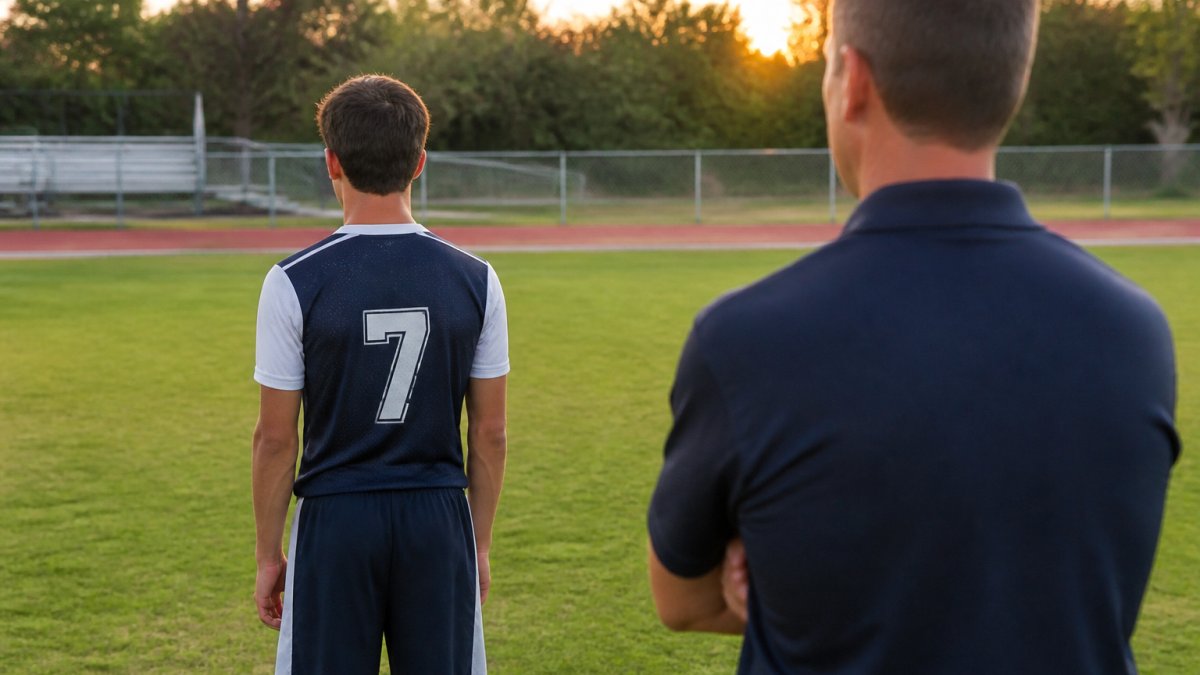
Take a photo of your athlete from behind, standing relaxed, once a month. Comparing photos over a season shows postural changes far better than trying to eyeball them in the moment.
Poor Spinal Alignment Symptoms Every Parent Should Know
The symptoms parents notice first are usually not back pain at all. They are fatigue, a slumping posture at the dinner table, or a teen who suddenly stops mentioning practice.
Watch for these patterns:
- Complaints that shift from “my back hurts” to “I’m just tired”
- Favoring one leg when standing or climbing stairs
- A backpack that sits unevenly no matter how it’s adjusted
- Reluctance to do overhead movements like serving or rebounding
Muscle imbalance often shows up here too. One side of the back works harder, tightens, and pulls the spine off center. Over a season, that pattern can feed into sports-related injuries that seem to come out of nowhere.
Back Pain in Young Athletes: When It’s More Than Soreness
Ordinary soreness follows a predictable arc: it shows up after hard work, peaks in a day or two, and fades with rest. Back pain in young athletes that breaks that pattern deserves attention. But the harder question for parents is not “is this soreness?”, it is “is this the same soreness, in the same place, showing up the same way every week?”
Use this comparison as a starting point, not a diagnosis:
| Pattern | Ordinary Soreness | Worth a Closer Look |
|---|---|---|
| Timing | After hard practice or a game | At rest, at night, or before activity starts |
| Location | Spread across muscles, shifts day to day | One fixed spot that recurs |
| Duration | 24-72 hours | Longer than two weeks, or returns every week |
| Response to rest | Improves with a day off | Stays the same or worsens |
| Movement | Loosens with activity | Stiffens, catches, or limits a usual skill |
| Function | Athlete finishes practice at normal level | Athlete modifies drills, avoids contact, or sits out |
Sport-specific patterns to watch
Soreness and alignment concerns can look similar in a single practice. The difference often shows up in how the pattern repeats across a season. A few examples for San Antonio-area high school athletes:
- Football (linemen and linebackers): Repeated blocking and tackling load the neck and mid-back. Soreness that follows a Friday game and clears by Monday is common. One-sided neck or mid-back pain that returns after every contact practice, or a stinger that lingers, is worth a closer look.
- Soccer and basketball: Cutting, jumping, and single-leg landings stress the low back and pelvis. Soreness after a tournament weekend is expected. Pain that shows up on the same side with every sprint or rebound, or that changes the athlete’s landing mechanics, is a different pattern.
- Track and field (throwers, hurdlers, distance runners): Extension-heavy and repetitive loading can produce low-back tightness. Soreness that eases with a warm-up is ordinary. Stiffness that persists through warm-up or limits hip and shoulder rotation is not.
- Volleyball and baseball/softball: Overhead serving, hitting, and pitching load the thoracic spine and shoulder blade region. Soreness after a heavy serving day is normal. Pain that recurs with every overhead session, or that changes the athlete’s arm path, deserves attention.
A parent-friendly recurrence check
Rather than trying to judge a single episode, track three things over two to three weeks:
- Persistence: Does the complaint show up on most days, even light ones?
- Recurrence: Does it return in the same spot after the same type of practice or game?
- Functional impact: Is the athlete changing how they play, shortening strides, avoiding overhead hits, sitting out drills, or icing the same area after every session?
Two or three “yes” answers are a reasonable trigger for a professional evaluation. They are not proof of spinal misalignment. Posture, pain, and movement patterns can suggest that alignment and muscle function are part of the picture, but they do not confirm it. A clinician uses history, physical examination, and, when indicated, imaging to sort out what is actually going on.
Back pain that wakes a teen from sleep, comes with fever, numbness, weakness, or bowel or bladder changes, or follows a direct collision with a visible deformity is not a wait-and-see situation. Those symptoms need prompt medical assessment, not a training adjustment.
Keep a simple three-line log on your phone after each practice: date, where it hurt, and whether the athlete finished at full speed. Three weeks of notes is far more useful to a clinician than trying to remember how many times your athlete mentioned their back.
Scoliosis Signs in Teenage Athletes
Scoliosis signs in teenage athletes are easy to miss because a strong, flexible athlete can hide a curve well. Scoliosis is a sideways curvature of the spine, and it often appears during the adolescent growth spurt (Idiopathic Scoliosis – OrthoInfo).
Check for these signs:
- One shoulder blade more prominent than the other
- Ribs that look uneven when bending forward
- A waistline that seems lopsided
- Clothes that hang unevenly
The growing spine deserves a spinal check during any growth spurt, especially in sports that load one side. According to guidance from the American Academy of Orthopaedic Surgeons, early detection of spinal curvature gives families more options.
When to See a Doctor for Teen Back Pain
See a doctor for teen back pain when symptoms last more than two weeks, wake your child at night, or come with numbness, weakness, fever, unexplained weight loss, or bowel or bladder changes. Those are red flags. For everyday aches that linger, a chiropractic evaluation can help sort out whether alignment and muscle function are part of the picture.
Red flags that need prompt medical assessment
Some symptoms should go straight to a physician or urgent care rather than a training adjustment or a routine chiropractic visit:
- Pain that wakes the athlete from sleep or is worse at night
- Fever, chills, or unexplained weight loss alongside back pain
- Numbness, weakness, or loss of coordination in the legs
- Changes in bowel or bladder function
- Back pain after a direct collision with visible deformity or severe point tenderness
- A new curve or asymmetry that appears during a growth spurt and progresses quickly
These signs do not mean something serious is present, but they are the situations where a medical evaluation should come first.
What a stepwise evaluation looks like
A sensible path for a high school athlete with persistent back pain usually moves in stages:
- Rest and load review. Take a short break from the specific activity that provokes symptoms, not necessarily all sport, and note whether the pattern changes.
- Primary care or sports medicine visit. A physician can take a history, perform a physical exam, and decide whether imaging or a referral to orthopedics, sports medicine, or another specialist is appropriate.
- Conservative care. If the evaluation points to muscle function, mobility, or alignment-related factors, a chiropractor or physical therapist can work alongside the medical team on a plan.
- Return-to-play progression. Resume sport in stages, light skill work, then non-contact practice, then full practice, then games, while watching for the return of the original pattern.
Diagnostic limits worth knowing
Posture photos, a forward bend test, and a movement screen are useful screening tools, but they do not diagnose spinal misalignment. A clinician may use a physical examination to assess symmetry, range of motion, and strength, and may order imaging when the history or exam suggests a structural issue. For adolescent scoliosis, the forward bend test is a common screening step, and the American Academy of Orthopaedic Surgeons notes that early detection gives families more options.
What a first visit at our San Antonio clinic includes
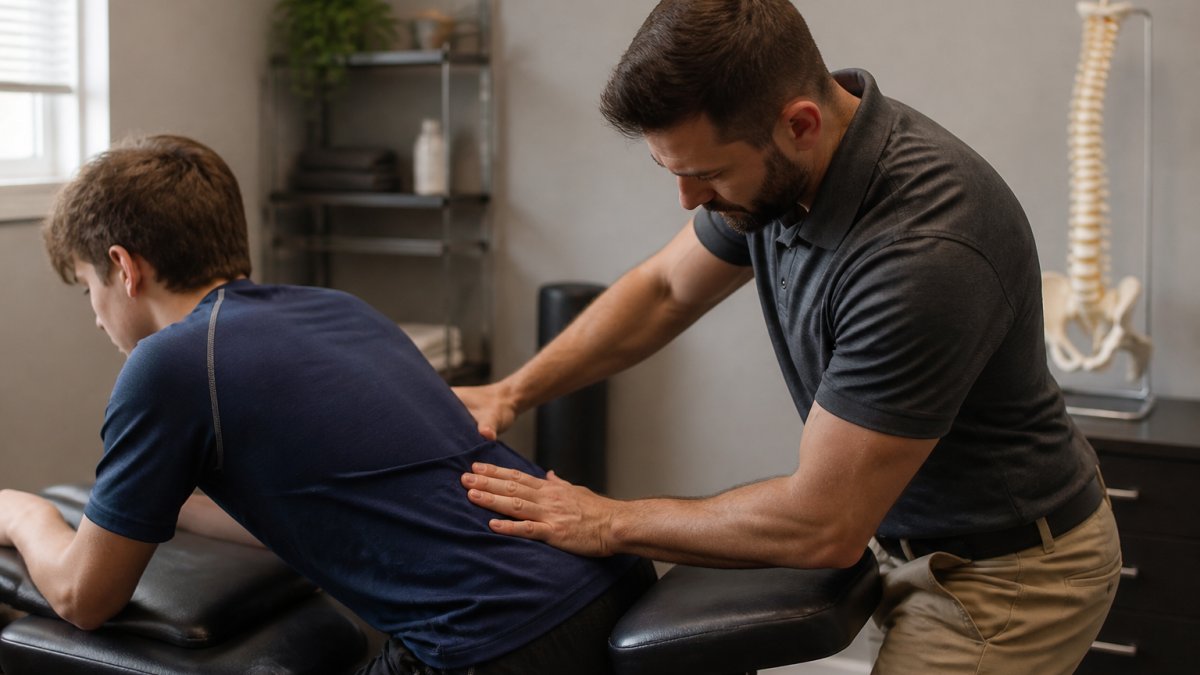
At Moore Chiropractic, our approach starts with a conversation and a hands-on assessment, not a sales pitch. We offer a complimentary evaluation and consultation for new patients.
What does a visit look like?
- A review of training load, sport, and symptom history
- A posture and movement screen
- A plain-language explanation of what we find
- A personalized care plan only if care makes sense
If you are searching for a chiropractor near me in San Antonio for a teen athlete, ask two questions before booking: do you work with adolescents, and what does your first visit include? The answers tell you a lot.
Red flags go to a physician first. For lingering, recurring complaints without red flags, a structured evaluation, medical, chiropractic, or physical therapy, can clarify whether alignment and muscle function are part of the picture and what a safe return to sport looks like.
For general guidance on adolescent back health, the American Academy of Pediatrics offers parent-friendly resources worth bookmarking.
Frequently Asked Questions
What are the most common signs of spinal misalignment in high school athletes?
Common signs include persistent back or neck pain, stiffness, reduced range of motion, uneven shoulders or hips, muscle tightness on one side, and changes in gait or balance. Athletes may also notice decreased performance, such as slower sprint times or reduced throwing accuracy. Parents should watch for complaints of focal back pain, especially during or after sports, and any visible postural changes.
How can I tell if my teen athlete’s back pain is from a misalignment or just sore muscles?
Ordinary soreness typically improves with rest, hydration, and light stretching within a few days. Pain from a possible alignment issue tends to persist, may be sharp or localized, and often comes with stiffness or limited movement. If your teen avoids certain movements, has pain that radiates into the buttocks or thighs, or notices uneven shoulders, consider a professional evaluation.
Can a chiropractor help a high school athlete with poor spinal alignment symptoms?
Chiropractors can assess spinal alignment and provide gentle adjustments to improve mobility and reduce pain. For athletes, care often focuses on restoring range of motion and addressing muscle imbalances. However, not all back pain is suitable for chiropractic care; a thorough exam helps determine if it’s appropriate or if a referral to another specialist is needed.
When should a teen athlete with back pain see a doctor instead of waiting?
Seek medical attention if back pain follows a direct impact, is severe or constant, wakes your teen at night, or comes with numbness, weakness, or bowel/bladder changes. Also see a doctor if pain lasts more than a week despite rest or if there’s a visible curve in the spine. Early evaluation can rule out serious conditions and guide safe return to play.