Table of Contents
- Quick Fixes for Stiff Neck Relief You Can Start Today
- Neck and Shoulder Pain Exercises You Can Do at Home
- Ergonomic Workstation Audit: Fixing Desk-Related Stiffness
- Sleep Hygiene and San Antonio Climate: Two Overlooked Factors
- When to See a Doctor for Neck Pain
- Chiropractic for Long Term Pain Relief in San Antonio
- Frequently Asked Questions
Last Updated: September 23, 2026
Quick Fixes for Stiff Neck Relief You Can Start Today
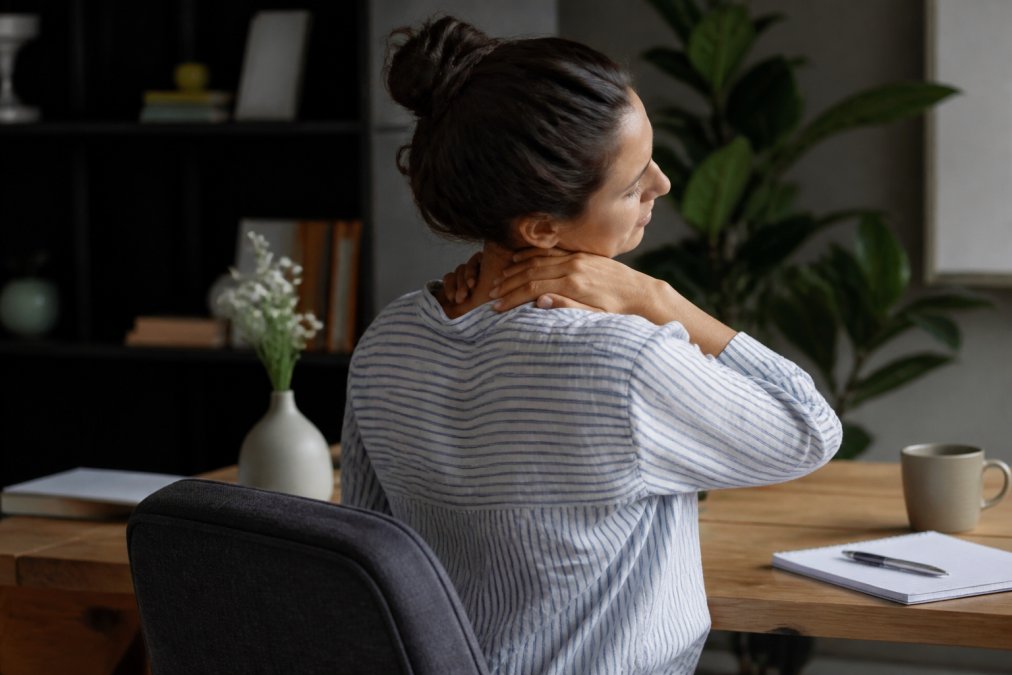
A stiff neck and tight shoulders can make even simple tasks feel hard. This guide from Moore Chiropractic covers how to relieve a stiff neck and shoulders at home, right here in San Antonio, Texas.
Heat and Cold Therapy: Which One When
Cold is best for a fresh injury or sharp pain. It eases inflammation and numbs the sore spot.
Use this simple rule:
- Cold: first 48 hours after a strain or flare-up
- Heat: ongoing stiffness, morning tightness, or muscle spasms
Topical Analgesics: Menthol and Lidocaine Options
Topical analgesics are creams or gels you rub on the skin to ease pain. Two common types are menthol-based and lidocaine products.
Apply a topical cream, then wait 10 minutes before stretching. The cream relaxes surface muscles, so your stretches go further with less pull.
Neck and Shoulder Pain Exercises You Can Do at Home
Home exercises for a stiff neck work on one principle: restore motion in the joints that got stiff, then rebuild endurance in the muscles that got lazy. Stretching alone feels good for an hour. Stretching plus light strengthening is what keeps the stiffness from coming back.
Step 1: Chin Tucks (Cranio-cervical Flexion)
This is the single most useful home exercise for forward-head posture.
- Sit or stand tall, eyes level.
- Without tilting your head, glide your chin straight back, like you’re making a double chin.
- Hold 5 seconds. Relax 5 seconds.
- Do 10 reps, once or twice daily.
Step 2: Neck Rotation and Lateral Flexion
Rotation: turn your head slowly to the right until you feel a gentle pull, hold 15 to 20 seconds, return to center, then repeat to the left. Two to three reps per side.
Step 3: Shoulder Blade (Scapular) Work
A stiff neck is often a weak-shoulder-blade problem. The upper trapezius takes over when the lower and middle traps aren’t doing their job.
- Shoulder rolls: 10 forward, 10 back, slow and full.
- Wall slides: stand with your back against a wall, arms in a goalpost position, and slide them up and down 10 times while keeping contact with the wall.
- Prone Y-T-W raises: lie face down, lift the arms into a Y, then a T, then a W shape. 8 to 10 reps of each. This is the endurance work that actually changes posture over weeks.
Step 4: Chest Opener
Tight chest muscles pull the shoulders forward and load the neck. Stand in a doorway, forearms on the frame at shoulder height, and step through gently for 20 to 30 seconds. Two reps.
How Often, and What to Expect
- Frequency: once or twice daily, ideally morning and evening.
- Duration: the whole sequence takes about 8 to 10 minutes.
- Timeline: most people notice easier motion within 3 to 5 days. Posture-related endurance changes take 4 to 6 weeks of consistent work.
Stress, Anxiety, and the Neck
Chronic stress shows up in the neck before almost anywhere else. When you’re anxious, you breathe shallowly into the chest, the shoulders creep up toward the ears, and the upper trapezius and levator scapulae stay switched on for hours. That sustained low-level contraction is a common driver of the “my neck is always tight” complaint.
Two things help:
- Diaphragmatic breathing: lie on your back, one hand on the belly, breathe so the belly rises more than the chest. Five minutes, once or twice a day. This directly down-regulates the muscles that hold the shoulders up.
- Awareness cue: set a phone reminder twice a day to drop the shoulders, unclench the jaw, and do two slow chin tucks. Small, frequent resets beat one long session.
Skip these exercises and see a clinician if you have numbness, tingling, or weakness in the arm or hand, pain after a fall or car accident, severe headache with a stiff neck, fever, or trouble controlling your bladder or bowels. Those are not home-care problems.
Motion first, then endurance. Ten minutes a day of chin tucks, gentle rotation, and shoulder-blade work will do more for a stiff neck than an hour of stretching once a week.
Ergonomic Workstation Audit: Fixing Desk-Related Stiffness
Here is how to check your setup:
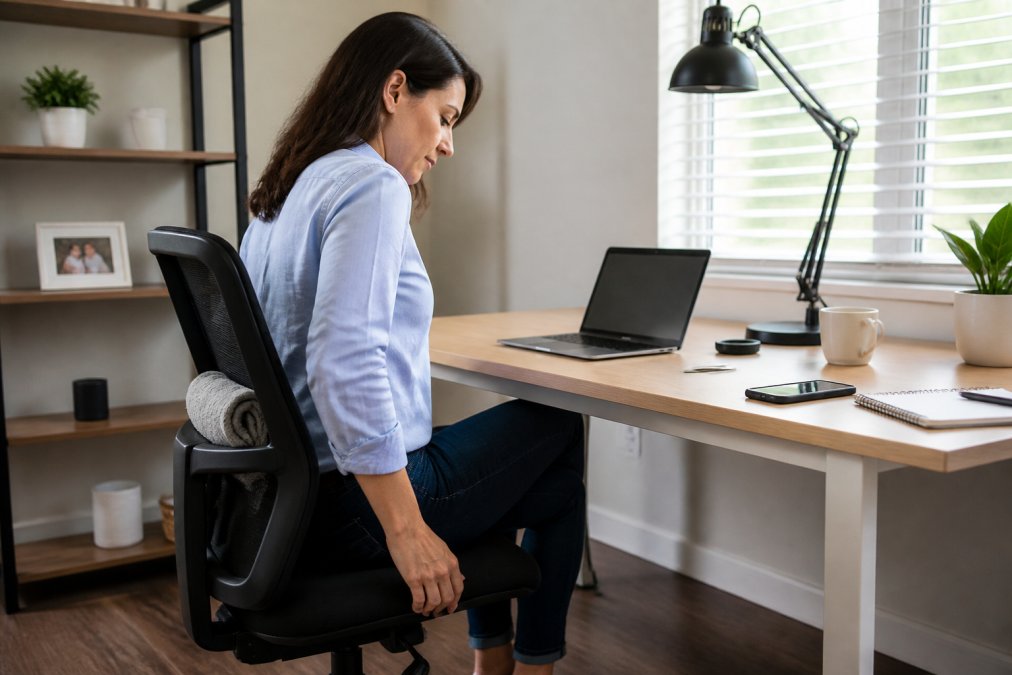
- Monitor: top of the screen at eye level
- Chair: feet flat, knees at 90 degrees
- Elbows: bent at 90 degrees, wrists straight
- Screen distance: about an arm’s length away
Sleep Hygiene and San Antonio Climate: Two Overlooked Factors
Most people who wake up with a stiff neck assume they slept “wrong.” In practice, morning stiffness is usually a setup problem: the head is held in flexion or rotation for six to eight hours, and the deep neck extensors and upper trapezius never get to fully lengthen. Fix the setup and a large share of morning tightness disappears.
Pillow Loft: The Number That Matters
Pillow “firmness” is marketing. What actually matters is loft, the compressed height of the pillow under the weight of your head.
- Back sleepers: aim for roughly 3 to 4 inches of compressed loft. A pillow that is too tall pushes the chin toward the chest and shortens the front of the neck all night.
- Side sleepers: aim for 4 to 6 inches, enough to fill the gap between the side of your head and the mattress so the neck stays parallel to the bed, not angled up or down.
- Stomach sleepers: this is the hardest position to make neutral. If you can’t switch, use a very flat pillow or none at all, and turn your head only partway rather than fully to one side.
Position-by-Position Fixes
- Back: add a rolled towel or a thin cervical roll under the curve of the neck, and a pillow under the knees to take load off the low back.
- Side: stack a pillow between the knees and hug a second pillow to keep the top shoulder from rolling forward.
- Stomach: if you must, keep the head turned only slightly and consider a body pillow to keep one hip and shoulder propped so you don’t fully rotate the neck.
Why San Antonio Nights Make It Worse
South Texas summers push bedroom temperatures up, and people compensate by sleeping with less coverage, more fans, and windows open. Two things follow. First, cool air blowing directly on the neck and shoulders can tighten the superficial muscles and encourage a guarded, hunched position. Second, when the room is warm, people tend to sprawl and rotate, which is exactly the position that loads one side of the neck for hours.
Practical adjustments for a San Antonio bedroom:
- Set the thermostat so the room stays cool but not cold, and aim the fan at the ceiling or wall rather than at your head and neck.
- Keep a light layer over the shoulders even on warm nights.
- Change pillowcases weekly during high-humidity months; a damp pillow compresses differently and loses loft faster.
- Replace a pillow once it stops springing back. Most pillows lose meaningful loft within 12 to 18 months of nightly use.
A Five-Minute Pre-Bed Routine
Before you lie down:
- Two slow chin tucks, held 5 seconds each.
- Ten shoulder rolls, forward and back.
- A 20-second cross-body arm stretch on each side.
- One minute of slow breathing with the shoulders dropped away from the ears.
This isn’t a workout. It’s a reset so you don’t fall asleep already braced.
If you wake with a stiff neck more than twice a week, change one variable at a time, pillow loft first, then sleep position, then room temperature. Changing all three at once makes it impossible to know what helped.
When to See a Doctor for Neck Pain
Most stiffness eases within a few days of home care. But some signs mean you should see a doctor.
Seek care if you notice:
- Pain that lasts more than a week
- Numbness, tingling, or weakness in your arms
- Pain after a fall or car accident
- Headaches, fever, or trouble moving your neck
Chiropractic for Long Term Pain Relief in San Antonio
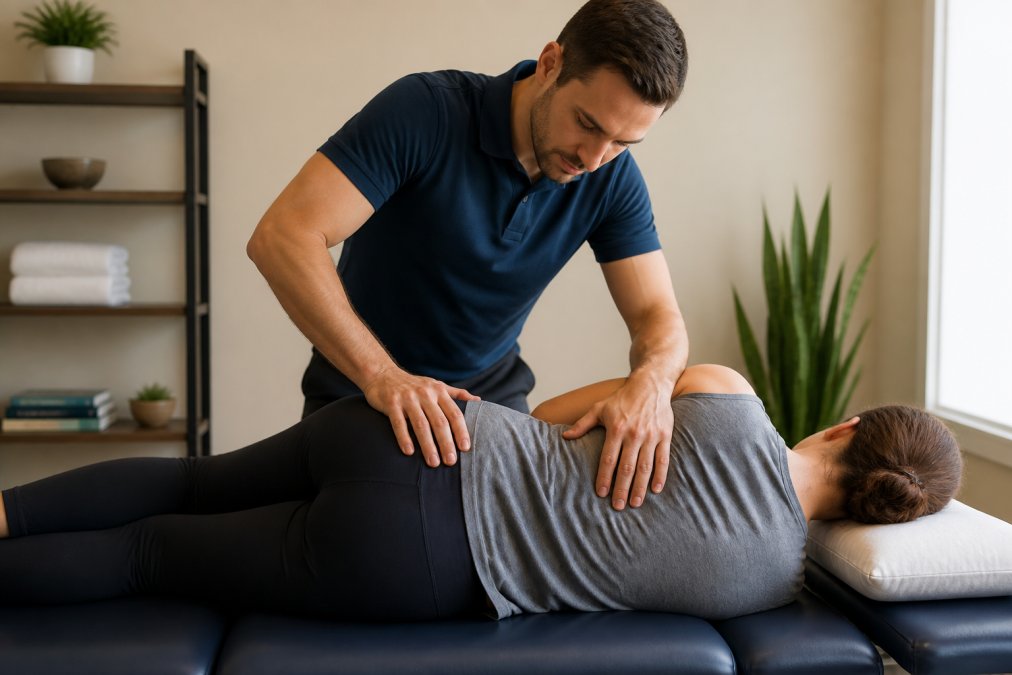
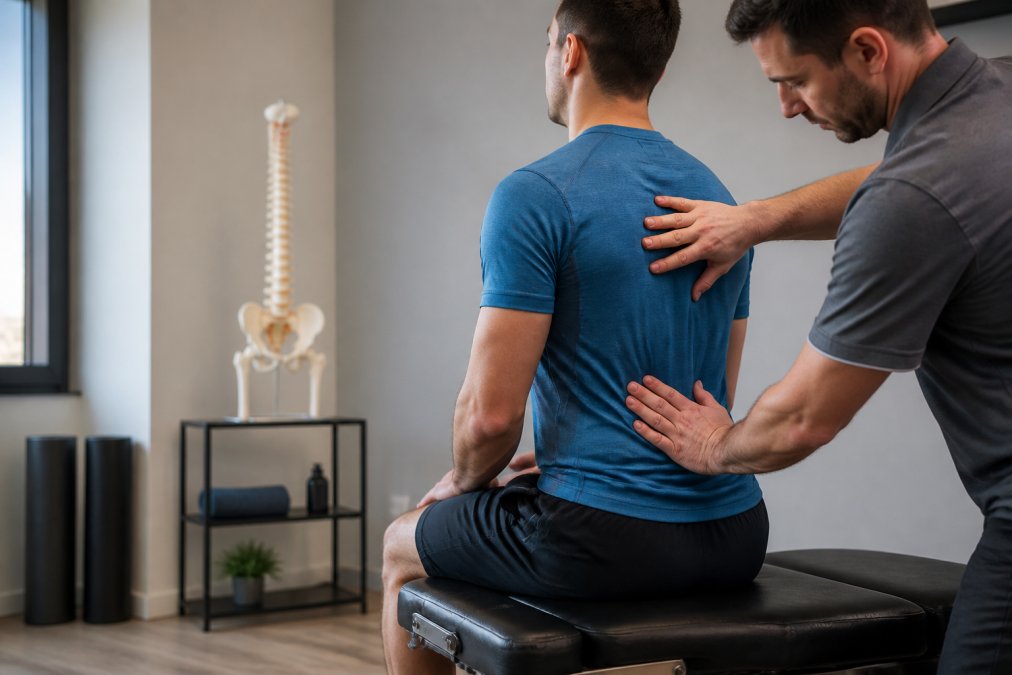
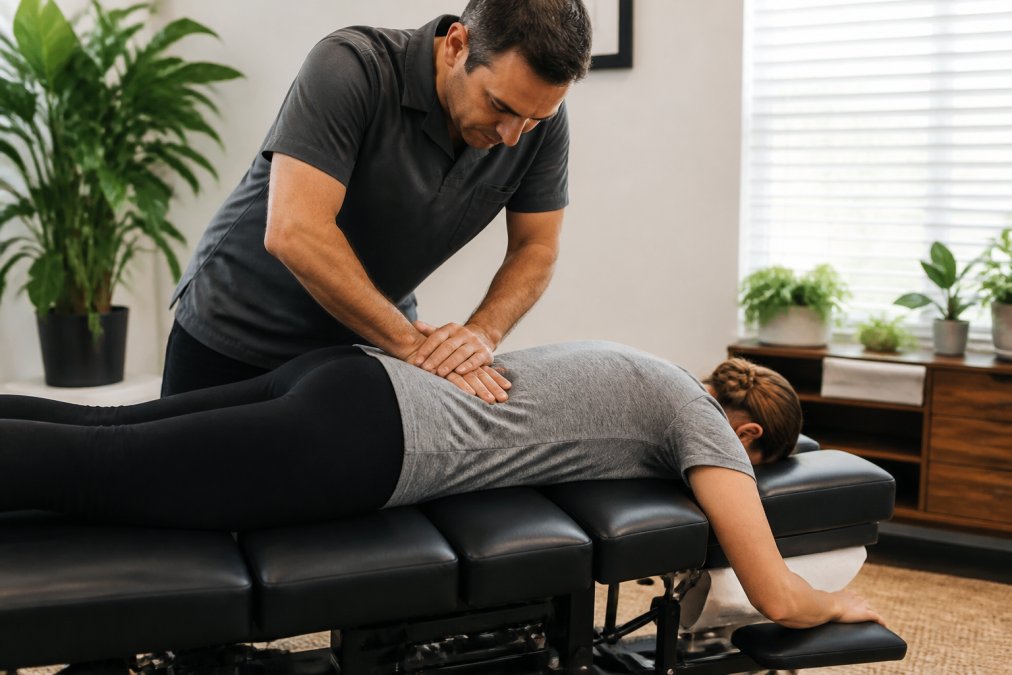
Home care helps short-term. For ongoing or repeat stiffness, chiropractic for long term pain relief may help more.
Home fixes calm everyday stiffness. If pain keeps coming back, a full evaluation can find the root cause and help you avoid the same cycle.
Frequently Asked Questions
How do I get instant relief from neck and shoulder pain?
Apply a cold compress for the first 15 to 20 minutes if inflammation is present, or a heating pad for muscle tension and stiffness. Over-the-counter topical analgesics with menthol or lidocaine can numb trigger points quickly. Gentle neck rotation and chin tucks help restore range of motion. If pain persists beyond a few days or radiates down your arm, see a healthcare provider. Chiropractic care for long term pain relief addresses the underlying alignment issues rather than masking symptoms.
What should I avoid doing when I have a stiff neck?
Avoid forcing neck rotation or lateral flexion beyond your comfortable range, which can strain the cervical spine further. Skip heavy lifting, overhead activities, and sleeping on your stomach. Do not ignore persistent stiffness that lasts more than a week or comes with numbness, tingling, or weakness in your arms. These signs may indicate nerve impingement and warrant a medical evaluation before trying home remedies.
Is it safe to massage a stiff neck at home?
Gentle self-massage around the shoulders and upper back is generally safe for muscle tension. Use light pressure with your fingers or a massage tool, avoiding deep pressure directly on the cervical spine or front of the neck. Stop if you feel dizziness or increased pain. For chronic pain or recurring stiffness, a professional evaluation can identify whether the issue stems from posture, vertebrae alignment, or stress-induced tension.
When should I seek professional chiropractic care for neck pain in San Antonio?
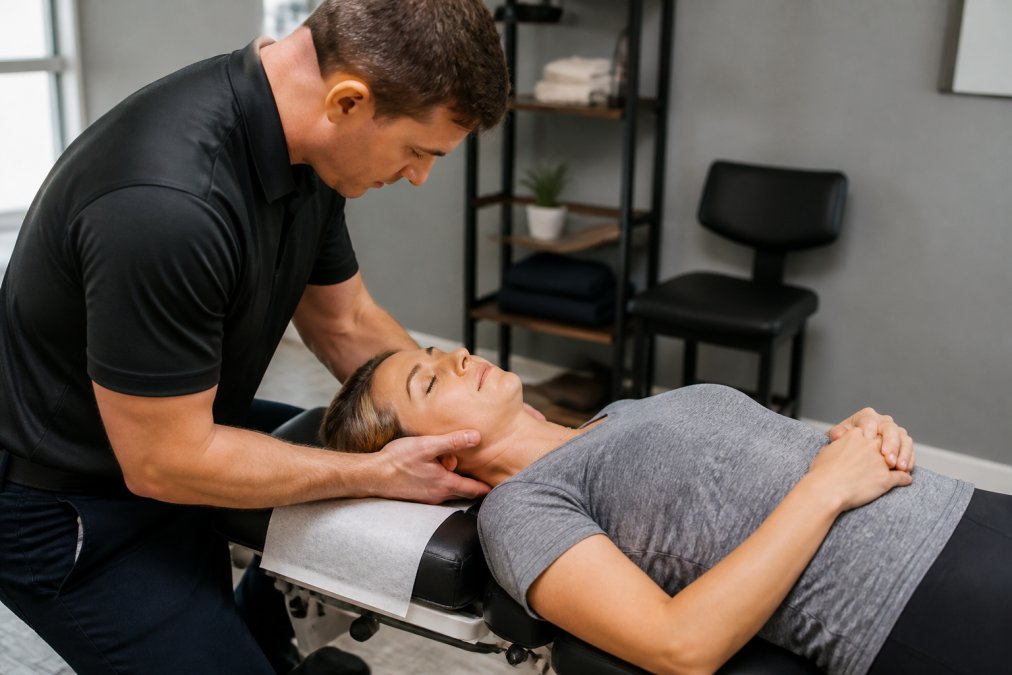
If home remedies have not improved your stiffness after one to two weeks, or if pain keeps returning, a chiropractor can assess your cervical spine alignment and posture. Moore Chiropractic in San Antonio offers a complimentary evaluation to determine whether gentle chiropractic techniques suit your situation. Athletes, desk workers, and people recovering from motor vehicle accidents often benefit from personalized care plans that combine adjustment with therapeutic exercises.
A stiff neck rarely fixes itself overnight, and repeat flare-ups often point to a deeper cause. Moore Chiropractic can help you find it. Our gentle techniques, personalized care plans, and complimentary evaluation and consultation make it easy to start. Get started with Moore Chiropractic and take back your mobility.