Table of Contents
- Common Causes of Sudden Sharp Back Pain When Bending
- Signs of a Herniated Disc You Should Not Ignore
- How to Relieve Lower Back Pain at Home
- Chiropractic for Long Term Pain Relief
- Ergonomic Fixes for San Antonio Desk Workers and Active Lifestyles
- The Emotional Toll of Sudden Back Pain
- Frequently Asked Questions
Last Updated: September 19, 2026
Common Causes of Sudden Sharp Back Pain When Bending
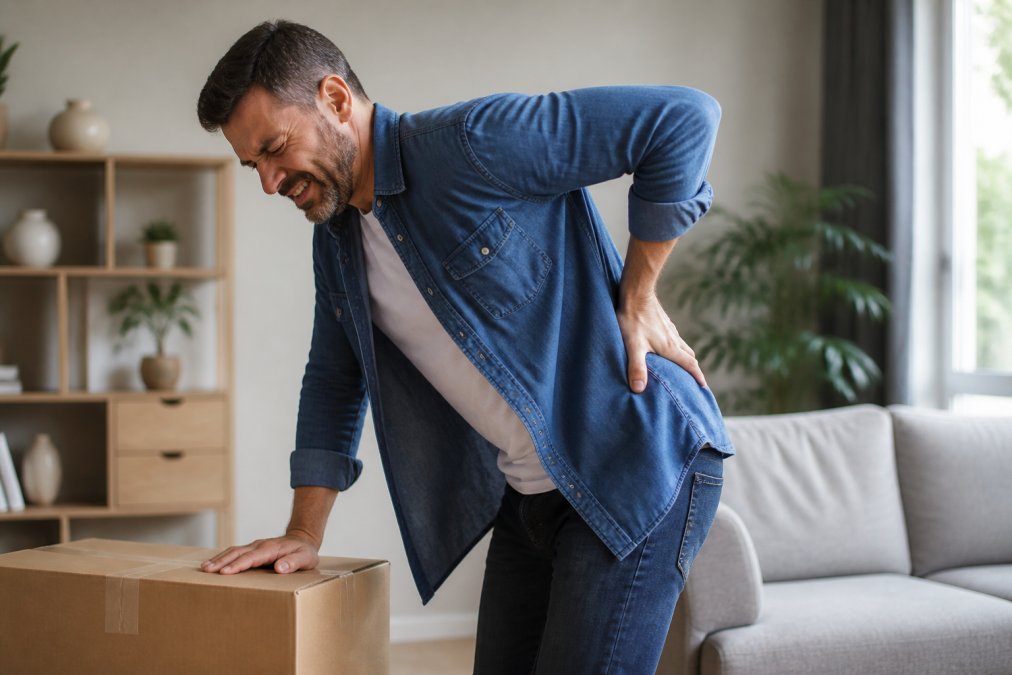
Sudden sharp back pain when bending usually comes from a strain, a sprain, or a disc problem. Most cases are not serious. But the cause changes how you treat it.
Three structures usually take the blame:
- Muscles that stretch too far
- Ligaments that hold the spine together
- Discs that cushion the vertebrae
Muscle Strain vs. Ligament Sprain
A muscle strain is a tear in the muscle fibers. A ligament sprain is a tear in the tissue that connects bone to bone. Both hurt. They just hurt in different ways.
| Injury | What Tears | Typical Cause | Main Feeling |
|---|---|---|---|
| Muscle strain | Muscle fibers | Lifting, twisting | Ache that sharpens |
| Ligament sprain | Ligaments | Sudden stretch, fall | Deep throb, swelling |
| Disc injury | Disc cushion | Bending, lifting | Sharp, shooting pain |
Herniated Disc and Nerve Compression
A herniated disc happens when the soft center of a spinal disc pushes through its outer ring. That bulge can press on a nerve. The result is a sharp, electric pain.
Signs of a Herniated Disc You Should Not Ignore
The clearest sign of a herniated disc is sharp pain that travels down one leg. Other warning signs include numbness, tingling, and muscle weakness.
Watch for these red flags:
- Pain that shoots below the knee
- Numbness or tingling in the foot
- Weakness when lifting your foot
- Pain that worsens when you cough or sneeze
- Trouble standing up straight
If you lose bladder or bowel control, or feel numbness in the groin area, go to an emergency room right away. These are signs of a rare but serious condition called cauda equina syndrome.
How to Relieve Lower Back Pain at Home
Most sudden back pain improves within a few days at home. The goal in the first 48 hours is to calm inflammation and keep the spine moving without re-tearing tissue. Bed rest beyond a day or two actually stiffens the spine and slows recovery.
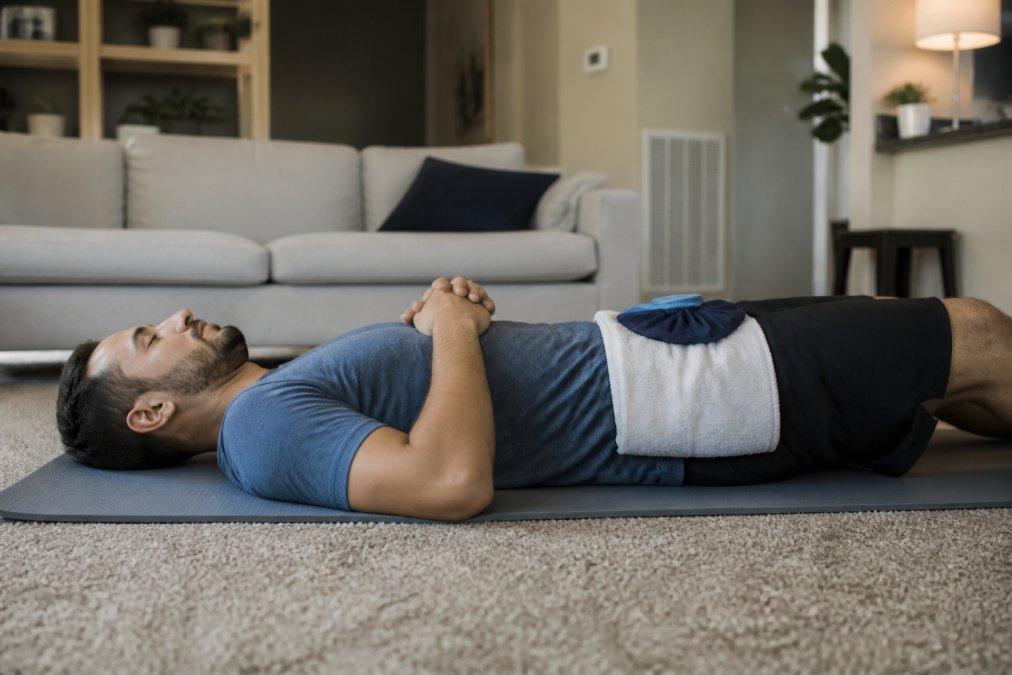
Try these steps for the first 48 hours:
- Rest for a day, but do not stay in bed longer, walk to the kitchen, the bathroom, and around the block
- Apply cold therapy for 15 to 20 minutes at a time, with at least 40 minutes off between sessions
- Take an over-the-counter anti-inflammatory such as ibuprofen or naproxen if your doctor approves, these reduce the chemical drivers of inflammation, not just the sensation of pain
- Walk short distances every few hours to keep the lumbar spine from stiffening
- Avoid heavy lifting, twisting, and any movement that reproduces the sharp jolt
Cold Therapy vs. Heat Application
Use cold first, then heat. The reason is mechanical, not traditional. Cold narrows blood vessels, which limits swelling and numbs the nerve endings firing in a strained muscle. Heat does the opposite, it opens blood vessels and relaxes muscle fibers, which feels good on a tight muscle but can worsen fresh inflammation.
- Cold packs: Best for the first 48 hours and after any activity that flares the pain. Wrap the pack in a towel, never place ice directly on skin.
- Heat pads: Best for stiffness and muscle tightness after day two, or for a chronic ache that has no swelling
- Never sleep on a heating pad. Burns can happen even at low settings because pain sensation fades during sleep.
What Actually Helps Beyond Ice and Heat
A few low-cost tools have solid support for acute low back pain:
- Gentle walking: 5 to 10 minutes at a time, several times a day. This keeps the discs hydrated and the surrounding muscles from guarding.
- Supported positions: Lying on your back with a pillow under the knees, or on your side with a pillow between the knees, takes load off the L4-L5 and L5-S1 segments.
- Topical analgesics: Over-the-counter creams with menthol or lidocaine can dull surface pain without stomach side effects.
- Sleep position: Back sleepers do best with a pillow under the knees. Side sleepers do best with a pillow between the knees to keep the pelvis neutral.
When to See a Doctor
See a doctor if pain lasts more than two weeks, or if you have numbness, weakness, or trouble walking. Also go in if the pain follows a fall or car accident.
Do not wait if you notice any of these:
- Pain that gets worse over time instead of easing
- Fever, chills, or unexplained weight loss
- Loss of bladder or bowel control
- Pain that wakes you at night or that does not change with position
- Numbness in the groin or inner thighs
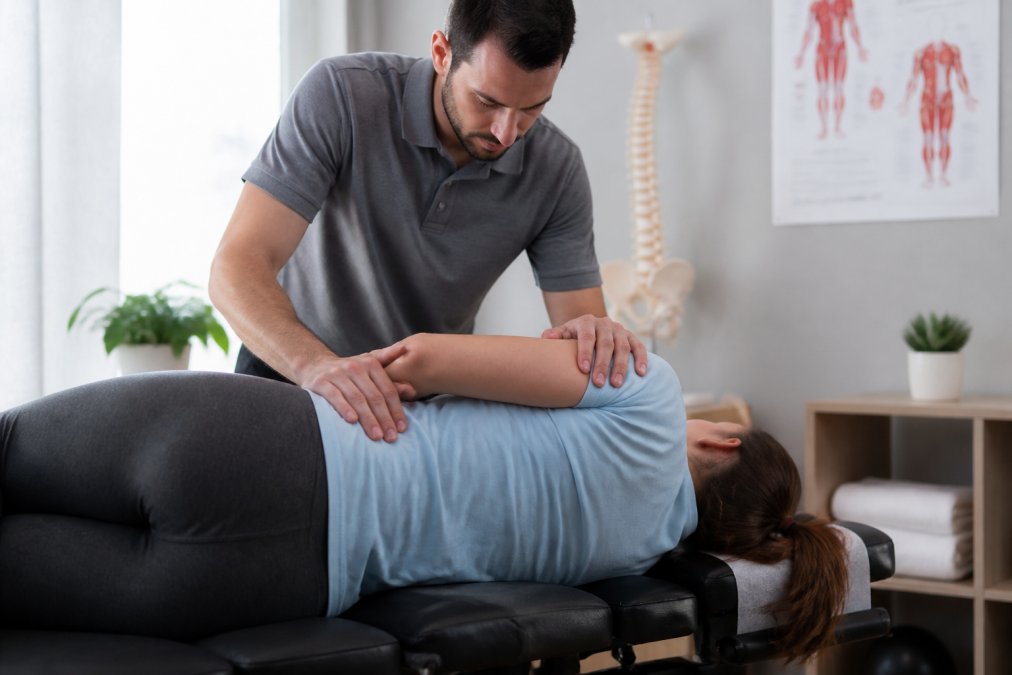
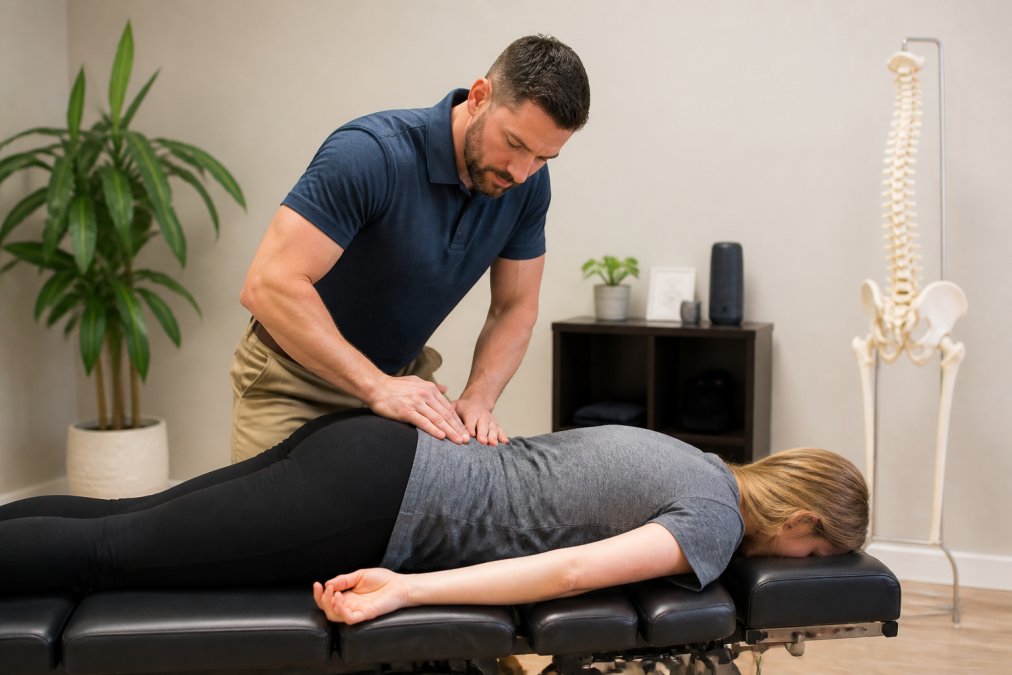
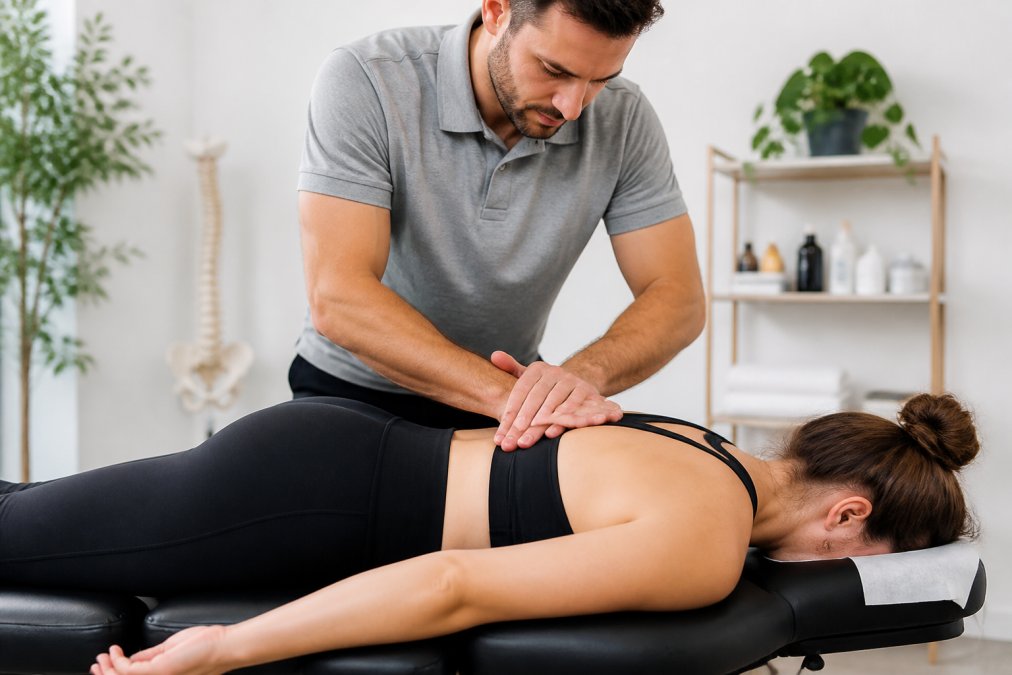
Chiropractic for Long Term Pain Relief
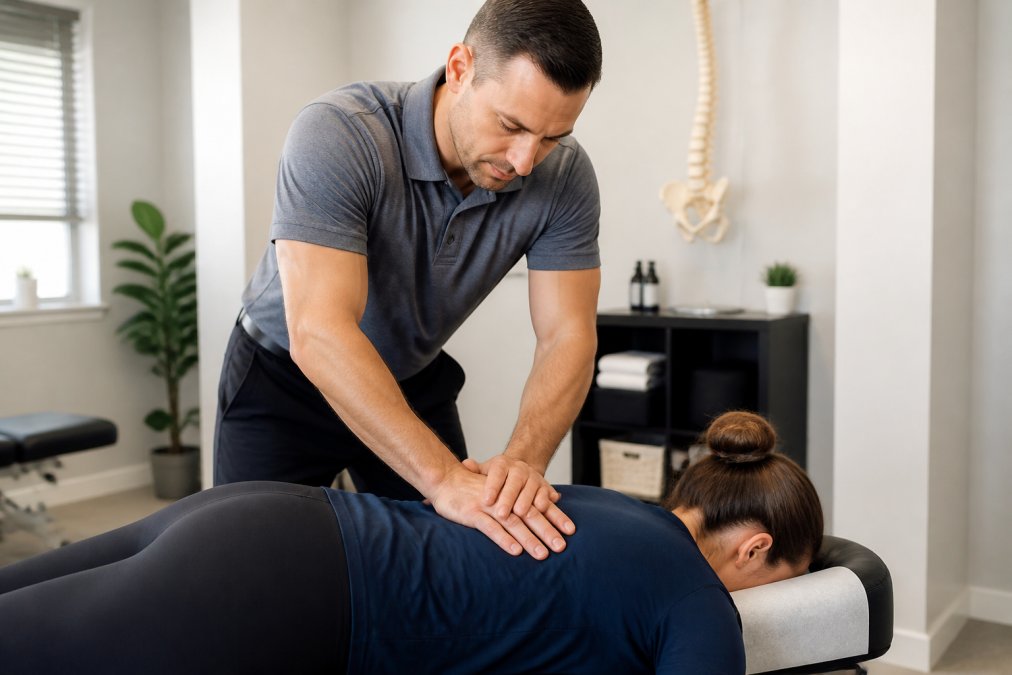
Chiropractic care for long term pain relief focuses on spinal alignment, range of motion, and core stabilization. It aims to fix the cause, not just mask the pain.
Ask about the plan before you commit. A good provider will tell you how many visits to expect and what progress should look like. If chiropractic is not right for you, they should say so.
Ergonomic Fixes for San Antonio Desk Workers and Active Lifestyles
Ergonomics is the practice of setting up your workspace and daily tasks to fit your body. Small changes cut the load on your spine. But the advice that actually prevents a repeat injury is task-specific, most articles say “don’t bend” without telling you what to do instead.
Bending Alternatives for Common Daily Tasks
Instead of bending at the waist, hinge at the hips with a flat back, or change the height of the task so you do not have to bend at all.
- Laundry: Put the basket on a stool or chair instead of the floor. Load the washer from a kneeling position on one knee, not a bent-over stance.
- Gardening: Use a kneeler bench or a bucket turned upside down to sit on. Long-handled tools let you work standing up.
- Picking up a child: Squat with feet shoulder-width apart, keep the child close to your chest, and stand by pushing through your heels, never twist while lifting.
- Making the bed: Walk around the bed instead of reaching across it. Kneel on the mattress to tuck sheets rather than bending at the waist.
- Unloading the dishwasher: Squat to the lower rack, or pull a chair over and sit while you unload.
- Walking the dog: Use a waist leash instead of a hand leash so a sudden pull does not yank your spine.
Desk Setup for San Antonio Office Workers
- Screen: Top of the monitor at eye level, about an arm’s length away
- Chair: Backrest supporting the curve of your lower back, seat height so feet rest flat on the floor
- Keyboard and mouse: Close enough that your elbows stay at 90 degrees and your shoulders relax
- Phone: Hold it up to eye level instead of bending your neck down, “text neck” adds load to the same spinal segments that hurt when you bend
- Driving: Move the seat close enough that your knees stay slightly bent and your back stays against the seat. San Antonio traffic on I-35 and Loop 1604 means long commutes, a lumbar support cushion is worth the $20.
Where to Get Care in San Antonio
If the pain does not settle in a few days, San Antonio has several options depending on how urgent it is:
- Urgent care: Good for pain that started in the last day or two, with no numbness or weakness. Wait times are usually shorter than an ER and the cost is lower.
- Emergency room: Needed for loss of bladder or bowel control, groin numbness, or weakness in both legs. Go to the nearest ER, do not drive yourself.
- Primary care or a chiropractor: Best for pain lasting more than a few days without red flags. A chiropractor can assess whether the cause is muscular, ligamentous, or disc-related before you commit to imaging.
- Physical therapy: Often the next step when pain lasts more than two weeks. Look for a clinic that offers manual therapy plus a home exercise program.
A simple test: bend forward slowly. If the pain is sharp and shoots down one leg, that points to a nerve issue and you should be evaluated before starting home stretches. If it is a dull ache that tightens, a strain is more likely.
The Emotional Toll of Sudden Back Pain
Sudden back pain affects your mood, not just your body. Many people feel anxious, frustrated, or afraid to move. That stress can slow recovery.
What helps:
- Keep a simple log of what eases the pain
- Stay gently active instead of resting all day
- Talk to your provider about your fears
- Ask about a plan so you know what comes next
Frequently Asked Questions
How can I tell if my sudden sharp back pain is muscular or spinal?
Muscle strains usually cause a dull ache that worsens with movement and improves with rest. Spinal issues like a herniated disc often send sharp, shooting pain down the leg, sometimes with numbness or tingling. If bending triggers a jolt that travels below your knee, that points more toward nerve involvement. A doctor or chiropractor can confirm the difference with a physical exam and, if needed, diagnostic imaging such as an MRI scan.
What are the common triggers for sudden sharp back pain when bending?
The most frequent triggers are lifting something heavy with poor lifting mechanics, twisting while bending, and sitting for long periods before standing up. In San Antonio, yard work, golf, and picking up children are common culprits. Cold mornings can also stiffen the lumbar spine and make a sudden movement more likely to strain muscles or irritate a disc. Warming up before activity and bracing your core can reduce the risk.
Can chiropractic care help with sharp pain when bending?
Chiropractic care focuses on spinal alignment and restoring range of motion, which can ease the muscle guarding and joint stiffness that make bending painful. A chiropractor will first assess whether your pain is muscular, disc-related, or something else. If chiropractic is not the right fit, a good practitioner will tell you and refer you elsewhere. For long-term relief, combining adjustments with core stabilization exercises tends to work better than either alone.
When should I seek emergency care for sudden sharp back pain?
Go to an emergency room if the pain follows a fall or accident, or if you lose control of your bladder or bowels, feel numbness in the groin area, or have weakness in both legs. These can signal a serious condition like cauda equina syndrome. Also seek urgent care if the pain comes with a fever, unexplained weight loss, or a history of cancer. For pain that is severe but stable, a chiropractor or primary care doctor can evaluate you sooner.