You stand up from your desk, take two steps, and a sharp, buzzing sensation shoots from your lower back down the back of your thigh. Maybe it stops at the knee. Maybe it travels all the way to the foot. Either way, it is hard to ignore, and it often gets worse at the worst possible moments, like during a long drive, a business trip, or the third hour of a coding session. Pain that travels is different from the dull ache of a tight muscle, and it deserves a different kind of attention.
If you have been searching for back pain treatment San Antonio TX residents can trust, this guide is for you. We will walk through why back pain spreads into the legs, which symptoms are worth taking seriously, what you can safely try at home, and how a hands-on, non-surgical approach may help. Whether you run a small business, write software, or simply spend a lot of time sitting, standing, or lifting, you will find practical steps you can start using today.
One note before we begin: this article is educational and is not a substitute for a personal evaluation. Radiating pain has many possible sources, and the right plan starts with identifying yours.
Why Back Pain Travels Down the Leg
Your spine is more than a stack of bones. Between the vertebrae, nerve roots exit through small openings and branch out to supply sensation and movement to the hips, thighs, calves, and feet. When something in the lower back irritates or compresses one of those nerve roots, your brain does not always read the signal as coming from the back. Instead, you feel it along the path that nerve travels, which is why pain can show up in a buttock, behind a knee, or in the toes.
Common culprits include a bulging or herniated disc pressing on a nerve, narrowing of the openings where nerves exit, joint irritation in the lower spine or pelvis, and tight muscles such as the piriformis that can squeeze the sciatic nerve. People often describe the sensation as burning, electric, or like a toothache that runs down the leg. For anyone seeking sciatica relief and spinal care, understanding that the leg symptoms usually begin at the spine is the first step toward treating the real source instead of chasing the symptom.
Reading the Signals: What Your Leg Symptoms Are Telling You
Not all leg symptoms mean the same thing, and paying attention to the details can give a clinician valuable clues. Pain that follows a single line down the back of the leg often points toward a lumbar nerve root. Pain that stays above the knee and feels more like a deep ache may be coming from the sacroiliac joint or hip region. Tingling in the top of the foot suggests a different nerve level than numbness in the outer edge of the foot.
Try keeping a simple log for a week. Note when the symptoms start, what position triggers them, and what eases them. Do they flare when you bend forward, such as tying your shoes? That pattern often fits with disc involvement. Do they worsen when you stand or walk for a while and ease when you sit? That can fit with narrowing around the nerves. Does coughing or sneezing send a jolt down the leg? That is another detail worth sharing.
None of this replaces an exam, but arriving with a clear description helps the provider narrow the possibilities faster. Be specific about location, quality, timing, and anything that makes it better or worse.
Red Flags That Need Prompt Medical Attention
Most radiating back pain improves with conservative care, but a small number of cases are emergencies. Seek urgent medical help right away if you notice any of the following:
- Loss of bladder or bowel control, or difficulty urinating
- Numbness in the groin, inner thighs, or saddle area
- Sudden or rapidly worsening weakness in one or both legs
- Pain that follows a significant fall, accident, or trauma
- Fever, unexplained weight loss, or a history of cancer alongside new back pain
- Severe pain that does not change at all with position and is worse at night
These signs can point to serious nerve compression or conditions that need immediate imaging and treatment, not a wait-and-see approach. If you are unsure whether your symptoms qualify, err on the side of caution. A few hours in an urgent care or emergency setting is a small price compared with the risk of permanent nerve damage. For everything outside this list, a thoughtful, stepwise plan is usually appropriate.
Smart First Steps in the First Few Days
When leg pain first flares, the instinct is often to lie flat and avoid everything. Strict bed rest tends to backfire, because stiffness builds and the nerve can become more sensitive. A better approach is relative rest: avoid the specific activities that provoke the pain, but keep moving gently throughout the day.
Short, frequent walks on flat ground are a good starting point. Alternate between sitting, standing, and walking every 30 minutes if you can. Applying heat to tight muscles or ice to a sharply inflamed area for around 15 minutes at a time can take the edge off. Sleeping on your side with a pillow between the knees, or on your back with a pillow under the knees, often reduces strain on the lower spine.
Over-the-counter options may help some people, but check with a pharmacist or physician about what is appropriate for you. Avoid heavy lifting, deep forward bends, and long stretches in a single position. If you are working with Moore Chiropractic or another local provider, they can tailor these early steps to what your exam reveals rather than leaving you to guess.
What a Hands-On Evaluation Looks Like
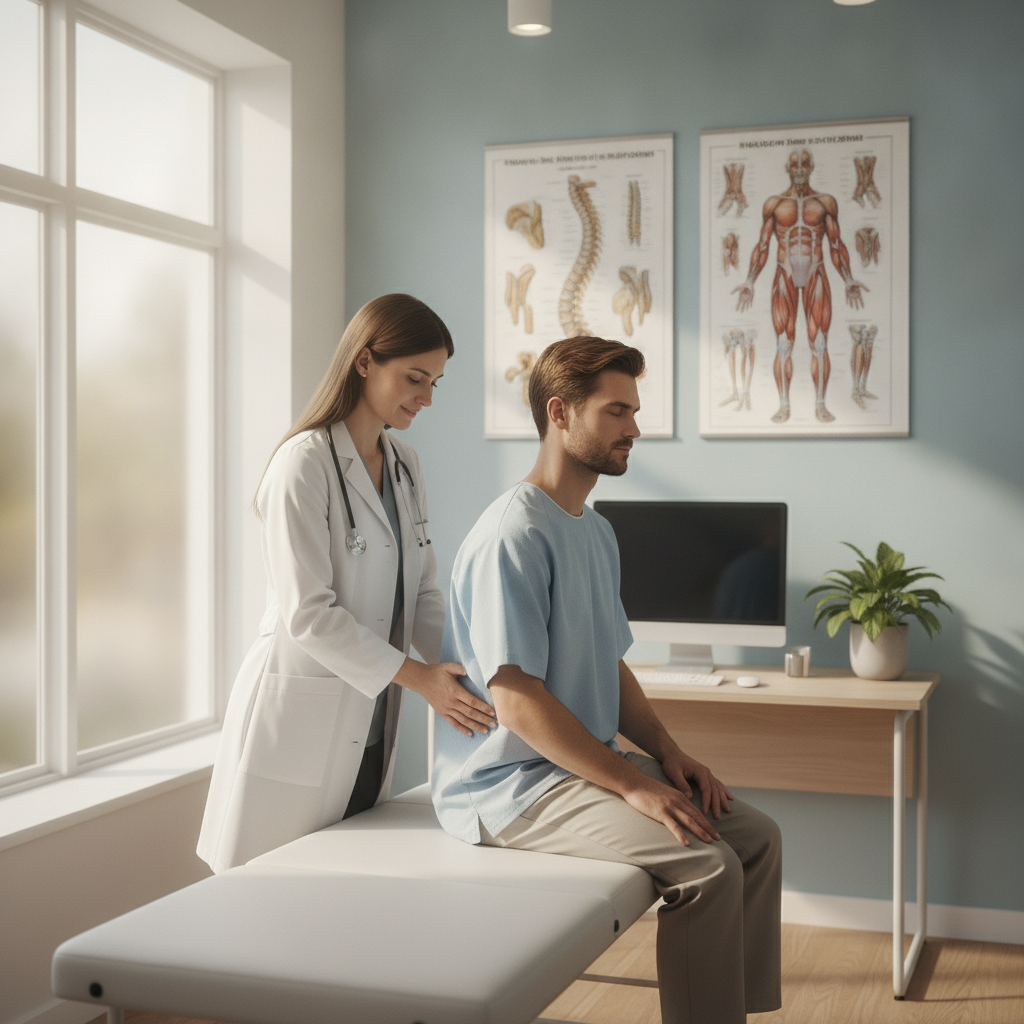
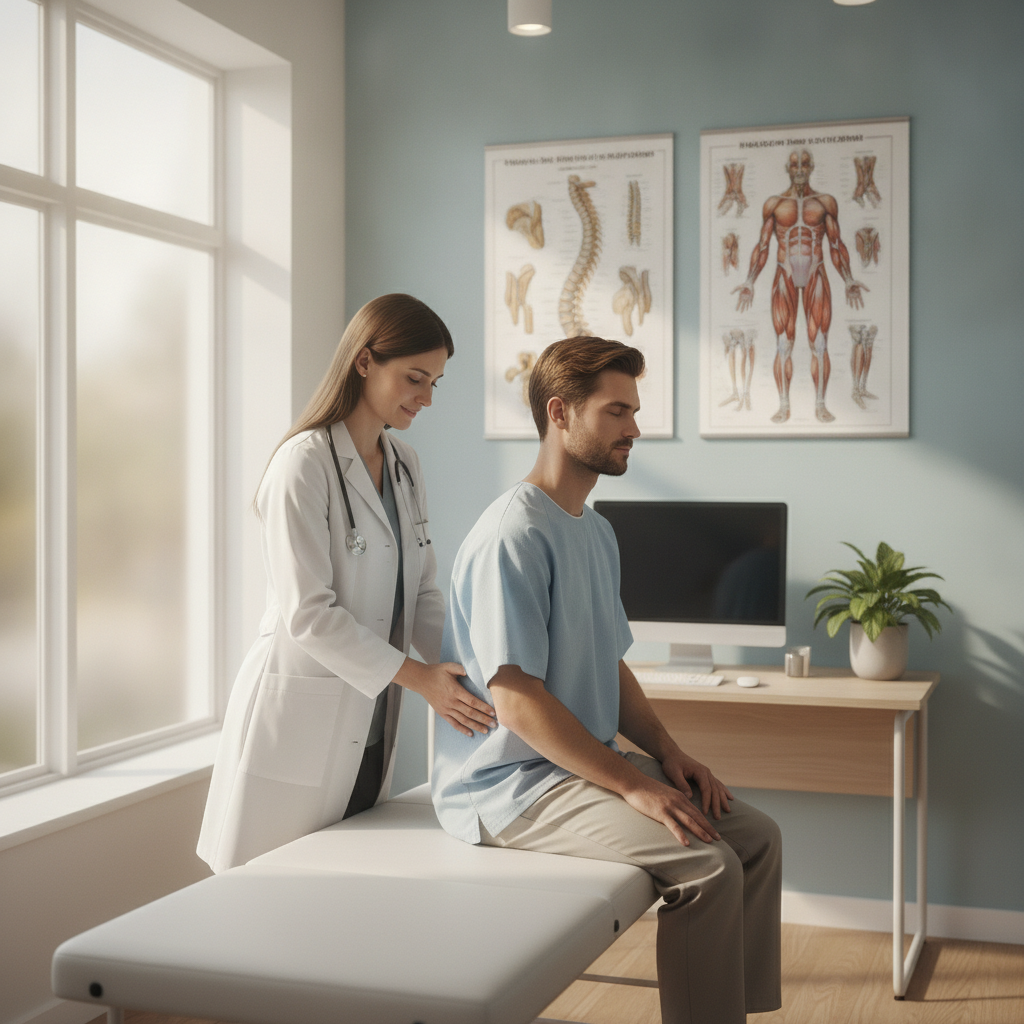
A proper evaluation for radiating pain goes well beyond asking where it hurts. Expect a detailed history covering when the pain began, what you were doing, your work habits, and any past injuries. Then comes the physical exam, which usually includes checking posture, spinal motion, muscle strength in the legs, reflexes, and sensation along the leg.
Orthopedic and neurological tests help pinpoint whether a nerve root is involved. For example, a straight leg raise can reproduce the radiating pain if a lower lumbar nerve is irritated. The provider may also palpate the lower back, hips, and pelvis to find joint restrictions or muscle tension that contribute to the problem.
Imaging such as X-ray or MRI is not always needed at the start, but it can be valuable when symptoms are severe, are not improving, or when the exam suggests something beyond a typical mechanical cause. Finding a Chiropractor in San Antonio, TX who explains each finding in plain language, and tells you honestly when a referral is the better move, is a sign you are in good hands.
How Chiropractic Care May Help Nerve-Related Leg Pain
Chiropractic care focuses on how the joints and soft tissues of the spine move and function. When a lower back joint is restricted, nearby muscles often tighten to protect it, and that combination can increase pressure on already sensitive nerves. Gentle spinal adjustments or mobilizations aim to restore motion in those restricted areas, which may reduce irritation and help the surrounding muscles relax.
Many plans pair adjustments with soft tissue work, such as targeted muscle release around the hips and glutes, plus guided exercises. Some patients respond well to flexion-distraction techniques, a gentle, table-assisted method that creates mild traction through the lumbar spine. Others do better with low-force methods, especially when pain is intense.
It is important to stay realistic. Results vary from person to person, and chiropractic care is not a cure-all. A good provider will set expectations, monitor your progress over the first several visits, and adjust the plan if you are not improving. If your symptoms do not respond as hoped, that is useful information that may point toward a co-managed or medical pathway.
Common Causes of Radiating Pain at a Glance
The table below summarizes several typical sources of back pain that spreads into the legs, along with the patterns people commonly report. It is a general guide only, and a hands-on exam is needed to sort out what is actually happening in your case.
| Possible Source | Typical Pattern | Often Aggravated By |
|---|---|---|
| Disc bulge or herniation | Sharp or burning pain down one leg, sometimes with tingling | Bending forward, prolonged sitting, coughing |
| Spinal narrowing (stenosis) | Heaviness or cramping in both legs while walking | Standing upright, walking longer distances |
| Sacroiliac joint irritation | Deep ache in buttock and thigh, rarely below the knee | Climbing stairs, rolling in bed, standing on one leg |
| Piriformis muscle tightness | Buttock pain that may travel down the back of the thigh | Sitting on hard surfaces, long drives |
| Lumbar facet joint strain | Low back ache that refers into the hip or upper thigh | Leaning backward, twisting |
Desk Habits That Quietly Make Leg Pain Worse
If you build websites, run a shop, or manage a team, chances are you sit for long stretches. Sitting increases pressure on the lower spinal discs and can shorten the muscles at the front of the hips, which tugs on the lower back. Over time, this can keep a sensitive nerve irritated even when you do everything else right.
Start with the basics. Set your chair so your feet rest flat and your knees sit roughly level with or slightly below your hips. Keep a small cushion or rolled towel at the curve of your lower back. Position your monitor at eye level so you are not craning forward, and keep your keyboard close so your arms stay relaxed.
More important than any perfect posture is how often you change position. Set a timer to stand up every 30 to 45 minutes. A standing desk can help, but only if you alternate; standing rigidly for hours causes its own problems. Take short walking breaks, do a few gentle hip stretches, and avoid sitting on a wallet, since that small tilt can aggravate the pelvis and sciatic nerve over time.
Gentle Movements to Calm an Irritated Nerve
Movement is one of the most useful tools for radiating pain, but the type of movement matters. Aggressive stretching of an already irritated nerve can flare symptoms. Gentler options tend to work better in the early stage.
Pelvic tilts, performed lying on your back with knees bent, teach your lower spine to move without strain. Knee-to-chest holds can ease tight hips for some people, while others find that gentle press-ups on the elbows feel better, depending on which direction calms their symptoms. The guiding rule is that a good movement should reduce or centralize the leg pain, meaning the symptoms retreat toward the spine, rather than push farther down the leg.
Stop any movement that increases numbness, tingling, or leg pain that lingers afterward. Walking remains a reliable choice for most people. Once the pain settles, building strength in the glutes, deep core muscles, and hips gives your spine better support. A provider can show you which exercises fit your pattern so you are not guessing or repeating moves that quietly work against you.
Keeping the Problem From Coming Back
Once the pain eases, the real work begins: reducing the odds of a repeat. Recurring leg pain often traces back to habits and mechanical patterns that were never addressed. For many people, Chiropractic Options for People With Recurring Misalignment and Postural Strain can be a useful starting point for understanding how ongoing structural stress contributes to flare-ups.
Lifting technique is a big factor. Keep loads close to your body, hinge at the hips instead of rounding the spine, and avoid twisting while carrying weight. If you handle inventory, deliveries, or equipment, ask for help with awkward loads or use a cart.
Maintain a baseline of fitness too. Regular walking, light strength work, and mobility routines keep the supporting muscles ready to protect your spine. Pay attention to sleep and stress, since tension can amplify how sensitive your nerves feel. Finally, do not wait for a major flare to act. At the first hint of familiar warning signs, adjust your activity, return to your gentle routine, and schedule a check-in before small irritation grows into several weeks of pain.
Back Pain Treatment in San Antonio, TX: Choosing a Provider
When you are weighing options for back pain treatment San Antonio TX offers, look beyond convenience and focus on how a clinic communicates and evaluates. A thorough first visit, a clear explanation of what is likely causing your symptoms, and a plan with defined checkpoints are all good signs. Be cautious about any clinic that promises a guaranteed outcome or pushes a long prepaid package before examining you.
Ask practical questions. How will progress be measured? What happens if I am not improving after a set number of visits? Do you coordinate with medical providers or order imaging when needed? A trustworthy provider welcomes these questions and answers them plainly.
Also consider how well the care fits your life. If you work long hours, you may need flexible scheduling and clear home strategies so you can keep progressing between visits. And remember that injuries from accidents may call for a different approach. For example, How Chiropractic Care Can Support Recovery After Whiplash Without Surgery explains how a structured, non-surgical plan can work after a sudden impact injury.
Where to Go From Here
Back pain that radiates into the legs can feel alarming, but in most cases it is a mechanical problem with a logical explanation and a realistic path toward relief. The key ideas are simple. Pain that travels usually starts with an irritated nerve in or near the lower spine. Red flags like loss of bladder control, saddle numbness, or rapidly worsening weakness need urgent medical care. For everything else, staying gently active, adjusting your daily habits, and getting a proper hands-on evaluation tend to produce the best results.
Pay attention to the patterns your body is showing you. Keep that symptom log, notice what eases and aggravates the pain, and share those details with your provider. Small changes, like breaking up long periods of sitting, lifting with better mechanics, and building steady strength, add up over time and reduce the odds of a repeat episode.
If your symptoms have lingered for more than a couple of weeks, keep returning, or are interfering with work and sleep, do not simply push through. Schedule an evaluation, ask thoughtful questions, and choose a provider who explains the plan and measures progress honestly. With the right guidance and a little consistency, many people get back to the activities they care about without letting leg pain run the show.