Table of Contents
- 1. Child’s Pose: A Gentle Start for Lower Back Pain
- 2. Knee-to-Chest Stretch for Lower Back Pain Relief
- 3. Cat-Cow Stretch to Improve Spinal Alignment and Mobility
- 4. Pelvic Tilt for Core Stability and Pain Management
- 5. Seated Spinal Twist to Release Muscle Tension
- 6. Piriformis Stretch for Sciatica and Deep Hip Tightness
- 7. Sphinx or Cobra Pose for Lower Back Pain Relief
- How Long Should Stretches for Lower Back Pain Relief Duration Last?
- When to See a Chiropractor for Back Pain
- Frequently Asked Questions
Last Updated: September 20, 2026
1. Child’s Pose: A Gentle Start for Lower Back Pain
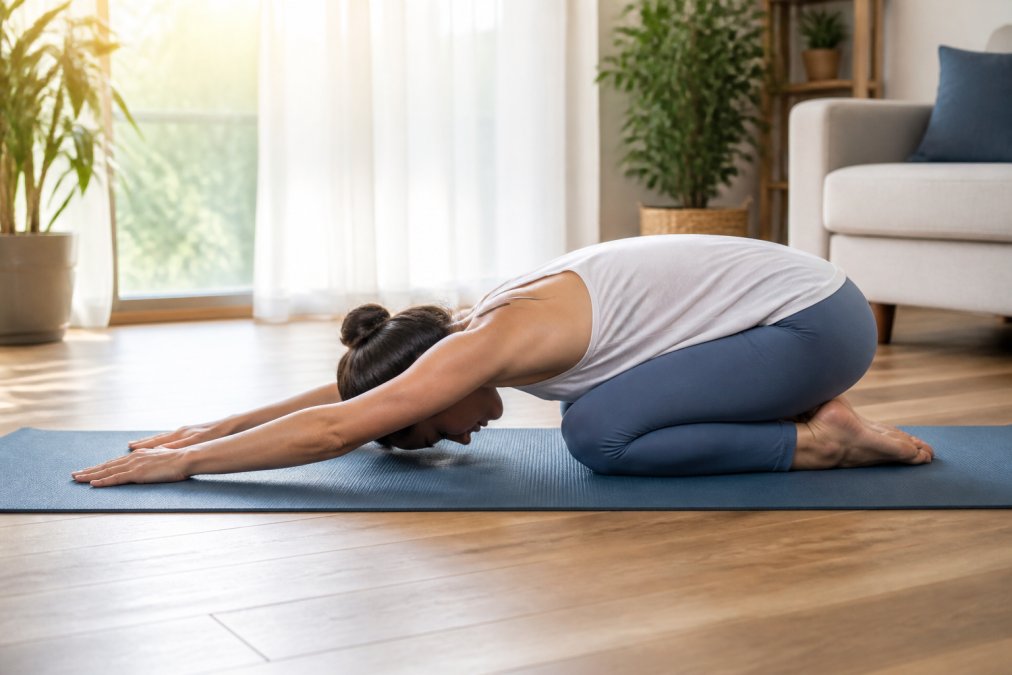
Child’s Pose is a resting stretch that lengthens the lumbar spine and releases tension in the hips and glutes. It works well as a first movement because it requires no balance and puts almost no load on the vertebrae.
To perform it, kneel on a mat, sink your hips back toward your heels, and walk your hands forward until your forehead rests on the floor. Breathe slowly for 30 to 60 seconds. If your knees object, place a folded towel behind them or widen them apart.
The stretch is gentle by design, but it isn’t for everyone. Skip it if you have a knee replacement or an acute ankle injury, and check with a clinician first if you’re pregnant and past your first trimester.
2. Knee-to-Chest Stretch for Lower Back Pain Relief
The knee-to-chest stretch is one of the simplest ways to decompress the lower back. It creates gentle traction on the lumbar spine and eases the muscle tension that builds up after a long day of sitting.
Lie on your back, pull one knee toward your chest with both hands, and hold for 20 to 30 seconds. Switch sides, then repeat with both knees together. Keep your other leg flat or bent, whichever feels more comfortable.
A common mistake is yanking the knee in fast. Slow, steady pressure works better than force. If you feel a sharp pinch rather than a stretch, back off and reduce the range of motion.
3. Cat-Cow Stretch to Improve Spinal Alignment and Mobility
Cat-Cow is a dynamic stretch that moves the spine through flexion and extension, which helps restore range of motion between the vertebrae. It’s a staple in physical therapy settings for exactly this reason.
Start on your hands and knees with a neutral spine. Inhale as you drop your belly and lift your chest and tailbone (Cow). Exhale as you round your back and tuck your chin (Cat). Move slowly through 8 to 10 rounds.
The [Mayo Clinic back pain(/understanding-chronic-back-pain-solutions-in-san-antonio/) exercise guide | mayoclinic.org] recommends this kind of gentle, controlled movement as part of a daily routine for back maintenance. Keep the motion smooth rather than jerky, and let your breath set the pace.
Do Cat-Cow before any heavier activity, including yard work or a gym session. Five rounds takes under a minute and primes the spinal joints for load.
4. Pelvic Tilt for Core Stability and Pain Management
A pelvic tilt is a small, isometric movement that activates the deep abdominal muscles supporting the lumbar spine. It’s one of the least intimidating stretches for anyone nervous about movement.
Lie on your back with knees bent and feet flat. Gently flatten your lower back against the floor by tilting your pelvis, hold for 5 seconds, then release. Repeat 10 times. The movement is tiny; if your hips are lifting off the floor, you’re pushing too hard.
This is where core stability starts. A stronger set of deep abdominal muscles takes load off the vertebrae during everyday bending and lifting. For chronic pain, that matters more than any single stretch.
5. Seated Spinal Twist to Release Muscle Tension
The seated spinal twist rotates the thoracic and lumbar spine, releasing tension in the muscles that run along the back. It’s convenient because you can do it in a chair, which makes it a practical option for desk workers in San Antonio who sit for long stretches.
Sit tall in a chair with feet flat on the floor. Place your right hand on the outside of your left thigh and your left hand on the chair behind you. Inhale, then exhale as you twist gently to the left. Hold for 15 to 20 seconds and switch sides.
Never force a spinal twist, especially if you have a history of disc problems or a recent acute injury. Twisting into pain can aggravate the condition rather than relieve it.
6. Piriformis Stretch for Sciatica and Deep Hip Tightness
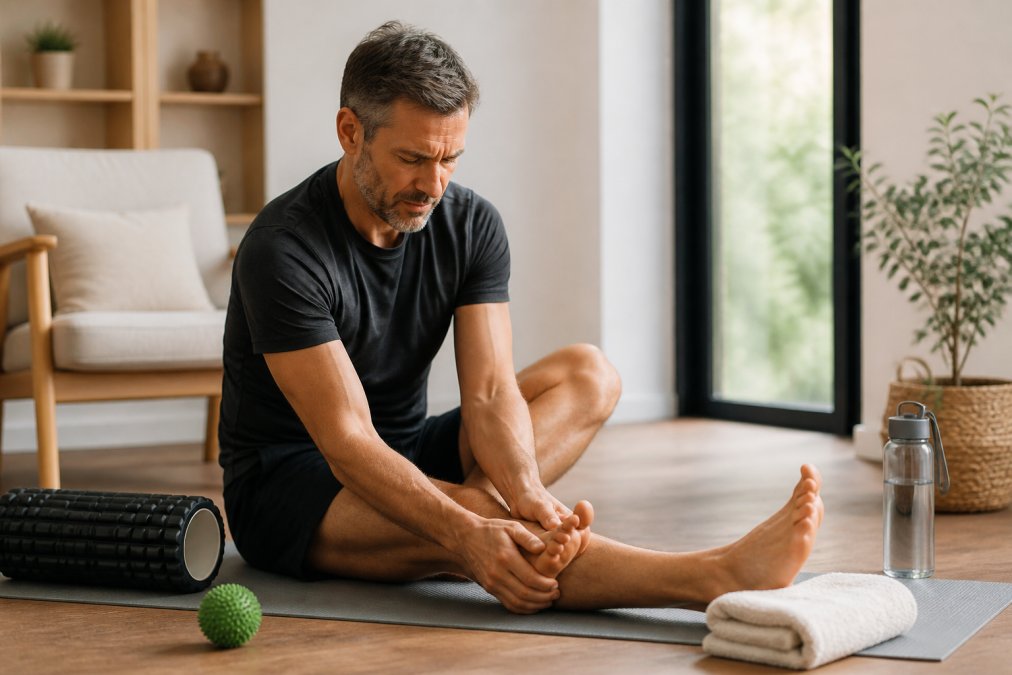
The piriformis is a small muscle that runs from the lower spine (sacrum) to the top of the thigh bone (femur). In most people, the sciatic nerve passes underneath it; in a minority, the nerve runs straight through the muscle.
How to do it:
- Lie on your back with both knees bent and feet flat.
- Cross your right ankle over your left knee, forming a figure-4.
- Reach through the gap and pull your left thigh toward your chest until you feel a stretch deep in the right hip and buttock.
- Hold 30 seconds, breathe, then switch sides. Two to three rounds per side.
Skip this stretch if you have a known herniated disc with radiating leg pain, a recent hip replacement, or pain that worsens the further you pull the knee in. In those cases, a clinician should evaluate you before you stretch. Stretching an irritated nerve can make symptoms worse, not better.
The Cedars-Sinai guidance on back exercises notes that combining stretching with strengthening gives better long-term results than stretching alone. For the piriformis specifically, that means pairing this stretch with glute bridges and side-lying hip abduction once the acute pain settles. Pair it with the pelvic tilt above for a more complete routine.
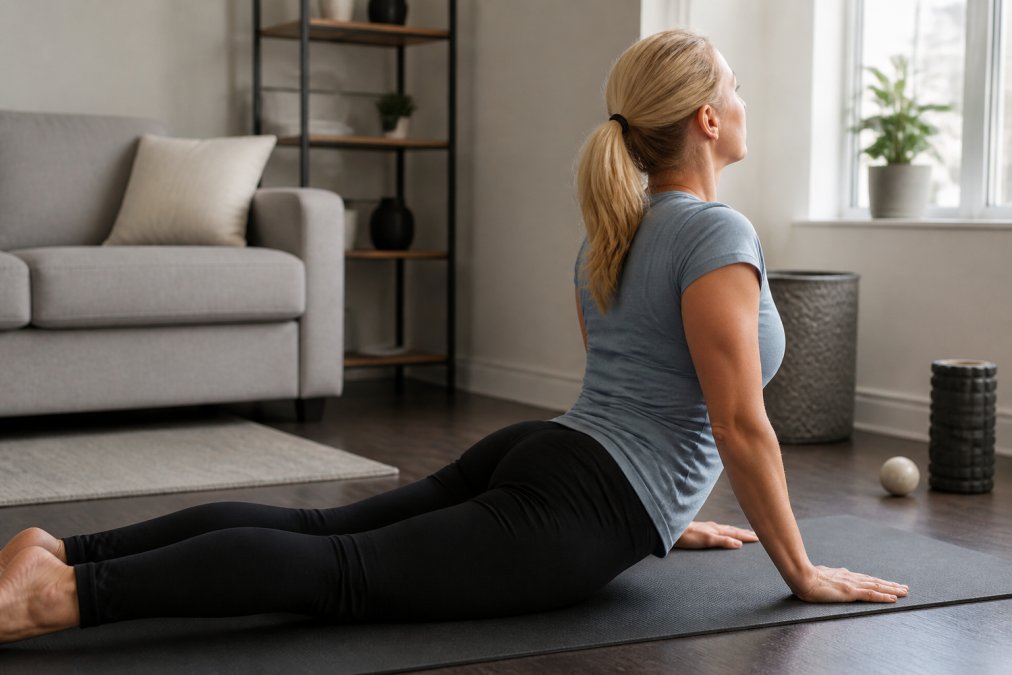
7. Sphinx or Cobra Pose for Lower Back Pain Relief
Sphinx and Cobra are extension stretches that move the spine in the opposite direction from most sitting postures. They’re especially useful for people whose pain worsens after prolonged sitting.
How Long Should Stretches for Lower Back Pain Relief Duration Last?
Most people should hold static stretches for 20 to 30 seconds and repeat them 2 to 3 times per side. A full routine of the seven stretches above takes about 10 to 15 minutes. Dynamic movements like Cat-Cow are done in 8 to 10 slow repetitions rather than held.
| Stretch | Hold / Reps | Best Time of Day |
|---|---|---|
| Child’s Pose | 30-60 seconds | Morning or before bed |
| Knee-to-Chest | 20-30 seconds per side | After sitting |
| Cat-Cow | 8-10 slow rounds | Before activity |
| Pelvic Tilt | 10 reps, 5-second holds | Morning |
| Seated Spinal Twist | 15-20 seconds per side | Mid-workday |
| Piriformis Stretch | 30 seconds per side | After walking or running |
| Sphinx or Cobra | 20-30 seconds | After long sitting |
When to See a Chiropractor for Back Pain
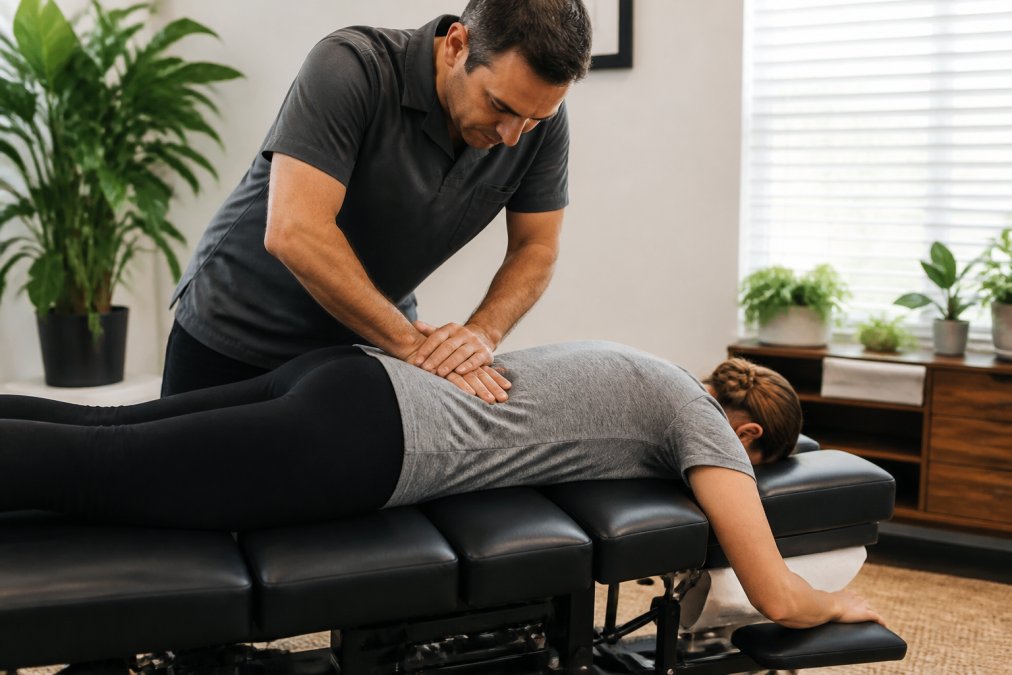
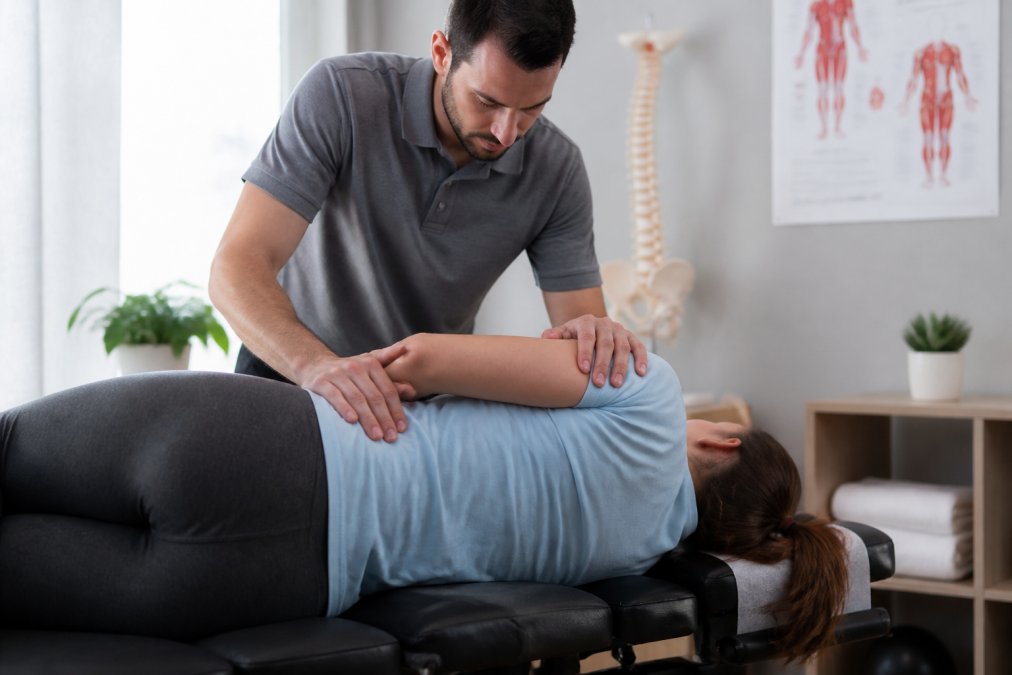
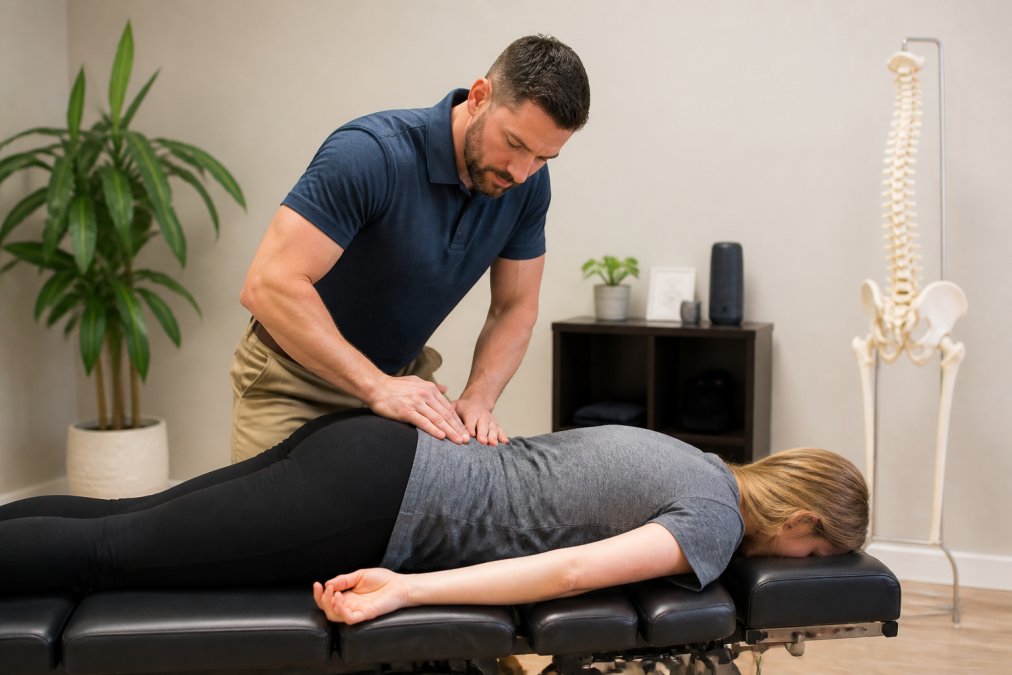
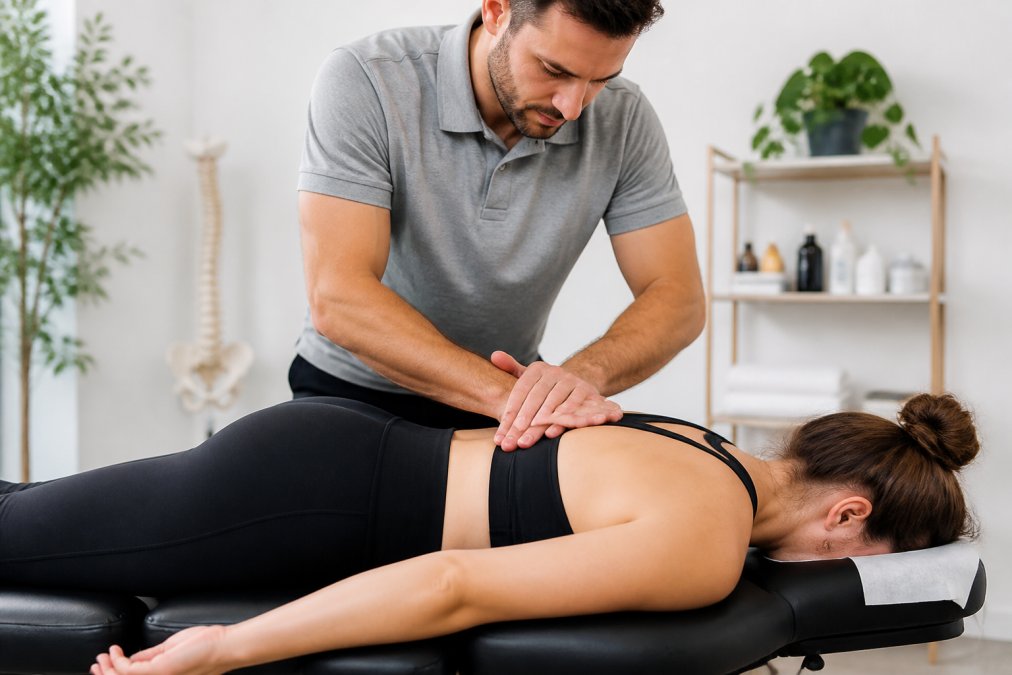
Stretching helps with muscle tension and mild stiffness, but it has limits. The clearest signal to seek professional care is pain that lasts more than two to four weeks despite consistent stretching, or pain that radiates below the knee. Nerve involvement changes the picture: numbness, tingling, weakness in the leg or foot, or pain that shoots down one leg when you cough or sneeze all point to something stretching alone will not fix.
- Set your chair so your hips are level with or slightly above your knees.
- Raise your monitor so the top of the screen is at or just below eye level.
- Keep your feet flat on the floor or on a footrest.
- Take a two-minute stretch break every hour, the seated spinal twist above is a good option.
Stretching manages symptoms; it doesn’t diagnose the cause. If pain keeps returning, an evaluation will tell you why, and that’s the difference between temporary relief and long-term improvement.
Frequently Asked Questions
What is the single best stretch for lower back pain?
There is no single best stretch for everyone, but Child’s Pose is often recommended as a starting point because it gently decompresses the lumbar spine. For others, the knee-to-chest stretch or pelvic tilt may feel more effective. The right choice depends on your specific condition, flexibility, and pain triggers. A chiropractor can help identify which stretch suits your body best and whether you need to modify or avoid certain movements.
How often should I perform stretches for lower back pain relief?
Most people benefit from stretching daily, or at least five days a week, holding each stretch for 15 to 30 seconds and repeating two to three times. Consistency matters more than intensity. If pain worsens during or after stretching, stop and consult a healthcare provider. Stretching works best as part of a broader routine that includes strengthening and posture correction, not as a standalone fix.
When should I see a chiropractor for lower back pain in San Antonio?
See a chiropractor if pain lasts more than a few weeks, limits your daily activities, or keeps returning despite home stretching. Warning signs like numbness, tingling, or weakness in the legs need prompt medical evaluation. A chiropractor can assess whether your pain is mechanical and treatable with gentle adjustments, or whether you need a referral. Many San Antonio clinics, including Moore Chiropractic, offer a complimentary evaluation to help you decide.
Are there stretches I should avoid with chronic lower back pain?
Avoid any stretch that causes sharp pain, numbness, or tingling down your legs. Deep forward bends, full sit-ups, and unsupported spinal twists can aggravate certain conditions like herniated discs or sciatica. If you have osteoporosis, spinal stenosis, or a recent injury, check with a professional before starting a stretching routine. Gentle movement is usually safe, but the specific stretches must match your diagnosis.
What is the difference between stretching and strengthening for back pain?
Stretching improves flexibility and reduces muscle tension, while strengthening builds core stability and supports the spine during movement. Both are important. Stretching alone may relieve symptoms temporarily, but without strength, the pain often returns. A balanced plan includes static stretches for tight muscles and isometric or dynamic exercises for the deep abdominal and back muscles. A chiropractor or physical therapist can help you combine both safely.
Lower back pain that keeps coming back usually has an underlying cause that stretching alone won’t address. Moore Chiropractic offers gentle chiropractic techniques, personalized care plans, and a complimentary evaluation and consultation to help San Antonio residents find lasting relief. If you’re searching for a chiropractor near me in San Antonio, contact us to schedule your evaluation and start building a plan for long-term mobility and comfort.