

Table of Contents
- Why Book a Free Chiropractic Consultation
- How to Prepare for Your First Chiropractor Appointment
- What to Expect at Your First Chiropractic Visit
- How Long Is a Chiropractic Consultation and What’s Included
- Chiropractic Consultation Questions to Ask Your Doctor
- Scheduling Your Free Chiropractic Consultation
- Common Concerns About Your First Visit
- Conclusion
Last Updated: August 11, 2026
Why Book a Free Chiropractic Consultation
A free chiropractic consultation lets you meet a qualified chiropractor, discuss your health concerns, and learn whether chiropractic care is right for you without financial commitment or pressure. Many people delay seeking care due to uncertainty, cost concerns, or skepticism about whether chiropractic techniques work. A free consultation removes these barriers and lets you ask questions directly, observe the clinic, and decide if you’re comfortable moving forward.
The consultation also serves the chiropractor. Your healthcare provider gathers information about your health history, current symptoms, and lifestyle factors affecting spinal health. This assessment determines whether your condition requires chiropractic adjustment, additional imaging, or referral to another specialist. A good practitioner will tell you upfront if your issue falls outside chiropractic scope rather than booking unnecessary visits.
The best time to book your free chiropractic consultation is when you first notice persistent pain or mobility issues, not after months of compensating and creating secondary problems. Early intervention often means shorter treatment timelines and better outcomes.
How to Prepare for Your First Chiropractor Appointment

Minimal preparation significantly improves your consultation quality. Arrive organized and ready to provide accurate health information so the chiropractor can conduct a thorough musculoskeletal evaluation efficiently.
Documents and Information to Bring
Bring your photo ID, insurance card, and any recent imaging results (X-rays, MRI, CT scans) from other providers. These images help the chiropractor understand your spinal structure without ordering duplicate tests. Write down your current medications, including supplements and over-the-counter pain relievers with dosages and frequency.
Document your symptoms in writing before arrival. Note when pain started, what makes it worse or better, how it affects daily life, and the pain character (sharp, dull, burning, numbness, tingling). Specific language helps far more than vague descriptions.
Physical and Mental Preparation
Wear comfortable, loose-fitting clothing that allows easy access to areas being evaluated. Eat a light meal 1-2 hours before your appointment and stay hydrated. Arrive 10-15 minutes early so you’re not rushed through intake. Take a few deep breaths in the waiting room, your mental state affects muscle tension and helps the chiropractor get an accurate baseline.
The most important preparation is honest communication. Write down your actual symptoms, how long you’ve had them, and what you’ve already tried. Practitioners can only help if they understand your full situation.
What to Expect at Your First Chiropractic Visit
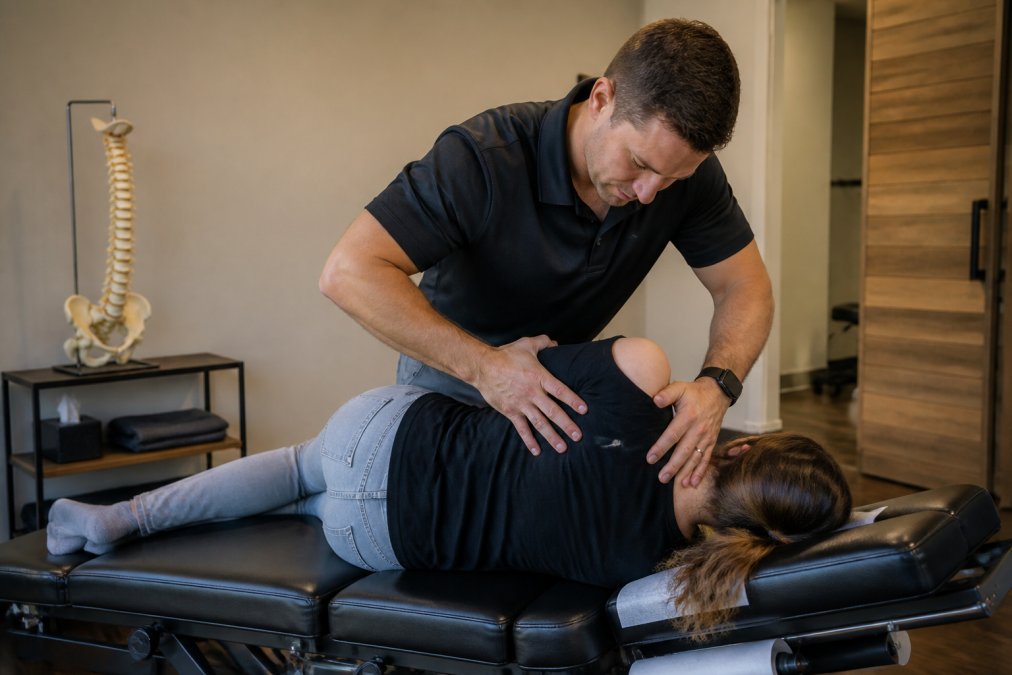
Your first visit typically lasts 30-45 minutes and follows a structured format designed to gather comprehensive health information and assess your condition.
Initial Assessment and Health History
You’ll complete a patient intake form asking about medical history, current conditions, surgeries, medications, family health history, and lifestyle factors like your job, exercise habits, and sleep position. Be thorough, seemingly unrelated details often connect to spinal health. A desk job with poor ergonomics, for example, directly contributes to neck and upper back pain.
The chiropractor then interviews you based on your intake form, asking about your chief complaint, when the problem started, what makes it better or worse, and how it affects your function. They’ll ask about previous injuries or trauma to understand your condition’s context. This is your opportunity to ask initial questions about whether your condition suits chiropractic care, typical treatment duration, or whether you need imaging.
Physical Examination and Diagnostic Evaluation
The chiropractor observes your posture and spinal alignment while you stand, assesses your range of motion by asking you to bend forward, backward, and sideways, and checks your reflexes, muscle strength, and neurological function. They may perform orthopedic tests designed to reproduce your symptoms and identify the pain source.
Palpation is key, the chiropractor uses their hands to feel your spine, identifying areas of restricted movement, muscle tension, or misalignment. They assess vertebral subluxation and posture alignment. Depending on your condition, they may recommend diagnostic imaging. X-rays are common and help rule out fractures or severe arthritis. A good practitioner explains why imaging is or isn’t necessary for your situation.
Treatment Plan Discussion
The chiropractor explains their findings, what they believe is causing your symptoms, and whether chiropractic care is appropriate. If another healthcare provider would better suit your needs, they’ll refer you, a sign of integrity, not failure.
If chiropractic care is recommended, they outline the proposed treatment plan: visit frequency, expected duration, specific techniques, and realistic outcomes. They’ll discuss your role in recovery, including stretches, ergonomic changes, or lifestyle modifications. Ask detailed questions about costs, insurance coverage, payment options, and what happens if you don’t see improvement after the proposed timeframe.
If a chiropractor recommends an extensive treatment package (50+ visits) during your first consultation without clear justification based on your condition, that’s a red flag. Legitimate treatment plans are based on your specific diagnosis and response to care, not a predetermined package.
How Long Is a Chiropractic Consultation and What’s Included
A typical free chiropractic consultation lasts 30-45 minutes, though complexity of your condition affects the exact timeframe. Initial appointments take longer than follow-ups because they include comprehensive health history and physical examination.
The consultation includes patient intake and health history (10-15 minutes), physical examination and diagnostic assessment (15-20 minutes), and treatment plan discussion (5-10 minutes). If imaging is performed on-site, add another 10-15 minutes.
A rushed consultation wrapping up in 10-15 minutes suggests insufficient evaluation. Your condition deserves careful assessment. A consultation extending beyond an hour may indicate inefficiency rather than thoroughness.
What’s included in a complimentary consultation at Moore Chiropractic covers the full assessment process: health history intake, physical examination, posture analysis, range of motion testing, orthopedic and neurological evaluation, and detailed explanation of findings and recommendations. You’re not charged, and there’s no obligation to proceed with treatment.
Chiropractic Consultation Questions to Ask Your Doctor
Prepared questions ensure you get the information needed to make a confident decision. The right questions reveal whether the chiropractor is knowledgeable, transparent, and genuinely focused on your wellbeing.
Questions About Your Condition and Treatment
Ask directly: "What’s causing my pain, and how did you determine that?" A good chiropractor explains findings in clear language, referencing what they found during the physical examination. They don’t use vague language or blame everything on "subluxations" without explaining what that means in your specific case.
Ask about their approach: "What treatment techniques will you use, and why are these appropriate for my condition?" Understanding their philosophy helps you assess whether it matches your comfort level.
Ask about realistic outcomes: "What should I expect to feel after treatment, and what’s a reasonable timeline for improvement?" Honest practitioners say something like, "Most patients with your condition see noticeable improvement within 2-4 weeks of consistent care, though some take longer." They don’t promise complete pain elimination.
Ask about your role in recovery: "What can I do at home to support the treatment?" This might include stretches, ergonomic adjustments, or activity modifications.
Ask about red flags: "What symptoms would indicate I need to see a different type of doctor?" A competent chiropractor knows the limits of their scope and refers appropriately.
Questions About Costs and Insurance
Ask upfront: "What does your office charge for visits, and how is that structured?" Understanding the financial model prevents surprises later.
Ask about insurance: "Do you accept my insurance, and what’s my out-of-pocket responsibility?" Request an estimate based on your specific plan.
Ask about payment options: "What payment methods do you accept, and do you offer payment plans for patients without insurance?"
Ask about the commitment: "If I start treatment, am I locked into a specific number of visits, or can I stop anytime?" Legitimate practices don’t require long-term contracts.
Ask about adjustments: "If I’m not seeing improvement after the recommended timeframe, will you adjust the treatment plan or refer me elsewhere?"
Request a written treatment plan and fee estimate before committing to care. This protects you and creates accountability. A professional practice provides this documentation without hesitation.
Scheduling Your Free Chiropractic Consultation
Booking Options and Availability
Most chiropractic offices offer multiple booking methods: phone scheduling, online booking through their website, or text-based scheduling. Some practices offer virtual consultations as a first step, though the physical examination requires an in-person visit.
When you book, have your calendar ready and be prepared to share your chief complaint, when the problem started, and your general availability. Ask about wait times, some offices fit you in within days; others have longer waitlists. If you’re experiencing acute pain, mention that; many practices reserve same-day or next-day slots for urgent cases.
What Happens After You Schedule
Once booked, the office sends a confirmation via email or text with appointment details, address, parking information, and what to bring. Some practices send the patient intake form in advance so you can complete it at home.
A few days before your appointment, you might receive a reminder call or text. Arrive 10-15 minutes early on appointment day. Bring your ID, insurance card, and any medical records you’ve gathered.
After your first appointment, the chiropractor discusses next steps. If they recommend treatment, they’ll explain the proposed schedule, expected duration, and what to do if you want to proceed. If they refer you elsewhere, they’ll explain why and provide contact information.
A free chiropractic consultation is ideal for anyone experiencing persistent [back pain](/how-to-treat-desk-job-neck-pain/), neck pain, or other musculoskeletal issues who wants to explore non-invasive treatment options without financial risk. It’s also valuable if you’re skeptical about chiropractic care and want to ask questions before deciding.
Common Concerns About Your First Visit
"I’m nervous about spinal manipulation. Is it safe?" Spinal adjustment is a controlled procedure performed by trained professionals. Serious complications are rare, far less common than complications from untreated chronic pain. If you’re anxious, tell your chiropractor before treatment. They can explain the procedure in detail and use gentler techniques if you prefer.
"What if I’ve had this pain for years and nothing has worked?" Chronic pain is harder to resolve than acute injury, but chiropractic may still help. A fresh evaluation sometimes reveals what was missed.
"I’m worried this is just a sales pitch to get me in the door." A legitimate practitioner uses the free consultation to assess your condition and make an honest recommendation. You’re never obligated to move forward.
"Can chiropractic help my specific condition?" This is exactly what the consultation answers. Ask directly whether the chiropractor believes they can help.
"I work a desk job and my neck hurts by afternoon. Is that something chiropractic addresses?" Yes. Desk posture and repetitive strain are common causes of neck pain, and chiropractic care combined with ergonomic adjustments often resolves these issues.
"I’m pregnant and worried about safety." Prenatal chiropractic care is safe when performed by practitioners trained in pregnancy-specific techniques. Mention your pregnancy status during consultation.
Booking your free chiropractic consultation with Moore Chiropractic in San Antonio removes uncertainty from your first visit. You’ll arrive prepared, understand what happens during the appointment, ask informed questions, and leave with a clear picture of whether chiropractic care is right for you.
The real value of that initial appointment is clarity. You’ll know what’s causing your pain, whether treatment is appropriate, what it would involve, and what realistic outcomes look like. Armed with that information, you can decide whether to move forward with confidence. The American Chiropractic Association emphasizes that patient education and informed consent are foundational to quality chiropractic care, and that starts with a thorough consultation.
When you’re ready to take the next step, contact Moore Chiropractic to schedule your no-obligation appointment. Our team is committed to providing a complimentary evaluation that genuinely assesses your condition and gives you honest answers about how we can help you regain mobility, reduce pain, and support your long-term wellness. Reach out today and experience the difference personalized, patient-centered chiropractic care can make in your health journey.
Frequently Asked Questions
What happens during a free chiropractic consultation?
During your free chiropractic consultation, you'll complete a patient intake form covering your health history, current symptoms, and lifestyle factors. The chiropractor will perform a musculoskeletal evaluation, including posture analysis, range of motion testing, and a neurological screening if needed. They'll discuss your condition, answer questions, and outline a potential treatment plan tailored to your needs, no obligation to proceed with care.
How long is a chiropractic consultation typically?
Your initial chiropractic consultation usually lasts 30 to 45 minutes. This includes time for your health history review, physical examination, any diagnostic imaging if necessary, and a discussion of your treatment plan. Subsequent visits are typically shorter, focusing on the therapeutic care and chiropractic adjustment itself.
What should I bring to my first chiropractic appointment?
Bring a valid photo ID, insurance card (if applicable), and any relevant medical records or imaging from previous healthcare providers. Wear comfortable, loose-fitting clothing that allows easy access to the areas being evaluated. If you have a list of current medications or supplements, bring that too. Arriving 10 to 15 minutes early allows time to complete your patient intake form.
Do I need a referral to book a chiropractic consultation?
No referral is required to schedule a chiropractic consultation. You can contact Moore Chiropractic directly to book your complimentary evaluation. However, if your insurance plan requires a referral for chiropractic care to be covered, check with your provider beforehand. During your consultation, the chiropractor can discuss insurance coverage and payment options with you.
This article was written using GrandRanker