
Table of Contents
- What a Chiropractic Adjustment Actually Involves
- What Does Gentle Chiropractic Mean for Nervous Beginners?
- Your First Visit: What Beginners Should Expect
- How Long Does a Chiropractic Adjustment Take?
- Chiropractic Adjustment Side Effects and Safety
- Is a Chiropractic Adjustment Worth It? What Beginners Should Weigh
- Frequently Asked Questions
Last Updated: September 12, 2026
What a Chiropractic Adjustment Actually Involves
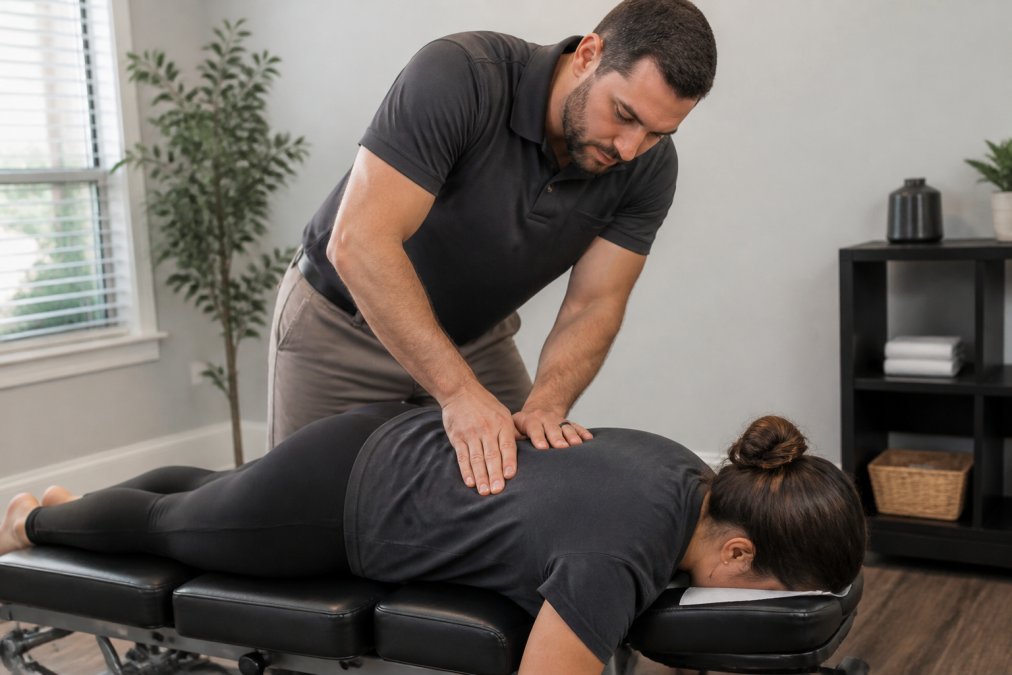
A chiropractic adjustment is a hands-on treatment in which a licensed chiropractor applies a controlled, directed force to a spinal joint to improve its movement and reduce pain (peer-reviewed research). At Moore Chiropractic, we explain this to every nervous first-timer before they lie down on the table.
If you have never had one, the word “adjustment” sounds more dramatic than the reality. Most visits are quiet, quick, and far less forceful than the videos online suggest.
Here is the honest version: a chiropractor uses their hands, or a small spring-loaded instrument, to move a joint slightly past the point where it feels stuck. That is it. The goal is joint mobility and pain relief, not a full-body overhaul.

Spinal Manipulation, Joint Mobility, and the Popping Sound
Spinal manipulation is the formal name for the manual thrust technique used in most adjustments. That audible pop is called cavitation, and it is simply gas releasing from the fluid inside the joint capsule (peer-reviewed research). It is not bones cracking, and it is not a sign that something was broken or fixed.
Many patients worry the sound means damage. In practice, a joint can adjust with no sound at all and still improve. The pop is a side effect of the technique, not the treatment itself.
What Does Gentle Chiropractic Mean for Nervous Beginners?
Gentle chiropractic means the chiropractor uses low-force techniques instead of a hard manual thrust, so the joint is mobilized without the twisting and cracking that worries most first-timers. For anyone anxious about their neck, this is usually the right starting point.
The nervousness is normal. A common mistake is assuming every adjustment looks like the dramatic neck rotations on social media. It does not have to.
Low-Force Techniques and Who They Suit
Low-force methods suit beginners, older adults, pregnant patients, and anyone with a history of neck sensitivity. Techniques may include:
- A small handheld instrument that delivers a light, rapid pulse to the joint
- Slow, sustained stretching of the joint rather than a quick thrust
- Positioning the body so gravity does the work instead of force
A chiropractor should walk you through each technique before using it. If a provider rushes past your questions, that is your cue to slow things down or get a second opinion.
Your First Visit: What Beginners Should Expect
Your first visit is mostly information gathering, not treatment. Expect a consultation and a physical examination before anyone touches your spine, which is standard practice in reputable clinics. Plan on time for a new-patient appointment; the adjustment itself, if it happens at all, is only a portion of the visit.
The visit usually follows this order:
- Patient history covering your pain, past injuries, medications, and surgeries
- Physical examination of posture, range of motion, and the affected area
- Clinical assessment to identify whether the source is muscular, joint-related, or something that needs a referral
- Treatment plan explaining what will be done, how often, and what results to expect
- Your first adjustment, only if the exam supports it
Patient History, Physical Examination, and Your Treatment Plan
A thorough patient history is where the real diagnosis begins. Tell your chiropractor about prior surgeries, disc problems, and any numbness or tingling in your arms or legs, because those details change what is safe to do.
The physical examination checks how your musculoskeletal system moves and where motion is restricted. From there, the chiropractor builds a treatment plan with a realistic recovery time rather than an open-ended commitment.
If a clinic hands you a prepaid package before examining you, walk away. A legitimate treatment plan follows the exam, not the other way around.
Beginner Prep Checklist: What to Wear and What to Bring
This is the part most guides skip, and it is the part that makes a first visit go smoothly.
What to wear:
- Loose-fitting athletic wear or a t-shirt and joggers, anything you can move in without restriction
- Flat, closed-toe shoes you can slip off easily
- Skip dresses, skirts, tight jeans, and heavy belts; they limit how the chiropractor can assess your spine and hips
- If you are being seen for a lower-back or hip issue, bring or wear shorts
What to bring:
- A photo ID and your insurance card
- A list of current medications, including dosages
- Any recent imaging (X-rays, MRIs) or reports from other providers
- A short written list of your symptoms: when they started, what makes them worse, what makes them better
- A list of your questions, it is easy to forget them once you are on the table
What to do the morning of:
- Eat a light meal rather than skipping food entirely; going in on an empty stomach can make you lightheaded
- Drink water and avoid heavy caffeine right before the visit
- Arrive 10 to 15 minutes early to complete intake paperwork without rushing
Insurance, Cost, and Finding a Provider in San Antonio
Cost is a common question for beginners. We offer a complimentary evaluation and consultation. For specific pricing and insurance inquiries, please contact us directly. Many chiropractic offices are in-network with major carriers but out-of-network with others. You can also call the member-services number on the back of your insurance card and ask specifically about chiropractic benefits, visit limits, and whether a referral is required.
When choosing a provider, look for a licensed Doctor of Chiropractic (D.C.) with an active license, which you can verify through the Texas Board of Chiropractic Examiners. Ask whether the provider coordinates with primary-care physicians and orthopedic specialists, since that matters if your case turns out to need a referral.
Bring a notebook or use your phone to record the treatment plan, frequency, expected duration, and home exercises. Beginners routinely forget the details by the time they get to the parking lot.
Red Flags When Choosing a Clinic
A few patterns should make you pause:
- High-pressure sales of multi-visit packages before any exam
- Claims that adjustments cure unrelated conditions like asthma, allergies, or infections
- Unwillingness to explain the technique being used or to answer questions
- No written treatment plan or cost estimate
- Pressure to commit to long-term care on day one
A good first visit ends with you understanding what is wrong, what will be done, how often, and how you will know it is working.
How Long Does a Chiropractic Adjustment Take?
A chiropractic adjustment itself takes a short time once you are on the table. A first visit runs longer because it includes the consultation and examination.
Follow-up visits are quicker. The time depends on how many areas are treated and whether your plan includes soft tissue work or therapeutic exercise.
If you are comparing clinics, ask how long a new-patient visit lasts. A rushed five-minute first appointment usually means the exam was skipped.
Chiropractic Adjustment Side Effects and Safety
Most people feel fine after an adjustment, though mild soreness in the treated area for a day or two is common, similar to the feeling after a new workout. Fatigue, temporary headache, or a brief increase in soreness can also happen as muscles adapt. Serious complications are rare, and the American Chiropractic Association’s patient information notes that adjustments are generally well tolerated when performed by a licensed provider.
Watch for anything unusual: worsening pain, new numbness, or tingling down an arm or leg. Report those to your chiropractor and your physician rather than waiting it out.
Post-Adjustment Recovery: What to Do in the First 24 to 48 Hours
How you treat your body after an adjustment affects how much you get out of it.
- Hydrate. Drink water through the rest of the day; some patients find it reduces post-treatment soreness.
- Move gently. A short walk and light stretching are fine. Avoid heavy lifting, intense workouts, and long periods in one position.
- Apply heat or ice. Ice for acute soreness in the first day, heat for muscle tightness afterward, whichever your provider recommends.
- Sleep with support. Side sleepers should keep a pillow between the knees; back sleepers can place one under the knees to keep the spine neutral.
- Follow your home plan. The stretches and posture cues your chiropractor gives you are what carry the improvement between visits.
- Note how you feel. Track what improved and what did not, so your next visit can be adjusted accordingly.
Most patients can return to normal activity the same day. If your provider used a low-force technique, there is usually no downtime at all.
Who Should Check With a Doctor First
Some patients should get medical clearance before any spinal manipulation:
- Anyone with severe osteoporosis or a known spinal fracture
- People with cancer affecting the bones or an active infection
- Patients with significant disc herniation causing nerve compression
- Anyone with numbness, weakness, or loss of bowel or bladder control
- People with a history of stroke, transient ischemic attack, or significant vascular disease, particularly before any neck manipulation
- Patients on blood thinners or with bleeding disorders
- Anyone with recent spinal surgery or a spinal implant
Pregnant patients can often receive gentle care safely, but should confirm with their obstetric provider first. If you have a lumbar disc issue, sciatica, or pinched nerves, a coordinated plan between your chiropractor and physician is the safer route.
When to Seek Immediate Medical Care
Stop and seek urgent medical attention if you experience any of the following after an adjustment:
- Sudden severe headache, neck pain, or dizziness
- Vision changes, slurred speech, or difficulty swallowing
- New weakness or numbness in an arm or leg
- Loss of bowel or bladder control
- Chest pain or shortness of breath
These symptoms are uncommon, but they are not something to wait out. Emergency care, not another adjustment, is the right next step.
Mild soreness for a day or two is normal. Anything sudden, severe, or neurological is not, call your doctor or go to urgent care.
Is a Chiropractic Adjustment Worth It? What Beginners Should Weigh
Chiropractic care is worth trying if you have musculoskeletal pain that has not responded to rest, stretching, or over-the-counter remedies, and you want a non-invasive option. It is not a cure-all, and it will not fix pain caused by an untreated medical condition.
Weigh three things before you commit:
- Cost transparency. For specific pricing information, please contact us directly. Pricing varies by clinic and treatment type.
- Realistic goals. Expect gradual improvement in joint mobility and range of motion, not instant, permanent relief.
- Your own effort. Adjustments work best alongside posture correction, stretching, and preventative care at home.
For beginners, the practical test is simple: does the plan explain what is wrong, what will be done, and how you will know it is working? If yes, it is worth a trial. If a clinic cannot answer those three questions, keep looking. You can also ask about a complimentary evaluation and consultation to see whether care fits your situation before committing.
Frequently Asked Questions
Will a chiropractor do an adjustment on the first visit?
Often, yes, but not always. A first appointment typically starts with a patient history and physical examination so the chiropractor can identify what is causing your pain. If nothing rules out treatment that day, a gentle adjustment may follow. Some clinics prefer to review findings and start care at a second visit. Ask when you book so you know what to expect.
Is it normal to feel sore after your first chiropractic adjustment?
Mild soreness for a day or two is common, similar to how muscles feel after a new workout. It usually eases on its own. Ice or gentle movement can help. Contact the clinic if pain is severe, lasts longer than a few days, or you notice numbness or weakness, since those symptoms need a closer look.
How do I know if a chiropractic clinic is reputable?
Look for a licensed doctor of chiropractic, a clear explanation of your exam findings, and a treatment plan with defined goals and a review point. A reputable clinic tells you when chiropractic is not the right fit and refers you elsewhere. Reviews help, but read them for specifics about communication and results rather than star ratings alone.
What does gentle chiropractic mean for someone who is nervous?
Gentle chiropractic describes low-force techniques that use slow, controlled pressure instead of sharp thrusts. Some methods use a small handheld instrument. Many beginners choose this approach because it feels milder and still aims to improve joint mobility. Tell the chiropractor you are nervous so they can explain each step before it happens.
How long does a chiropractic adjustment take?
The adjustment itself takes a short time once you are an established patient. A first visit runs longer because it includes a patient history, physical examination, and a discussion of your treatment plan. Follow-up visits are typically shorter than the initial appointment.
Chronic back or neck pain rarely resolves on its own, and guessing at the cause can cost you months of discomfort. Moore Chiropractic offers personalized, gentle chiropractic care in San Antonio, with a complimentary evaluation and consultation for new patients, personalized care plans built around your history, and a team experienced in both traditional and advanced techniques. Get started with Moore Chiropractic and take the first step toward restored mobility and long-term relief.