
Table of Contents
- What Multidisciplinary Pain Rehabilitation Actually Is
- How Multidisciplinary Pain Management Works in Practice
- The Team Members and Their Roles
- Chronic Pain Rehabilitation: Medical, Physical, and Psychological Integration
- Key Benefits of Multidisciplinary Treatment for Chronic Pain
- Real Outcomes: Pain Relief, Mobility, and Daily Function
- Pain Rehabilitation Program Benefits for Long-Term Success
- Who Benefits Most and What to Expect
- Frequently Asked Questions
Last Updated: October 12, 2026
What Multidisciplinary Pain Rehabilitation Actually Is
Multidisciplinary pain rehabilitation is a coordinated approach combining medical management, physical therapy, and psychological support to address chronic pain from multiple angles at once. Rather than treating pain as a single problem for one specialist, it recognizes that persistent pain involves physical, emotional, and behavioral components requiring integrated care. (Source: the National Institute of Neurological Disorders and Stroke (NINDS))
At Moore Chiropractic, we understand chronic pain rarely responds to isolated interventions. Multidisciplinary pain rehabilitation replaces the model where patients bounce between separate providers with a unified plan where all team members coordinate around shared goals.
This integration matters because chronic pain often involves neurological adaptation: the nervous system restricts movement even after an injury heals, while fear, depression, and catastrophic thinking amplify pain signals and deconditioning limits function. No single intervention addresses all three. Multidisciplinary pain rehabilitation tackles them together, producing outcomes isolated treatments cannot match.
How Multidisciplinary Pain Management Works in Practice
The process begins with comprehensive assessment. Rather than one provider conducting a single exam, a chiropractor assesses spinal mechanics and alignment. A comprehensive multidisciplinary team would also include a physical therapist to evaluate movement patterns, strength, and functional limitations, and a behavioral health specialist to explore emotional factors contributing to pain and disability.
These assessments feed into one integrated plan, not competing plans. A multidisciplinary team identifies which factors drive pain and disability most for a patient, some have primarily mechanical problems, others are limited by fear-avoidance or depression, many by both, and prioritizes interventions that will produce the greatest functional improvement.
Treatment in a multidisciplinary program proceeds in coordinated phases: early phases emphasize education and pain reduction to build confidence and reduce protective guarding; middle phases shift toward functional restoration, increasing activity and strength while addressing psychological barriers; later phases focus on sustained self-management and prevention. All providers adjust based on progress and feedback from teammates.
This coordination prevents common pitfalls. A physical therapist might push aggressive exercise without knowing a behavioral health specialist is still working through fear-avoidance beliefs that make it counterproductive; a chiropractor might focus on alignment without addressing deconditioning. In multidisciplinary care, these conflicts get resolved through team communication rather than competing demands on the patient.
The Team Members and Their Roles
A comprehensive multidisciplinary pain rehabilitation program includes several key specialists, each contributing specific expertise to the integrated treatment plan.
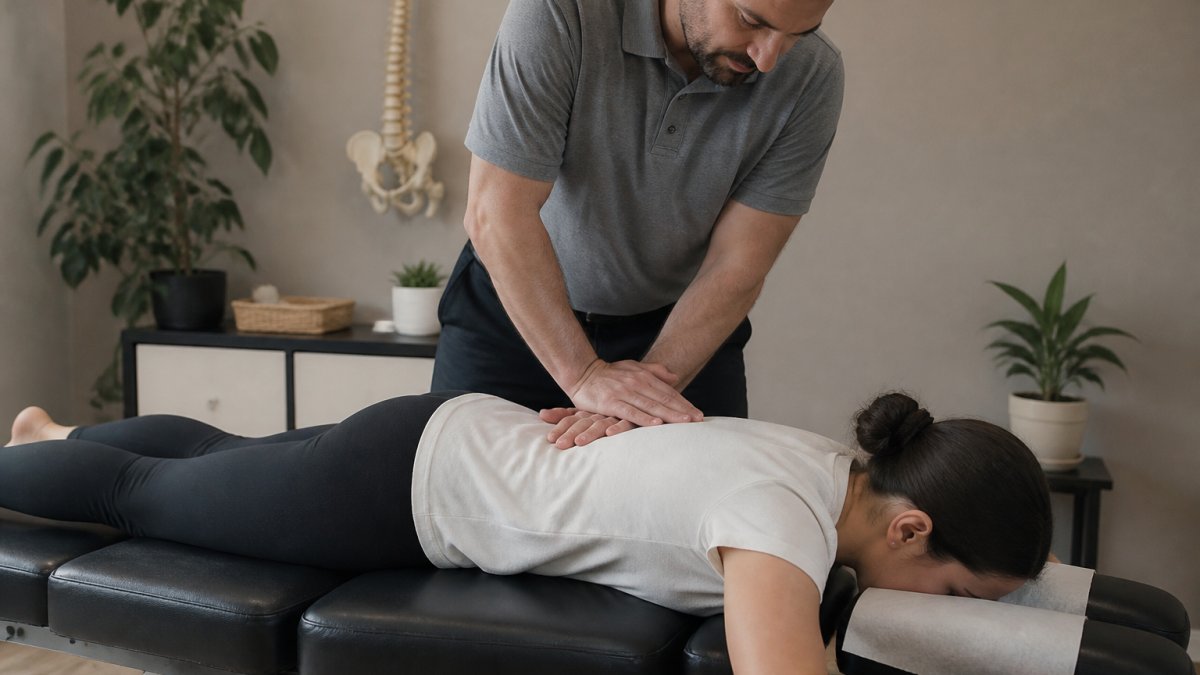
Chiropractors assess and treat structural and mechanical issues affecting the spine and nervous system, evaluating alignment, mobility restrictions, and biomechanical dysfunction.
Physical therapists restore functional capacity through targeted exercise, movement retraining, and activity progression. They rebuild strength, improve flexibility, restore normal movement patterns, gradually increase the patient’s ability to perform daily activities and work tasks, and teach proper body mechanics to prevent re-injury.
Behavioral health specialists address psychological factors that maintain or amplify chronic pain. They help patients modify thought patterns that catastrophize pain, develop coping strategies that avoid escalating medication use, treat accompanying depression and anxiety, and build psychological resilience.
Primary care physicians oversee medical management, including medication optimization, monitoring for complications, and coordinating with specialists. They ensure the rehabilitation approach aligns with the patient’s overall health status and medical history.
Occupational therapists (when included) help patients adapt activities and environments to functional goals, teaching energy conservation, recommending workplace modifications, and supporting safe return to work or leisure activities.

Communication is the backbone of multidisciplinary care.
Chronic Pain Rehabilitation: Medical, Physical, and Psychological Integration
Effective chronic pain rehabilitation recognizes these three dimensions are inseparable. Medical management alone, medication, injections, or surgery, often fails because it ignores the deconditioning and psychological factors now part of the pain cycle. Physical therapy without addressing fear and catastrophic thinking hits a ceiling. Psychological support without physical rehabilitation leaves patients deconditioned and unable to apply coping skills in real activity.
The integration works because each dimension addresses different mechanisms maintaining pain. Medical interventions target inflammatory processes, neuropathic signaling, and neurochemical imbalances. Physical rehabilitation reverses deconditioning, restoring strength, endurance, and confidence in the body’s capacity. Psychological work addresses learned protective behaviors, fear-avoidance patterns, and mood disturbances that amplify pain perception and limit activity tolerance.
Consider a patient with chronic lower back pain who has avoided bending for two years. Imaging shows degenerative changes but nothing requiring surgery; the patient is deconditioned, anxious about re-injury, and moderately depressed. Medical management alone might slightly reduce pain but won’t address deconditioning or fear. Physical therapy alone may feel too threatening while fear-avoidance beliefs remain untreated.
This integration is particularly effective for complex conditions where multiple factors interact. Fibromyalgia involves central nervous system sensitization, peripheral muscle dysfunction, sleep disturbance, and often mood disorders (Fibromyalgia: Pathogenesis, Mechanisms, Diagnosis and Treatment Options Update). No single intervention addresses all components; multidisciplinary rehabilitation targeting all four dimensions can produce better outcomes than any single approach.
Key Benefits of Multidisciplinary Treatment for Chronic Pain
Patients pursuing multidisciplinary pain rehabilitation typically experience several interconnected benefits that extend beyond simple pain reduction.
Reduced pain intensity and frequency occurs as the integrated approach addresses multiple pain generators at once: mechanical correction reduces structural irritation, medication optimization addresses neurochemical contributors, and psychological work reduces amplification from catastrophic thinking, together producing greater pain reduction than any single intervention.
Improved functional capacity and daily activity tolerance is one of the most meaningful benefits. Many patients are so deconditioned that basic activities feel impossible. Coordinated physical rehabilitation, behavioral support for fear-avoidance, and medical management together let patients progressively increase activity, functional improvement that often matters more to quality of life than pain reduction alone.
Decreased medication dependence frequently occurs as patients regain physical capacity and coping skills. Rather than escalating pain medication, they learn to manage pain through activity, exercise, stress management, and cognitive strategies, reducing side effects and medication-related risks.
Improved psychological well-being and reduced depression and anxiety accompanies functional improvement. As patients regain capacity and confidence, mood typically improves, and behavioral health support directly addresses the anxiety and depression that often accompany chronic pain, a marked quality-of-life gain beyond pain reduction alone.
Enhanced self-efficacy and sense of control develops as patients learn they can influence their pain through their own actions rather than remaining passive recipients of treatment, a transformative shift from a helpless, pain-focused mindset to an active, capability-focused one.
Real Outcomes: Pain Relief, Mobility, and Daily Function
The practical outcomes of multidisciplinary pain rehabilitation can manifest in how patients live. A patient who couldn’t walk 10 minutes without significant pain and had stopped working may gradually progress to walking 30 minutes comfortably, returning to work, and resuming leisure activities. Another dependent on opioids may gradually reduce medication use as capacity and coping skills improve.
Pain relief in multidisciplinary programs typically develops gradually. In the first few weeks, patients may notice modest reduction and increased confidence that improvement is possible. Over weeks and months, as capacity increases and psychological barriers decrease, pain can continue to decline. Importantly, patients often report pain matters less even before it decreases significantly, they’re doing more despite it, which fundamentally changes their relationship to pain.
Mobility improvements in multidisciplinary programs are often striking. Patients who lost range of motion to protective guarding and deconditioning may gradually restore normal movement; bending, reaching, and twisting can become possible again. This can cascade into functional gains: tying shoes, driving without discomfort, working at a desk, or performing household tasks that had become impossible.
Daily function in multidisciplinary programs can improve across domains. Work capacity may increase as patients regain endurance and pain management skills. Sleep may improve as pain and anxiety decrease. Social engagement may increase as patients feel capable of activities they’d avoided, and family relationships may improve as they become less irritable and more engaged.
Pain Rehabilitation Program Benefits for Long-Term Success
The structure of multidisciplinary pain rehabilitation programs is specifically designed to produce durable, long-term improvement rather than temporary relief.
Most multidisciplinary programs follow a time-limited intensive phase, typically 8 to 12 weeks, with coordinated treatment multiple times per week. This intensity builds rapid progress and momentum, while emphasizing self-management skills and independent exercise so patients don’t become dependent on ongoing professional intervention.
During the intensive phase of a multidisciplinary program, patients learn the principles underlying their treatment: how movement and activity reduce pain, how catastrophic thinking amplifies pain perception, how proper body mechanics prevent re-injury. They practice under professional guidance so they can apply these principles independently afterward, critical for long-term success because it shifts them from passive recipients to active managers of their own recovery.
Transition to maintenance in a multidisciplinary program is gradual and structured. As patients progress, they reduce professional visits while maintaining independent exercise and self-management practices, preventing the common pattern of dramatic improvement during treatment followed by lost gains once it ends. Patients maintain improvement because they’ve developed the skills and confidence to manage pain independently.
Follow-up support is typically available in multidisciplinary programs for setbacks or periodic recalibration, preventing minor flare-ups from becoming full relapses. A patient with increased pain after a stressful period or overdoing activity can access a brief intervention to get back on track rather than spiraling back into the pain-disability cycle.
Who Benefits Most and What to Expect
Multidisciplinary pain rehabilitation can produce strong outcomes for chronic pain resistant to single-intervention approaches. Patients who have tried isolated physical therapy, medication alone, or chiropractic care without sustained improvement often respond well when these approaches are coordinated and combined with psychological support.
Patients with complex pain involving multiple body areas, significant deconditioning, and substantial psychological components typically benefit most from multidisciplinary pain rehabilitation.
The multidisciplinary approach also works well for patients whose pain has significantly limited their life, those who’ve stopped working, withdrawn from social activities, or become dependent on pain medication.
Patients in a multidisciplinary program should expect an initial assessment phase, typically one to two weeks, where the team evaluates their situation and develops an integrated plan. Treatment then follows, usually 2 to 4 visits per week for 8 to 12 weeks.
Realistic expectations matter. Multidisciplinary pain rehabilitation doesn’t eliminate pain for everyone, but it can typically produce substantial functional improvement even when pain reduction is modest. Many patients experience both; some experience primarily functional improvement.
Patients in San Antonio seeking multidisciplinary pain rehabilitation should look for programs that include coordination among chiropractors, physical therapists, and behavioral health specialists, with clear communication about treatment goals and progress.
Chronic pain often persists because isolated treatments address only part of the problem. Multidisciplinary pain rehabilitation coordinates medical, physical, and psychological care to address all the factors maintaining your pain and disability.
Frequently Asked Questions
What is multidisciplinary pain rehabilitation?
Multidisciplinary pain rehabilitation combines medical treatment, physical therapy, and psychological support to address chronic pain from multiple angles. Instead of relying on one approach, this integrated model treats the physical injury, restores function through exercise and movement, and addresses the emotional and behavioral factors that sustain pain. This comprehensive strategy aims to reduce pain, improve daily function, and help patients manage their condition long-term without depending solely on medication.
How does multidisciplinary treatment for chronic pain differ from standard pain management?
Standard pain management often focuses on reducing pain symptoms through medication or a single treatment method. Multidisciplinary treatment for chronic pain goes further by addressing the root causes and related factors. It combines medication management with physical rehabilitation, behavioral strategies, and education about pain science. This approach tackles not just the pain itself but also how pain affects movement, mood, sleep, and daily activities, leading to more sustainable improvement and lower reliance on opioids or injections.
What conditions can benefit from a pain rehabilitation program?
Multidisciplinary pain rehabilitation programs can benefit many chronic conditions, including back pain, neck pain, fibromyalgia, complex regional pain syndrome, and post-injury pain that hasn’t improved with standard treatment. Athletes recovering from sports injuries and individuals managing pain after motor vehicle accidents may also benefit significantly. The approach works best for people whose pain has persisted for months or longer and who want to improve function rather than simply mask symptoms. A consultation with a qualified healthcare provider can determine if this approach suits your specific situation.
How long does multidisciplinary pain rehabilitation typically take?
Program duration varies based on the severity of pain, the individual’s goals, and how quickly they progress. Most structured multidisciplinary programs last 4 to 12 weeks, though some people benefit from extended care. The focus is on building skills and independence rather than creating long-term dependence on treatment. Many patients continue self-management strategies learned during the program long after formal treatment ends. Your healthcare team will establish specific goals and timelines during your initial evaluation.