
Quick Summary
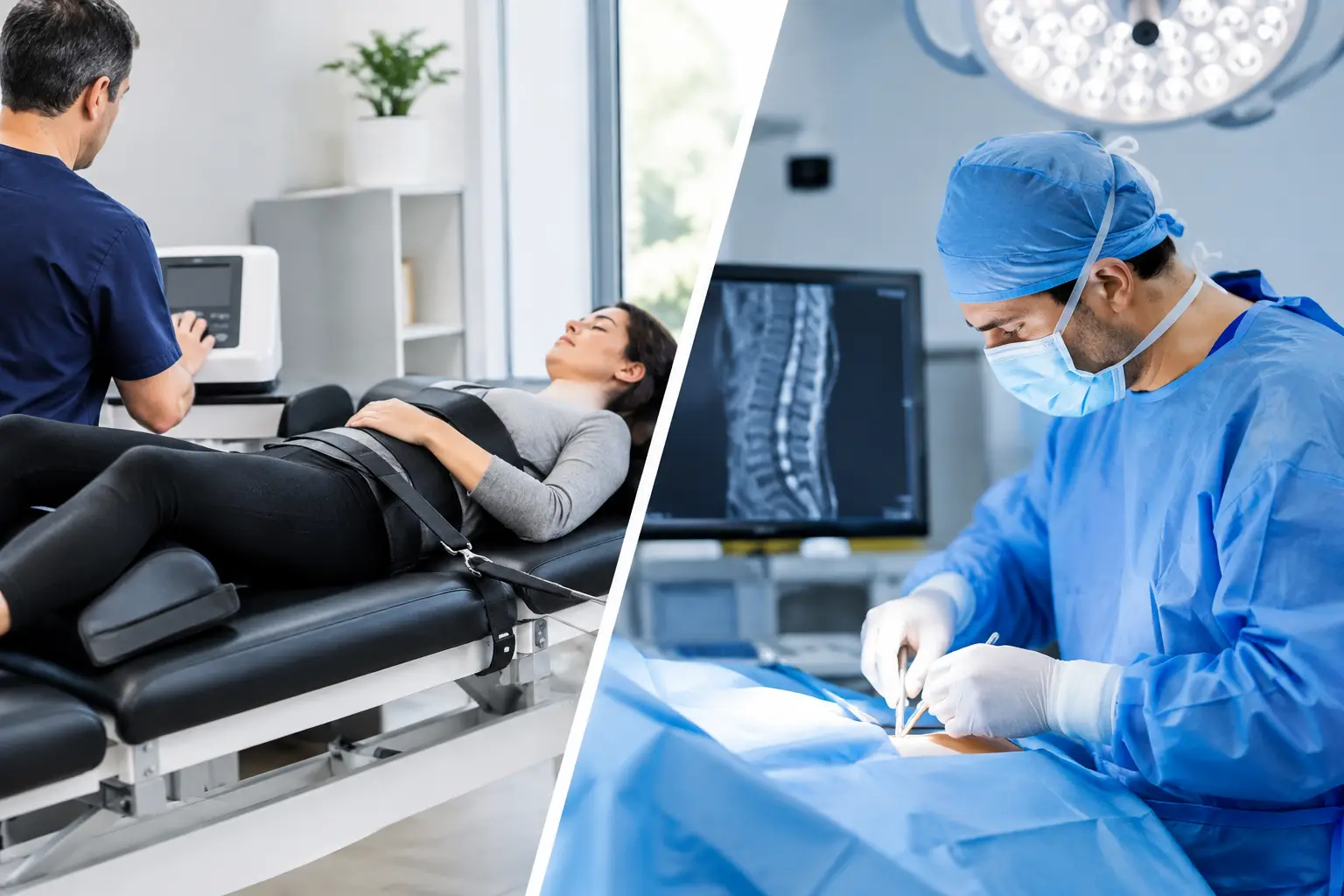
Alternatives to traditional spinal surgery include nonsurgical care such as chiropractic treatment, physical therapy, and exercise, along with surgical options that preserve motion or remove only the source of pressure. The right choice depends on an accurate diagnosis from imaging and exam findings, not on what is easiest to schedule.
- Nonsurgical care often helps pain from muscles, joints, or ligaments but is less likely to fix severe structural nerve compression.
- A herniated disc often improves over several weeks, and worsening leg or arm weakness needs prompt medical attention.
- Artificial disc replacement is most commonly considered for single-level disease, not for multi-level disease or instability.
- Decompression keeps spinal motion but does not correct instability, which may call for adding fusion.
- Minimally invasive spine surgery is still surgery and carries risks of infection, bleeding, and nerve injury.
Table of Contents
- Nonsurgical Treatment for Back Pain: What It Can and Cannot Do
- Herniated Disc Treatment Without Surgery
- Spinal Fusion Alternatives: Disc Replacement, Decompression and Discectomy
- Minimally Invasive Spine Surgery Compared With Traditional Surgery
- Choosing the Right Path: Diagnosis, Imaging and When Fusion May Still Be Appropriate
- Booking a Spine Evaluation in San Antonio at Moore Chiropractic
- Frequently Asked Questions
Why Patients Look for Alternatives to Traditional Spinal Surgery in San Antonio (Source: the National Institute of Neurological Disorders and Stroke (NINDS))
Patients usually look for alternatives for a few reasons. Some want to avoid the risks and downtime of an operation. Others have tried medication or physical therapy and still have pain.
Here is what most patients want to know:
- Will the pain go away without an operation?
- How long will recovery take?
- What are the risks compared with the benefits?
- Can the problem be managed without fusion?
The sections below answer these questions one at a time, so you can compare your options clearly.
Nonsurgical Treatment for Back Pain: What It Can and Cannot Do
Nonsurgical treatment is often the first step for back pain, and it helps many people. Common approaches include chiropractic care, physical therapy, exercise programs, and changes to daily habits.
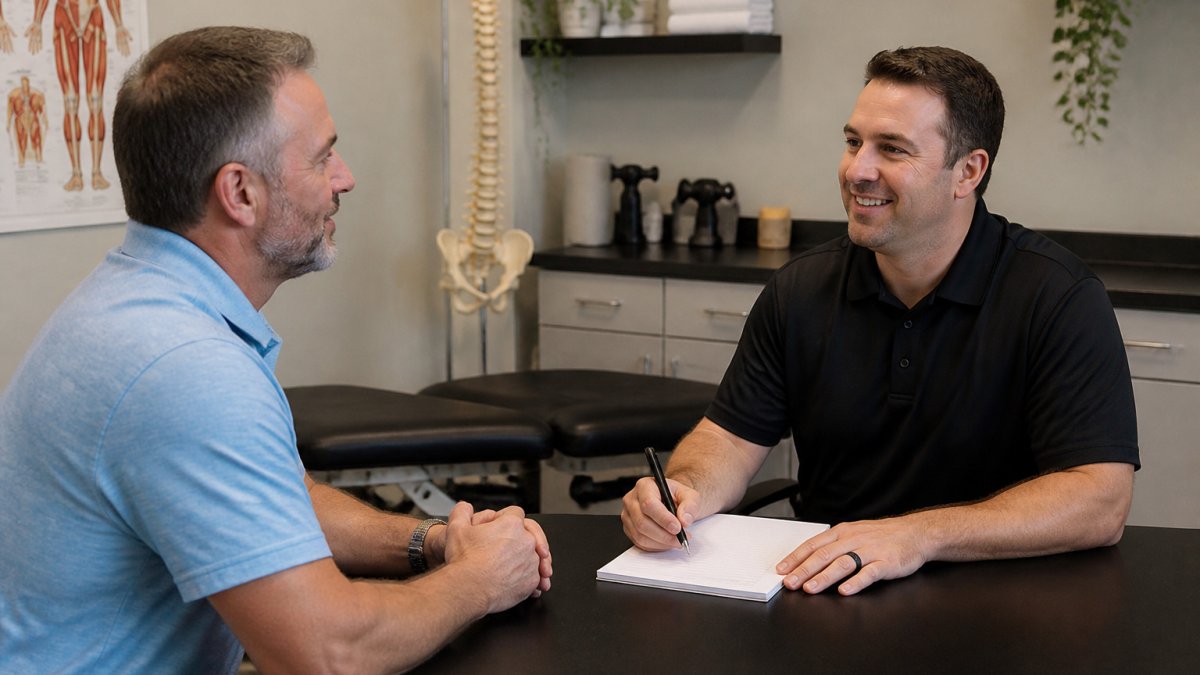
Nonsurgical care is generally considered for pain that comes from muscles, joints, or ligaments. It is less likely to reverse damage that is already severe, such as a structural problem that presses hard on nerves.
What nonsurgical care can do:
- Ease muscle tension and joint stiffness
- Improve range of motion
- Support healthier posture and movement habits
- Reduce pain for some people with ongoing back problems
What it cannot always do:
- Repair a structural problem that needs surgical correction
- Stop pain caused by serious nerve compression
- Work the same way for everyone
Herniated Disc Treatment Without Surgery
A herniated disc happens when the soft center of a spinal disc pushes through its outer layer. This can irritate nearby nerves and cause pain that runs into the arm or leg. Many herniated discs improve over time without surgery.
Nonsurgical treatment for a herniated disc often includes rest from aggravating activities, guided exercise, and hands-on care to ease nerve irritation. Explore chiropractic treatment options for herniated discs that may relieve pain and restore mobility without surgery.
Signs that a herniated disc may need a closer look:
- Leg or arm weakness that is getting worse
- Numbness in the groin or loss of bladder or bowel control
- Pain that does not improve after several weeks of care
If you notice any of these signs, seek medical care right away.
Spinal Fusion Alternatives: Disc Replacement, Decompression and Discectomy
When surgery is on the table, the conversation should not jump straight to spinal fusion. Several procedures preserve motion or remove only the source of pressure, and each fits a different diagnosis. See how chiropractic and physical therapy compare for back pain as non-fusion routes before surgery is considered. The key is matching the procedure to what your imaging and exam actually show, not to what is easiest to schedule.
Artificial disc replacement (motion preservation)
Artificial disc replacement removes the damaged disc and inserts a device designed to preserve motion at that level. In the United States, it is most commonly considered for the cervical spine (neck) in adults with single-level disc disease and no significant facet arthritis or instability, and for the lumbar spine in selected patients with single-level degenerative disc disease. It is not a good fit for multi-level disease, severe facet degeneration, osteoporosis, or spinal instability, those are situations where fusion may still be the more reliable choice.
What patients should ask:
- Is my disc disease confined to one level?
- Do my imaging studies show facet arthritis or instability that would rule out a motion-preserving device?
- What is the revision plan if the device wears or loosens over time?
Decompression without fusion (laminectomy, laminotomy, foraminotomy)
Decompression relieves nerve pressure by removing a small amount of bone, ligament, or disc material. It does not fuse the spine, so natural motion is kept. This is a common option for lumbar spinal stenosis and for nerve compression in the neck when the spine is stable. The trade-off: decompression alone does not correct instability, and in patients who already have spondylolisthesis or degenerative scoliosis, a surgeon may recommend adding fusion to prevent the spine from shifting further.
Discectomy and microdiscectomy (herniated disc and sciatica)
Discectomy removes the portion of a herniated disc that is pressing on a nerve. Microdiscectomy is the same operation performed with a microscope through a smaller incision. It is most often considered for a herniated disc with leg pain (sciatica) that has not improved after a reasonable course of nonsurgical care, or for patients with progressive weakness. Many herniated discs improve on their own, so the decision usually hinges on symptom duration, neurologic findings, and imaging that matches the symptoms.
Endoscopic and percutaneous techniques
Endoscopic discectomy and percutaneous techniques use a small tube or camera to reach the disc or nerve. They are variations on decompression and discectomy rather than a separate category. They may reduce muscle disruption and shorten recovery for selected patients, but they are not appropriate for every herniation, and surgeon experience with the specific technique matters.
Interspinous and interlaminar stabilization devices
These devices are placed between the spinous processes to limit extension and keep the space around the nerves open. They are sometimes described as “fusion alternatives” for lumbar stenosis, but they are not a substitute for decompression in every case, and long-term evidence is more limited than for decompression or fusion. Patients should ask whether the device is being used as an adjunct to decompression or as a stand-alone treatment.
Minimally invasive surgery is still surgery. Disc replacement, decompression, discectomy, and endoscopic techniques are alternatives to fusion, not alternatives to surgery. Nonsurgical care and regenerative injections are a separate category. Ask your specialist to place each recommendation in the correct category before you decide.
The article compares several surgical alternatives to spinal fusion, each suited to a different diagnosis.
| Procedure | Best for | Key difference |
|---|---|---|
| Artificial disc replacement | Single-level disc disease | Preserves motion at that level |
| Decompression | Lumbar stenosis, nerve compression | Removes bone or tissue; keeps spine motion |
| Discectomy / microdiscectomy | Herniated disc with sciatica | Removes the disc portion pressing on a nerve |
| Endoscopic techniques | Selected herniations | Uses a small tube or camera; less muscle disruption |
| Interspinous devices | Lumbar stenosis, as an adjunct | Limits extension; long-term evidence is more limited |
Minimally Invasive Spine Surgery Compared With Traditional Surgery
Minimally invasive spine surgery (MISS) is an approach, not a diagnosis-specific procedure. It uses smaller incisions, tubular retractors, and sometimes an endoscope or microscope to reach the spine. Traditional open surgery uses a larger incision and direct visualization of the anatomy. The right question is not “which is better” in general, it is which approach fits your diagnosis, your anatomy, and your surgeon’s experience.
What minimally invasive approaches can offer
- Less muscle dissection, which can mean less postoperative pain for some patients
- Shorter hospital stays for selected procedures
- Faster return to light activity in many cases
- Smaller scars
What they do not guarantee
- A shorter overall recovery in every case
- Better long-term outcomes than open surgery for every diagnosis
- Suitability for complex deformities, multi-level disease, or revision surgery
Minimally invasive techniques are commonly used for microdiscectomy, single-level decompression, and some lumbar fusions. They are less commonly used for major scoliosis correction, multi-level cervical fusion, or cases with significant instability, where direct visualization and correction matter more than incision size.
How to compare the two approaches at a consultation
Ask your surgeon:
- What is the exact procedure name, and is it decompression, fusion, or both?
- How many of these specific cases do you perform each year?
- What are the known risks for my diagnosis with this approach versus an open approach?
- What is the plan if the minimally invasive approach cannot safely reach the problem?
- What does recovery look like week by week, including time away from work?
Evidence and realistic expectations
Most surgeons agree that for the right patient, single-level disc herniation, focal stenosis, or selected degenerative disease, minimally invasive techniques can produce outcomes comparable to open surgery with less tissue trauma. The evidence is strongest for microdiscectomy and single-level decompression; it is weaker and more surgeon-dependent for complex fusions and motion-preserving devices. A second opinion is reasonable when the recommendation is for a newer device or a technique your surgeon performs infrequently.
Minimally invasive surgery is still surgery. It carries risks of infection, bleeding, nerve injury, and the need for further surgery. Do not let a smaller incision imply a risk-free procedure.
Choosing the Right Path: Diagnosis, Imaging and When Fusion May Still Be Appropriate
The right treatment depends on an accurate diagnosis. Imaging tests such as X-rays, MRI, and CT scans help show what is causing your pain. Learn how diagnostic imaging pinpoints the source of back pain before choosing between nonsurgical care and surgery.
Spinal fusion may still be appropriate in certain cases, such as spinal instability or some types of severe degenerative disease. Fusion has risks, including infection, bleeding, and nerve injury, and recovery can take months.
Before deciding, consider these questions:
- What do my imaging results show?
- Have I tried conservative care for an adequate period?
- What are the risks and expected outcomes of each option?
- Would a second opinion help me decide?
Shared decision-making means you and your care team weigh these factors together.
Booking a Spine Evaluation in San Antonio at Moore Chiropractic
If you are dealing with back or neck pain and want to know whether nonsurgical care could help, a professional evaluation is a good first step.
We also know that a chiropractic evaluation is not right for every spine problem. You can learn more about our approach to herniated disc treatment in San Antonio and back pain treatment options in San Antonio.
To talk through your symptoms, contact Moore Chiropractic and schedule your complimentary consultation today.
Frequently Asked Questions
Is there a better alternative to spinal fusion?
Whether an alternative fits depends on the diagnosis, the imaging findings and how the problem affects daily function. Options such as physical rehabilitation, chiropractic care, injections, disc replacement, decompression and discectomy may be considered in different situations. A spine specialist can compare these options against your specific findings and explain the realistic outcomes, risks and recovery time for each.
Can back pain improve without spinal surgery?
Many people with back pain improve with nonsurgical care, especially when the pain is related to muscle strain, joint stiffness or a recent injury. Care plans often combine chiropractic adjustments, movement guidance and home exercises. Symptoms that persist, worsen or involve weakness, numbness or loss of bladder or bowel control need prompt medical evaluation. Outcomes vary, so an individual assessment is the best way to learn what to expect.
What nonsurgical treatments may help with a herniated disc?
Conservative approaches for a herniated disc may include chiropractic care, physical therapy, activity modification, targeted exercises and, in some cases, medication or injections prescribed by a physician. Many herniated discs improve over several weeks to months without surgery. Imaging and a clinical exam help determine whether nerve compression is present and how severe it is. Anyone with significant leg weakness or progressive symptoms should be evaluated promptly.
What is the difference between minimally invasive spine surgery and traditional surgery?
Minimally invasive spine surgery uses smaller incisions, specialized instruments and sometimes endoscopic techniques to reach the affected area. Traditional open surgery usually involves a larger incision and more exposure of muscle and bone. Minimally invasive approaches may be associated with less tissue disruption, but they are not suitable for every patient or condition. A surgeon can explain which approach, if any, fits a particular diagnosis.
Information in this article is general and not a substitute for medical advice. Talk with a qualified provider about your specific condition.