Last Updated: November 4, 2026
Quick Summary
Spinal decompression therapy is a non-surgical treatment that uses gentle, controlled traction to ease pressure on the spinal discs and nerves. It is often considered when rest, exercise and over-the-counter medication have not brought enough relief. Results vary, so a careful evaluation of your symptoms comes first.
- Non-surgical treatment that involves no incision and no anesthesia.
- Common side effects such as muscle soreness and fatigue are usually temporary.
- Evidence is limited but promising, strongest when combined with exercise and education.
- Fractures, spinal tumors and advanced osteoporosis are reasons to avoid traction.
- A candidacy evaluation should come before the first session.
Table of Contents
- What Spinal Decompression Therapy Is and Why It Is Used
- How Spinal Decompression Works on Discs and Nerves
- Conditions Spinal Decompression Therapy May Help
- Spinal Decompression Therapy Benefits and Risks
- Spinal Decompression Therapy Safety and Who Should Avoid It
- Spinal Decompression Therapy Session Length and What to Expect
- Spinal Decompression Exercises and Next Steps at Moore Chiropractic
- Frequently Asked Questions
What Spinal Decompression Therapy Is and Why It Is Used
Spinal decompression therapy is a non-surgical treatment that uses gentle, controlled traction to ease pressure on the spinal discs and nerves. Many patients with back or neck pain explore it when rest, exercise and over-the-counter medication have not brought enough relief. Decompression is a tool that suits some patients far better than others, so a careful evaluation of your symptoms comes first.
Spinal decompression is often grouped with other conservative options, which is one reason it can be confusing. Some clinics use motorized traction tables, while others combine traction with chiropractic adjustments, stretching and exercise. The common thread is the goal: reduce compression on the disc and calm irritated nerves so the body can heal over time.
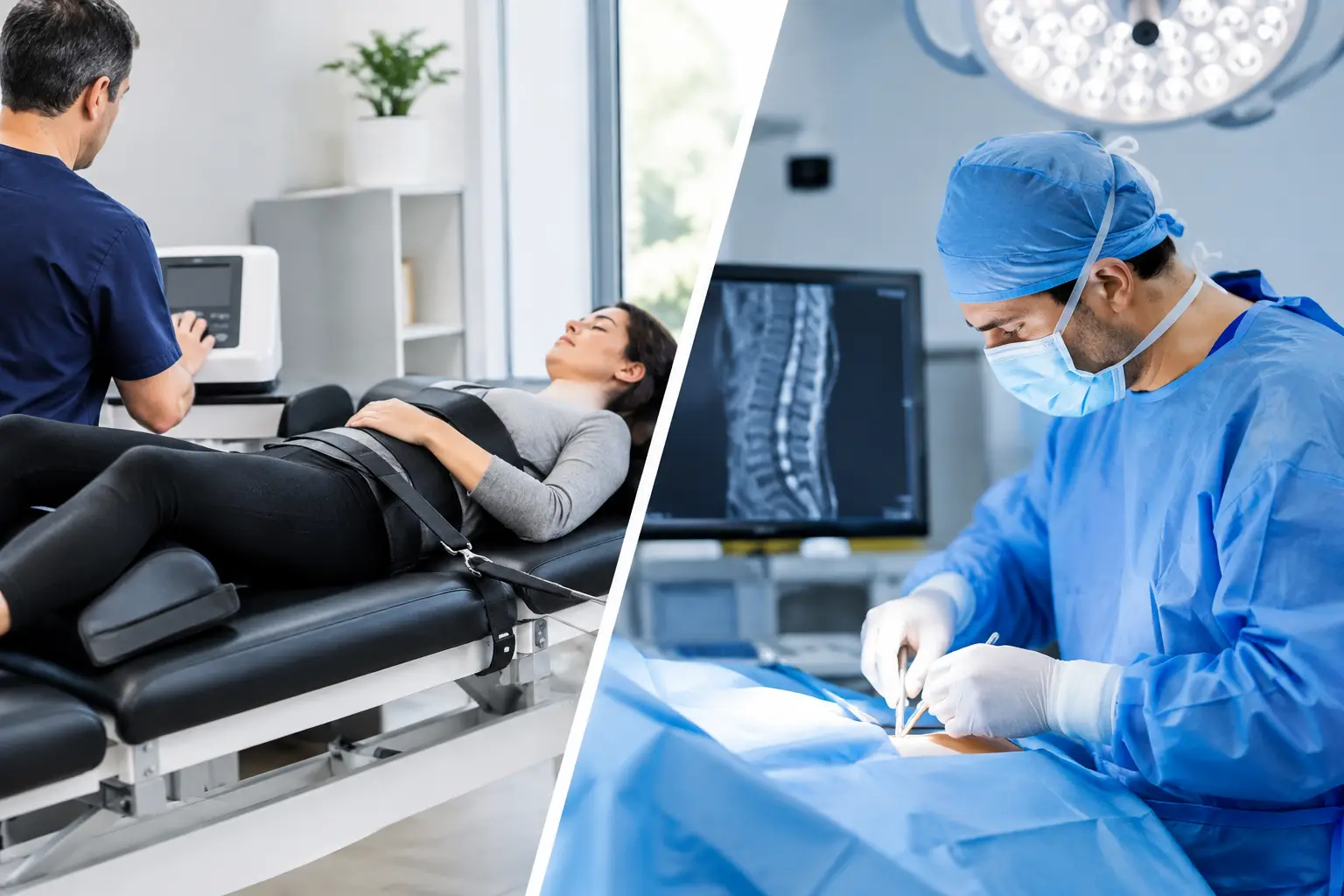
Surgical decompression and non-surgical decompression should not be confused. Surgery physically removes or reshapes tissue, while non-surgical traction works without incisions. Most people who seek non-surgical care want to avoid surgery altogether or explore it before considering more invasive options.
How Spinal Decompression Works on Discs and Nerves
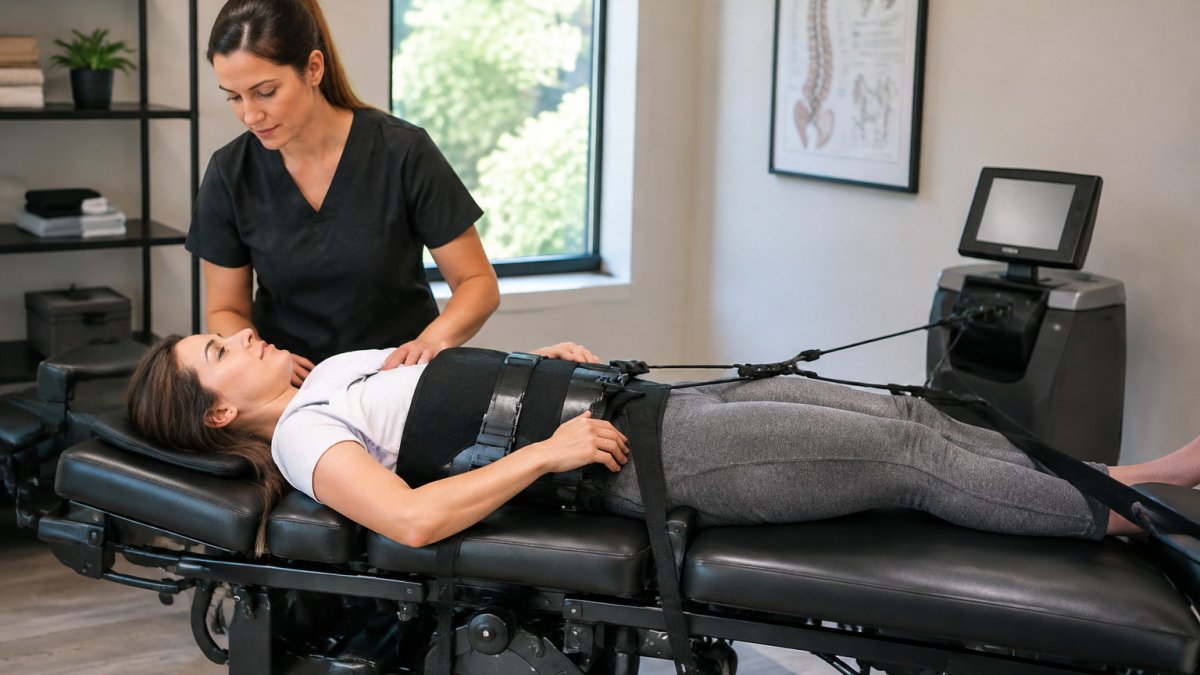
Mechanical traction gently stretches the spine so the vertebral segments separate slightly. That separation can reduce pressure on an intervertebral disc, which may help draw in a bulging or herniated disc material away from the nerve root.
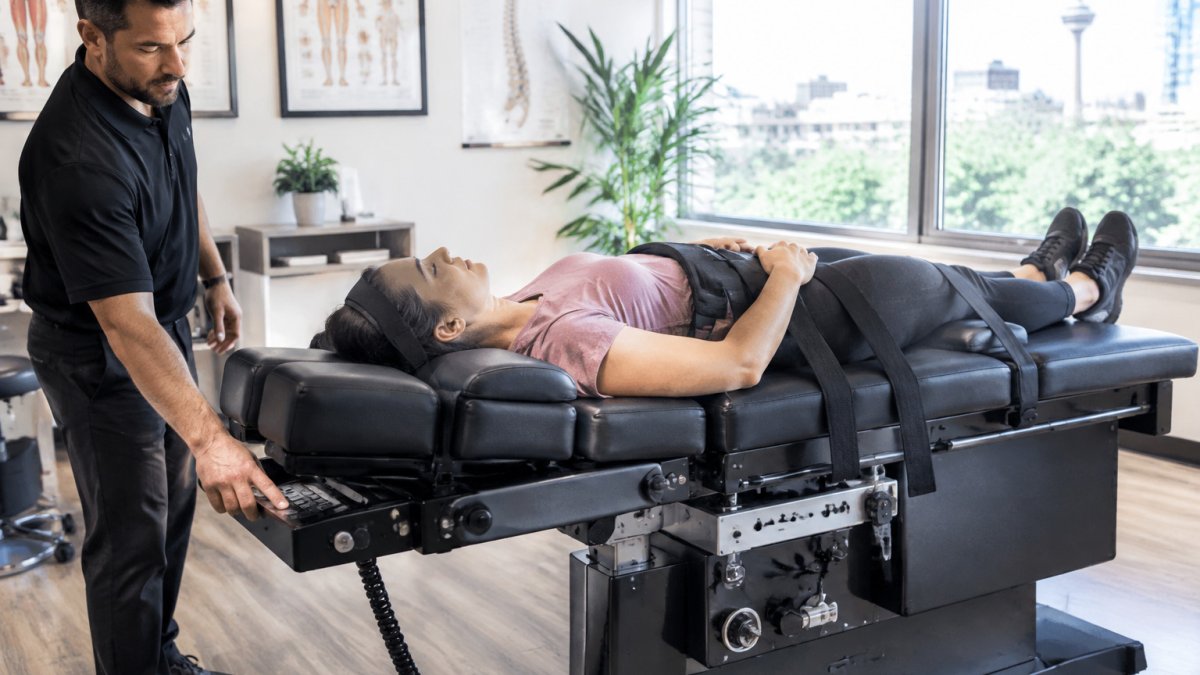
Many patients ask whether this process is painful. In a typical session, the table gradually applies and releases force in cycles, and most people describe a feeling of gentle stretching rather than strain. The force is adjusted to your comfort level and the area being treated.
Researchers continue to study how much of the benefit comes from traction alone versus the surrounding care, so treatment plans should be individualized rather than promised as a universal fix.
Conditions Spinal Decompression Therapy May Help
Spinal decompression is most often considered for conditions linked to disc pressure or nerve irritation. Patients commonly seek care for:
- Herniated or bulging discs
- Sciatica and symptoms that travel down the leg
- Degenerative disc disease
- Chronic lower back or neck pain
- Facet joint irritation and mild spinal stenosis symptoms
A diagnosis from a qualified clinician should always come first. Radiculopathy, numbness, weakness or loss of bladder or bowel control require urgent medical evaluation rather than a self-directed treatment plan.
Spinal Decompression Therapy Benefits and Risks
Reported benefits can include reduced leg or arm pain and improved tolerance for daily activity, though results vary. Because decompression is non-surgical, there is no incision, no anesthesia, and no surgical recovery period, which is a major reason patients explore it before considering surgery.
On effectiveness, the honest picture is mixed. Systematic reviews of non-surgical spinal decompression have generally found limited but promising evidence, with the strongest results reported when decompression is combined with exercise, education, and other conservative care rather than used alone. Success is not guaranteed, and a provider who promises a fixed outcome is overstating what the evidence supports.
Recovery and daily life during a course of treatment are usually low-impact. Soreness or a temporary increase in symptoms for a day or two after a session is common and typically settles. Heavy lifting, prolonged bending, and high-impact activity are usually limited during the treatment course, and your provider will give specific restrictions based on your diagnosis. (Source: Mayo Clinic’s information on herniated discs)
Risks exist and should be discussed openly. Minor side effects include muscle soreness, fatigue, and temporary worsening of symptoms. More serious concerns are rare but include injury in patients with unrecognized fractures, advanced osteoporosis, spinal tumors or infection, or certain vascular conditions (Red flags and serious pathology). Traction is not appropriate for everyone, which is why screening before the first session matters more than the session itself.
Compared with other conservative options, decompression sits alongside physical therapy, chiropractic adjustment, and acupuncture rather than replacing them. Physical therapy focuses on strengthening and movement patterns, chiropractic adjustment targets joint mobility, and acupuncture addresses pain signaling; decompression specifically targets disc and nerve compression. Many San Antonio patients combine two or more of these approaches, and a good provider will tell you when decompression is not the right first step for your presentation.
The article’s key points on what decompression can offer and what to watch for are summarised below.
| Aspect | Detail | Note |
|---|---|---|
| Procedure type | Non-surgical | No incision or anesthesia |
| Recovery | No surgical recovery period | Soreness for a day or two is common |
| Common side effects | Muscle soreness, fatigue | Usually temporary |
| Evidence | Limited but promising | Strongest when combined with exercise |
| Serious risk | Rare | Fractures, tumors, advanced osteoporosis |
| Best combined with | Exercise, education, conservative care | Not reliable as a standalone fix |
Spinal Decompression Therapy Safety and Who Should Avoid It
Spinal decompression is generally considered low risk when performed by a trained provider, but it is not suitable for every patient. Those who may need to avoid traction include people with fractures, tumors, advanced osteoporosis, pregnancy-related conditions that require modification, or certain vascular or spinal conditions. A careful intake and examination help identify these cases early.
Pregnant patients, people with implanted devices, and anyone recovering from recent spine surgery should always disclose their history. Your provider can then decide whether traction is appropriate or whether a gentler approach is safer.
Spinal Decompression Therapy Session Length and What to Expect
Session length and frequency depend on your diagnosis and response to care, and your provider will explain the expected schedule at your evaluation. You can also read how chiropractic back pain treatment unfolds from start to finish to see the full process. Some clinics pair each traction session with chiropractic adjustment, soft-tissue work, or guided exercise, which extends the visit. You can learn what a spinal alignment session involves at a San Antonio clinic before you book.
Before starting, a candidacy evaluation is a standard step in good practice for decompression. Imaging such as MRI or X-ray is not required for every patient, but it is commonly requested when disc herniation, stenosis, or fracture is suspected. This screening step is what separates a safe decompression plan from a generic traction table session.
Cost and insurance are where most patients have the most questions, and the answers vary widely. Pricing depends on your evaluation and treatment plan, so please contact Moore Chiropractic or visit our website for current prices or a quote. Insurance coverage varies by plan and diagnosis, so check directly with your insurer. Before committing, ask the clinic for a written treatment plan and confirm your coverage with your plan provider.
Spinal Decompression Exercises and Next Steps at Moore Chiropractic
Traction is often paired with movement. Your provider can advise which movements suit your diagnosis and stage of healing.
If you are dealing with persistent back, neck or leg pain and want to learn whether spinal decompression is a reasonable option, schedule a consultation with the team at Moore Chiropractic in San Antonio. We will talk through your symptoms and discuss whether decompression may be a reasonable option for you.
Frequently Asked Questions
Is spinal decompression therapy safe?
Spinal decompression is generally considered low risk when performed by a qualified provider after a proper evaluation. Possible side effects include temporary soreness, muscle fatigue, or mild discomfort during or after sessions. It is not appropriate for everyone, including people with certain fractures, tumors, infections, or pregnancy-related conditions. A consultation helps determine whether the therapy fits your situation.
How long does a spinal decompression session last?
Session length depends on the protocol the provider recommends and your individual needs. Treatment is usually delivered over a series of visits rather than a single session. Your provider will explain the expected schedule during your evaluation.
Is spinal decompression a permanent fix?
Spinal decompression is not a guaranteed permanent cure. Many patients experience improvement that lasts, particularly when combined with posture changes, exercises, and ongoing care, but results vary by condition and individual factors. Outcomes depend on the underlying cause of your symptoms and how you maintain your progress afterward.
What is the difference between nonsurgical spinal decompression and spinal decompression surgery?
Nonsurgical spinal decompression uses mechanical traction to gently stretch the spine and reduce pressure on discs and nerves, without incisions. Spinal decompression surgery involves procedures such as discectomy or laminectomy performed by a surgeon to physically remove or relieve structures. Nonsurgical options are often considered before surgery, but the right choice depends on your diagnosis and should be discussed with a qualified professional.
Does insurance cover spinal decompression therapy?
Coverage varies by insurance plan, provider, and diagnosis, so there is no single answer that applies to everyone. Some plans may cover parts of conservative care when it is medically necessary. Check directly with your insurer and ask Moore Chiropractic about current office policies before scheduling.