Table of Contents
- Why Chiropractic Care Belongs in Your Runner’s Knee Recovery
- Runner’s Knee Exercises to Rebuild Strength and Control
- Runner’s Knee Stretches That Ease Tension
- How Often to Do These Exercises (and What to Avoid)
- Return to Running After Runner’s Knee: A Step-by-Step Plan
- When to See a Chiropractor for Runner’s Knee in San Antonio
- Conclusion
- Frequently Asked Questions
Last Updated: October 19, 2026
Why Chiropractic Care Belongs in Your Runner’s Knee Recovery
Runner’s knee is one of the most common overuse injuries in running, and it rarely improves with rest alone. Chiropractic exercises for runner’s knee recovery work because they fix the movement patterns that caused the pain in the first place. At Moore Chiropractic, we see runners every week who stopped running for months, felt better, then returned to the same stride and the same pain.
That cycle is the real problem. Pain is a signal, not the injury itself.
Runner’s knee, clinically called patellofemoral pain syndrome, is irritation of the cartilage under the kneecap caused by tracking problems, weak hips, or tight quads. The kneecap slides out of its groove instead of gliding cleanly, and every stride grinds it a little more.
Here is what most runners get wrong: they stretch the knee and ignore the hip. The kneecap follows the thigh bone, and the thigh bone follows the hip. Weak glutes let the knee drift inward on every landing. No amount of knee stretching fixes that.
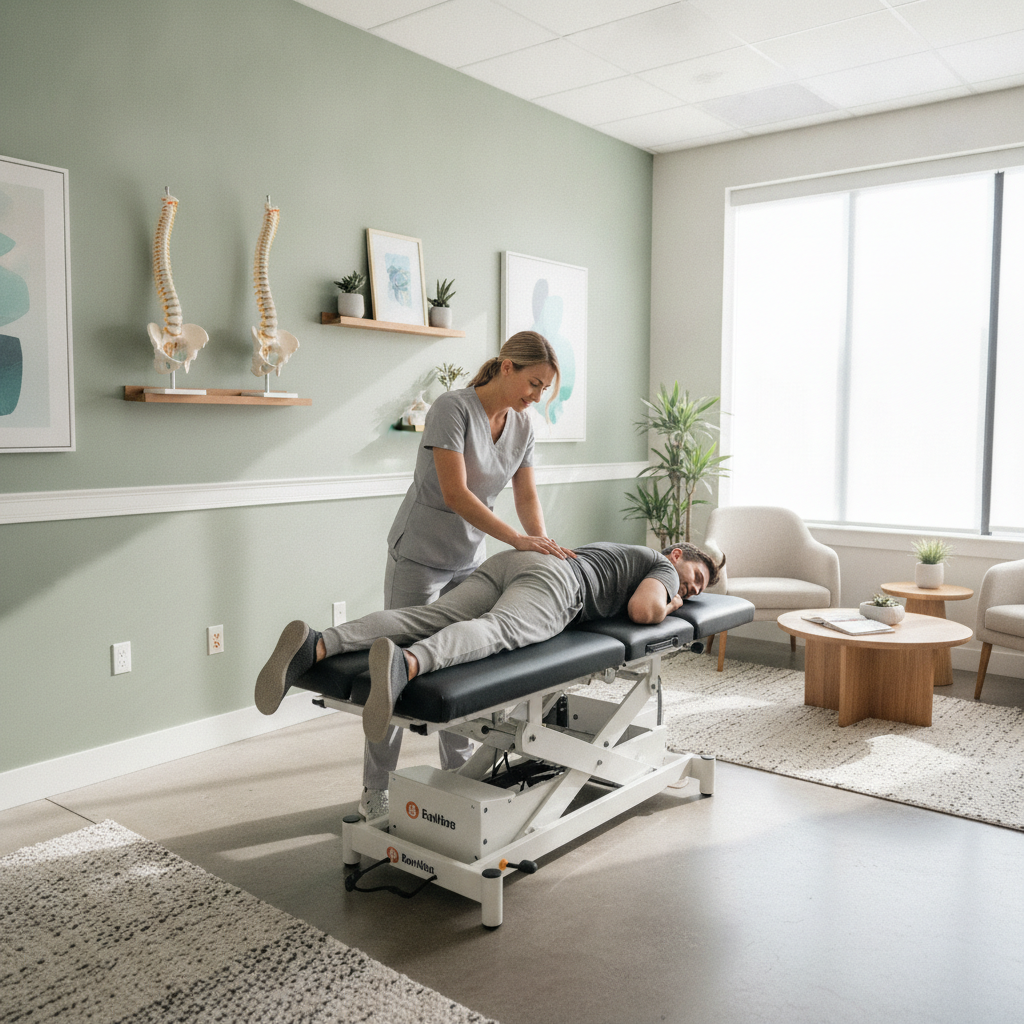
Gentle chiropractic care addresses the joint restriction side of this, while targeted exercises rebuild the control side. Together, they give you a recovery plan that holds up when you start running again. Below, we break down the exact exercises, the stretching that actually helps, and a step-by-step return plan you can follow.
Runner’s Knee Exercises to Rebuild Strength and Control
The best runner’s knee exercises target the hips, glutes, and quads, not just the knee. These four moves are a foundation for many runners. They need no equipment and can typically be completed in about 15 minutes.
Quad Sets and Straight-Leg Raises
Quad sets wake up the muscle that controls your kneecap. Sit with your leg straight, press the back of your knee down into the floor, and hold for five seconds. Do two sets of ten per leg.
Straight-leg raises build on that. Lie on your back, tighten the quad first, then lift the straight leg about 30 centimeters and lower it slowly. Two sets of ten, once daily.
Clamshells and Glute Bridges
Clamshells strengthen the glute that stops your knee from caving inward. Lie on your side with knees bent, keep your feet together, and open the top knee like a clamshell. Two sets of fifteen per side.
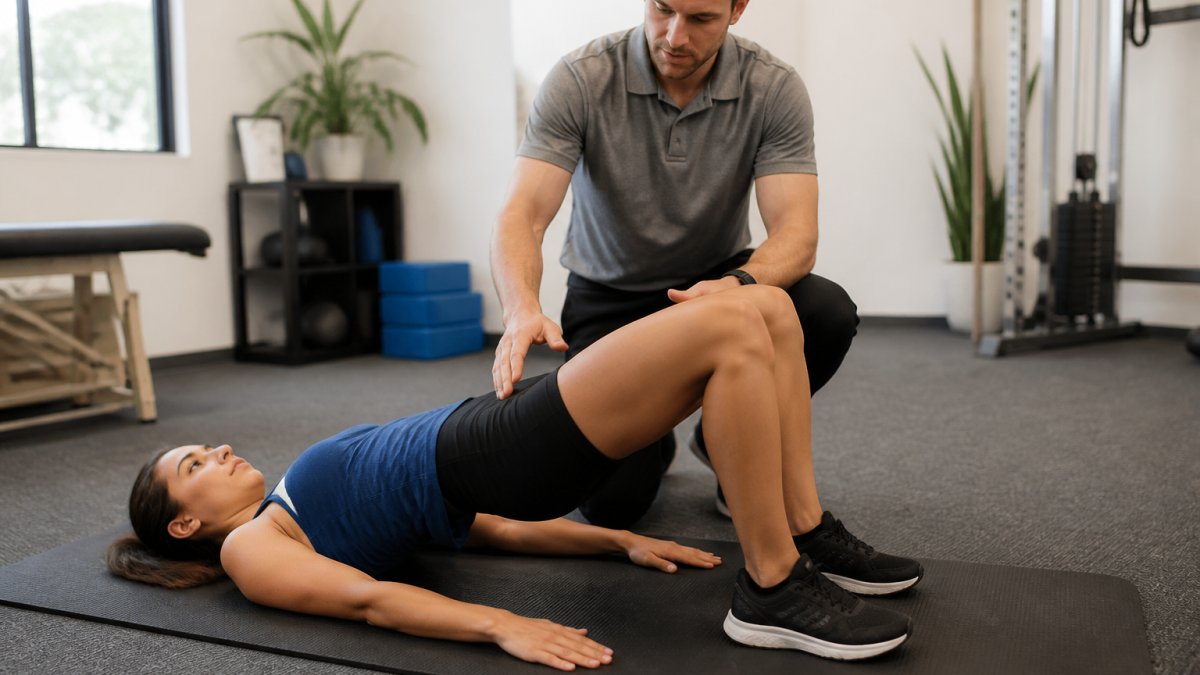
Glute bridges hit the whole hip complex. Lie on your back, feet flat, and lift your hips until your body forms a straight line from shoulders to knees. Squeeze at the top for two seconds. Two sets of twelve.
A common mistake is rushing these. Slow, controlled reps beat fast ones every time. If your knee aches during a rep, reduce the range of motion rather than pushing through it.
Runner’s Knee Stretches That Ease Tension
Runner’s knee stretches should target the quads, hip flexors, and IT band, and they work best after your strengthening routine, not before. Stretching cold muscles before exercise does little for recovery.
Hold each stretch for 30 seconds and repeat twice per side. Breathe normally and stop short of sharp pain.
- Standing quad stretch: Hold your ankle behind you, keep knees together, and gently pull your heel toward your glute.
- Kneeling hip flexor stretch: In a half-kneel, tuck your pelvis under and shift your weight forward until you feel the front of your hip open.
- IT band stretch: Cross one leg behind the other, lean away from the crossed leg, and reach your arm overhead.
- Calf stretch: Press your heel into the floor with a straight back leg, then repeat with a bent knee.
Foam rolling the outside of your thigh for 60 seconds per leg can also ease the tightness that pulls on the kneecap. Keep it gentle. Rolling hard enough to bruise defeats the purpose.
How Often to Do These Exercises (and What to Avoid)
Consistency matters more than volume. Most people do well with strengthening four days a week and stretching daily, keeping each session short.
Here is a simple weekly structure:
| Day | Focus | Time |
|---|---|---|
| Monday | Quad sets, straight-leg raises, clamshells, glute bridges | 15 min |
| Tuesday | Stretching and foam rolling | 10 min |
| Wednesday | Strengthening routine | 15 min |
| Thursday | Stretching and foam rolling | 10 min |
| Friday | Strengthening routine | 15 min |
| Saturday | Strengthening routine | 15 min |
| Sunday | Rest or gentle stretching | 10 min |
What to avoid matters just as much. Skip deep squats, lunges on painful days, and running through sharp pain. Pain that worsens during activity is a stop signal, not a challenge. Also avoid suddenly increasing your weekly mileage once you return. A common rule is to add no more than 10% per week, though your own tolerance may differ.
The biggest setback many see is runners who feel better after two weeks and jump straight back to their old mileage. The pain often returns within days. Rebuild slowly, even when you feel fine.
Return to Running After Runner’s Knee: A Step-by-Step Plan
Return to running after runner’s knee should be gradual and pain-free at every stage. Expect several weeks, not several days. Move to the next step only when the current one causes no pain during or after.
- Walk 20-30 minutes pain-free. Confirm your knee tolerates daily walking before anything else.
- Add walk-run intervals. Alternate one minute of easy jogging with two minutes of walking for 20 minutes.
- Build the running portion. Shift to two minutes running, one minute walking, then three and one.
- Run continuously for 10-15 minutes. Keep the pace easy, slower than your normal training pace.
- Increase duration, not speed. Add five minutes per week until you reach your previous easy-run length.
- Reintroduce speed and hills last. These load the kneecap hardest, so save them for the end.
If pain returns at any step, drop back one step for a week. That is not failure. It is how the plan is designed to work.
When to See a Chiropractor for Runner’s Knee in San Antonio
See a chiropractor for runner’s knee in San Antonio when pain lasts more than two to three weeks, limits your daily activity, or keeps coming back after rest. A proper exam can tell you whether joint restriction, hip weakness, or another issue is driving the problem.
At Moore Chiropractic, we start with a complimentary evaluation and consultation. We look at how you move, where your joints are restricted, and how your hips and knees work together. Then we build a personalized care plan using gentle chiropractic techniques alongside the exercises above.
If chiropractic is not the right fit for your situation, we will tell you. Our goal is lasting relief and better mobility.
The runners who recover fastest are the ones who treat strength work as part of training, not a temporary fix. Keep the exercises in your routine even after the pain fades.
Conclusion
Runner’s knee recovery takes patience, and the exercises only work if you stay consistent when the pain fades. The strength and control you build now are what keep the pain from returning the next time you lace up.
If you are searching for a chiropractor near me in San Antonio, our team at Moore Chiropractic can assess your movement, provide gentle care, and build a plan around your running goals. We offer personalized care plans, expertise in both traditional and advanced chiropractic methods, and a complimentary evaluation for new patients. Contact us to schedule your evaluation and get back to running with confidence.
Frequently Asked Questions
What exercises help runner’s knee recover?
Focus on strengthening the quadriceps and glutes while improving hip control. Quad sets, straight-leg raises, clamshells, and glute bridges are good starting points. These runner’s knee exercises target the muscles that stabilize the kneecap and reduce tracking problems. A chiropractor can assess your movement patterns and tailor a program to your specific weaknesses, which is more effective than a generic routine.
Can a chiropractor help with runner’s knee?
Yes. A chiropractor can evaluate joint mobility in the knee, hip, and ankle, then use gentle adjustments and soft tissue work to improve alignment and reduce irritation. Combined with targeted exercises and stretches, this approach supports recovery. In San Antonio, Moore Chiropractic offers a complimentary evaluation to determine whether chiropractic care fits your situation.
How often should I do exercises for runner’s knee?
Many people benefit from performing runner’s knee exercises regularly, with appropriate rest days between sessions. Start with lower resistance and focus on controlled form. If pain increases during or after exercise, scale back and consult a professional. Consistency matters more than intensity for recovery.
How long does runner’s knee take to heal?
Recovery time varies. Mild cases may improve with consistent exercise and activity modification, while more stubborn cases can take longer. Returning to running too soon often causes setbacks. A chiropractor can help you gauge readiness and build a gradual return-to-running plan.