Quick Summary
Concussion symptoms in youth athletes often include headache, dizziness, nausea, confusion, and sensitivity to light or noise, and they may appear hours or days after a hit. Any suspected head injury should be evaluated by a clinician, and youth athletes should not return to play until a licensed provider gives written clearance.
- Symptoms can appear immediately or develop over the following hours or days.
- A child can have a concussion without losing consciousness.
- Remove the athlete from play immediately, even if symptoms seem mild or fade.
- Call 911 for seizures, repeated vomiting, slurred speech, or unequal pupils.
- Return to play follows a stepwise progression, advancing only when symptom-free.
Table of Contents
- What a Concussion Is and Why Youth Athletes Are at Higher Risk
- Physical Concussion Symptoms in Youth Athletes
- Signs of Concussion in Children Under 12 and Teens
- Cognitive, Sleep, and Mood Changes to Watch For
- When to Seek Emergency Care After a Head Injury
- Concussion Recovery Timeline for Youth and a Safe Return to Play in Texas
- Frequently Asked Questions
Concussion Symptoms in Youth Athletes: What Parents Should Know
Last Updated: November 10, 2026
What a Concussion Is and Why Youth Athletes Are at Higher Risk
Concussion symptoms in youth athletes often show up hours or even days after a hit, which is why many parents miss them. Families often are unsure whether a bump on the field was serious. A concussion is a mild traumatic brain injury caused by a blow to the head, neck, or body that jolts the brain inside the skull. It changes how the brain functions for a period of time, even when no structural damage shows up on a scan.
Young athletes are more vulnerable for several reasons. Parents looking to lower their child’s injury risk can read this local guide to preventing youth sports injuries. Their brains are still developing, their neck muscles are often weaker relative to head size, and they may underreport symptoms because they want to keep playing. A common mistake is assuming that only a hard hit to the head matters. Falls, collisions with teammates, and whiplash-type motions can all cause a concussion.
Sports-related concussions are a significant concern across American youth sports. Parents wondering how a pediatric chiropractor in San Antonio fits into youth sports care can read about benefits, safety, and what to expect. Parents should treat any suspected head injury seriously, regardless of how minor it looks in the moment.
Physical Concussion Symptoms in Youth Athletes
Physical symptoms are often the first signs parents notice. They may appear immediately or develop gradually over the next day or two. Watch for changes in how your child moves, feels, and responds to the world around them.
Headache, Pressure, and Dizziness
Headache is the most commonly reported symptom after a concussion. Young athletes may describe it as a dull ache, a sense of pressure in the head, or a feeling that their head is “heavy.” Dizziness and balance problems are equally important. A child who seems unsteady, clumsy, or who stumbles when walking or turning should be evaluated, even if they insist they feel fine.
Nausea, Vision Changes, and Light or Noise Sensitivity
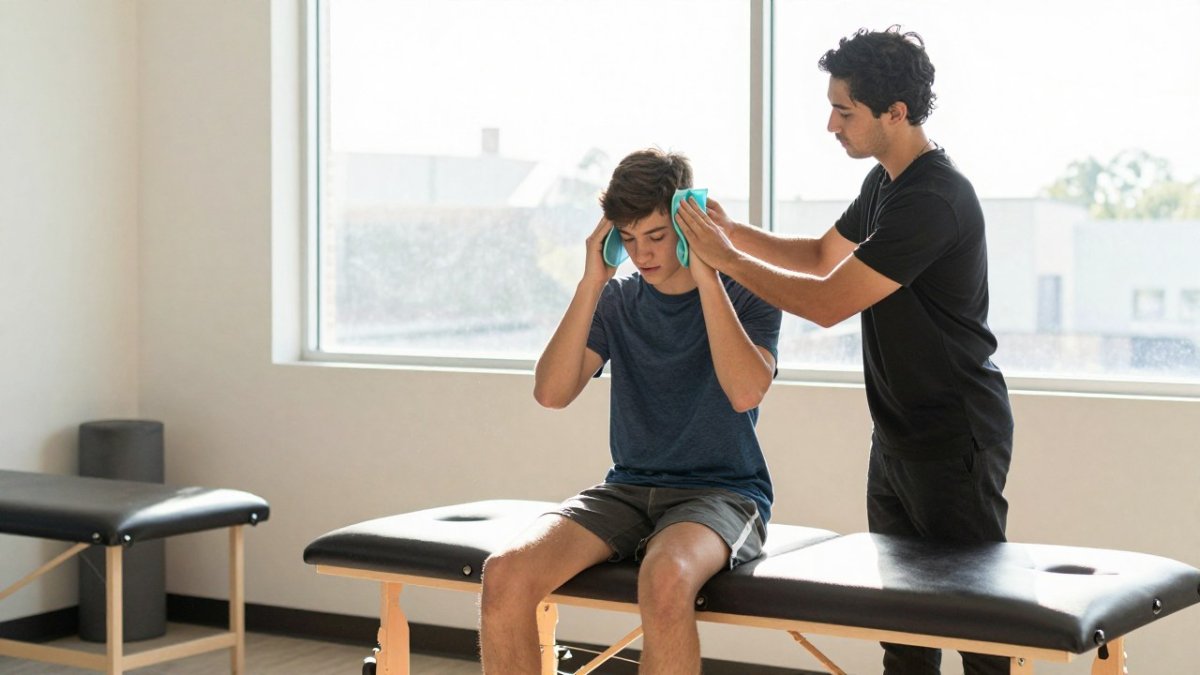
Nausea or vomiting after a head impact is a warning sign that requires prompt medical attention. Vision changes, including blurred or double vision, are also significant. Many children become sensitive to bright lights or loud environments, such as a crowded gym or a noisy car. If your child covers their eyes or ears, asks for the lights to be dimmed, or seems overwhelmed by normal background noise, note it and report it.
Signs of Concussion in Children Under 12 and Teens
Symptoms can look different depending on age. Younger children often cannot describe what they feel, so changes in behavior may be the clearest clue. A child under 12 might cry more than usual, become unusually clingy, or lose interest in favorite toys and activities. They may also have trouble following simple instructions or seem unusually tired.
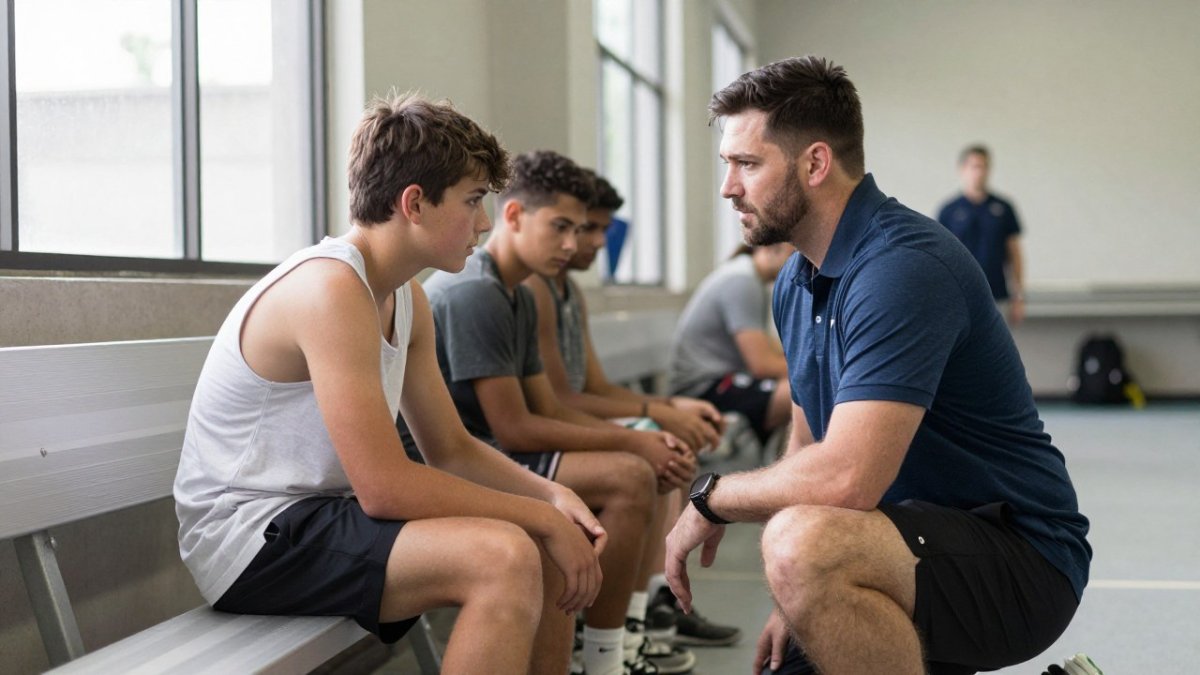
Teens are more likely to describe headaches, fatigue, and difficulty concentrating in school. They may hide symptoms because they worry about losing playing time or being judged by teammates. Ask specific questions, such as whether screens bother their eyes or whether they are having trouble finishing homework.
For both groups, a parent’s observation is valuable. If your child is not acting like themselves after a hit, that alone is reason to seek an evaluation.
Cognitive, Sleep, and Mood Changes to Watch For
Concussion symptoms are not limited to the body. Cognitive changes can include confusion, forgetfulness, slowed speech, and trouble concentrating. A child may repeat questions, lose track of conversations, or struggle with schoolwork they handled easily before.
Sleep disorders are common. Some children sleep far more than usual, while others have trouble falling asleep or staying asleep. Fatigue and low energy often accompany both patterns.
Mood changes deserve attention as well. Irritability, anxiety, sadness, and aggression can all follow a concussion. These changes can strain family relationships and social life, so consider how your child is coping emotionally. If mood symptoms persist, talk with your child’s doctor about mental health support.
When to Seek Emergency Care After a Head Injury
Most concussions in youth sports can be managed with a same-day medical evaluation, but a small set of signs means the child needs emergency care right away (the CDC). Sorting these signs into clear tiers helps parents and coaches act quickly without second-guessing.
Call 911 or Go to the Emergency Department Now
Seek emergency care immediately if the athlete has any of the following:
- A seizure or convulsion
- Trouble waking up, or unusual drowsiness that gets worse
- Slurred speech or difficulty speaking
- Weakness, numbness, or clumsiness in the arms or legs
- Repeated vomiting
- One pupil noticeably larger than the other
- Loss of consciousness, even if brief
Do not drive the child yourself if any of these signs are present. Call 911 and keep the athlete still, especially if a neck or spine injury is possible.
Get a Same-Day Medical Evaluation
Some symptoms do not require an ambulance but still need a clinician to examine the athlete that day. These include a headache that keeps getting worse, increasing confusion or agitation, unusual irritability, and any new vision change that persists. If you are in San Antonio and cannot reach your child’s primary care provider quickly, a licensed urgent care clinic or the nearest hospital emergency department can complete the evaluation. Bring a written account of when the hit happened, what the athlete did afterward, and which symptoms have changed since.
What Coaches Should Do on the Sideline
Coaches and officials are often the first people to recognize a possible concussion, so a short, consistent response protocol matters:
- Remove the athlete from play immediately, even if symptoms seem mild or have already faded (the CDC).
- Do not allow the athlete to return to the game or practice that day.
- Stay with the athlete and watch for any of the emergency signs listed above.
- Inform the parent or guardian the same day, and document the time and the mechanism of injury.
- Confirm that the athlete will not return to activity until a licensed healthcare provider provides written clearance (the CDC).
Watch out: A child who appears to recover within minutes is still at risk, and a second head impact before full recovery can cause far more serious harm.
Why Waiting Is the Riskier Choice
Parents often hope symptoms will pass on their own, but symptoms that seem to improve can return with physical or mental exertion. When in doubt, seek a same-day evaluation rather than waiting to see how the child feels the next morning.
Concussion Recovery Timeline for Youth and a Safe Return to Play in Texas
Recovery varies widely from child to child. Parents planning a return to play can learn when youth athletes should start chiropractic care. Most young athletes improve over days to weeks, but some take longer, and a second head impact before full recovery can cause serious harm. Because there is no single fixed timeline, each return decision should be made by a licensed clinician who has examined the athlete.
A Stepwise, Clinician-Guided Progression
A typical return-to-play plan moves through stages, and the athlete advances only when symptoms stay absent at each step:
- Rest and symptom management, including limiting screens, bright light, and loud environments as needed.
- Light aerobic activity, such as walking or stationary cycling, kept well below symptom-provoking intensity.
- Sport-specific movement, such as skating or dribbling drills, without contact.
- Non-contact practice with more complex drills.
- Full practice, including contact, once cleared by a provider.
- Return to competition.
If symptoms return at any stage, the athlete drops back to the previous step and waits before trying again. Athletes should not return to play while they still have any symptoms, including at rest or during activity.
Texas School and League Requirements
Texas schools and youth leagues use concussion-management rules. Parents should contact their child’s school athletic department or the league office to confirm the exact forms and clearance steps that apply to their program. Parents should contact their child’s school athletic department or the league office to confirm the exact forms and clearance steps that apply to their program, since requirements can differ between districts and sports.
Academic Return and Learning Accommodations
Returning to class can be as important as returning to sport. Many children need temporary changes during recovery, such as reduced homework, extended deadlines, shorter assignments, breaks from screens, or a lighter testing schedule. Share the clinician’s written recommendations with teachers and the school nurse or counselor so accommodations are in place from the first day back. Cognitive activity should be increased gradually, just as physical activity is, and symptoms that rise during schoolwork are a signal to scale back.
Getting a Personalized Plan in San Antonio
Families in San Antonio can start with the child’s primary care provider, a pediatric sports medicine clinic, or a licensed provider who manages concussion care. Families can also see how chiropractic supports youth sports injury rehabilitation. A thorough evaluation should document symptoms at rest and with activity, and it should produce a written plan that the family, coaches, and school can all follow. Families seeking guidance can schedule a consultation to talk through next steps with a qualified professional.
The article lays out a stepwise, clinician-guided return-to-play progression, summarised below.
| Step | What the athlete does | Key rule |
|---|---|---|
| 1 | Rest and symptom management | Limit screens, bright light, loud places |
| 2 | Light aerobic activity | Stay well below symptom-provoking intensity |
| 3 | Sport-specific movement | No contact; skating or dribbling drills |
| 4 | Non-contact practice | More complex drills |
| 5 | Full practice, including contact | Only once a provider clears it |
| 6 | Return to competition | Advance only if symptom-free |
Concussion symptoms can be serious. This article provides general information only and is not a substitute for evaluation by a qualified healthcare professional. If you suspect your child has a head injury, seek medical care promptly.
Frequently Asked Questions
How long does it take a youth athlete to recover from a concussion?
Recovery varies widely from one young athlete to another, and there is no fixed timeline that applies to every child. Many youth athletes improve over a few weeks, while some have symptoms that last longer. Recovery depends on the child’s age, the severity of the injury, prior concussions, and how carefully they follow medical guidance. Any youth athlete who still has symptoms should be evaluated by a qualified health professional before returning to sports or school activities.
How do I tell if my 13-year-old has a concussion?
Watch for headache, dizziness, nausea, confusion, sensitivity to light or noise, and changes in mood, sleep, or concentration after any blow to the head or body. Teens may be reluctant to report symptoms because they want to keep playing, so ask direct questions about how they feel. Symptoms do not always appear right away, so keep monitoring for several days. If you suspect a concussion, remove the athlete from play and arrange a medical evaluation rather than waiting to see if it passes.
What should a parent do immediately if they suspect a concussion?
Stop the athlete from playing or practicing right away, even if the symptoms seem mild. Do not let the child return to the game, and do not leave them alone if they seem confused or drowsy. Call a healthcare provider for guidance, and go to an emergency department if warning signs appear, such as worsening headache, repeated vomiting, seizures, or unusual confusion. Share the injury details with coaches and the child’s school so the proper return-to-play steps are followed.
Can a youth athlete return to play in Texas after a concussion?
Texas schools and youth leagues use concussion-management rules, and parents should review the current requirements with their school district and the official Texas Education Agency and state resources. Parents should review the current requirements with their school district and the official Texas Education Agency and state resources, since specific rules and procedures can change.