Last Updated: November 13, 2026
Quick Summary
Use ice first for a new injury, sharp or shooting pain, or a swollen, hot area, applying it for 10 to 15 minutes with at least two hours between sessions. Choose heat for stiff, tight, achy, or knotted pain and muscle spasms, using it for 15 to 20 minutes at a time. The choice between heat or ice depends on whether your back is irritated and swollen or tight and stiff.
- Ice is commonly used during the first 72 hours after a new injury, and for inflamed, swollen, or sharply painful areas.
- Apply ice for 10 to 15 minutes, then leave the skin alone for at least two hours before repeating.
- Use heat for 15 to 20 minutes per session, with at least a two-hour break between sessions.
- Once the first 72 hours pass and swelling calms, alternate ice for 10 to 15 minutes with heat for 15 to 20 minutes.
- For sciatica, start with ice for sharp, shooting pain and switch to heat once it settles into an ache or stiffness.
Table of Contents
- Heat or Ice for Back Pain: Start With the Right Question
- When to Use Ice for Back Pain
- When to Use Heat for Back Pain
- How Long to Use a Heating Pad for Back Pain
- Alternating Ice and Heat for Back Pain
- Ice or Heat for Lower Back Pain Sciatica
- Heat or Ice for Back Pain Spasms
- Red Flags, Safety, and When to Get Care in San Antonio
- Frequently Asked Questions
Heat or Ice for Back Pain: Start With the Right Question
Most people reach for the wrong one. Is your back irritated and swollen, or tight and stiff? (Source: National Institute of Arthritis and Musculoskeletal and Skin Diseases)
**Heat therapy is the use of warmth to relax muscles and increase blood flow.
Here is a simple decision guide by symptom and timing.
- New injury, fall, or sudden strain within the last 24 to 72 hours: start with ice. Cold narrows blood vessels, which can limit swelling and dull sharp nerve signals.
- Sharp, shooting, or burning pain at any stage: ice first, especially if the pain runs down a leg.
- Stiff, tight, achy, or knotted pain, especially in the morning or after sitting: heat. Warmth increases blood flow and helps tight muscles release.
- A muscle spasm that came on without a clear injury: heat is usually the better first choice.
- A spasm that started right after a strain: ice for the first day or two, then heat once the sharp stage passes.
- Swollen, hot, or throbbing area: skip heat and use ice.
- Pain that has been present for weeks or months with no swelling: heat is generally more comfortable, but neither replaces an exam if it is not improving.
Safety matters as much as timing. Temperature therapy can cause burns or cold injuries in some people, so some need to be more careful:
- Reduced sensation or neuropathy: if you cannot reliably feel hot or cold on the area, do not self-treat with a heating pad or ice pack without a clinician’s guidance. You may not notice a burn or cold injury developing.
- Diabetes and circulation problems: poor circulation and reduced skin sensation make burns and cold injuries more likely. Ask a doctor before using heat or ice on the back.
- Fragile or thin skin, or skin over a bony area: use a thin towel barrier every time, keep sessions short, and check the skin afterward.
- Anyone who might fall asleep: do not use a heating pad or ice pack in bed or while drowsy. Falling asleep with a heating pad can cause burns.
- Pregnancy, recent surgery, or an implanted device: check with your clinician before starting temperature therapy on the back.
Watch out: heat applied to an area that is already swollen, hot, or newly injured can increase swelling and make pain worse.
Below, we break down when to use each one, how long to apply them, and how to alternate safely.
Here is a quick guide to matching the therapy to what your back is doing right now.
| Symptom or timing | First choice | Why |
|---|---|---|
| New injury, fall, or strain within 24 to 72 hours | Ice | Narrows blood vessels, limits swelling, dulls sharp signals |
| Sharp, shooting, or burning pain | Ice first | Especially if pain runs down a leg |
| Stiff, tight, achy, or knotted pain | Heat | Increases blood flow, helps tight muscles release |
| Muscle spasm with no clear injury | Heat | Warmth helps the muscle relax |
| Spasm right after a strain | Ice first day or two, then heat | Calm swelling before loosening muscles |
| Swollen, hot, or throbbing area | Ice, skip heat | Heat can increase swelling and pain |
| Pain for weeks or months with no swelling | Heat generally | Neither replaces an exam if not improving |
When to Use Ice for Back Pain
Ice is commonly used during the first 72 hours after a new injury, and for times when your back is inflamed, swollen, or sharply painful.
Use ice when you notice:
- A strain from lifting, twisting, or a sudden movement
- Pain that started after a fall or a car accident
- A hot, swollen, or throbbing area
- Sharp pain that gets worse with movement
Here is how to apply it safely:
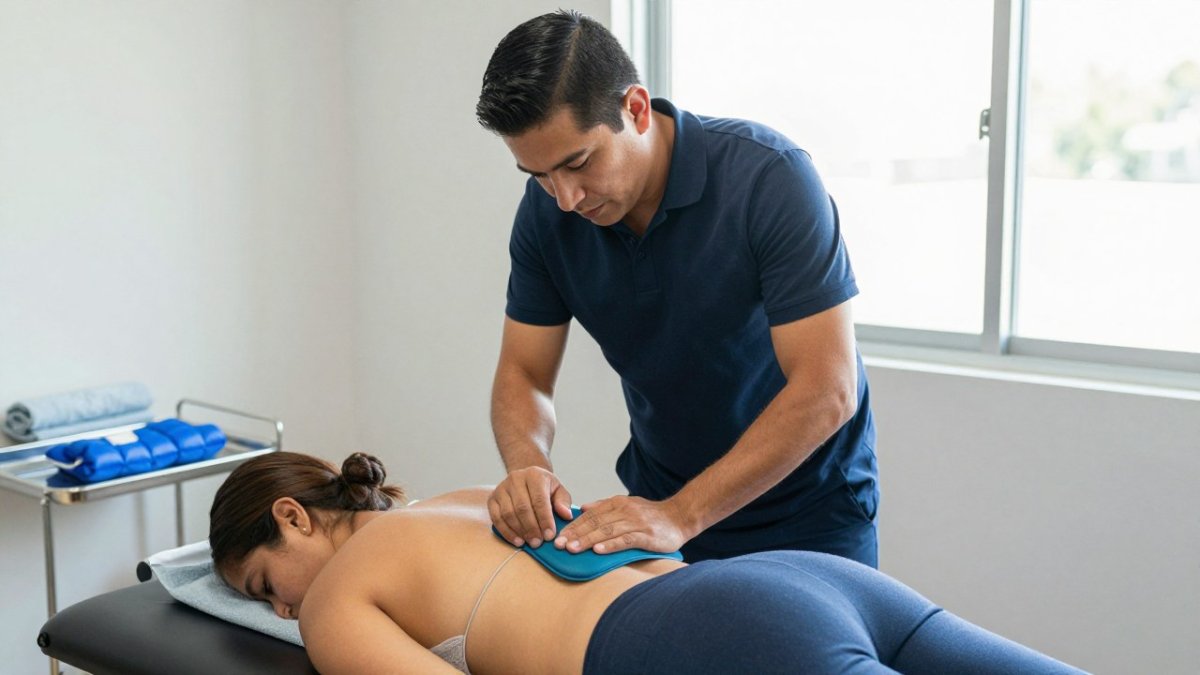
- Wrap a cold compress, ice pack, or frozen gel pack in a thin towel. Never put ice directly on skin.
- Place it on the sore area for 10 to 15 minutes.
- Remove it and leave the skin alone for at least two hours.
- Repeat a few times a day for the first 72 hours.
Watch out: leaving an ice pack on too long can cause skin damage or nerve damage, especially on thin skin or over a bony area. Set a timer and take it off even if it still feels good.
When to Use Heat for Back Pain
Heat is for muscle stiffness, tightness, and pain that has been around for more than a few days. Warmth opens blood vessels, brings blood to the area, and helps tight muscles let go. It also soothes a muscle spasm.
Reach for heat when your back feels:
- Stiff in the morning or after sitting
- Tight or knotted rather than sharp
- Sore from old, nagging pain
- Tense from stress or a long day at a desk
A hot pack, heating pad, or warm compress works well here. Keep a thin towel between the heat and your skin, and use it for 15 to 20 minutes at a time. Skip heat if the area is swollen, hot to the touch, or you have a new injury.
How Long to Use a Heating Pad for Back Pain
The safe answer is 15 to 20 minutes per session, with a break in between. That is long enough to relax tight muscles without risking a burn.
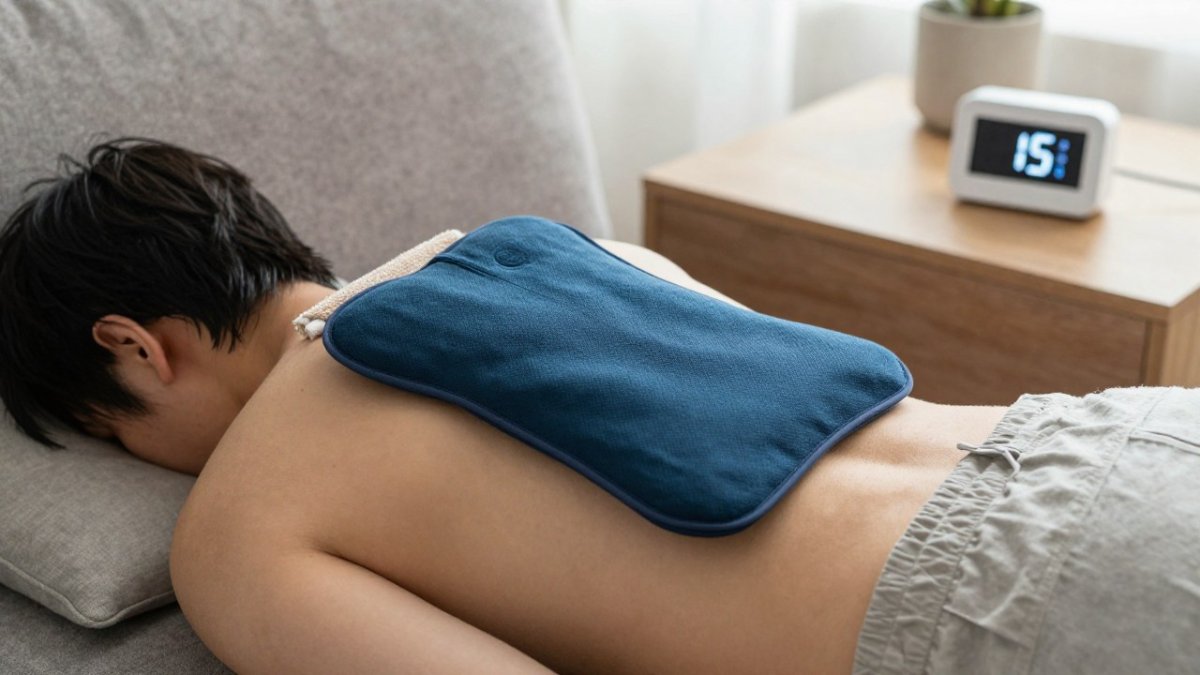
Follow these limits:
- Per session: 15 to 20 minutes
- Between sessions: at least a two-hour break
- Per day: a few times a day, not constant use
- Skin check: look at the area after each session
Never fall asleep with a heating pad on. That is one of the most common ways people get a burn. If you have diabetes or reduced feeling in your skin, ask a doctor before using heat at all.
Alternating Ice and Heat for Back Pain
Alternating ice and heat for back pain works well once the first 72 hours have passed and the sharp, swollen stage has calmed down. The idea is simple: cold calms irritation, warmth brings blood flow and movement.
A common approach is:
- Start with ice for 10 to 15 minutes to settle the area.
- Wait at least two hours.
- Follow with heat for 15 to 20 minutes to loosen tight muscles.
- Repeat a few times a day, always ending with ice if the area swells.
If you are managing ongoing pain at home and want more than temperature therapy, our guide on how to manage chronic back pain at home covers movement, posture, and daily habits that support the same goal.
Ice or Heat for Lower Back Pain Sciatica
Sciatica is different from ordinary back pain.
For sciatica, ice is commonly used first. In the early stage, cold may help calm irritated tissue and numb the shooting pain. A common approach is:
- Wrap a cold pack in a thin towel and apply it to the lower back for 10 to 15 minutes.
- Take it off and give the skin at least a two-hour break.
- Repeat a few times a day during the first 48 to 72 hours.
- Once the sharp, shooting stage settles into an ache or stiffness, switch to heat for 15 to 20 minutes at a time to relax the surrounding muscles.
Here is how we think about it:
- Sharp, shooting, or burning pain down the leg: start with ice.
- Aching, tight, or stiff afterward: switch to heat.
- Numbness, weakness, or loss of bladder or bowel control: stop and get care now.
It helps to know what sciatica is not. Muscular back pain tends to stay in the back, feels better or worse with specific movements, and often eases with heat and gentle movement.
Watch out: sciatica that comes with new leg weakness, foot drop, saddle numbness, or loss of bladder or bowel control is a medical emergency.
If you are wondering how long this kind of pain tends to last, read our breakdown on how long sciatica pain lasts without treatment.
Heat or Ice for Back Pain Spasms
A muscle spasm is a sudden, tight squeeze that will not let go. For spasms, heat is usually the better first choice because warmth helps the muscle relax. Use a heating pad or hot pack for 15 to 20 minutes, with a break in between.
But if the spasm came on right after a strain or injury, start with ice for the first day or two to calm the swelling. Once the sharp stage passes, switch to heat. If spasms keep coming back, that is a sign the underlying issue needs a closer look.
Red Flags, Safety, and When to Get Care in San Antonio
Some back pain needs more than a heating pad. Stop self-treating and get checked if you notice:
- Numbness or weakness in your legs
- Pain that shoots down your leg and will not ease
- Loss of bladder or bowel control
- Fever, chills, or unexplained weight loss with back pain
- Pain after a fall or car accident
- Back pain that keeps getting worse
If your symptoms are severe or sudden, our page on emergency back pain treatment explains when back pain warrants urgent care. We offer sciatica relief in San Antonio, TX, where Dr.
Heat and ice are tools, not a cure. If you want to go further with temperature therapy, our guide on how to effectively use heat and cold therapy for back pain walks through the details.
Back pain that keeps returning is your body asking for a real answer, not another 15 minutes with a heating pad.
Frequently Asked Questions
Is it better to put heat or ice on lower back pain?
It depends on timing and symptoms. In the first 48 to 72 hours after a new injury, ice is usually the better choice because it narrows blood vessels and calms inflammation and swelling. After that window, or for stiffness and muscle tightness, heat often feels better and helps loosen tissue. A simple rule: ice for a fresh, sharp, swollen injury, heat for an old, stiff, achy one. If you are unsure which applies to you, a professional evaluation can sort it out.
When should you not use heat on your back?
Skip heat on a new injury in the first 48 to 72 hours, when swelling is still building. Avoid it over broken or irritated skin, on areas with reduced sensation, or if you have poor circulation. Never sleep on a heating pad or leave one on for long stretches, because skin damage can happen without you noticing. If you have diabetes, neuropathy, or any condition that dulls sensation, check with a clinician before using heat at all.
How do you alternate ice and heat for back pain?
Alternating ice and heat for back pain means switching between the two in a set pattern. A common approach is 15 to 20 minutes of ice, then a break of at least an hour, then 15 to 20 minutes of heat, repeating a few times a day. Always place a thin towel between the pack and your skin and check the area every few minutes. Many people prefer to end on heat, since it leaves the muscles feeling looser.
How long should you use a heating pad for back pain?
Keep a heating pad on for no more than 15 to 20 minutes at a time, then take a break of at least an hour before reapplying. Use the lowest setting that feels warm rather than hot, and always put a thin towel between the pad and your skin. Do not fall asleep with a heating pad on. If the area turns red or you feel numbness, remove it right away. For repeated use through the day, a few short sessions work better than one long one.