
Table of Contents
- What Happens During a Chiropractic Adjustment for Back Pain
- Chiropractic Adjustment Benefits for Back Pain
- What to Expect at Your First Chiropractic Visit in San Antonio
- How Long Does Chiropractic Treatment Take for Back Pain?
- Techniques Chiropractors Use for Acute and Chronic Low Back Pain
- Post-Adjustment Home Care and Therapeutic Exercise
- Cost Transparency and Insurance Coverage in Texas
- Safety, Risks, and When to See a Medical Doctor
- Frequently Asked Questions
Last Updated: September 14, 2026
What Happens During a Chiropractic Adjustment for Back Pain
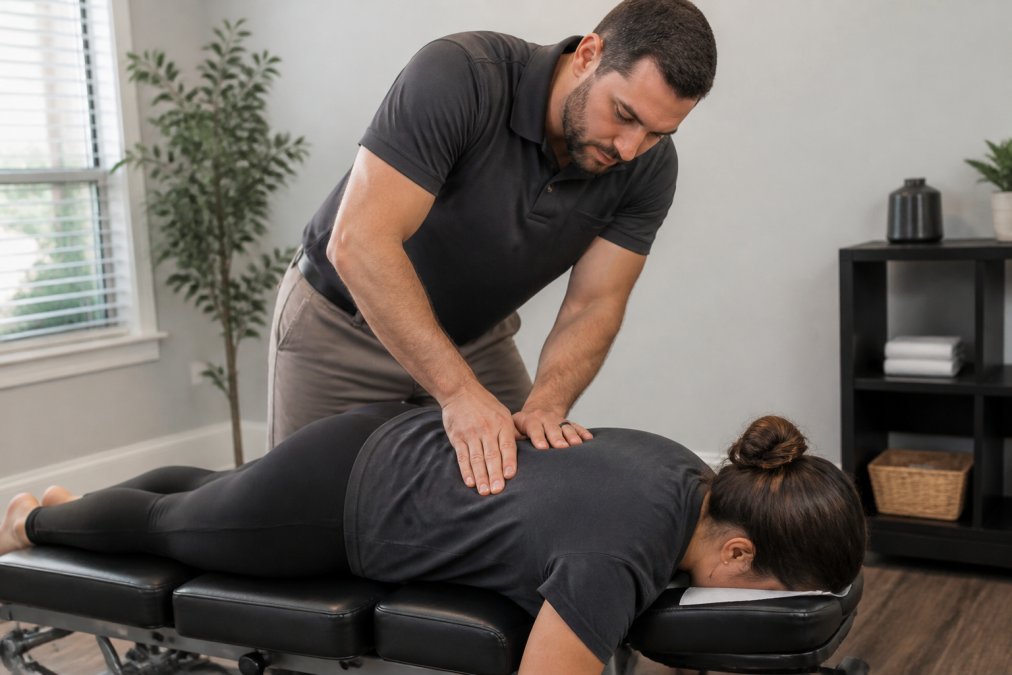
How chiropractic works for back pain relief comes down to restoring proper motion to the spine and reducing stress on the joints and nerves that cause discomfort. At Moore Chiropractic in San Antonio, Texas, we see it daily: a patient walks in guarded and stiff, and walks out moving more freely. A chiropractic adjustment is a precise, controlled movement applied to a spinal joint to improve alignment and function. Understanding how chiropractic works for back pain relief starts with knowing what happens in the treatment room.

Spinal Manipulation and the Musculoskeletal System
Spinal manipulation is the foundation of chiropractic care. It targets the musculoskeletal system, the network of bones, muscles, ligaments, and nerves that supports your body. When a joint loses normal motion from poor posture, injury, or repetitive strain, surrounding muscles tighten and nerve pressure can build. A chiropractic adjustment applies a controlled force to that joint, restoring mobility and easing tension. The goal is not just a satisfying pop; it is restoring healthy biomechanics so your spine can do its job without compensating elsewhere.
Chiropractic Adjustment Benefits for Back Pain
The benefits of a chiropractic adjustment for back pain go beyond a single moment of relief. Patients commonly report reduced pain, better joint mobility, and a wider range of motion. For chronic low back pain, consistent care can reduce the frequency and intensity of flare-ups. For acute back pain, an adjustment often shortens recovery by addressing the mechanical cause rather than masking symptoms.
Pain Relief, Joint Mobility, and Range of Motion
Pain relief is the most immediate benefit, but not the whole story. Improved joint mobility means your hips, pelvis, and spine move together more smoothly, taking strain off the lower back. Better range of motion lets you bend, twist, and lift without that catch of pain. That is why many active patients in San Antonio, from weekend runners to office workers, find chiropractic care supports both recovery and performance.
What to Expect at Your First Chiropractic Visit in San Antonio
Your first visit is built around understanding you, not rushing you onto a table. At Moore Chiropractic, every new patient receives a complimentary evaluation and consultation, a chance to share your history and ask questions before treatment begins. Expect a thorough conversation about your pain, daily routine, and goals, followed by a hands-on assessment.
Patient Assessment and Treatment Planning
A proper assessment includes an orthopedic evaluation, a range-of-motion review, and a check of how your spine and joints move under load. From there, your chiropractor builds a personalized treatment plan that might include manual therapy, soft tissue therapy, and therapeutic exercise, tailored to whether your pain is acute or chronic. If your situation needs medical attention beyond chiropractic care, a good practitioner will say so and refer you onward.
How to Vet a Chiropractor in San Antonio
Most articles skip the part that trips people up: choosing a provider. In Texas, chiropractors are licensed by the Texas Board of Chiropractic Examiners, and you can verify license status through that board before you book. A few checks separate a clinical practice from a sales operation:
- Ask about the treatment plan up front. A reputable San Antonio chiropractor examines you first, then explains a recommended course of care and what progress looks like. Be cautious of a large prepaid package pitched before any exam.
- Confirm the scope of care. Chiropractors are not medical doctors. A good one screens for red flags (see the safety section below) and refers you to a physician, physical therapist, or specialist when your case calls for it.
- Check how they coordinate. If you see a primary care doctor, physical therapist, or pain specialist in San Antonio, ask whether the chiropractor will share notes and coordinate. Integrated care tends to produce better outcomes than siloed treatment.
- Look at the whole visit, not just the adjustment. Strong practices pair spinal manipulation with soft tissue work, therapeutic exercise, and home-care instructions rather than treating the adjustment as the entire product.
Insurance and Cost Logistics in San Antonio
Cost is one of the biggest questions patients ask, and it deserves a straight answer. Chiropractic pricing varies by practice, number of visits, and whether insurance applies. In Texas, many plans include chiropractic coverage, but copays, visit limits, and referral rules differ. Medicare Part B covers manual manipulation of the spine to correct a subluxation by a qualified provider, but not maintenance or wellness adjustments, so know which category your care falls into (Coverage For Chiropractic Services).
The most reliable step is to call your insurer and ask three questions: Is chiropractic covered? How many visits per year? What is my copay or coinsurance? Then confirm with the clinic what you will owe out of pocket. If you are uninsured or your plan does not cover chiropractic, ask about self-pay rates before your first appointment.
At Moore Chiropractic, we offer a complimentary evaluation and consultation so you can understand your options before committing to a treatment plan. We do not believe in pressure. We believe in telling you honestly whether chiropractic care is right for your situation. For current pricing, contact our office directly, as costs depend on your specific plan and needs.
Before your first visit, bring a written list of your medications, prior imaging (X-rays or MRIs), and any doctors you are currently seeing. It shortens the assessment and helps your chiropractor spot anything that needs medical clearance first.
How Long Does Chiropractic Treatment Take for Back Pain?
There is no single answer, because how long chiropractic treatment takes for back pain depends on the cause, how long you have had it, and how your body responds. Some patients feel meaningful relief after one or two visits; others with long-standing chronic low back pain need a series of appointments over several weeks. A typical session runs 15 to 30 minutes, with the first visit longer because of the assessment (Chiropractic Adjustment Care, Treatment & Benefits).
| Pain Type | Typical Visit Length | Common Course of Care |
|---|---|---|
| Acute back pain | 15-30 minutes | A few visits over 1-2 weeks |
| Chronic low back pain | 15-30 minutes | Ongoing plan over several weeks |
| Maintenance and wellness | 15-20 minutes | Periodic visits as needed |
Your chiropractor should outline an expected treatment plan up front, including how many visits they recommend and what progress looks like. If anyone promises a fixed cure in a set number of visits before examining you, treat that as a warning sign.
Techniques Chiropractors Use for Acute and Chronic Low Back Pain
Chiropractors draw on a range of techniques rather than one fixed method. The right choice depends on your age, pain pattern, and how sensitive your spine is that day. Common approaches include:
- Spinal manipulation: A controlled force applied to a joint to restore alignment and motion.
- Manual therapy and mobilization: Slower, gentler movements for patients who need a softer touch.
- Soft tissue therapy: Work on tight muscles and fascia to release muscular tension.
- Therapeutic exercise: Targeted movement to build strength and prevent recurrence.
For acute back pain, the focus is often calming the irritated area and restoring basic motion. For chronic low back pain, care usually combines adjustments with exercise and posture work, an evidence-based practice that addresses the cause, not just the symptom.
Post-Adjustment Home Care and Therapeutic Exercise
What you do after your appointment matters as much as the adjustment itself. Your spine is most responsive in the hours following treatment, so this is the window to reinforce the gains. Most chiropractors recommend light movement rather than bed rest, plus targeted stretches and strengthening exercises. Heat or ice, as advised, can ease temporary soreness.
The First 24 to 48 Hours
The day after an adjustment is when your body consolidates the change, and when mild soreness is most likely. Stiffness commonly peaks within a day and fades within two (Adverse effects of spinal manipulation: a systematic review). A simple protocol for that window:
- Move, don’t rest. A short walk (10 to 20 minutes) keeps blood flowing to the area and prevents the guarding that makes stiffness worse. Prolonged bed rest works against you.
- Ice vs. heat. Ice is generally used for acute, inflamed pain in the first day or two after an injury or flare-up; heat for muscle tightness and stiffness. Follow your chiropractor’s instruction rather than guessing.
- Skip the heavy stuff. Avoid heavy lifting, twisting under load, and high-impact activity for a day or two. This is a temporary pause, not a long-term restriction.
- Hydrate and sleep. Both support tissue recovery. A normal night’s sleep does more for a healing spine than any single stretch.
A Simple Home Routine
A basic home routine might include gentle spinal stretches, core-strengthening moves, and posture resets if you sit at a desk. Consistency beats intensity: a few minutes of the right exercise daily does more for long-term spinal health than an occasional hard session. If unsure whether a movement is safe for your condition, ask first.
Activity Modification for San Antonio Lifestyles
What counts as ‘activity modification’ depends on what you actually do. If you sit at a desk, break up long static periods: stand and walk briefly every 30 to 45 minutes, and reset your posture rather than slumping for hours. If you are active outdoors, whether running the city’s greenway trails or working in the yard, ease back in rather than jumping to your previous intensity. For physical work, avoid the specific motion that provoked the pain until it settles, then reintroduce it gradually.
The 24 to 48 hours after an adjustment are when your body consolidates the change. Keep that window active but gentle: a short walk, light stretching, and good hydration help more than sitting still.
If soreness after an adjustment is severe, lasts more than a few days, or comes with new numbness, weakness, or pain radiating down a leg, contact your chiropractor and your medical doctor. That pattern is not normal post-treatment soreness and should be evaluated.
Cost Transparency and Insurance Coverage in Texas
At Moore Chiropractic, we offer a complimentary evaluation and consultation so you can understand your options before committing to a treatment plan. We do not believe in pressure. We believe in telling you honestly whether chiropractic care is right for your situation. For current pricing, contact our office directly, as costs depend on your specific plan and needs.
Be wary of any clinic that quotes a large prepaid package before examining you. A reputable practice assesses first, then recommends care based on your actual condition, not a sales target.
Safety, Risks, and When to See a Medical Doctor
Chiropractic care is generally considered low-risk and non-invasive when performed by a licensed professional, but it is not risk-free, and honest practitioners say so. Some patients experience mild soreness or stiffness for a day or two after an adjustment, similar to post-workout soreness. Serious complications are rare.
Certain conditions require medical evaluation before chiropractic treatment. If you have severe or worsening pain, numbness, leg weakness, loss of bladder or bowel control, a history of cancer, or significant osteoporosis, see a medical doctor first. These can signal a problem chiropractic care should not address. A responsible chiropractor screens for these and refers you when needed.
If you are pregnant, have a child with sports-related back pain, or have a chronic condition, chiropractic care can often be adapted safely with a gentle approach, but it should start with a proper assessment and, where appropriate, coordination with your other providers.
Chiropractic care for back pain works best as part of a complete plan: a careful assessment, the right technique for your condition, and home care that reinforces the adjustment. It is not a one-time fix, and it is not right for every case.
Back pain that has resisted physical therapy, massage, and injections can feel like a problem with no solution. At Moore Chiropractic in San Antonio, we take a different path: a thorough evaluation, a personalized care plan, and gentle techniques that address the mechanical cause of your pain rather than just the symptom. Our complimentary evaluation and consultation is a no-pressure way to find out whether chiropractic care fits your situation. Contact us to schedule your visit and take the first step toward moving without pain.
Frequently Asked Questions
Do chiropractors actually help with back pain?
Yes, for many people. Research shows spinal manipulation can reduce pain and improve function, especially for acute and chronic low back pain. A chiropractor uses manual therapy and controlled force to improve joint mobility and reduce nerve pressure. Results vary by condition, so a patient assessment is essential before starting any treatment plan.
What are the downsides of going to the chiropractor?
Most people experience mild soreness for a day or two after an adjustment, similar to post-exercise soreness. Serious complications are rare but possible, especially with neck manipulation. Chiropractic is not right for everyone. Conditions like severe osteoporosis, spinal fractures, or certain neurological issues may require a different approach. Always discuss your full health history during the initial evaluation.
Is chiropractic care for back pain covered by insurance in Texas?
Many health insurance plans in Texas include chiropractic coverage, though benefits vary by plan. Medicare Part B covers manual manipulation of the spine when medically necessary. Medicaid coverage in Texas may be limited. Contact your insurance provider directly to verify your specific benefits before your first appointment. Moore Chiropractic offers a complimentary evaluation to help you understand your options.
When should you see a chiropractor for back pain instead of a primary care physician?
See a chiropractor for musculoskeletal back pain, such as pain from poor posture, sports injuries, or restricted joint mobility. See a primary care physician first if you have red flags like unexplained weight loss, fever, loss of bladder control, or severe pain after a fall. These symptoms may indicate a condition that needs medical evaluation before any manual therapy.