
Table of Contents
- What Causes Upper Back Pain Between Shoulder Blades?
- Upper Back Pain Relief Exercises You Can Do at Home
- Posture Correction for Back Pain: A Desk Setup Audit
- Chiropractic for Long Term Pain Relief: What to Expect
- Home Remedies for Pain Relief: Heat, Ice, and Massage
- The Psychological Impact of Chronic Upper Back Pain
- When to See a Doctor or Chiropractor in San Antonio
- Frequently Asked Questions
Last Updated: September 21, 2026
What Causes Upper Back Pain Between Shoulder Blades?
Most upper back pain between the shoulder blades starts with muscle strain, not something serious. The muscles around your shoulder blades and thoracic spine get overloaded, tighten up, and send pain signals. At Moore Chiropractic in San Antonio, we see this pattern constantly in desk workers and athletes alike.
Upper back pain is discomfort in the thoracic region, the section of spine between your neck and lower back. It often shows up as a dull ache, a burning feeling, or a sharp catch when you move.
Here’s what’s usually behind it:
- Muscle strain from slouching or heavy lifting
- Poor posture that pulls your head forward
- Thoracic spine stiffness that limits how your vertebrae move
- Nerve impingement where a nerve gets pinched
A common mistake is assuming the pain means something is broken. Usually it’s a soft tissue problem that responds well to movement and care. The American Academy of Orthopaedic Surgeons overview of back pain notes that most back pain improves without surgery.
Muscle Strain and Poor Posture
Muscle strain happens when the muscles between your shoulder blades work too hard for too long. Your scapula, the flat bone we call the shoulder blade, depends on a group of muscles to hold it in place.
A sedentary lifestyle makes this worse. When you sit for hours, those muscles weaken and lengthen. Then they tighten to compensate.
Thoracic Spine Issues and Nerve Impingement
The thoracic spine has twelve vertebrae, and each one connects to ribs. When these joints stiffen, your range of motion drops. That stiffness can irritate nearby nerves.
Upper Back Pain Relief Exercises You Can Do at Home
The best upper back pain relief exercises combine stretching and strengthening. Stretching restores range of motion. Strengthening keeps your scapula stable so the pain does not come back. Do these daily, and most people notice a difference within a week or two.

Step-by-Step Stretching Routine
Try this simple stretching routine. Hold each stretch for 30 seconds and repeat twice.
- Doorway stretch – Stand in a doorway, place forearms on the frame, and lean forward gently.
- Cat-cow – On hands and knees, arch your back up, then let it sag down slowly.
- Thread the needle – From hands and knees, slide one arm under your body and hold.
- Shoulder blade squeeze – Pull your shoulder blades together and hold for five seconds.
- Neck side stretch – Tilt your head toward one shoulder and hold.
Move slowly. Stop if anything sharpens the pain.
Strengthening Exercises for Scapula Stability
Weak scapula muscles let your shoulders roll forward. That puts constant tension on your upper back. These moves build the support your spine needs:
- Wall angels – Press your back to a wall and slide your arms up and down
- Band pull-aparts – Hold a resistance band and pull it apart at chest height
- Prone Y-T-W raises – Lie face down and lift your arms into each letter shape
- Rows – Use a band or light weight and pull your elbows back
How Much, How Often, and How to Progress
Dosage is where most home routines fall apart. A simple, repeatable schedule beats an ambitious one you abandon by Wednesday.
- Stretching: 2 rounds of each stretch, 30 seconds per hold, once or twice a day. Total time is about 8 to 10 minutes.
- Strengthening: 2 to 3 sets of 10 to 15 reps per move, 3 times per week, with at least one rest day between sessions.
- Warm-up: 2 to 3 minutes of arm circles and shoulder rolls before you start. Cold tissue does not stretch well.
- Progression: When 15 reps feel easy with clean form, add a slightly heavier band or one more set. Do not add both at once.
- Timeline: Expect soreness to ease within 1 to 2 weeks. Strength changes typically take 4 to 6 weeks of consistent work.
Red Flags: When to Stop and Call a Professional
Stop the exercise and contact a clinician if you notice:
- Sharp, shooting, or electric pain that travels down an arm
- Numbness, tingling, or weakness in a hand or arm
- Pain that gets worse with every session instead of better
- New loss of balance or trouble walking
- Pain that started after a fall or car accident
The thing nobody tells you about stretching is that it only works if you also strengthen. Stretching alone gives temporary relief. Adding strengthening moves three times a week can help keep the pain from returning.
Write the schedule down: stretch daily, strengthen three times a week, progress every two weeks, and stop if you feel nerve symptoms. That single page does more than any single exercise.
Posture Correction for Back Pain: A Desk Setup Audit
Posture correction for back pain starts with your desk, not your willpower. You cannot out-discipline a bad setup. A quick audit of your workstation will show you exactly what to fix.
Run through this checklist:
- Monitor top edge at or just below eye level
- Screen an arm’s length away
- Feet flat on the floor or a footrest
- Elbows at roughly 90 degrees
- Chair back supporting your lower spine
- Keyboard close enough that your shoulders stay relaxed
Chiropractic for Long Term Pain Relief: What to Expect
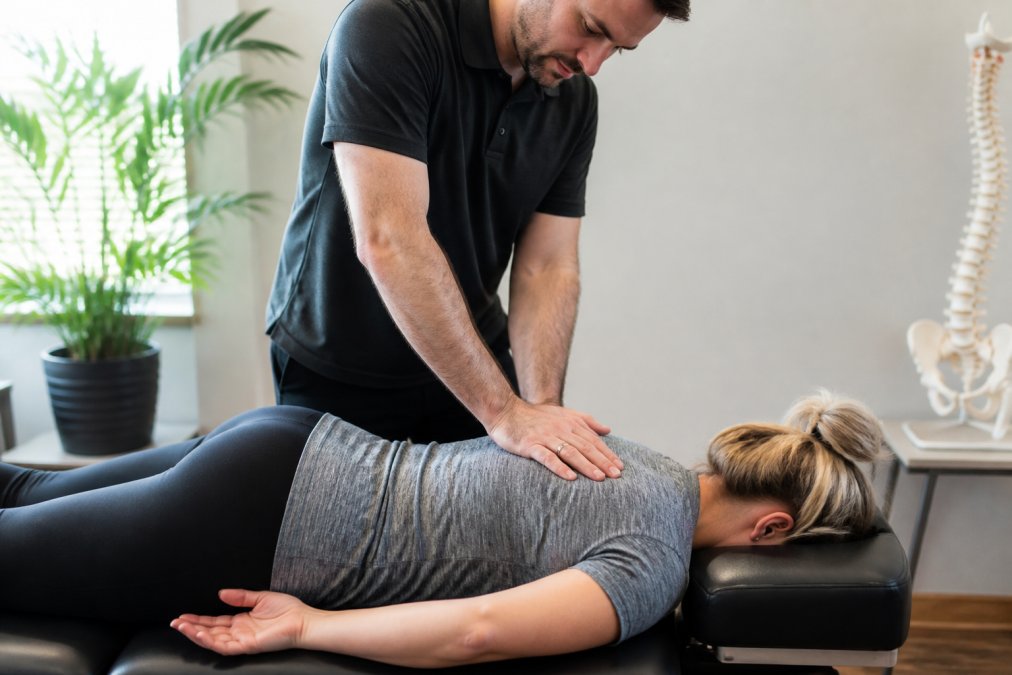
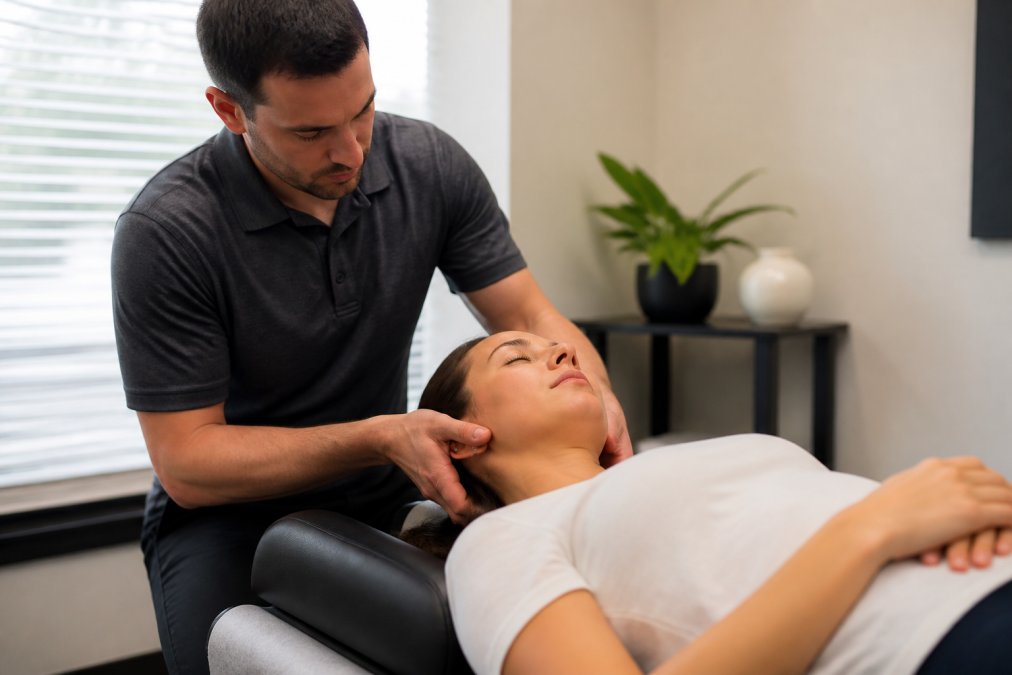
Chiropractic for long term pain relief focuses on restoring how your spine moves, not just quieting the pain for a day. That is the difference between feeling better for a week and actually fixing the problem.
| Phase | Focus | Typical Frequency |
|---|---|---|
| Relief | Reduce pain and inflammation | 2-3 visits per week |
| Correction | Restore spinal alignment and motion | 1-2 visits per week |
| Maintenance | Keep gains and prevent flare-ups | Every 2-4 weeks |
Home Remedies for Pain Relief: Heat, Ice, and Massage
Heat and ice are the two easiest tools you already have. Use ice for the first day or two after a new injury to calm inflammation. Switch to heat after that to relax tight muscles and boost blood flow.
Do not leave a heating pad on for hours or fall asleep with it. Prolonged heat can burn your skin and make inflammation worse, not better. Cap it at 20 minutes.
The Psychological Impact of Chronic Upper Back Pain
Chronic pain wears you down in ways that do not show up on an X-ray. When pain lasts for months, it affects sleep, mood, and focus. Many people feel anxious about whether it will ever go away.
Why the Stress-Pain Loop Happens
The mechanism is fairly well understood. When your brain perceives threat, your body releases stress hormones and your muscles around the neck, shoulders, and upper back tighten as a protective response. That guarding posture reduces blood flow and keeps the tissue tense. The tension feeds more pain signals back to the brain, which reads them as more threat. The cycle repeats.
What Actually Helps
A few concrete tools make a measurable difference for most people:
- Diaphragmatic breathing: 5 minutes, twice a day. Slow belly breaths signal safety to the nervous system and reduce muscle guarding.
- Sleep hygiene: Consistent bedtime, dark room, no screens for 30 minutes before bed. Aim for 7 to 9 hours (the CDC).
- Graded activity: Do a little more each week instead of resting completely. Bed rest makes chronic back pain worse, not better.
- Cognitive reframing: When pain flares, note it as “uncomfortable but not dangerous” rather than “something is wrong.” This reduces the threat response.
- Professional support: A licensed therapist, especially one trained in cognitive behavioral therapy for chronic pain, can be as useful as a physical intervention.
When to Seek Mental Health Support
Talk to a doctor or licensed mental health professional if you notice:
- Persistent low mood or loss of interest in things you used to enjoy
- Anxiety that keeps you from work, exercise, or normal activities
- Sleep problems lasting more than a few weeks
- Thoughts of self-harm, which warrant immediate help
The physical work and the mental work are not separate tracks. Breathing, sleep, graded movement, and honest conversations about mood can all help lower the tension that keeps upper back pain stuck.
When to See a Doctor or Chiropractor in San Antonio
See a doctor right away if you have numbness, weakness, trouble with balance, or pain after a fall. Those signs point to something that needs urgent care.
Frequently Asked Questions
What causes sharp pain between the shoulder blades?
Sharp pain between the shoulder blades often comes from a muscle strain, a facet joint issue in the thoracic spine, or nerve impingement. Poor posture and prolonged sitting can make it worse. If the pain is sudden and severe, or comes with numbness or weakness, see a healthcare provider to rule out more serious causes.
Can poor posture cause upper back pain between shoulder blades?
Yes, poor posture is a leading cause. Slouching pushes your head forward and rounds your shoulders, which strains the muscles between your shoulder blades and can lead to trigger points. Over time, this creates chronic pain. Posture correction for back pain, including ergonomic adjustments and regular stretching, can help reverse these effects.
When should I see a chiropractor for upper back pain?
See a chiropractor if your upper back pain lasts more than a week, limits your daily activities, or keeps coming back. A chiropractor can assess your spinal alignment and recommend a treatment plan. In San Antonio, Moore Chiropractic offers a complimentary evaluation to determine if chiropractic care is right for you.
How does chiropractic care help with chronic upper back pain?
Chiropractic care for long term pain relief focuses on restoring proper motion in the thoracic spine, reducing muscle tension, and improving posture. Techniques like spinal adjustments and myofascial release can address the root cause, not just the symptoms. Many patients experience improved range of motion and less pain after a series of visits.
Upper back pain between the shoulder blades rarely needs surgery, but it does need the right plan. Moore Chiropractic offers gentle chiropractic techniques, personalized care plans, and a complimentary evaluation to find the cause of your pain. If you are ready to move without the ache, get started with Moore Chiropractic and regain your mobility.