

Table of Contents
- Is Chiropractic Treatment Actually Permanent?
- How Long Do Chiropractic Adjustments Last?
- Factors That Influence How Long Results Last
- Benefits of Maintenance Chiropractic Care
- Chiropractic Treatment Plan Duration and What to Expect
- Acute Pain vs. Chronic Conditions: Different Timelines
- When to Consider Alternative or Complementary Treatments
- Conclusion
Last Updated: August 17, 2026
Is Chiropractic Treatment Actually Permanent?
The short answer: chiropractic adjustments are not permanent in the way a surgical repair might be. Your spine can shift back out of alignment after treatment, especially if the underlying causes aren’t addressed. But that’s only half the story. The real question isn’t whether chiropractic is permanent, it’s whether you’re willing to support the results through ongoing preventative care and behavioral change.
Most people expect chiropractic to work like a reset button: one adjustment and you’re fixed forever. That’s not how the musculoskeletal system works. Your spine, joints, and soft tissues respond to daily stress, posture habits, and movement patterns. Without addressing those factors, even excellent adjustments lose their effectiveness over time. The good news is that many patients find chiropractic treatment actually permanent when combined with the right maintenance strategy and lifestyle modifications.
Chiropractic adjustments provide relief, but lasting results depend on your daily habits, posture, and commitment to maintenance care. The treatment itself isn’t permanent, but the benefits can be sustained long-term with the right approach.
How Long Do Chiropractic Adjustments Last?
Most patients experience relief lasting anywhere from a few days to several weeks after a single adjustment, depending on the severity of their condition and how well their body responds to treatment. For acute injuries, like a recent sports injury or whiplash from a motor vehicle accident, adjustments often provide noticeable relief that lasts longer initially because the underlying issue is newer and more responsive to intervention.
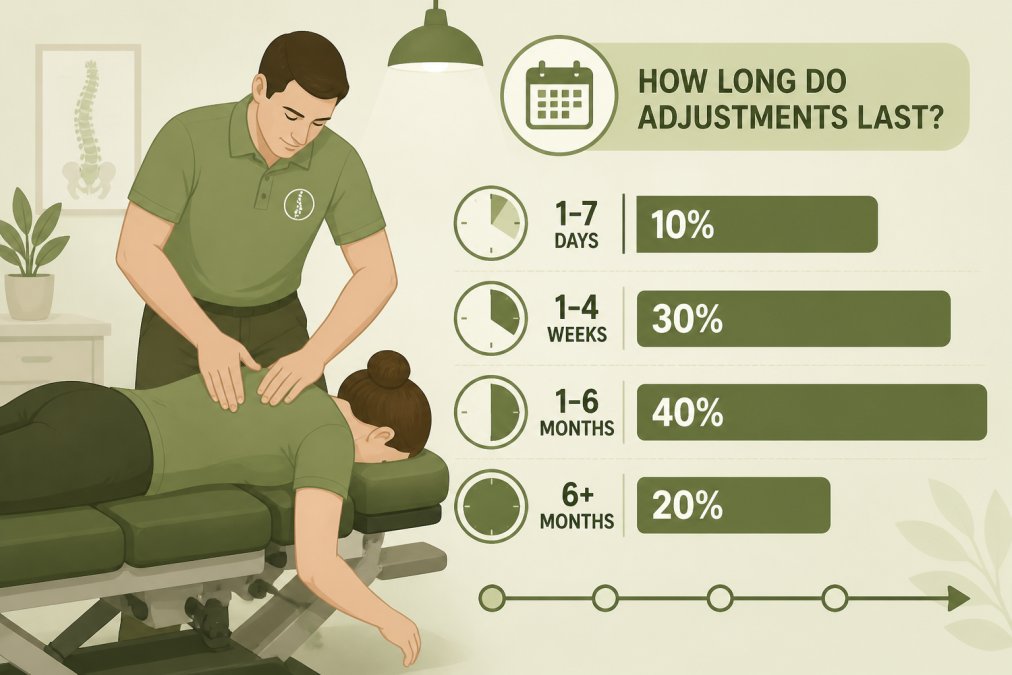
For chronic conditions that have developed over months or years, the timeline is different. A single adjustment might provide temporary relief, but without a structured treatment plan, symptoms typically return within days. This is where many patients get frustrated, they expect one visit to solve a problem that took years to develop. The adjustment does work; it’s just that chronic mechanical pain requires repeated intervention to retrain movement patterns and allow soft tissue healing.
The duration also depends on what caused the misalignment in the first place. If your job requires you to sit at a desk hunched over a keyboard eight hours a day, your vertebral subluxation (misalignment) will likely return quickly unless you address your ergonomics and posture. Athletes with sports injuries may see longer-lasting results if they combine adjustments with rehabilitation exercises. Pregnant women in the San Antonio area seeking prenatal chiropractic care often experience relief that extends between visits when combined with proper body mechanics and modified movement patterns.
Research into neuromusculoskeletal function shows that adjustments work by restoring range of motion, reducing nerve interference, and allowing your body to return to more normal movement patterns. But your daily habits determine whether those improvements stick around.
Track how long your relief lasts after each adjustment. If you’re consistently getting relief for only 2-3 days, that’s a signal you need more frequent visits or additional lifestyle modifications. If relief lasts 1-2 weeks, you’re on a better track but still likely need maintenance care.
Factors That Influence How Long Results Last
Your Lifestyle and Daily Habits
Your daily habits are the primary driver of how long chiropractic results stick around. If you spend eight hours a day in poor posture, you’re working against every adjustment your chiropractor makes. The same applies to repetitive motions, heavy lifting without proper body mechanics, or sitting in positions that stress your spine.
People with active lifestyles often see longer-lasting results because they tend to maintain better movement awareness. Athletes in the San Antonio area who combine chiropractic care with strength training and flexibility work typically experience sustained improvement. Conversely, sedentary individuals or those with high-stress jobs that lock them into fixed positions often need more frequent adjustments because they’re constantly re-creating the conditions that caused the original misalignment.
Sleep position matters too. If you sleep on your stomach with your neck twisted, you’re undoing some of the work done during your adjustment. Similarly, the way you carry your phone, your driving posture, and even how you hold your children or lift objects all contribute to spinal alignment.
The Type and Severity of Your Condition
Acute injuries typically respond faster and maintain results longer than chronic conditions. A recent sports injury or whiplash from a motor vehicle accident creates a clear mechanical problem that chiropractic adjustments address directly. Once the acute inflammation subsides and proper alignment is restored, many patients maintain that improvement with maintenance visits.
Chronic conditions, like degenerative disc disease, long-standing lower back pain, or neuropathy, require a different timeline. These conditions develop over years, and the supporting musculature has adapted to protect the injured area, often creating secondary problems. Reversing that pattern takes time. You’re not just realigning vertebrae; you’re retraining movement patterns and allowing soft tissue to heal. This is why chronic pain typically requires a longer treatment plan and ongoing maintenance care.
Mechanical pain (pain from misalignment, muscle tension, or joint dysfunction) responds better to chiropractic treatment and maintains results more consistently than pain with neurological components. If your pain has a clear mechanical cause, you’re more likely to experience long-term relief.
Your Posture and Movement Patterns
This is where the real permanence happens. If you correct your posture and movement patterns, your results last significantly longer. This is also where many patients struggle, because changing how you move and sit is harder than getting an adjustment.
Your posture reflects decades of habit. If you’ve spent twenty years hunching forward at a desk, your body has adapted, your chest muscles are tight, your back muscles are weak, and your nervous system has accepted that position as normal. Chiropractic adjustments can correct the alignment, but they can’t permanently override those ingrained patterns without your participation.
Functional improvement comes from combining adjustments with therapeutic exercises, stretching, and conscious posture correction. Patients who engage in rehabilitation and learn proper body mechanics see dramatically better outcomes. For parents in San Antonio supporting their children’s health, teaching kids proper ergonomics early prevents many of the chronic issues adults develop.
Benefits of Maintenance Chiropractic Care

Maintenance chiropractic care is fundamentally different from acute care. Instead of waiting until pain becomes severe, you get regular adjustments to maintain spinal alignment and prevent problems from developing. Think of it like dental care: you don’t wait until you have a cavity to see a dentist; you get regular cleanings to prevent problems.
The benefits accumulate over time. Regular adjustments keep your spine properly aligned, reducing the stress on nerves and joints. Your range of motion improves and stays improved. Many patients report better sleep, fewer headaches, and improved overall mobility. Athletes often use maintenance care to enhance performance and prevent injury.
For individuals in San Antonio with desk jobs or high-stress careers, maintenance care provides consistent relief from the daily wear and tear of poor ergonomics and tension. The frequency varies, some people benefit from monthly visits, others do well with quarterly adjustments. Your chiropractor can help determine the right schedule based on your condition and lifestyle.
Long-term health maintenance through chiropractic care also supports your nervous system function. Proper spinal alignment reduces nerve interference, which affects everything from pain perception to overall wellness. This is why many patients pursue wellness strategies that include regular chiropractic care as part of their broader health plan.
Maintenance chiropractic care works best for people with chronic conditions who want to prevent flare-ups, active individuals seeking to optimize performance, and anyone whose job or lifestyle creates ongoing spinal stress.
Chiropractic Treatment Plan Duration and What to Expect
A typical treatment plan for acute conditions lasts 4-8 weeks, with visits 2-3 times per week initially, then tapering as you improve. For chronic conditions, the plan is longer, often 8-12 weeks or more, because you’re not just addressing the current pain but retraining movement patterns and allowing tissue healing.
Your chiropractor will assess your condition during an initial consultation and recommend a treatment plan. This plan should include specific goals: reduce pain by X percent, improve range of motion, return to specific activities, or achieve other measurable outcomes. A good treatment plan includes more than just adjustments, it incorporates therapeutic exercises, posture correction, and lifestyle modifications.
The cost-benefit analysis of acute versus maintenance care is important. Acute care addresses immediate pain and typically results in faster improvement. Maintenance care costs less per visit but requires ongoing commitment. Many patients find that investing in maintenance care prevents the expensive acute episodes that require intensive treatment.
For residents of San Antonio dealing with sports injuries, the treatment timeline depends on the severity. Minor sprains or muscle strains might resolve in 4-6 weeks. More significant injuries can take 8-12 weeks or longer. Prenatal chiropractic care typically involves regular visits throughout pregnancy to manage changing biomechanics and prepare for labor.
Acute Pain vs. Chronic Conditions: Different Timelines
Acute pain and chronic pain respond to chiropractic treatment differently, and understanding the distinction helps set realistic expectations.
Acute pain typically develops suddenly, you sleep wrong, get in a car accident, or suffer a sports injury, and within hours or days, you have significant pain. The good news is that acute injuries often respond quickly to chiropractic treatment. Your body hasn’t yet adapted to the injury, inflammation is localized, and proper alignment typically provides rapid relief. Many people with acute pain see substantial improvement within 2-4 weeks.
Chronic conditions are different. Pain that persists for more than three months has usually triggered adaptive changes throughout your body. Your muscles have tightened to protect the injured area. Your movement patterns have shifted. Your nervous system has become sensitized to pain signals. Reversing these adaptations takes time, typically longer than the acute phase.
Chronic back pain, neuropathy, and long-standing neck pain often require 8-12 weeks or longer of consistent treatment before you see the full benefit. This doesn’t mean chiropractic isn’t working; it means you’re addressing deeply ingrained patterns. The timeline is also longer because chronic conditions often have multiple contributing factors: poor posture, weak core muscles, stress, and lifestyle habits all playing a role.
The key difference in permanence: acute injuries, once resolved with proper treatment and rehabilitation, often stay resolved if you maintain good habits. Chronic conditions require ongoing maintenance because the underlying factors that created them are usually still present. A person with chronic lower back pain from a sedentary desk job will likely need regular chiropractic care as long as their job remains unchanged.
When to Consider Alternative or Complementary Treatments
Chiropractic care works well for many musculoskeletal conditions, but it’s not the answer for everything. Knowing when to seek complementary treatments or alternative approaches is important.
If you’ve been in consistent chiropractic care for 12 weeks and aren’t seeing meaningful improvement, it’s time to reassess. This might mean your condition requires a different approach, or it might mean you need to address lifestyle factors more aggressively. A consultation with your chiropractor about next steps is appropriate.
Some conditions benefit from a combination of treatments. Physical therapy complements chiropractic care by addressing muscle weakness and movement dysfunction. Massage therapy can reduce muscle tension that contributes to misalignment. For certain conditions, like severe degenerative disc disease or significant nerve compression, more advanced interventions might be necessary.
Individuals in San Antonio with complex conditions or those who haven’t responded to conservative treatment should discuss integration with other local healthcare providers. Your primary care physician, physical therapist, or orthopedic specialist can work alongside your chiropractor to create a comprehensive treatment plan.
For pregnant women seeking prenatal chiropractic care, integration with obstetric care is important. Your OB/GYN should be aware of your chiropractic treatment. For children with sports injuries, parents should work with athletic trainers and their child’s pediatrician to ensure coordinated care.
Conditions that typically benefit from chiropractic: mechanical back pain, neck pain, headaches, sports injuries, whiplash, sciatica, and postural dysfunction. Conditions that may require additional or alternative treatment: severe nerve compression, fractures, infections, inflammatory arthritis, and systemic diseases.
If your pain is accompanied by numbness, weakness, loss of bladder or bowel control, fever, or unexplained weight loss, seek immediate medical attention. These are red flags that require evaluation by a physician before chiropractic treatment.
Conclusion
Is chiropractic treatment actually permanent? The answer depends on your definition of permanent and your commitment to supporting the results. Adjustments themselves aren’t permanent, your spine can shift back out of alignment. But the benefits can be sustained long-term through a combination of regular adjustments, lifestyle modifications, and ongoing maintenance care.
Moore Chiropractic in San Antonio specializes in personalized care plans that address not just your immediate pain but the underlying factors contributing to your condition. Through gentle chiropractic techniques, rehabilitation guidance, and a focus on long-term health maintenance, many patients experience sustained relief that lasts far beyond their initial treatment. Start with a complimentary evaluation to discuss your specific condition and learn what a realistic timeline looks like for your situation. The path to lasting relief is possible, it just requires understanding that permanence comes from combining professional care with your own commitment to better movement habits and posture.
Frequently Asked Questions
What happens when you stop chiropractic care?
When you stop chiropractic treatment, your spine gradually returns to its previous alignment patterns. The timeline depends on your condition's severity and how well you maintain posture and lifestyle habits. Some patients experience symptom return within days or weeks; others maintain improvement for months. This is why many chiropractors recommend maintenance care, ongoing adjustments help prevent regression and keep your musculoskeletal system functioning optimally. The key is understanding that chiropractic treatment addresses mechanical pain and movement patterns, which require consistent attention to stay corrected.
How many chiropractic sessions are typically needed for lasting relief?
The number of sessions varies widely based on your condition. Acute injuries may improve in 4-12 visits, while chronic conditions often require 12-24+ visits over several weeks or months. Your chiropractor will develop a personalized treatment plan during your initial consultation and evaluation. Most patients see measurable improvement within 2-4 weeks of consistent care. After the initial treatment phase, many benefit from maintenance visits, typically monthly or quarterly, to prevent symptom recurrence and support long-term spinal health and functional improvement.
Is chiropractic care considered a permanent solution for back pain?
Chiropractic treatment can provide significant, long-lasting relief, but it is not typically a one-time permanent cure. It works best as part of a comprehensive wellness strategy that includes posture correction, ergonomic adjustments, and lifestyle modifications. For acute injuries, you may achieve full recovery with a defined treatment course. For chronic conditions, maintenance care helps sustain improvements and prevent re-injury. Think of it similarly to dental care, regular adjustments maintain spinal alignment just as dental cleanings maintain oral health. Success depends heavily on your compliance with the treatment plan and commitment to preventative care.
Can chiropractic adjustments permanently correct spinal misalignments?
Chiropractic adjustments can correct vertebral subluxations and restore spinal alignment, improving range of motion and reducing pain. However, maintaining that correction requires ongoing attention to posture, ergonomics, and movement patterns. Your spine naturally shifts based on daily activities, stress, and muscle tension. Without reinforcement through maintenance care or lifestyle modifications, your spine gradually returns to previous patterns. Evidence-based practice shows that combining initial treatment with rehabilitation exercises, posture awareness, and periodic maintenance adjustments provides the best long-term outcomes for sustained spinal health and functional improvement.
This article was written using GrandRanker