Last Updated: November 20, 2026
Quick Summary
Physical therapy after spinal surgery is a structured, progressive exercise program that helps you rebuild strength, restore movement, and return to daily life safely. Surgery fixes a problem but does not rebuild the muscles around your spine, so post-operative rehabilitation is generally considered an important part of recovery. Your surgeon can advise whether physical therapy is right for you.
- Most people start physical therapy within a few weeks of back surgery, depending on the procedure.
- Discectomy often has the fastest recovery, with formal therapy in the first few weeks.
- Spinal fusion is the slowest, with precautions often lasting three to six months.
- Avoid heavy lifting, twisting, high-impact activity, and deep forward bends until cleared.
- Call your surgeon right away for fever, new weakness, or loss of bladder or bowel control.
Table of Contents
- Why Physical Therapy After Spinal Surgery Matters
- When to Start Physical Therapy After Back Surgery
- Recovery Phases and Milestones by Procedure
- Physical Therapy Exercises After Back Surgery
- Spinal Fusion Physical Therapy Exercises
- Exercises to Avoid After Back Surgery
- Choosing a Post-Surgical Physical Therapist in San Antonio
- Warning Signs and When to Contact Your Care Team
- Frequently Asked Questions
Why Physical Therapy After Spinal Surgery Matters
Physical therapy after spinal surgery is a structured, progressive exercise program that helps you rebuild strength, restore movement, and return to daily life safely.
Surgery fixes a problem. It does not rebuild the muscles around your spine. That work takes weeks of guided movement.
Post-operative rehabilitation is generally considered an important part of recovery after spinal surgery, and your surgeon can advise whether physical therapy is right for you.
How Post-Operative Rehabilitation Supports Clinical Progress
Rehab does four jobs at once:
- It rebuilds strength in the muscles that support your lumbar spine
- It restores range of motion without stressing healing tissue
- It retrains safe movement for daily activities
- It gives your surgeon clear markers of clinical progress
Your physical therapist and surgeon should compare notes on your progress.
MedlinePlus guide to spine surgery recovery
When to Start Physical Therapy After Back Surgery
Most people start physical therapy within a few weeks of back surgery, but the exact timing depends on your procedure and your surgeon’s recommendations. Timing differs by procedure, and your surgeon sets the start date for your case.
Your post-surgical protocol, pain levels, and incision healing all shape the timeline.
Formal therapeutic exercise comes next, once your care team clears you.
Follow your surgeon’s timeline for starting therapy and increasing activity.
Recovery Phases and Milestones by Procedure
Recovery after spinal surgery moves through three broad phases, and each has its own milestones. The table below shows the general shape, but your surgeon’s written protocol overrides it every time. Ask for that protocol before your first therapy visit and bring it with you.
| Phase | Typical Timing | Main Focus | Milestone |
|---|---|---|---|
| Early recovery | First 2-4 weeks | Walking, safe movement, wound care | Walk short distances without help |
| Intermediate | Weeks 4-12 | Range of motion, light strengthening | Climb stairs, sit comfortably |
| Late stage | 3-6 months | Progressive strengthening, lumbar stabilization | Return to work and daily activities |
Discectomy, Laminectomy, and Spinal Fusion Timelines
Each procedure has its own rhythm, and the differences matter more than most guides admit.
- Discectomy: Often the fastest recovery. Light activity may begin within days, with formal therapy in the first few weeks. Many surgeons clear patients for desk work within two to four weeks, but lifting restrictions usually stay in place for about six weeks.
- Laminectomy: Similar to discectomy, but recovery can run a little longer if more bone was removed. Expect a slower return to bending and twisting, and a longer course of formal therapy when the decompression was extensive.
- Spinal fusion: The slowest. Bone needs time to fuse, so lifting restrictions and spinal precautions last longer, often three to six months. Return to a physically demanding job can take longer than return to a desk job, and your surgeon may order imaging before clearing heavier activity.
What Progress Actually Looks Like
In practice, your therapy team may track several concrete markers:
- Walking tolerance: how far and how long you can walk before pain or fatigue forces a stop
- Pain scores: a simple 0-10 rating before and after activity, tracked over weeks rather than days
- Mobility: how well you can sit, stand, and transition without guarding
- Strength: hip and core strength tested in positions your surgeon has cleared
- Daily function: dressing, bathing, driving, and household tasks
If progress stalls, your therapist should communicate with your surgeon about the plan.
Watch out: a sudden loss of function, new weakness, or loss of bladder or bowel control is not a plateau, it is a reason to contact your surgeon or emergency services immediately.
If you are weighing surgical and non-surgical paths, it helps to understand alternatives to traditional spinal surgery in San Antonio before you commit to a rehab plan.
Physical Therapy Exercises After Back Surgery
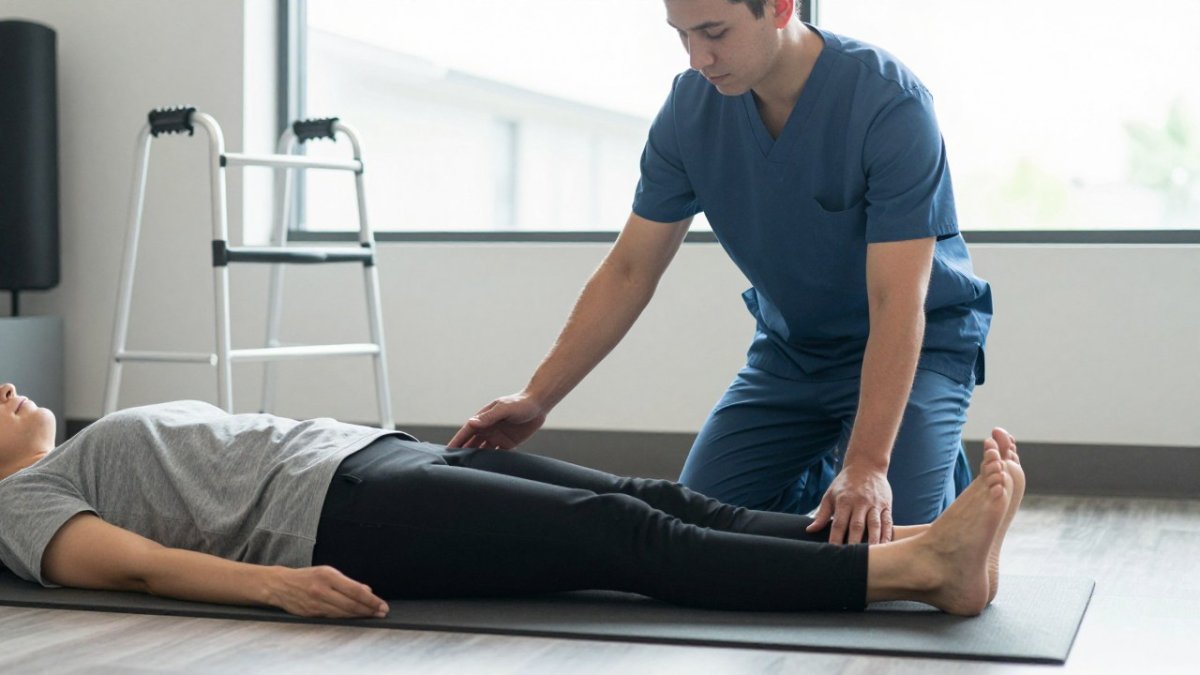
Early exercises are gentle and controlled. The goal is movement, not effort. Typical early exercises include:
- Ankle pumps and heel slides to keep blood moving
- Gentle pelvic tilts to wake up the core
- Short walks several times a day
- Diaphragmatic breathing to support the spine (Source: National Institute of Arthritis and Musculoskeletal and Skin Diseases)
A physical therapist sets the exercise frequency and duration for your body. Most programs start with short, frequent sessions rather than one long one. For a deeper set of spine-focused movements, see our guide to physical therapy exercises for spine health.
Spinal Fusion Physical Therapy Exercises
Spinal fusion rehab is slower and more cautious, because the goal is protecting the fusion while the bone heals. Early on, expect walking and gentle range of motion only.
As weeks pass, progressive strengthening begins. Typical later-stage work includes:
- Core stabilization holds
- Gentle hip and hamstring stretches
- Posture and body mechanics training
- Low-impact aerobic activity like walking or stationary cycling
What most guides miss is how much spinal precautions shape the program. No twisting, no heavy lifting, and no bending far forward until your surgeon clears you. Your therapist builds the exercise program around those limits.
Exercises to Avoid After Back Surgery
Some movements can set your recovery back. Avoid these until your care team gives the green light:
- Heavy lifting beyond your lifting restrictions
- Twisting motions like golf swings or Russian twists
- High-impact activity such as running or jumping
- Deep forward bends that load the lumbar spine
- Sit-ups and crunches that strain the healing area
Watch out: the biggest risk is doing too much on a good day. Pain and swelling the next morning are your signal to scale back.
Choosing a Post-Surgical Physical Therapist in San Antonio
The right therapist makes recovery smoother, but the practical work starts before your first appointment. This section covers all three, because competitors rarely do.
Questions to Ask a Post-Surgical Physical Therapist
Use this checklist when you compare providers:
- Do they ask for your surgeon’s protocol before your first visit?
- Do they have experience with your procedure, such as spinal fusion or discectomy?
- Do they track measurable progress, like walking distance and range of motion?
- Do they explain what to expect at each phase?
- Will they send progress notes to your surgeon, and how often?
- Are they easy to reach for a post-surgical rehab “near me” search in San Antonio?
A therapist who cannot answer the first two questions clearly is probably not the right fit for post-surgical care, no matter how convenient the location.
Insurance, Referrals, and Out-of-Pocket Costs
Coverage rules vary by plan, so confirm your benefits before you book. Coverage rules vary by plan, and your insurer can tell you whether a referral or visit limit applies. Call the member services number on your insurance card and ask three questions:
- Is physical therapy after spine surgery covered under my plan?
- Do I need a referral, and does it need to be in writing?
- What is my copay or coinsurance per visit, and is there a visit limit?
Ask the therapy clinic the same questions. If you are paying out of pocket, ask the clinic about its self-pay options and payment arrangements.
San Antonio Access and Care Logistics
San Antonio is a large, car-dependent city, and post-surgical patients often cannot drive for weeks. Plan transportation before your first appointment. Ask your surgeon when you can drive, and arrange rides from family, friends, or a rideshare service for the early weeks. If you are scheduling around follow-up visits, try to cluster therapy and surgeon appointments in the same part of town when possible.
If you live far from your surgeon’s office, ask whether a clinic closer to home can follow the same protocol and send notes back to the surgeon.
Moore Chiropractic offers a complimentary evaluation and consultation for new patients. If you are ready to compare providers, see our list of the best physical therapists for back pain in San Antonio, and explore rehabilitation programs for back pain survivors to see how structured care supports long-term mobility.
Warning Signs and When to Contact Your Care Team
Call your surgeon or care team right away if you notice any of these:
- Fever, chills, or redness and drainage at the incision
- New or worsening numbness, weakness, or loss of bladder or bowel control
- Severe pain that does not ease with rest
- Calf pain, swelling, or shortness of breath
Do not wait for your next scheduled visit.
For everyday aches between sessions, you can learn how to manage post-surgical pain at home with our guide on heat or ice for back pain.
Recovery after spinal surgery takes patience, and the right support makes the difference. If you are in San Antonio and want gentle, personalized care alongside your rehab, Moore Chiropractic can help. Our team offers gentle chiropractic techniques, personalized care plans, and a complimentary evaluation and consultation to support your return to mobility. Get started with Moore Chiropractic and take the next step toward long-term relief.
Frequently Asked Questions
When should you start physical therapy after back surgery?
Timing depends on the procedure and your surgeon’s protocol. Timing varies by procedure, and your surgeon sets the start date based on your case. Your surgeon sets the start date based on clinical progress, wound healing, and imaging results. Never begin a physical therapy program on your own after spinal surgery without clearance.
What exercises should you avoid after back surgery?
Avoid heavy lifting, twisting motions, and high-impact activities during early recovery. Your surgeon and physical therapist can tell you which movements to avoid during recovery. Also skip any exercise that causes sharp pain or numbness radiating down a leg. Your physical therapist can adjust a safe exercise program around these restrictions.
How long does physical therapy last after spinal fusion?
The length and frequency of physical therapy after spinal fusion vary, and your therapist can outline a plan for your case. The timeline varies with the number of levels fused, your baseline fitness, and how quickly you meet milestones like walking without assistance. Your therapist tracks functional recovery and coordinates with your surgeon to adjust frequency along the way.
Can you walk after an L4-L5 fusion?
Yes. Walking after spinal fusion is typically guided by your surgeon, who will tell you how far and how often to walk. Use a walker or cane if balance feels unsteady. Your care team will tell you how far and how often to walk based on your surgeon recommendations and clinical progress.