Table of Contents
- What Early Intervention Actually Means for a Sports Injury
- The Sports Injury Recovery Timeline: What Happens at Each Stage
- When to See a Chiropractor for Sports Pain (And When to Wait)
- Chiropractic Care for Athletes in San Antonio: Local Sports Infrastructure and What to Expect
- The Cost of Waiting: Early vs. Late Treatment Outcomes
- Diagnostic Technology: How Chiropractors Assess Soft Tissue and Joint Injuries
- Common Mistakes Athletes Make After an Injury
- Frequently Asked Questions
Last Updated: September 16, 2026
What Early Intervention Actually Means for a Sports Injury
Early intervention for a sports injury is the practice of evaluating and beginning treatment within the first 24 to 72 hours after symptoms appear, rather than waiting to see whether the pain resolves on its own. At Moore Chiropractic in San Antonio, Texas, we observe that athletes who address a joint or soft tissue injury in the first few days often experience a more favorable recovery process compared to those who delay treatment. This guide from Moore Chiropractic explains the sports injury recovery timeline, when to see a chiropractor for sports pain, and what early care actually changes. The core argument is simple: the injury you ignore in week one is the injury you’re still managing in month six. (Source: the National Institutes of Health)
The first hours after an injury set the trajectory for everything that follows. Swelling control, musculoskeletal assessment, and gentle range of motion work all matter more in that window than at any later point.
The First 48 Hours: Why Timing Changes Everything
What happens in the first two days shapes how the next two months unfold. Acute injury management during this window focuses on controlling inflammation and protecting the tissue from further strain, not on pushing through discomfort.
A common mistake is the “wait and see” approach. Many athletes assume a muscle strain or ligament sprain will settle on its own, so they rest completely for a week or two. Complete rest beyond a couple of days often works against you. Tissue needs controlled movement to heal with proper alignment, and prolonged inactivity allows joints to stiffen and surrounding muscles to weaken.
The practical approach looks like this:
- Reduce loading on the injured area for 24-48 hours
- Use ice and elevation to manage swelling
- Begin gentle, pain-free movement as soon as it’s tolerable
- Get a professional assessment if pain persists past 48 hours
That last point matters most. A clinical diagnosis early on separates a minor strain from something that needs a different plan.
The Sports Injury Recovery Timeline: What Happens at Each Stage
Soft tissue healing follows a predictable sequence, and understanding it helps you match your activity to what your body can handle. The sports injury recovery timeline has three broad phases.
Phase 1: Acute (Days 1-7)
The acute phase is when inflammation peaks and the body begins clearing damaged tissue. Swelling control and pain management dominate this week. Gentle movement within a comfortable range prevents stiffness without stressing the healing tissue. This is the phase where early intervention pays the biggest dividend: starting treatment here means the tissue begins remodeling in a better position.
Phase 2: Subacute and Tissue Remodeling (Weeks 2-6)
Tissue remodeling is the process where new collagen fibers organize along the lines of stress. Without guided movement, that new tissue can form adhesions that restrict range of motion later. Therapeutic exercise and biomechanical evaluation during these weeks determine whether you regain full function or develop a chronic limitation.
Phase 3: Return-to-Play and Neuromuscular Control (Weeks 6+)
Neuromuscular control is your nervous system’s ability to coordinate movement without conscious effort. A return-to-play protocol rebuilds that control through progressive loading, balance work, and sport-specific drills. Skipping this phase is how athletes re-injure the same joint months later.
When to See a Chiropractor for Sports Pain (And When to Wait)
The 48-hour mark is not arbitrary. It reflects the transition from the acute inflammatory phase into the proliferative phase of soft tissue healing, when the body begins laying down new collagen. An assessment before that transition can redirect how the tissue remodels; an assessment after it can still help, but the window for influencing alignment and scar orientation has narrowed.
Injuries That Respond Well to Early Chiropractic Assessment
- Lateral ankle sprain, Grading the sprain (I, II, or III) in the first 48 hours determines whether you need protected weight-bearing or can begin gentle range of motion.
- Patellofemoral pain and runner’s knee, Often driven by hip and ankle biomechanics rather than the knee itself. Early gait and biomechanical evaluation catches the upstream cause before it becomes chronic.
- Low back strain from lifting or twisting, Common in football, weightlifting, and golf. Early assessment distinguishes muscular strain from facet joint irritation or disc involvement, which need different loading strategies.
- Rotator cuff and shoulder impingement, Frequent in baseball, swimming, and overhead sports. Early range-of-motion work prevents the capsular tightening that turns a two-week issue into a season-long one.
- Hamstring strain, Recurrence rates are high when athletes return before neuromuscular control is rebuilt. Early assessment sets a measurable return-to-play benchmark.
When to Wait
Wait only if the pain is clearly resolving within 24 to 48 hours, full range of motion returns without discomfort, and you can bear weight and move normally.
When to Skip Chiropractic Care Entirely
- Visible deformity or a joint that looks out of place
- Inability to bear weight on the affected limb
- Numbness, tingling, or weakness that does not resolve
- Rapidly worsening swelling or swelling that continues to increase past 48 hours
- A cracking or popping sound at the moment of injury accompanied by immediate loss of function
- Signs of fracture, including point tenderness over a bone or pain with axial loading
Pushing through pain to “test” an injury is one of the most common ways a two-week problem becomes a two-month one. If pain changes your gait or your throwing motion, stop and get assessed.
A Practical Decision Framework
Ask three questions in the first 48 hours:
- Can I move the joint through its full normal range without pain? If no, get assessed.
- Does the pain change how I walk, run, or throw? If yes, get assessed, altered mechanics load other structures.
- Is the pain improving day over day, or staying the same? If it is not clearly improving by day two, get assessed.
Chiropractic Care for Athletes in San Antonio: Local Sports Infrastructure and What to Expect
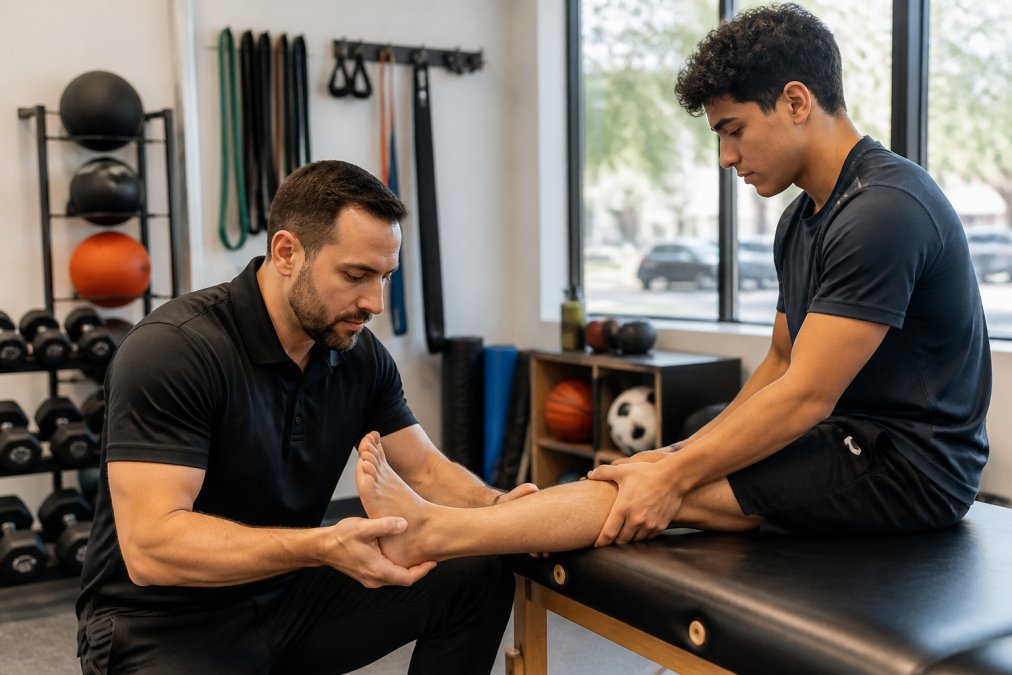
San Antonio has a significant sports infrastructure, which contributes to various injury profiles among athletes.
The San Antonio Injury Profile
The sports that dominate this region create specific patterns:
- High school football, Texas UIL football season runs August through December, and the combination of two-a-day practices in summer heat and Friday-night game loads produces a spike in ankle sprains, knee injuries, and low back strain among athletes ages 14 to 18.
- Year-round running, San Antonio’s mild winters allow 12-month outdoor training, which means overuse injuries like plantar fasciitis, Achilles tendinopathy, and IT band syndrome present year-round rather than seasonally.
- Basketball, With youth leagues, high school programs, and the Spurs’ presence driving interest at every level, ankle and knee injuries are the most common presentations.
- Golf and tennis, The region’s climate supports nearly year-round play, and the rotational loads of both sports produce low back and shoulder injuries that respond well to early biomechanical assessment.
What to Expect at a First Visit
- Health history, Prior injuries, current training load, and any medical conditions that affect treatment.
- Physical and musculoskeletal assessment, Hands-on testing of joint mobility, ligament integrity, and muscle function.
- Biomechanical evaluation, Observation of how you walk, squat, and load the injured area.
- Discussion of findings, A clear explanation of what is injured and what the treatment plan involves before any treatment begins.
Bring your training log or a rough summary of your weekly activity to your first visit. Knowing your sport, volume, and surface type helps a clinician identify the movement pattern that contributed to the injury.
Questions Worth Asking Before You Commit
- Does the practice treat athletes at your level and in your sport?
- What is the typical visit frequency in the first two weeks?
- How is progress measured, range of motion, strength testing, or functional movement screens?
- Is there a clear return-to-play protocol, or does care continue indefinitely?
The Cost of Waiting: Early vs. Late Treatment Outcomes
Delayed treatment rarely saves money.
| Scenario | Typical Timeline | Main Risk | Care Approach |
|---|---|---|---|
| Treatment within 48-72 hours | Shorter, more predictable | Minimal if assessed properly | Swelling control, gentle motion, guided exercise |
| Treatment after 2-4 weeks | Extended | Stiffness, compensation patterns | Longer remodeling, more therapeutic exercise |
| Treatment after months | Prolonged | Chronic pain, recurring injury | Full rehabilitation, patience required |
Diagnostic Technology: How Chiropractors Assess Soft Tissue and Joint Injuries
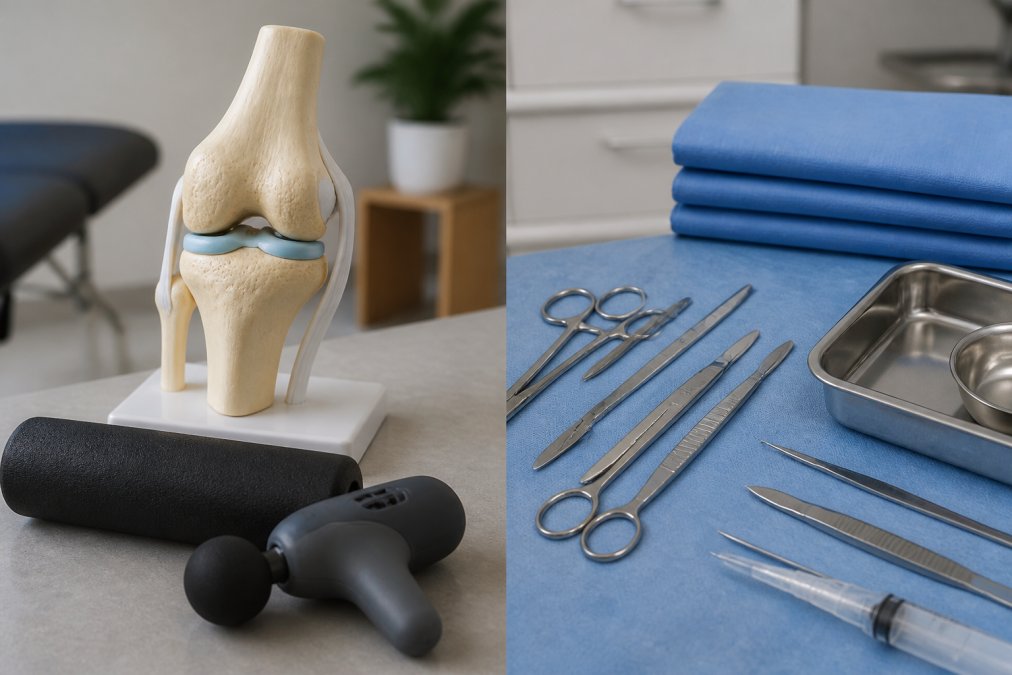
Diagnostic technology gives a clinician a clearer picture of what’s actually injured.
Common Mistakes Athletes Make After an Injury
Most setbacks trace back to a handful of predictable errors.
Frequently Asked Questions
Why is the first 48 hours after a sports injury so important?
The first 48 hours set the trajectory for how quickly you recover. During this acute window, inflammation peaks and soft tissue begins initial healing. Early intervention during this period helps control swelling and reduces pain. Waiting may allow scar tissue to form improperly and joint stability to weaken, which can potentially extend your recovery timeline.
What happens if you ignore a minor sports injury?
Ignoring a minor injury may lead to compensatory movement patterns where other joints and muscles overwork to protect the injured area. Over time, this could contribute to secondary issues, discomfort, and reduced range of motion. What started as a mild ligament sprain or muscle strain has the potential to become a more persistent issue. Early assessment catches these problems before they compound.
How does early chiropractic care improve long-term mobility?
Early chiropractic care focuses on restoring proper joint alignment and reducing inflammation before scar tissue restricts movement. By addressing biomechanical imbalances early, chiropractors aim to help maintain functional mobility and may help prevent the joint stiffness that can follow untreated injuries. This proactive approach supports tissue remodeling and neuromuscular control, contributing to joint stability and flexibility.
What are the signs that a sports injury requires professional intervention?
Seek professional evaluation if you have swelling that does not improve within 48 hours, pain that prevents normal movement, instability when bearing weight, or numbness and tingling. In San Antonio, athletes with these symptoms benefit from a chiropractic assessment that includes musculoskeletal evaluation and, when needed, referral for imaging. Early diagnosis helps rule out fractures or ligament tears that require different treatment.