Table of Contents
- Chiropractic vs Physical Therapy: The Core Difference in Approach
- Quick Comparison: Chiropractic vs Physical Therapy for Back Pain
- How Chiropractic Care Works: Focus on Spinal Manipulation
- How Physical Therapy Works: The Role of Therapeutic Exercise
- Physical Therapy Recovery Timelines vs. Chiropractic Relief
- Benefits of Chiropractic Adjustments for Mobility and Pain
- When to Choose Chiropractic Care: Scenarios That Favor Manual Therapy
- When to Choose Physical Therapy: Scenarios That Favor Exercise
- Frequently Asked Questions
Last Updated: September 5, 2026
Chiropractic vs Physical Therapy: The Core Difference in Approach
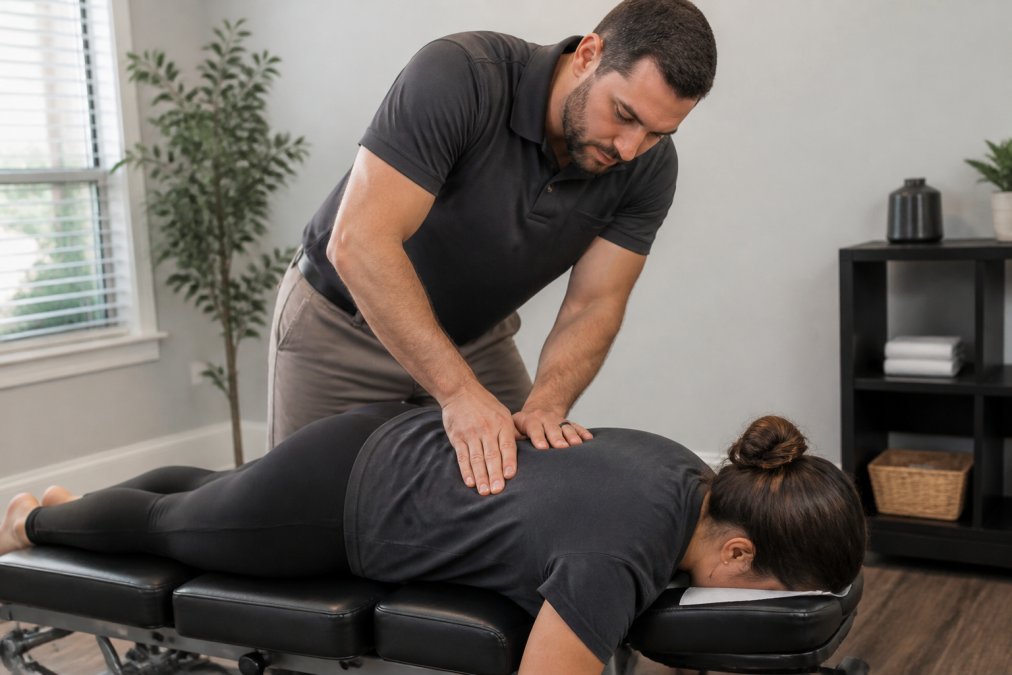
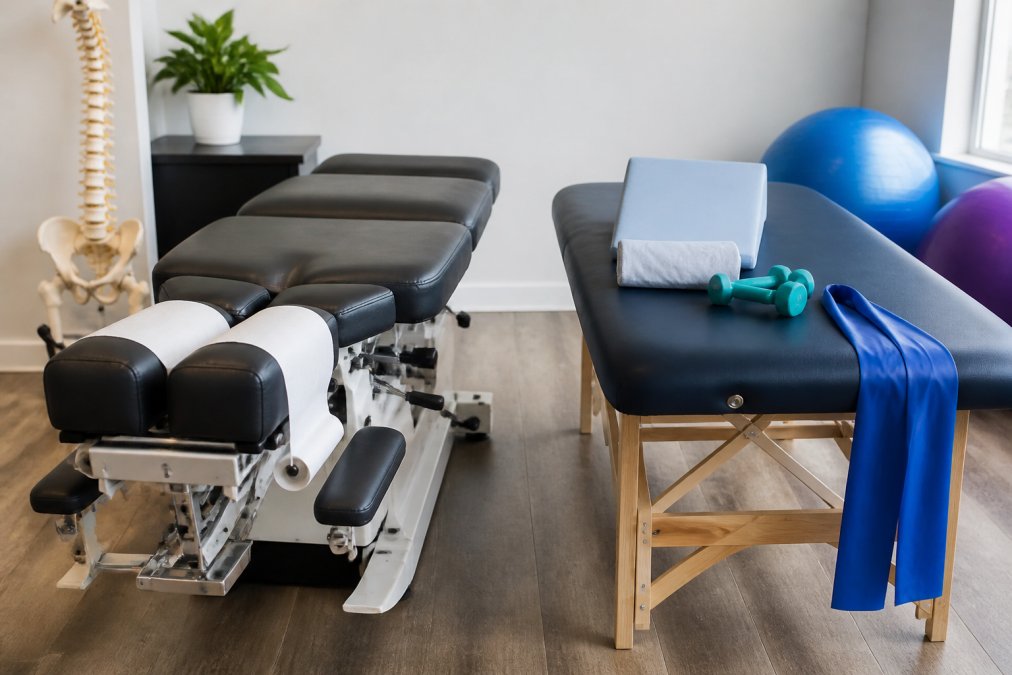
The question of chiropractic vs physical therapy efficacy often comes down to a single distinction: chiropractic care centers on spinal manipulation to restore joint function and nervous system communication, while physical therapy relies on therapeutic exercise to rebuild strength and correct movement patterns. Chiropractic care asks, “Is this joint moving properly?” Physical therapy asks, “Are the muscles supporting this joint strong enough?” At Moore Chiropractic in San Antonio, we help patients understand this difference every day, and the right answer often depends on whether your problem is a stuck joint or a weak muscle.
Chiropractic care excels at restoring joint mobility through manual therapy, while physical therapy excels at building long-term strength through exercise. Many patients benefit from both at different stages of recovery.
Quick Comparison: Chiropractic vs Physical Therapy for Back Pain
When comparing chiropractic vs physical therapy for back pain, the evidence suggests both are effective conservative treatment options, but they work through different mechanisms. Chiropractic care directly addresses spinal alignment and nervous system function through spinal manipulation and joint mobilization. Physical therapy focuses on neuromuscular re-education, soft tissue massage, and progressive strengthening to change how your body moves over time.
| Factor | Chiropractic Care | Physical Therapy |
|---|---|---|
| Primary Method | Spinal manipulation, manual therapy | Therapeutic exercise, movement training |
| Main Goal | Restore joint mobility and alignment | Rebuild strength and functional mobility |
| Best For | Acute pain, restricted joints, nerve irritation | Chronic weakness, postural issues, rehabilitation |
| Typical Timeline | Faster initial relief | Longer, gradual recovery |
| Key Focus | Nervous system regulation | Biomechanics and muscle balance |
The choice between chiropractic vs physical therapy efficacy for your specific case depends on whether your pain stems from a joint restriction or a muscle imbalance.
How Chiropractic Care Works: Focus on Spinal Manipulation
Chiropractic care is a hands-on approach to pain management that targets the musculoskeletal system, particularly the spine. Practitioners use spinal manipulation and joint mobilization to correct alignment issues that interfere with nervous system function. When a vertebra shifts out of position, it can irritate nearby nerves, causing pain that radiates to other parts of the body.
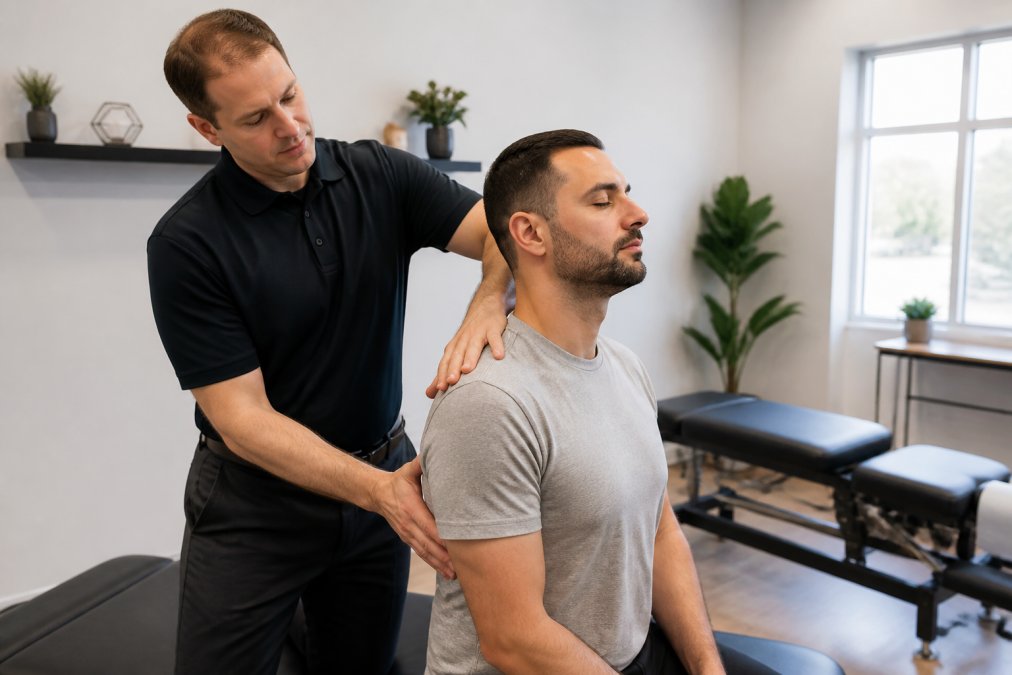
The adjustment itself is quick and precise. Most patients feel immediate relief as restricted joints regain their normal range of motion. This makes chiropractic care particularly effective for acute injuries, like whiplash from a motor vehicle accident or a sudden back strain. Chiropractors also treat extremity joints like shoulders, knees, and ankles.
What most guides miss is that modern chiropractic includes gentle techniques. Practitioners trained in low-force methods use instruments or light touch, making treatment suitable for pregnant women, children, and patients who are nervous about manual manipulation.
Ask your chiropractor whether they offer instrument-assisted adjustments. These techniques deliver the same joint mobilization benefits without the twisting or cracking many new patients fear.
How Physical Therapy Works: The Role of Therapeutic Exercise
Physical therapy takes a fundamentally different path to recovery. Instead of focusing on joint position, physical therapists design progressive exercise programs that address muscle weakness, tightness, and faulty movement patterns. The goal is functional mobility: teaching your body to move correctly so pain doesn’t return.
A typical physical therapy session combines manual therapy with active exercise. You might spend time on soft tissue massage to relax tight muscles, followed by targeted strengthening moves for your core, glutes, or back extensors. The therapist acts as a coach, correcting your form and progressing your program as you improve.
Physical therapy recovery timelines are generally longer than chiropractic relief timelines. While a patient might feel measurable improvement after several weeks of consistent work, the changes are designed to be permanent because they rebuild the structural support around your joints. For post-surgical recovery, physical therapy is usually the standard of care.
Physical Therapy Recovery Timelines vs. Chiropractic Relief
The speed of results differs significantly between these two approaches, but the real-world timeline depends on your condition, your commitment, and, critically for San Antonio residents, your insurance network.
Chiropractic adjustments often provide near-immediate relief because restoring joint mobility reduces nerve irritation right away. Many patients leave their first appointment feeling noticeably better. However, for chronic conditions, multiple visits are typically needed to retrain the surrounding muscles to hold the corrected alignment. A typical chiropractic plan for acute low back pain might involve 2-3 visits per week for 2-4 weeks, then taper to maintenance visits (peer-reviewed research).
Physical therapy requires more patience. You’re building strength, and muscle adaptation takes time. A typical recovery timeline for chronic low back pain might span six to twelve weeks of twice-weekly sessions, followed by a home exercise program (peer-reviewed research). The payoff is durability: once the supporting muscles are strong enough, the spine is less likely to revert to a painful state.
The San Antonio Insurance Angle
Most national articles ignore this, but your choice may be dictated by your insurance network. In San Antonio, many PPO plans cover both chiropractic and physical therapy, but with different copays and visit limits. For example, some plans cap chiropractic visits at 20 per year, while physical therapy may have a separate cap or require prior authorization after a certain number of sessions (cms.gov). HMO plans, common through employers like USAA or H-E-B, often require a referral from your primary care physician for physical therapy, but chiropractic may be accessible directly. Before you commit, call your insurance provider and ask:
- Are chiropractic and physical therapy both covered under my plan?
- Is there a visit limit or a deductible I must meet first?
- Do I need a referral from my primary care physician?
- Are there in-network providers near my zip code (e.g., 78205, 78209, 78230)?
Local Referral Networks
In San Antonio, orthopedic groups like the San Antonio Orthopaedic Group or the Texas Orthopaedic Associates often have physical therapists on staff or preferred referral partners. If you’re seeing an orthopedic surgeon for a condition like a herniated disc, they’ll likely send you to physical therapy first, it’s the standard of care. Chiropractors, on the other hand, are often the first stop for auto accident injuries, especially since many San Antonio chiropractors work with personal injury attorneys and handle liens.
What This Means for Your Decision
If you need rapid pain relief to function at work or care for your family, chiropractic care offers faster initial results, and in San Antonio, you can often be seen the same day. If you’re recovering from surgery or dealing with a long-standing weakness pattern, physical therapy’s slower, structural approach may serve you better in the long run, but you’ll need to factor in the time and cost of multiple weekly sessions. The most effective treatment plans sometimes combine both: chiropractic to restore mobility, then physical therapy to stabilize the result. Before you choose, check your insurance benefits and ask your provider about their experience with your specific condition, and whether they offer a complimentary evaluation like we do at Moore Chiropractic.
Recovery timelines differ, but so do insurance rules. In San Antonio, verify your coverage and referral requirements before starting either treatment to avoid surprise bills.
Benefits of Chiropractic Adjustments for Mobility and Pain
The benefits of chiropractic adjustments for mobility extend beyond simple pain relief. When your spine moves correctly, your nervous system functions more efficiently, which can improve everything from posture to energy levels. Chiropractic care is a form of preventative care: keeping joints mobile helps prevent the degenerative changes that lead to chronic issues later.
For athletes and active individuals in San Antonio, regular adjustments can enhance performance by ensuring optimal joint mechanics. A restricted hip or ankle doesn’t just cause local pain; it forces other joints to compensate, leading to overuse injuries. Restoring proper alignment through spinal manipulation allows your body to move with better biomechanics, reducing injury risk during training.
Chiropractic also shines for specific conditions like neuropathy and nerve-related pain. By reducing pressure on irritated nerves through gentle adjustments, patients often experience improved sensation and reduced tingling. The key is finding a practitioner who offers personalized care plans rather than a one-size-fits-all adjustment schedule.
Avoid chiropractors who recommend a fixed package of dozens of visits without a clear clinical rationale. A proper treatment plan should be based on your specific condition and progress, with re-evaluation at regular intervals.
When to Choose Chiropractic Care: Scenarios That Favor Manual Therapy
Chiropractic care is often the better first choice when your pain is mechanical and movement-based. Consider chiropractic care if you have:
- Acute back or neck pain following a specific incident, like a car accident or lifting injury
- Restricted range of motion in a joint that feels “stuck”
- Headaches originating from tension in the cervical spine
- Nerve symptoms like radiating pain or tingling from the spine
- A preference for hands-on manual therapy over active exercise
For residents of San Antonio dealing with whiplash or soft tissue injuries from motor vehicle accidents, chiropractic care provides targeted relief that addresses the joint restrictions common after impact. Pregnant women also often find gentle chiropractic adjustments helpful for pelvic alignment and lower back comfort as their posture shifts.
Moore Chiropractic offers a complimentary evaluation and consultation for new patients. This lets you get a professional opinion on whether chiropractic care is appropriate for your situation before committing to any financial outlay.
When to Choose Physical Therapy: Scenarios That Favor Exercise
Physical therapy becomes the stronger option when your problem is rooted in muscle dysfunction or requires structured rehabilitation. Let’s break down the scenarios with more specificity, including how physical therapy fits into post-surgical recovery and how it can be integrated with chiropractic care.
Post-Surgical Recovery: The Clear Winner
If you’ve had orthopedic surgery, such as a spinal fusion, knee replacement, or rotator cuff repair, physical therapy is almost always the standard of care. After surgery, your body needs progressive loading to regain strength safely, and only a trained therapist can guide that process. For example, after a lumbar fusion, you’ll start with gentle core activation and progress to functional movements over 12-16 weeks.
Chronic Pain from Muscle Weakness or Imbalance
Physical therapy excels when your pain is driven by muscle weakness or faulty movement patterns. Conditions like patellofemoral pain syndrome (runner’s knee), chronic low back pain with poor core stability, or postural neck pain from desk work respond well to targeted exercise. A physical therapist will assess your movement, identify imbalances, and design a program to correct them. This is not a passive treatment, you’ll be an active participant.
Arthritis and Joint-Friendly Exercise
For osteoarthritis, physical therapy is often recommended because it provides joint-friendly exercise that strengthens the muscles around the joint without exacerbating wear. For example, a patient with knee osteoarthritis might do quadriceps strengthening, balance training, and low-impact aerobic exercise like stationary cycling.
A Structured Decision-Making Framework
To help you decide, consider this simple flowchart:
- Have you had surgery in the last 6 months? → If yes, physical therapy is likely your first step.
- Is your pain acute (less than 4 weeks) and tied to a specific incident? → Chiropractic may offer faster relief.
- Do you have a known muscle weakness or imbalance? → Physical therapy is the better fit.
- Is your pain chronic (more than 12 weeks) and you’ve tried one approach without success? → Consider switching or combining both.
Integration Strategy: How to Use Both Effectively
Most articles force you to choose, but for complex cases, a combined approach often works best. For example, a patient with chronic low back pain might start with chiropractic adjustments to restore spinal mobility and reduce pain, then transition to physical therapy to strengthen the core and correct movement patterns. This sequential integration can provide immediate relief while building long-term stability. If you’re working with separate providers, ask them to communicate, share your treatment plan and progress notes to avoid conflicting advice.
The Role of Patient Education
Physical therapists are trained to educate you on body mechanics, how to lift, sit, and move in ways that protect your spine. This is a key differentiator. If you’re looking for a provider who will teach you self-management strategies, physical therapy is the stronger choice.
When Physical Therapy Might Not Be Enough
Physical therapy is not a magic bullet. If your pain is caused by a joint restriction that doesn’t respond to exercise, you may need manual therapy first. Also, if you’re not ready to commit to a home exercise program, results will lag.
The Bottom Line
Choose physical therapy if you’re recovering from surgery, have a muscle imbalance, or need education on long-term movement habits. Choose chiropractic if you have acute joint pain or prefer hands-on treatment. For many, the best path is a combination: chiropractic for immediate relief, then physical therapy for stabilization. At Moore Chiropractic, we can help you determine which approach, or combination, is right for you.
If you’re considering both, ask your chiropractor and physical therapist to coordinate. A shared treatment plan can prevent duplication and ensure you’re progressing safely.
Frequently Asked Questions
Is chiropractic or physical therapy more effective for chronic back pain?
Research suggests both chiropractic care and physical therapy can be effective for chronic back pain, but they work differently. Chiropractic adjustments often provide faster short-term pain relief by restoring joint movement and reducing nervous system irritation. Physical therapy builds long-term strength to prevent recurrence. For chronic pain, many patients find a combined approach works best. Your choice should depend on whether your primary goal is immediate pain relief or long-term functional retraining.
What can a physical therapist do that a chiropractor cannot?
Physical therapists are trained to prescribe and supervise therapeutic exercise programs aimed at strengthening muscles, improving balance, and correcting movement patterns. They use modalities like electrical stimulation and ultrasound, and focus heavily on patient education for self-management. While chiropractors focus primarily on spinal manipulation and alignment, physical therapists address the surrounding musculature and biomechanics through active exercise, which is why recovery timelines often extend over several weeks or months.
How quickly will I see results with chiropractic care versus physical therapy?
Chiropractic care often produces noticeable pain relief within a few sessions, sometimes immediately after the first adjustment, because it directly targets joint restriction and nerve irritation. Physical therapy recovery timelines are typically longer, with noticeable improvement often taking 4 to 6 weeks of consistent exercise and stretching. However, physical therapy results tend to compound over time as muscles strengthen. For acute injuries, chiropractic offers faster symptom relief, while physical therapy excels at preventing future episodes.
Can I see both a chiropractor and a physical therapist at the same time?
Yes, many treatment plans integrate chiropractic adjustments with physical therapy exercises. This combination addresses both the joint restriction and the underlying muscle weakness. A typical integrated approach might involve chiropractic adjustments twice per week for pain relief, alongside a physical therapy program focused on strengthening and mobility. If you are considering this in San Antonio, ask both providers about their experience with coordinated care and ensure they communicate about your treatment plan.
How do I decide between chiropractic and physical therapy for my specific injury?
Start by getting a proper diagnosis. If your issue involves joint restriction, limited range of motion, or nerve irritation from spinal misalignment, chiropractic adjustments are often the first-line choice. If your problem stems from muscle weakness, poor movement patterns, or you are recovering from surgery, physical therapy is usually more appropriate. A complimentary evaluation, like the one offered by Moore Chiropractic, can help you determine which approach aligns with your condition before committing to a full treatment plan.
This article was written using GrandRanker