
Table of Contents
- What Chronic Back Pain Actually Feels Like (and Why It Lingers)
- Daily Habits That Quietly Make Chronic Back Pain Worse
- At-Home Relief Strategies for Acute Flare-Ups and Everyday Aches
- Exercises for Chronic Back Pain You Can Do in Your Living Room
- When to See a Chiropractor for Back Pain
- Chiropractic for Long Term Pain Relief: How Gentle Care Fits In
- Desk Worker Ergonomics and Post-Recovery Maintenance in San Antonio
- Frequently Asked Questions
Last Updated: September 25, 2026
What Chronic Back Pain Actually Feels Like (and Why It Lingers)
Chronic back pain is discomfort in the spine or surrounding muscles that lasts 12 weeks or longer, even after the original injury heals. It often shows up as a dull ache, a sharp stab, or a stiff, heavy feeling that makes sitting and standing hard. (Source: the National Institute of Neurological Disorders and Stroke (NINDS))
Daily Habits That Quietly Make Chronic Back Pain Worse
The biggest mistake is treating pain as a reason to stop moving. Bed rest feels good for a day. After that, it stiffens your spine and weakens the muscles that support it.
A few common habits that keep pain alive:
- Sitting for hours without standing up
- Sleeping on a soft, sagging mattress
- Lifting with your back instead of your legs
- Skipping water and eating poorly, which raises inflammation
- Ignoring stress, which tightens muscles in the neck and lower back
Pushing through sharp pain to “loosen it up” often makes a flare-up worse. Sharp, shooting, or numb sensations mean stop and rest, not push harder.
At-Home Relief Strategies for Acute Flare-Ups and Everyday Aches
Start with the basics before reaching for anything else. The difference between relief that lasts and relief that fades is usually in the details: how long, how often, and in what order.
- Heat relaxes tight muscles and increases blood flow. Use a heating pad or warm compress for 15-20 minutes at a time, up to three times a day. Always place a cloth between the pad and your skin to avoid burns, and never sleep on a heating pad.
- Cold calms fresh inflammation and numbs sharp pain. Use an ice pack or a bag of frozen vegetables wrapped in a thin towel for 10-15 minutes at a time, with at least an hour between sessions. Cold is best in the first 48 hours after a new strain or flare-up.
- Positioning matters more than most people think. Lie on your back with a pillow under your knees, or on your side with one between your knees. This flattens the lower back curve and takes load off the discs.
- Gentle walking keeps blood flowing without strain. Ten minutes, two or three times a day, is enough. Walking on flat ground is safer than hills or stairs during a flare.
- Over-the-counter pain relief can ease symptoms short term. Follow the label exactly, and ask a pharmacist or doctor before using it for more than 10 days in a row. NSAIDs like ibuprofen can irritate the stomach and interact with blood pressure or blood thinner medications.
Heat, Cold, and Positioning: What Works in Practice
A common mistake is using heat on a fresh injury. Heat feels good, but on day one it can increase swelling. Cold first, heat later. A simple rule: cold for the first 48 hours, then switch to heat once the sharp edge of the pain fades.
A Simple Flare-Up Plan You Can Follow Tonight
When pain spikes, most people freeze or overdo it. A short, repeatable plan works better than guessing.
- Hour 0-48: Ice for 10-15 minutes every 2-3 hours. Rest in a supported position. Avoid bending, twisting, or lifting anything heavier than a gallon of milk.
- Day 3-7: Switch to heat for 15-20 minutes, two or three times a day. Add short walks of 5-10 minutes. Keep sitting bouts under 30 minutes.
- Week 2 onward: Return to gentle stretching and daily movement. If pain is not improving or is getting worse, that is your signal to get evaluated.
What Most Home Guides Leave Out
Most articles stop at heat and ice. The bigger lever is load management. Your spine tolerates a certain amount of sitting, bending, and standing each day. When pain flares, you don’t need to stop moving, you need to shorten the bouts and change positions more often. That is why “walk 10 minutes, sit 20 minutes, stand 5 minutes” beats “rest all day.”
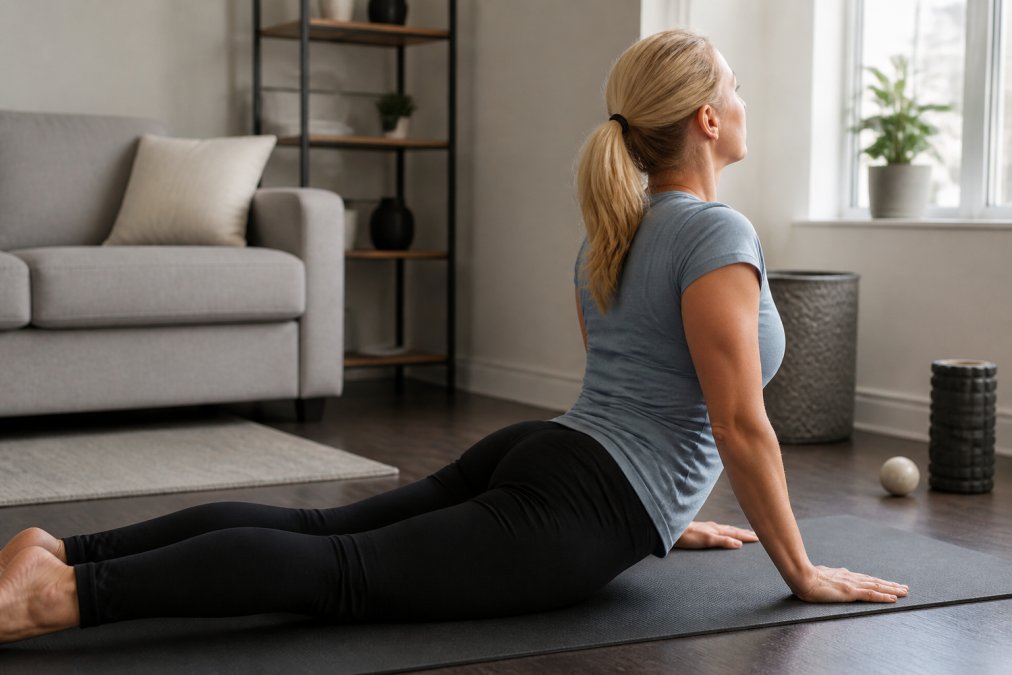
Exercises for Chronic Back Pain You Can Do in Your Living Room

A Simple Daily Routine to Build Mobility
Try this sequence once or twice a day:
- Knee-to-chest stretch – Lie on your back, pull one knee toward your chest, hold 20 seconds. Switch sides.
- Cat-cow – On hands and knees, arch and round your back slowly. 10 reps.
- Pelvic tilt – Lie on your back, flatten your lower back into the floor. Hold 5 seconds. 10 reps.
- Bird dog – On hands and knees, extend opposite arm and leg. 8 reps per side.
- Child’s pose – Kneel, sit back on your heels, reach forward. Hold 30 seconds.
Stop if anything causes sharp pain. Mild stretch is fine. Sharp is not.
When to See a Chiropractor for Back Pain
See a chiropractor when pain lasts more than two weeks, keeps coming back, or limits your daily life. Early care often means fewer visits later. Most people with chronic back pain improve with conservative care, and chiropractic care is one of the options that falls in that category.
Red Flags: When to Skip the Chiropractor and Call a Doctor
Some symptoms need a medical evaluation first, not an adjustment. Watch for:
- Loss of bladder or bowel control
- Numbness in the groin or inner thighs (sometimes called saddle numbness)
- Sudden weakness in both legs
- Pain after a serious fall or accident
- Fever, chills, or unexplained weight loss along with back pain
- A history of cancer with new back pain
Routine Care: When a Chiropractor Is a Reasonable Next Step
For everyone else, chiropractic care is a sensible next step. Gentle adjustments and soft tissue work can ease the nerve irritation that keeps pain alive. The American College of Physicians low back pain guideline lists spinal manipulation as a first-line option for acute and chronic low back pain, alongside heat, exercise, and other non-drug approaches.
A good first visit should include:
- A full history, including how long you’ve had pain and what makes it worse
- A movement and posture exam
- A clear explanation of what the plan is and how many visits are expected
- A conversation about home exercises you’ll do between visits
Finding Care in San Antonio
San Antonio has a wide range of options, from solo chiropractic offices to multi-specialty spine clinics. A few practical tips for choosing:
- Ask whether the provider offers a full evaluation before treatment
- Ask whether they coordinate with primary care doctors or physical therapists when needed
- Check whether they accept your insurance, since coverage for chiropractic care varies by plan
- Look for a provider who gives you home exercises, not just in-office treatment
The two-week rule is a good default: if pain is not improving after two weeks of consistent home care, or if it is getting worse at any point, get evaluated. Red-flag symptoms skip the two-week rule entirely and go straight to a doctor.
Bring a list of your daily habits to your first visit: how long you sit, how you sleep, and what makes pain worse. That context shapes the plan far more than an X-ray alone.
Chiropractic for Long Term Pain Relief: How Gentle Care Fits In
Chiropractic for long term pain relief works best as part of a plan, not a one-time fix. The goal is to restore motion, calm irritated nerves, and keep the spine moving well over time.
| Concern | What Gentle Care Looks Like | What It Means for You |
|---|---|---|
| Fear of cracking | Low-force techniques and slow movements | No sudden, jarring adjustments |
| Cost worries | ||
| Long-term results | Home exercises paired with visits | Less reliance on constant care |
| Desk-related neck pain | Posture and ergonomic guidance | Relief that lasts past the visit |
Bring a list of your daily habits to your first visit: how long you sit, how you sleep, and what makes pain worse. That context shapes the plan far more than an X-ray alone.
Desk Worker Ergonomics and Post-Recovery Maintenance in San Antonio
San Antonio desk workers face a specific problem: long commutes, long hours at a screen, and heat that makes people skip movement. That combo tightens the lower back and neck by mid-afternoon.
A few fixes that help:
- Set your screen at eye level so your neck stays neutral
- Keep feet flat and knees at a 90-degree angle
- Stand and stretch every 30-45 minutes
- Use a chair with real lower-back support
- Walk during lunch, even for 10 minutes
Frequently Asked Questions
What are the most effective at-home remedies for chronic back pain?
Start with heat or cold therapy, gentle stretching, and short walks. Heat relaxes tight muscles, while cold reduces inflammation after activity. Over-the-counter pain relievers can help temporarily, but they do not address the underlying cause. For chronic back pain, consistency matters more than intensity. A daily routine of five to ten minutes of gentle movement, paired with ergonomic adjustments to your chair and sleep position, often reduces flare-ups. If pain persists beyond a few weeks, a professional evaluation can identify whether nerve compression or another issue is driving the pain.
When should I stop home treatment and see a chiropractor in San Antonio?
If pain lasts more than two weeks, keeps returning, or starts limiting your ability to work or sleep, it is time for an evaluation. Seek care sooner if you notice numbness, tingling, or weakness in your legs, or if pain follows an injury. These signs can point to nerve involvement that home remedies will not fix. A chiropractor can assess your lumbar spine, check for herniated disc or spinal stenosis patterns, and recommend a plan that matches your situation.
Are there specific exercises recommended for long-term back pain relief?
Yes. Pelvic tilts, cat-cow stretches, bird-dog, and gentle bridges are commonly recommended for chronic back pain. These movements improve mobility and strengthen the muscles that support your lumbar spine without loading the spine heavily. Start with slow, controlled reps and stop if pain sharpens. A physical therapist or chiropractor can tailor the routine to your condition. For long-term relief, aim for consistency three to five days a week rather than occasional intense sessions.
What daily habits worsen chronic back pain?
Prolonged sitting, poor desk ergonomics, and lifting with your back instead of your legs are common culprits. Sleeping on a soft or unsupportive mattress can also aggravate symptoms. Smoking reduces blood flow to spinal discs, which slows healing. Even small habits like carrying a heavy bag on one shoulder or skipping warm-ups before activity add up. Addressing these daily patterns, along with targeted exercises, often reduces flare-up frequency and helps you manage chronic back pain at home more effectively.
Chronic back pain rarely disappears on its own, and it rarely responds to a single fix. It takes daily habits, gentle movement, and the right support to keep it quiet. Moore Chiropractic offers personalized, gentle care in San Antonio, with a complimentary evaluation and consultation for new patients. Our team builds custom plans around your posture, history, and goals, so you get relief that lasts. Get started with Moore Chiropractic and take back your mobility.