

Table of Contents
- Why Physical Therapy Exercises Matter for Spine Health
- What You’ll Need Before Starting
- Spine Mobility Exercises to Improve Range of Motion
- Back Strengthening Exercises to Support Your Spine
- Core Exercises for Back Pain Relief
- Gentle Stretches for Lower Back Pain
- How Often and How Long to Exercise
- Common Mistakes to Avoid
- Frequently Asked Questions
Last Updated: October 10, 2026
Why Physical Therapy Exercises Matter for Spine Health
Spine health determines your quality of life. A strong, flexible spine supports everything you do: sitting at a desk, lifting your child, playing sports, or simply walking without pain. When your spine weakens, everyday movements become difficult.
At Moore Chiropractic, we’ve worked with patients who discovered that targeted exercises changed their lives. The difference between chronic pain and lasting relief often comes down to consistent, proper movement.
Physical therapy exercises address the root cause. They rebuild strength, restore flexibility, and teach your body how to move correctly. Most people wait until pain is severe before taking action. That’s a mistake.
The exercises in this guide are designed for anyone dealing with back or neck pain. Whether you have chronic pain, recovered from an injury, or want to prevent problems, these movements work.
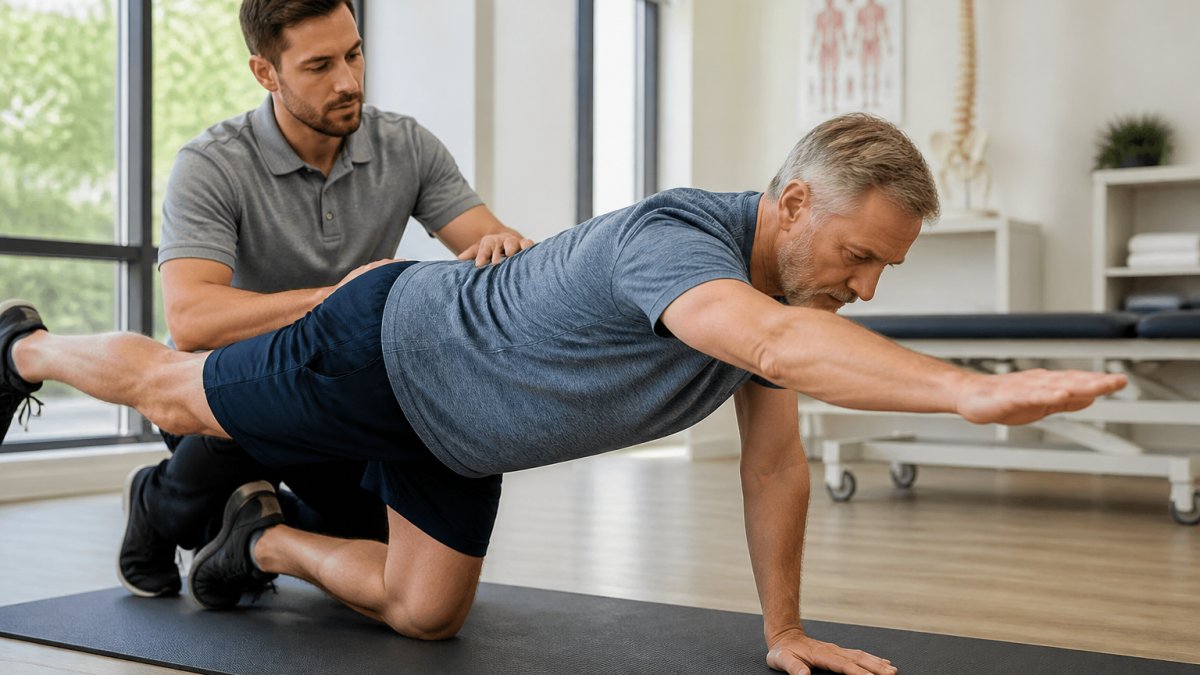
The best time to start spine exercises is before pain becomes severe. Prevention is easier than recovery. If you have sharp pain or numbness, consult a qualified professional before starting any new exercise routine.
What You’ll Need Before Starting
You don’t need expensive equipment to strengthen your spine. A few basic items make these exercises safer and more comfortable.
Essential items:
- Yoga mat or towel (provides cushioning for floor exercises)
- Firm pillow (supports your neck during stretches)
- Chair with back support (needed for several exercises)
- Resistance band (optional, adds difficulty as you progress)
Space requirements:
You need about 6 feet of clear floor space. A quiet room helps you focus on form and breathing. Wear comfortable clothing that allows full movement.
Before you begin:
Warm up for 2-3 minutes with gentle walking. This increases blood flow and prepares your muscles. If you feel sharp pain during any exercise, stop immediately. Mild discomfort is normal. Sharp pain is a warning sign.
Never push through sharp pain. Pain that radiates down your arm or leg, or pain accompanied by numbness or tingling, requires professional evaluation. Contact Moore Chiropractic or your physician before continuing.
Spine Mobility Exercises to Improve Range of Motion
Mobility means your spine can move freely in all directions. When mobility decreases, movement becomes stiff and painful. These exercises restore the natural range of motion your spine needs.
Cat-Cow Stretch
The Cat-Cow stretch is the foundation of spine mobility work. This exercise gently moves your entire spine through its natural range.
How to perform:
- Start on your hands and knees on your mat
- Hands should be under your shoulders, knees under your hips
- Inhale, then drop your belly toward the floor while lifting your head and tailbone (Cow position)
- Exhale, then round your spine while tucking your chin and tailbone (Cat position)
- Move slowly between positions, matching your breath to the movement
- Complete 10-12 repetitions
Why it works: This stretch mobilizes each vertebra individually. It warms up the spinal muscles and increases flexibility throughout your entire spine. The coordinated breathing calms your nervous system while you move.
Common mistakes: Moving too fast reduces effectiveness. Go slowly. Rushing through the motion misses the benefit. Also avoid dropping your belly too low in the Cow position, which strains your lower back.
Spinal Rotation Stretch
Rotation mobility is essential for daily activities like looking over your shoulder or turning in your seat.
How to perform:
- Lie on your back with both knees bent, feet flat on the floor
- Keep your shoulders on the mat
- Gently drop both knees to one side, moving as far as comfortable
- Hold for 20-30 seconds
- Return to center and repeat on the opposite side
- Complete 3-4 repetitions on each side
Why it works: This stretch lengthens the muscles along your spine and improves rotational mobility. It also releases tension in your lower back and hips.
Back Strengthening Exercises to Support Your Spine
Weak back muscles cannot support your spine properly. Strengthening exercises rebuild the muscular support system your spine depends on.
Bridge Exercise
The Bridge is one of the most effective exercises for lower back strength.
How to perform:
- Lie on your back with knees bent, feet flat and hip-width apart
- Place arms at your sides, palms down
- Push through your heels and lift your hips toward the ceiling
- Hold at the top for 2-3 seconds, squeezing your glutes
- Lower slowly and repeat
- Complete 12-15 repetitions
Why it works: This exercise strengthens your glutes, hamstrings, and lower back muscles. These muscles are crucial for supporting your spine during daily activities. A strong bridge foundation prevents lower back pain.
Progression: Once this becomes easy, try single-leg bridges by lifting one foot off the ground while maintaining the bridge position.
Prone Cobra
The Prone Cobra strengthens your entire back, from your neck to your lower back.
How to perform:
- Lie face down on your mat with your forehead resting on a small towel
- Place your hands under your shoulders, elbows close to your ribs
- Press your pelvis and thighs into the mat
- Using your back muscles (not your arms), lift your chest slightly off the ground
- Hold for 2-3 seconds
- Lower slowly and repeat
- Complete 10-12 repetitions
Why it works: This exercise targets the erector spinae muscles that run along your spine. These muscles are essential for maintaining upright posture and preventing slouching.
Consistent back strengthening is the single most important factor in long-term spine health. Weak muscles cannot support your spine, leading to pain and injury. Strong muscles prevent problems before they start.
Core Exercises for Back Pain Relief
Your core includes far more than your abdominal muscles. It includes all the muscles that stabilize your spine: your deep abdominal muscles, your back muscles, and your pelvic floor. A strong core reduces stress on your spine.
Dead Bug Exercise
The Dead Bug teaches your core to stabilize your spine while your limbs move.
How to perform:
- Lie on your back with your knees bent and feet flat
- Lift your feet off the ground so your knees are at 90 degrees
- Extend your right arm overhead while straightening your left leg
- Return to starting position
- Repeat on the opposite side
- Complete 10 repetitions on each side
Why it works: This exercise trains your deep core muscles to support your spine during movement. It’s particularly effective for people with lower back pain because it strengthens without stressing your spine.
Plank Hold
The Plank is a simple but powerful core strengthening exercise.
How to perform:
- Start in a push-up position with your forearms on the ground
- Your elbows should be under your shoulders
- Keep your body in a straight line from head to heels
- Engage your core and hold for 20-30 seconds
- Rest and repeat for 3-4 sets
Why it works: Planks activate all your core muscles simultaneously. This creates the stability your spine needs to handle daily stress. Start with shorter holds and gradually increase duration as you get stronger.
Modification: If a full plank is too difficult, perform a modified plank on your knees instead.
| Exercise | Duration | Frequency | Best For |
|---|---|---|---|
| Cat-Cow Stretch | 10-12 reps | Daily | Warming up, improving mobility |
| Spinal Rotation | 20-30 sec hold | 3-4x weekly | Rotational mobility, tension relief |
| Bridge Exercise | 12-15 reps | 3-4x weekly | Lower back strength |
| Prone Cobra | 10-12 reps | 3-4x weekly | Upper back strength |
| Dead Bug | 10 reps each side | 3-4x weekly | Core stability |
| Plank Hold | 20-30 sec hold | 3-4x weekly | Full core engagement |
Gentle Stretches for Lower Back Pain
Lower back pain affects millions of people (the CDC). These stretches provide relief by releasing tension in tight muscles.
Knee-to-Chest Stretch
This stretch targets the muscles in your lower back and glutes.
How to perform:
- Lie on your back with both legs extended
- Bend one knee and gently pull it toward your chest
- Hold for 20-30 seconds
- Return to starting position
- Repeat on the opposite side
- Complete 3-4 repetitions on each side
Why it works: This stretch lengthens the muscles in your lower back and releases tension. It’s particularly helpful after sitting for long periods.
Child’s Pose
Child’s Pose is a restorative stretch that calms your nervous system while stretching your entire spine.
How to perform:
- Start on your hands and knees
- Bring your hips back toward your heels
- Extend your arms forward, resting your forehead on the mat
- Hold for 30-60 seconds
- Breathe deeply and relax into the stretch
- Repeat 2-3 times
Why it works: This gentle stretch elongates your entire spine and releases tension in your shoulders, neck, and lower back. It also promotes relaxation and reduces stress.
How Often and How Long to Exercise
Consistency matters more than intensity. Short, regular sessions build lasting results better than occasional intense workouts.
Frequency guidelines:
- Beginners: Start with 3 days per week
- Intermediate: Progress to 4-5 days per week
- Advanced: 5-6 days per week is sustainable
Duration:
Most sessions should take 15-20 minutes. This is enough time to warm up, perform your exercises, and cool down without overtraining. Quality matters more than quantity. Five minutes of focused, proper movement beats 30 minutes of sloppy form.
Progression timeline:
Expect to notice improvements within 2-3 weeks of consistent exercise. Real strength gains take 6-8 weeks. Long-term spine health requires ongoing commitment. Think of these exercises as maintenance, not a temporary fix.
People with mild to moderate back pain who want to avoid medication and surgery. These exercises work best when combined with professional guidance from a qualified physical therapist or chiropractor.
Common Mistakes to Avoid
Most people sabotage their own progress by making these preventable mistakes.
Rushing through exercises: Speed reduces effectiveness. Move slowly and deliberately.
Ignoring pain signals: Mild discomfort is normal. Sharp pain is not. Stop immediately if you experience sharp, shooting, or radiating pain.
Skipping warm-ups: Your muscles need preparation before exercise. A 2-3 minute warm-up prevents injury and improves results.
Expecting instant results: Spine health takes time. You didn’t develop pain overnight, and you won’t fix it overnight either.
Poor form: Performing exercises incorrectly can make pain worse. Video yourself or work with a professional to verify your form.
Overtraining: More exercise isn’t always better. Rest days are when your body actually adapts and strengthens. Overtraining leads to burnout and injury.
Neglecting other factors: Exercise alone isn’t enough. Sleep, stress management, and proper nutrition support spine health.
According to research on physical activity and musculoskeletal health, regular movement combined with proper technique produces the best outcomes for long-term pain relief.
Spine health is something you control through daily choices.
Your first step is starting. Pick three exercises from this guide and commit to them for two weeks.
Frequently Asked Questions
How often should I do physical therapy exercises for my back?
Most people benefit from doing physical therapy exercises 3 to 5 days per week, with rest days to allow muscles to recover. Start with 2 to 3 sets of 8 to 12 repetitions per exercise, holding stretches for 20 to 30 seconds. Consistency matters more than intensity. If you’re new to exercise or recovering from an injury, begin slowly and increase frequency as your strength and comfort improve. Always follow guidance from your physical therapist or chiropractor for your specific condition.
What exercises should I avoid if I have back pain?
Avoid high-impact activities, heavy lifting, and exercises that involve excessive arching or twisting of the spine, especially during acute pain. Skip full sit-ups, leg raises while lying on your back, and forward bends that strain the lower back. Avoid movements that cause sharp pain or discomfort. Instead, focus on controlled, low-impact exercises that strengthen and stretch safely. A physical therapist can recommend modifications tailored to your condition and help you understand which movements to avoid.
Can physical therapy exercises help with chronic back pain?
Yes, physical therapy exercises are evidence-based treatments for chronic back pain. They work by strengthening the muscles that support the spine, improving flexibility and range of motion, and reducing tension. Regular exercise also promotes healing and prevents future injury. Many people experience significant relief through consistent practice combined with professional guidance. Results typically develop over weeks to months, not days. Pairing exercises with professional chiropractic or physical therapy care often produces better outcomes than exercise alone.
When should I see a physical therapist or chiropractor for spine pain?
Seek professional care if you experience persistent back or neck pain lasting more than a few days, pain that worsens despite rest, numbness or tingling in the arms or legs, or pain following an injury. A physical therapist or chiropractor can assess your condition, rule out serious issues, and create a personalized exercise plan. They can also teach you proper form to prevent injury and monitor your progress. A complimentary evaluation can help determine whether chiropractic care or physical therapy is right for your situation.