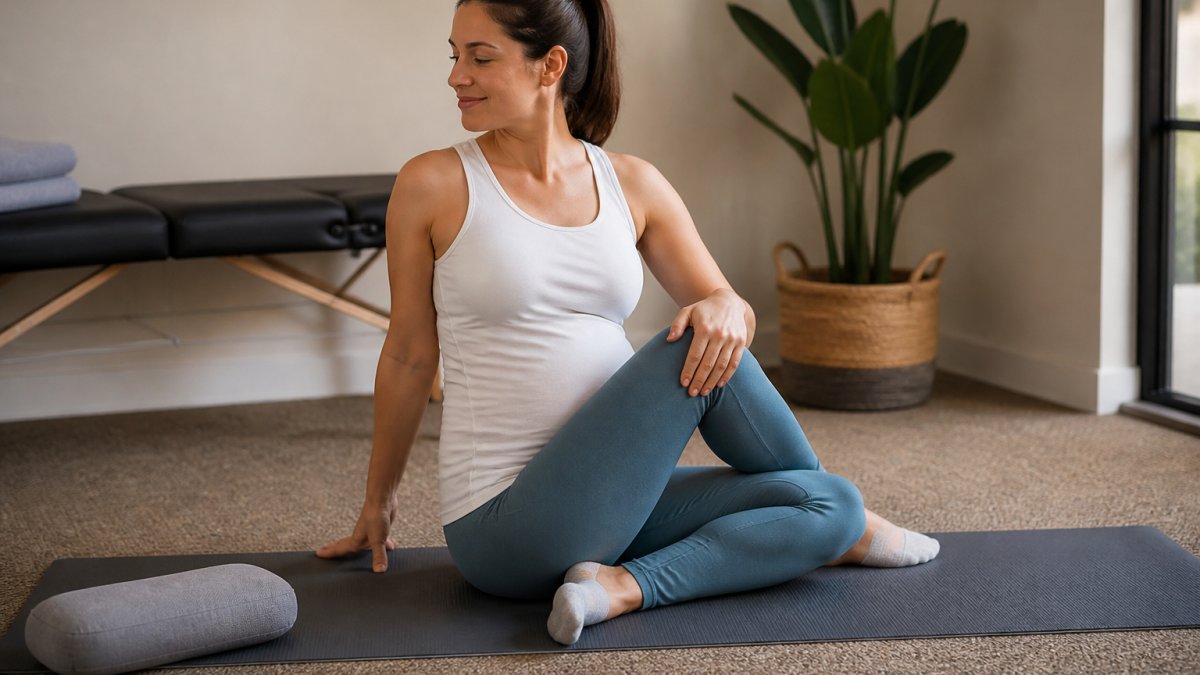
Table of Contents
- Why Third Trimester Stretches Matter for Your Comfort
- Third Trimester Pregnancy Stretches: A Safe, Sequenced Routine
- Pregnancy Stretches for Lower Back Pain Relief
- Pregnancy Exercise Safety: Stop Signs and Modifications
- How Chiropractic Care Differs from Stretching
- When to Call Your Healthcare Provider
- Conclusion: Gentle Movement for a More Comfortable Third Trimester
- Frequently Asked Questions
Last Updated: October 20, 2026
Why Third Trimester Stretches Matter for Your Comfort
In your last three months, your center of gravity shifts forward, joints loosen, and your lower back takes on extra load, making safe chiropractic stretches for third trimester comfort a practical daily habit, not a luxury.
At Moore Chiropractic in San Antonio, Texas, we see how much difference gentle movement makes. The goal is simple: keep muscles flexible, ease back pain, and protect your balance as your belly grows.
A few things happen in the third trimester that make stretching especially useful:
- The hormone relaxin loosens ligaments, so joints move more than usual
- Weight gain shifts pressure onto your lower back and hips
- Posture changes as you lean back to balance the extra weight
Stretching helps you stay mobile and comfortable. It will not “fix” pregnancy discomfort or treat a medical condition, think of it as gentle maintenance for a body doing hard work.
Third Trimester Pregnancy Stretches: A Safe, Sequenced Routine
Third trimester pregnancy stretches work best as a short, repeatable sequence. The routine below runs from supported seated work to floor work to standing balance work, so you get down to the floor and back up only once.
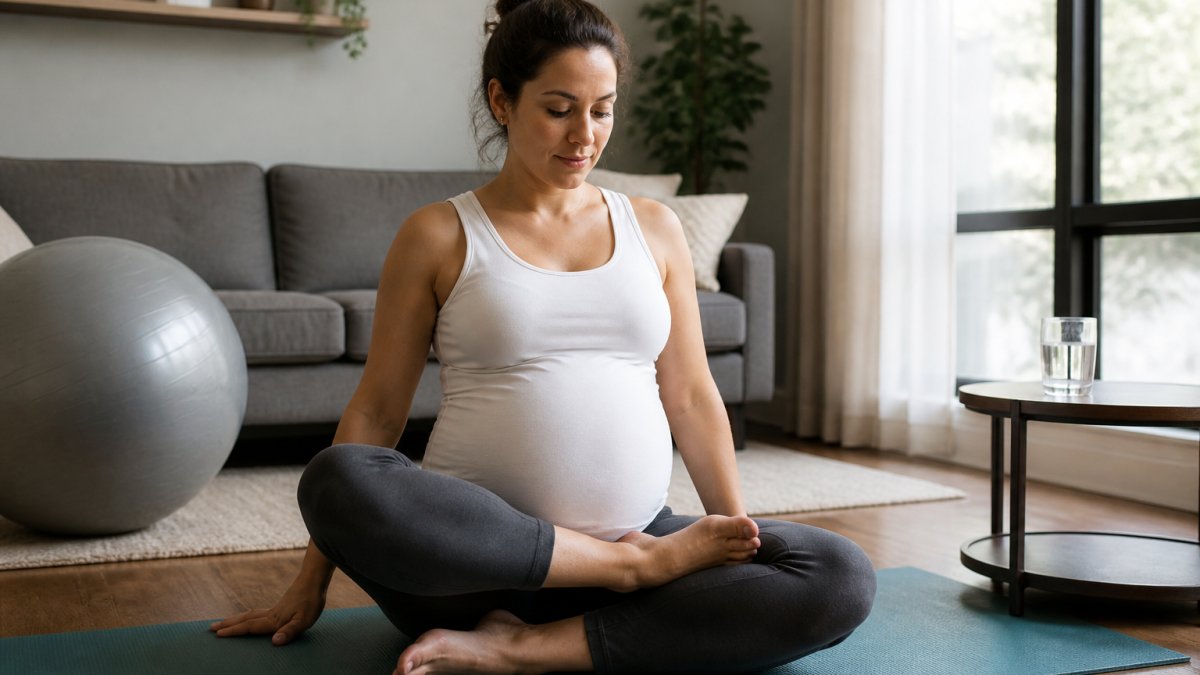
Before you start: clear the routine with your obstetric provider, especially if you have pelvic girdle pain, placenta previa, a history of preterm labor, or any condition that limits activity.
1. Seated Figure-Four Stretch (hips and glutes)
This move opens tight hips and glutes without pressure on your belly, and the chair fully supports you.
- Sit on a firm chair with your feet flat and your back tall.
- Cross your right ankle over your left knee, flexing the right foot.
- Keep your back straight and lean forward slightly from the hips until you feel a mild stretch in the right hip and glute.
- Hold for 20 to 30 seconds, breathing slowly. Rest 10 seconds.
- Repeat twice per side, then switch legs.
Stop leaning if you feel pinching in the hip or pressure in the front of the pelvis, a gentle pull is enough. If crossing the ankle over the knee feels unstable, rest the ankle on two stacked pillows on the opposite thigh instead.
2. Four-Point Kneeling Pelvic Tilts (lower back and abdominal support)
This move eases lower back tension and gently works the abdominal muscles supporting your belly.
- Come onto hands and knees on a mat, with wrists under shoulders and knees under hips.
- Keep your spine neutral and your belly relaxed, do not suck in your stomach.
- Tilt your pelvis by gently rounding your lower back, then return to neutral.
- Move slowly, 8 to 10 times, breathing out as you round and in as you return.
- Rest in child’s pose for 20 to 30 seconds if your knees feel strained.
If your wrists ache, rest your forearms on a stack of pillows. If the floor is difficult, do the same tilt standing against a wall: press your lower back gently toward the wall and release, 8 to 10 times.
3. Stability Ball Seated Leg Raises (balance and leg strength)
A stability ball builds balance and gentle leg strength, which matters as your center of gravity shifts forward.
- Sit tall on the ball with both feet flat on the floor and the ball against a wall for stability.
- Hold the ball steady with your hands at your sides.
- Slowly lift one foot a few inches off the floor.
- Hold for 3 to 5 seconds, then lower.
- Repeat 8 times per leg, resting 30 seconds between legs.
Keep the ball against a wall if you feel unsteady, balance changes late in pregnancy. If single-leg lifting causes pelvic pain, keep both feet down and do seated marches instead: lift one foot for 2 seconds, alternating for 10 repetitions per side.
4. Side-Lying Hip Stretch (outer hips and pelvic girdle)
The gentlest way to stretch the outer hips without loading the lower back.
- Lie on your left side with a pillow between your knees and your head supported.
- Bend your top (right) knee and gently guide it forward with your hand until you feel a mild stretch in the right hip.
- Hold for 20 to 30 seconds, breathing slowly.
- Switch sides and repeat twice per side.
If lying on your side is uncomfortable, do the same stretch seated: sit tall, cross your right ankle over your left knee, and lean forward slightly.
5. Standing Wall Calf Stretch (circulation and leg comfort)
This move helps with the calf tightness and swelling that build late in pregnancy.
- Stand facing a wall with your hands on the wall at shoulder height.
- Step your right foot back, keeping the heel down and the leg straight.
- Bend your left knee and lean into the wall until you feel a mild stretch in the right calf.
- Hold for 20 to 30 seconds, then switch sides.
- Repeat twice per side.
Keep your steps wide for balance, and hold a chair with one hand if you feel unsteady.
Rest guidance: between stretches, rest 10 to 30 seconds and take three slow breaths. If you feel lightheaded, short of breath, or any regular contractions, stop and call your healthcare provider.
Order matters: start seated, move to the floor once, and finish standing. This sequence limits up-and-down transitions, which are the most common cause of strain and falls late in pregnancy.
Pregnancy Stretches for Lower Back Pain Relief
Pregnancy stretches for lower back pain target the muscles that tighten as your belly grows.
Try these when your back feels stiff:
- Cat-cow on hands and knees: rounds and arches the spine gently
- Pelvic tilts against a wall: stand with your back to the wall and press your lower back toward it
- Side-lying hip stretch: lie on your side with a pillow between your knees
A common mistake is pushing until it hurts, which can strain already loose joints. Move to mild tension and breathe there.
Many pregnant patients in San Antonio find a short daily routine beats one long weekly session, ten minutes a day keeps muscles from stiffening.
Pregnancy Exercise Safety: Stop Signs and Modifications
Pregnancy exercise safety starts with knowing a normal stretch from a warning sign. A safe stretch produces a mild, steady pull in the target muscle, eases within seconds, and disappears when you come out of it.
Stop the stretch and call your healthcare provider if you notice:
- Dizziness or lightheadedness, a sign that blood pressure or blood sugar has dropped
- Shortness of breath that does not settle with rest
- Vaginal bleeding or fluid leaking
- Regular contractions, or contractions that continue after you stop
Modify your routine as your belly grows. These address the most common late-pregnancy limitations:
- Balance changes: do standing stretches with one hand on a wall or the back of a sturdy chair, keep your feet wider than hip width, and avoid single-leg balances unless you are holding support.
- Difficulty getting down to or up from the floor: do floor moves from a chair or bed instead, pelvic tilts against a wall, seated figure-four, and seated marches cover most of the same muscles. If you do get on the floor, use a firm cushion and come up by rolling to your side and pushing up with your arms, never by twisting.
- Pelvic girdle pain: avoid wide stance stretches and single-leg movements that load one side of the pelvis. Keep your knees together when turning in bed, and favor seated and side-lying stretches over standing hip openers.
- Limited mobility or fatigue: shorten holds to 15 seconds and do one round instead of two. Consistency matters more than duration.
Positions to skip in the third trimester: deep twists, lying flat on your back for long periods, and any move that strains the abdominal muscles or requires breath-holding.
Never push through sharp pain or hold your breath during a stretch. Breath-holding raises strain on already loose joints and can make back pain worse. If a move hurts, stop and try a gentler version, or skip it and ask your provider whether it is appropriate for you.
Stretching versus chiropractic treatment. Stretching is something you do yourself to lengthen tight muscles and keep joints moving. Chiropractic adjustment is a hands-on treatment a trained provider performs to address how your spine and pelvis move together. A home stretch routine cannot correct joint restrictions on its own, and a chiropractic visit is no substitute for the daily movement that keeps muscles from stiffening. If you are looking for prenatal chiropractic care in San Antonio, look for a provider who treats pregnant patients regularly, uses belly-support cushions and modified positioning, and coordinates with your obstetric provider.
Ask any chiropractor how they adjust pregnant patients before you book. A provider who uses belly-support cushions and gentle positioning will explain their approach clearly. If the answer is vague, keep looking.
How Chiropractic Care Differs from Stretching
Chiropractic care and stretching are not the same thing, and confusing them can lead to the wrong expectations.
Stretching is something you do yourself. It lengthens tight muscles and keeps joints moving.
A pregnancy-trained chiropractor uses gentle techniques and modified positioning, often with special cushions to support your belly.
The two work well together. Stretches you do at home support the changes a chiropractor makes in the office.
When to Call Your Healthcare Provider
Call your healthcare provider before starting any new stretch routine if you have a high-risk pregnancy, placenta previa, or a history of preterm labor. These conditions change what movement is safe for you.
Reach out right away if you have:
- Severe or sudden back pain
- Pain that radiates down your leg, which may signal sciatica
- Fever or chills
- A headache with vision changes
Your obstetric provider knows your pregnancy best. Bring a list of the stretches you plan to do and ask if any need adjusting, a quick check protects you and your baby.
Conclusion: Gentle Movement for a More Comfortable Third Trimester
The last trimester asks a lot of your body, and gentle movement helps you meet it. A short, consistent routine of safe chiropractic stretches for third trimester comfort can ease back pain, support pelvic alignment, and keep you mobile.
At Moore Chiropractic, we offer personalized, gentle care for pregnant patients in San Antonio, including a complimentary evaluation and consultation.
Ready to move more comfortably? Contact us to schedule your free evaluation and find out how gentle care can support your third-trimester wellness.
Frequently Asked Questions
Is it safe to see a chiropractor during the third trimester of pregnancy?
Many pregnant women safely receive chiropractic care in the third trimester when treated by a pregnancy-trained chiropractor. Adjustments are modified for your changing body, often using gentle techniques and positioning that accommodate your belly. However, safety depends on your individual health and pregnancy. Always consult your obstetric provider before starting care, and choose a chiropractor experienced with prenatal patients. Moore Chiropractic offers a complimentary evaluation to discuss whether care is appropriate for you.
What stretches are recommended for third trimester pregnancy?
Third trimester pregnancy stretches should be gentle and support your changing balance. Recommended options include the seated figure-four stretch for hips, four-point kneeling pelvic tilts for lower back, and seated leg raises on a stability ball for core and leg strength. Avoid deep twists, lying flat on your back for long periods, and any stretch that causes pain or shortness of breath. Always move slowly and stop if you feel discomfort. Your healthcare provider can help you modify stretches as your pregnancy progresses.
How can I modify stretches as my pregnancy progresses?
As your belly grows, modify stretches by using props like a stability ball, chair, or wall for support. Avoid lying on your back after the first trimester; instead, use side-lying or seated positions. Reduce the intensity and duration of stretches, and focus on gentle movement rather than deep stretches. If a position feels unstable or uncomfortable, switch to a safer alternative. A pregnancy-trained chiropractor can show you trimester-safe modifications tailored to your body.
When should I stop a stretch and contact my healthcare provider?
Stop any stretch immediately if you experience pain, dizziness, shortness of breath, uterine contractions, vaginal bleeding, fluid leakage, or decreased fetal movement. These could be signs of a complication and warrant prompt medical attention. Also stop if you feel numbness or tingling that doesn’t resolve. Contact your obstetric provider before resuming exercise. For general muscle soreness, rest and try a gentler approach, but always err on the side of caution during pregnancy.
| Stretch | Time | Frequency | Main Benefit |
|---|---|---|---|
| Seated figure-four | 20-30 sec per side | 2-3x weekly | Opens tight hips |
| Four-point pelvic tilts | 8-10 slow reps | 2-3x weekly | Eases lower back tension |
| Stability ball leg raises | 8 reps per leg | 2-3x weekly | Builds balance and leg strength |
| Cat-cow | 8-10 reps | Daily, if comfortable | Keeps spine mobile |