Table of Contents
- What Does Gentle Chiropractic Mean?
- Gentle vs. Traditional Chiropractic: Key Differences
- Low-Force Chiropractic Techniques Explained
- Who Is a Good Candidate for Gentle Chiropractic?
- What to Expect at a Chiropractic Appointment
- Chiropractic Care for Seniors: Is It Safe?
- Does Gentle Chiropractic Work? Evidence and Results
- Finding Gentle Chiropractic Care in San Antonio
- Frequently Asked Questions
Last Updated: September 7, 2026
What Does Gentle Chiropractic Mean?
Gentle chiropractic is a low-force approach to spinal care that prioritizes patient comfort while still addressing vertebral alignment and nervous system function. Unlike methods that rely on quick, forceful thrusts, gentle chiropractic uses minimal pressure, specialized instruments, and slow, controlled movements to reduce spinal subluxation and restore proper nervous system regulation. At Moore Chiropractic in San Antonio, Texas, we practice this patient-centered approach because it makes chiropractic care accessible to people who might otherwise avoid treatment due to fear or sensitivity.
If you have ever felt nervous about the popping and cracking sounds associated with traditional adjustments, gentle chiropractic offers a reassuring alternative. The philosophy centers on the idea that significant therapeutic results do not require aggressive force. Instead, practitioners focus on precision and consistency, working with the body’s natural biomechanics to encourage healing. This makes the approach effective for a broad range of patients, from those with chronic back pain to individuals seeking preventative care.
Gentle vs. Traditional Chiropractic: Key Differences
The most significant difference between gentle and traditional chiropractic comes down to the technique used to correct vertebral alignment. Traditional methods often involve manual manipulation with a high-velocity, low-amplitude thrust, which produces the familiar “cracking” sound. Gentle chiropractic, by contrast, avoids that sudden force entirely.
Practitioners of gentle care use low-force techniques that involve either a specialized handheld instrument or light, fingertip-level pressure. The goal is identical: to restore joint mobility and improve neurological function. However, the experience for the patient is markedly different. Many people report feeling a sense of release rather than a physical jolt, and post-treatment soreness is often significantly reduced compared to traditional adjustments.
| Feature | Traditional Chiropractic | Gentle Chiropractic |
|---|---|---|
| Force Used | High-velocity thrust | Low-force, minimal pressure |
| Primary Tool | Manual manipulation | Instrument-assisted or light touch |
| Patient Experience | Popping or cracking sounds | Quiet, subtle release |
| Ideal For | General musculoskeletal issues | Sensitive patients, seniors, children |
| Post-Treatment Soreness | Possible | Generally minimal |
This distinction is not about which method is “better,” but rather which is more appropriate for the individual. While traditional care is highly effective for certain acute conditions, gentle chiropractic shines when treating patients who require a softer touch.
Low-Force Chiropractic Techniques Explained
The term “low-force” describes any chiropractic method that avoids sudden, high-pressure movements. This category includes several distinct approaches, but all share a common foundation in clinical assessment and a commitment to patient comfort, encouraging the body to self-correct without triggering a defensive muscular reaction.
Instrument-Assisted Adjustments
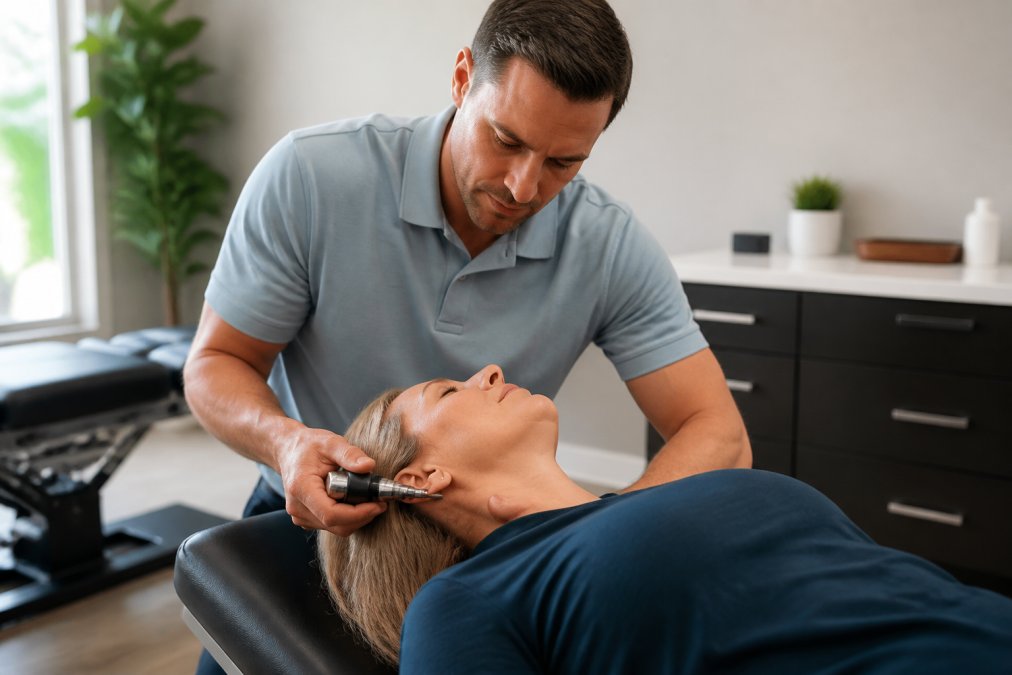
Instrument-assisted adjustments are a cornerstone of modern gentle chiropractic care. Rather than using the hands to apply a thrust, practitioners use a small, handheld device that delivers a precise, rapid impulse so fast that the body does not have time to resist, allowing for accurate correction without twisting or forceful bending.
This method is particularly effective for the neck and upper spine, where precision is critical and patients often feel most vulnerable. The instrument produces a light tapping sensation rather than a crack. For those asking what does gentle chiropractic mean in practice, this is often the answer: a targeted, comfortable treatment.
Manual Low-Force Methods
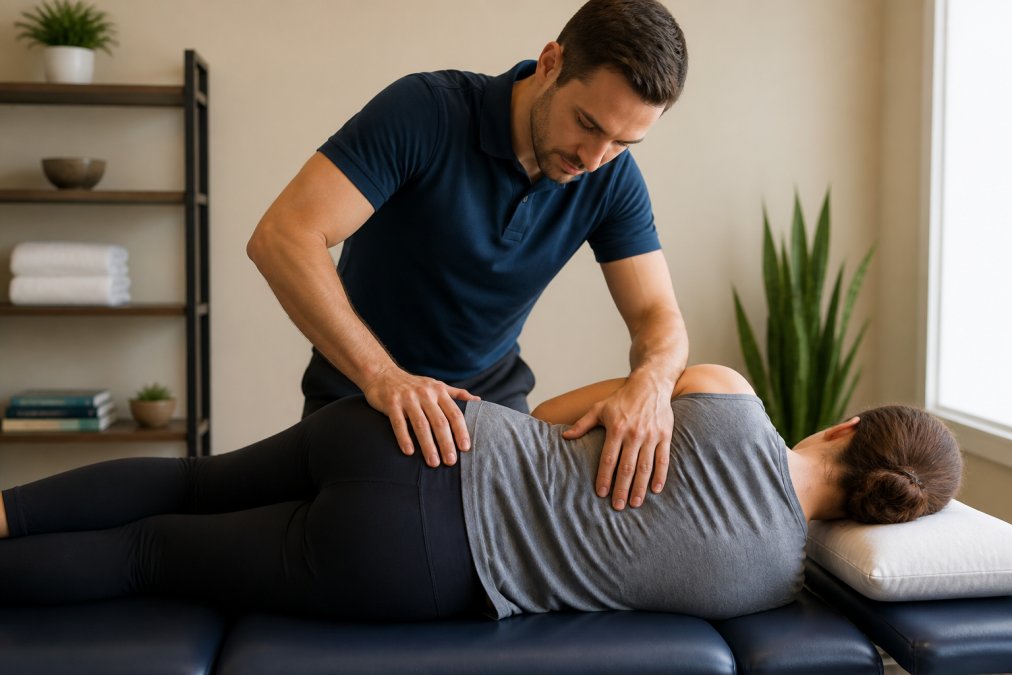
For those who prefer a hands-on approach, manual low-force methods offer an alternative. Instead of a quick thrust, the chiropractor applies steady, gentle pressure to specific points along the spine. This technique, sometimes called joint mobilization, involves moving the joint through its natural range of motion without forcing it past its limit.
Manual low-force methods require a high degree of skill and tactile pressure awareness. The practitioner must be able to feel subtle restrictions in the soft tissue and joint capsule to guide the treatment effectively. This approach is often favored for treating the lower back and pelvis, where stability is essential, and it works well for patients who find even the smallest instruments intimidating.
Who Is a Good Candidate for Gentle Chiropractic?
Gentle chiropractic is an inclusive therapeutic approach, but it is especially well-suited for specific groups who may not respond well to traditional high-force methods. If you have avoided chiropractic care because of a fear of cracking or twisting, you are a prime candidate for this low-force technique.
- Seniors and older adults: Aging spines can become less flexible, and conditions like osteoporosis require a gentler approach to avoid injury.
- Pregnant women: As the body changes, joint mobility and comfort can suffer. Gentle techniques safely address pelvic alignment without placing stress on the abdomen.
- Children and adolescents: Growing bodies respond well to light pressure, making gentle care a safe option for pediatric chiropractic.
- Athletes: For those recovering from sports injuries, gentle adjustments help restore function without aggravating inflamed soft tissue.
- Anxiety-prone patients: Individuals who tense up at the thought of manual manipulation often relax completely during instrument-assisted care.
Many patients assume chiropractic care is only for acute back pain. In reality, this patient-centered approach is a powerful tool for holistic wellness and preventative care, supporting your body’s ability to function at its peak and reducing the risk of future injuries.
What to Expect at a Chiropractic Appointment
For first-time patients, the unknown can be the biggest source of anxiety. Your initial visit will begin with a thorough clinical assessment, where the practitioner reviews your health history, discusses your concerns, and performs movement and posture tests to identify the root cause of your discomfort.
The adjustment phase is typically quick and painless. You will likely lie on a specialized table, and the chiropractor will use either an instrument or their hands to apply gentle pressure to specific areas of your spine. There is no dramatic twisting or forceful cracking. Most patients describe the sensation as a deep, satisfying pressure that encourages the muscles to relax.
Wear loose, comfortable clothing to your appointment. While you may change into a gown, comfortable attire allows the practitioner to assess your posture and movement patterns more accurately during the initial examination.
After the session, you might feel immediate relief or mild soreness similar to a good workout, which is normal as your muscles adapt. Your practitioner will likely recommend follow-up visits to build on the initial correction, as consistent care is often necessary to retrain supporting muscles and ligaments.
Chiropractic Care for Seniors: Is It Safe?
Chiropractic care for seniors is not only safe but often highly beneficial when performed with appropriate low-force techniques. As we age, the spine naturally undergoes changes that can lead to stiffness, reduced range of motion, and chronic pain. While traditional adjustments might pose risks for fragile bones, gentle chiropractic offers a safe avenue for maintaining mobility and independence.
For older adults, the focus is usually on improving joint mobility and reducing inflammation rather than correcting dramatic structural shifts. Instrument-assisted adjustments are particularly valuable here, as they allow for precise corrections without the torque required in manual manipulation, making the treatment non-invasive and comfortable.
Beyond pain relief, regular gentle care supports overall musculoskeletal health, which is crucial for balance and fall prevention. Many seniors find that incorporating chiropractic into their routine helps them stay active, maintain quality of life, and manage the aches and pains that accompany aging.
Does Gentle Chiropractic Work? Evidence and Results
A common misconception is that gentler methods yield weaker results. In practice, effectiveness depends less on force applied and more on the accuracy of the adjustment and consistency of the treatment plan. Gentle chiropractic works by providing the nervous system with the correct input it needs to regulate the body, allowing natural healing to take over.
While the research base for instrument-assisted adjusting is still developing, several peer-reviewed studies offer meaningful insights. A 2015 study in the Journal of Manipulative and Physiological Therapeutics examined instrument-assisted manipulation for chronic low-back pain and reported improvements in pain and disability scores (PubMed). A 2019 systematic review in the Journal of Chiropractic Medicine noted that low-force, instrument-based techniques can be a reasonable alternative for patients who cannot tolerate manual high-velocity adjustments (PubMed).
National Center for Complementary and Integrative Health recognizes spinal manipulation as a treatment option that may help with low-back pain. The key differentiator for gentle chiropractic is not that it works instead of traditional methods, but that it achieves comparable therapeutic goals through a mechanism that reduces the body’s natural defensive response. When a high-velocity thrust is applied, muscles can reflexively tighten, sometimes limiting the correction. Instrument-assisted tools deliver a rapid, low-amplitude impulse that outpaces this muscular reflex, allowing for a more precise correction without the need for twisting or forceful bending.
The measurable results for patients often include a significant reduction in pain intensity, improved range of motion, and better nervous system regulation. However, it is important to have realistic expectations. Chiropractic is not a “quick fix” for every condition, and results can depend on the chronicity of the issue, your overall health, and adherence to the recommended care schedule.
For San Antonio residents, this evidence-based approach means you do not have to choose between comfort and effectiveness. The research supports that a low-force method is not a watered-down version of care; it is a distinct, valid clinical tool. When you visit a practitioner who uses these techniques, you are receiving a targeted intervention designed to work with your body’s neurology, not against it.
The true value of gentle chiropractic lies in its accessibility. By removing the fear barrier, it encourages consistent, preventative care that supports long-term spinal health and overall well-being, rather than waiting for a crisis to force a visit. The evidence increasingly supports that this is not just a comfortable choice, but a clinically sound one.
Finding Gentle Chiropractic Care in San Antonio
Finding the right chiropractor in San Antonio means looking beyond proximity and considering the philosophy of the practice. You want a provider who listens, explains their reasoning, and customizes treatment to your comfort level rather than applying a one-size-fits-all protocol. For residents searching for “gentle chiropractic near me,” the priority should be a clinic that offers a complimentary evaluation to assess your needs without pressure.
What to Ask Before Your First Visit
Before booking, ask specific questions that reveal how a practice handles gentle care:
- Which instruments or techniques do you use? Look for specifics like Activator Methods, Impulse Adjusting, or manual low-force mobilization.
- How do you customize care for sensitive patients? A good practitioner will have a clear protocol for patients with anxiety, osteoporosis, or acute inflammation.
- Do you coordinate with my primary care physician or physical therapist? Integrated care often yields better outcomes than isolated treatment.
Insurance and Cost Transparency in Texas
One of the biggest barriers to chiropractic care is uncertainty about cost. In Texas, many health insurance plans offer some level of chiropractic coverage, but specifics vary widely. Medicare Part B covers medically necessary chiropractic services, but only for manual manipulation of the spine to correct subluxation; it does not cover instrument-assisted adjustments or maintenance care.
Many clinics, including Moore Chiropractic, offer a complimentary first evaluation to help you understand your needs before committing financially.
Integrating Gentle Chiropractic with Local Wellness Care
Gentle chiropractic does not exist in a vacuum. In San Antonio, many patients find that combining low-force adjustments with other local wellness modalities amplifies results. Pairing instrument-assisted care with physical therapy can accelerate recovery from a back injury, and working with a licensed massage therapist who understands myofascial release can help maintain alignment. When you visit Moore Chiropractic, we can discuss how your care plan fits into your broader health ecosystem.
Your Next Step in San Antonio
At Moore Chiropractic, we specialize in this exact approach. Our philosophy is rooted in personalized care plans that respect your body’s unique biomechanics. Whether you are dealing with chronic back pain, recovering from a sports injury, or seeking support during pregnancy, our team combines expertise in both traditional and advanced chiropractic methods to build a treatment plan that works for you. Led by Dr. Andrew Moore D.C., we focus on enhancing body mobility and restoring peak physical performance.
We also understand that cost and commitment are concerns. That is why we offer a complimentary evaluation and consultation for new patients, allowing you to meet our team, ask questions, and understand exactly what your treatment plan would involve before making any decisions.
Frequently Asked Questions
Does gentle chiropractic care involve ‘cracking’ or ‘popping’ sounds?
Usually not. Gentle chiropractic focuses on low-force techniques that avoid the twisting and quick thrusts typical of traditional adjustments, which often cause those sounds. Practitioners may use a handheld instrument that delivers a light, rapid impulse or apply slow, controlled pressure. You might hear a faint clicking from the instrument, but it is not the same as a manual joint ‘crack.’ The goal is to move the vertebrae gently without forcing them.
Is gentle chiropractic care as effective as traditional adjustments?
Low-force techniques can be effective for many conditions. The best approach depends on your specific condition, comfort level, and health history. A thorough clinical assessment determines which technique is most appropriate. Many practitioners combine methods, using gentler techniques when needed and traditional adjustments when they are the most effective and safe option.
Who is the ideal candidate for low-force chiropractic adjustments?
Low-force chiropractic is well-suited for people who are new to chiropractic care and feel anxious about traditional adjustments, as well as for seniors, pregnant women, and infants. It is also a strong option for individuals with acute pain, certain health conditions, or those who prefer a very light-touch approach. However, even healthy adults can benefit. A consultation with a chiropractor in San Antonio can help determine if this method fits your needs.
What is the difference between gentle chiropractic and traditional chiropractic?
The main difference is the amount of force used. Traditional chiropractic often uses manual manipulation with a high-velocity, low-amplitude thrust to restore joint mobility, which can produce a popping sound. Gentle chiropractic uses low-force techniques, such as instrument-assisted adjustments or slow, targeted pressure, to achieve the same goal of correcting vertebral alignment and improving nervous system function, with less force and often more patient comfort.