
Table of Contents
- When to Start Chiropractic for Youth Athletes: Age and Development Considerations
- When to Take a Child to a Chiropractor: Signs Your Young Athlete May Benefit
- Chiropractic Care for Children Safety: What Parents Need to Know
- Sports Injury Evaluation for Young Athletes: What Happens During an Assessment
- Chiropractic Care Before Sports Season: Preseason Preparation and Performance Support
- Red Flags and When to Seek Emergency Care Instead
- Your First Visit: What to Expect at a Youth Athlete’s Initial Chiropractic Appointment
- Frequently Asked Questions
Last Updated: October 17, 2026
When to Start Chiropractic for Youth Athletes: Age and Development Considerations
When to start chiropractic for youth athletes depends on your child’s age, sport, and physical demands. Most young athletes benefit from chiropractic evaluation once they begin competitive sports, typically around ages 8-10. However, earlier assessments can help identify movement patterns and posture issues before they become injuries.
The key is matching care to your child’s developmental stage. Young children have different skeletal structures than teenagers. Their bones are still growing, their muscles are developing, and their movement patterns are still forming. A chiropractor trained in pediatric care understands these differences and adjusts their approach accordingly.
Early intervention matters. A child who develops poor posture or movement habits at age 9 may struggle with back pain or repetitive injuries by age 14. Addressing these issues early can prevent years of problems.
Age-based guidance for when to start:
- Ages 6-8: General wellness checks if your child plays organized sports or shows signs of posture issues
- Ages 9-12: Regular assessment during competitive sports seasons to monitor movement quality
- Ages 13-17: Ongoing care during growth spurts and high-intensity training periods
- Ages 18+: Full adult chiropractic care for college and elite athletes
The decision isn’t about age alone. It’s about recognizing when your child needs support. If your young athlete complains of pain, shows poor posture, or plays a demanding sport, that’s the time to schedule an evaluation.
When to Take a Child to a Chiropractor: Signs Your Young Athlete May Benefit
Your young athlete may benefit from chiropractic care if they experience pain, limited movement, or performance issues related to sports. Common signs include back pain after practice, neck stiffness, or difficulty with certain movements. These aren’t normal parts of growing up, they’re signals that something needs attention.
Sports-related pain in young athletes often stems from poor movement patterns, muscle imbalances, or repetitive stress. A chiropractor can identify these issues before they become serious injuries. Early detection and correction of movement problems is far easier than treating an established injury.
Watch for these specific signs:
- Complaints of back, neck, or shoulder pain during or after sports
- Visible posture problems (slouching, uneven shoulders, head forward position)
- Limited flexibility or range of motion compared to teammates
- Limping or favoring one side of the body
- Reluctance to play or reduced performance without obvious injury
- Muscle soreness that doesn’t improve with rest
- Stiffness that worsens in the morning or after sitting
Pain isn’t the only indicator. Some young athletes perform below their potential because of movement restrictions they don’t recognize. A chiropractor can assess your child’s movement quality and identify areas holding back athletic performance.
If your child plays a high-demand sport like gymnastics, football, soccer, or baseball, consider a wellness evaluation even without pain. These sports place specific physical demands on the body, and early movement assessment can prevent injuries before they happen.
Chiropractic Care for Children Safety: What Parents Need to Know
Chiropractic care for children is safe when performed by a qualified practitioner trained in pediatric techniques. The approach is fundamentally different from adult care. Children’s spines are still developing, their bones haven’t fully hardened, and their bodies respond differently to treatment.
Qualified pediatric chiropractors use gentler techniques specifically designed for young bodies. They avoid high-force adjustments and instead use low-force methods, soft tissue work, and movement guidance. The goal is supporting healthy development, not forcing change.
Safety considerations parents should understand:
- Gentle technique: Pediatric chiropractors use lighter force and shorter lever arms than adult techniques
- Shorter session times: Young children have shorter attention spans and tire more easily
- Movement-focused care: Much of the treatment involves teaching proper movement and posture habits
- Regular reassessment: Techniques are adjusted as your child grows and develops
- Communication with other providers: A good chiropractor coordinates with your pediatrician and other healthcare providers
Red flags that suggest a chiropractor may not be appropriate for your child:
- They use the same techniques on children as adults
- They pressure you into long-term contracts without clear goals
- They discourage communication with your child’s pediatrician
- They make absolute cure or guarantee claims
- They seem uncomfortable answering questions about their pediatric training
Moore Chiropractic provides personalized, gentle chiropractic care, dedicated to enhancing body mobility and restoring peak physical performance. Our expert team addresses a wide range of conditions, from back pain and neuropathy to sports injuries and wellness needs, ensuring each patient receives comprehensive, high-quality treatment. We invite you to experience relief through our tailored approach, designed to help you regain and maintain your long-term health.
If your child experiences severe pain, swelling, neurological symptoms (numbness, tingling), or pain that worsens despite treatment, seek evaluation from your pediatrician or emergency care. These can indicate conditions requiring medical attention beyond chiropractic scope.
Sports Injury Evaluation for Young Athletes: What Happens During an Assessment
A proper sports injury evaluation for young athletes involves several steps designed to understand your child’s movement, pain patterns, and injury risk.
Here’s what typically happens during an assessment:
Initial consultation: The chiropractor asks about your child’s sports, training schedule, any current pain or injuries, and medical history. They may ask about growth spurts, recent changes in performance, or previous injuries. This conversation helps them understand your child’s specific demands and vulnerabilities.
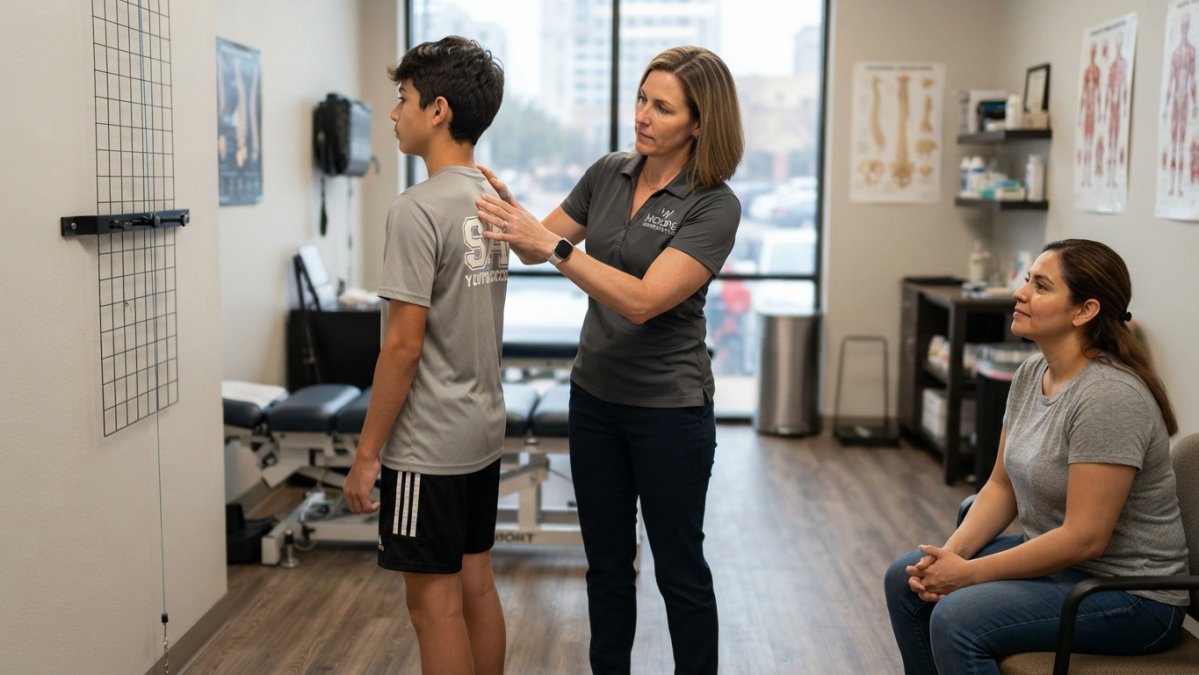
Posture and structural assessment: Your child stands and moves while the chiropractor observes alignment, symmetry, and posture.
Range of motion testing: The chiropractor gently moves your child through various movements to measure flexibility and identify restrictions. Limited range of motion in certain directions often indicates muscle tightness or joint stiffness that needs attention.
Muscle strength and function testing: Specific muscle tests help identify weak areas or imbalances. Many young athletes have strength imbalances between sides of their body or between muscle groups, which increases injury risk.
Sport-specific movement patterns: The chiropractor may ask your child to demonstrate movements specific to their sport. A pitcher throws differently than a soccer player, and a gymnast moves differently than a runner.
Palpation: The chiropractor carefully feels along your child’s spine and joints to assess mobility and identify areas of restriction or sensitivity.
After the assessment, the chiropractor explains findings in clear terms and discusses whether chiropractic care would help.
Chiropractic Care Before Sports Season: Preseason Preparation and Performance Support
Preseason chiropractic care helps young athletes start the season strong by addressing existing movement restrictions, improving flexibility, and optimizing muscle function. This preventive approach reduces injury risk and can enhance performance from day one.
Many young athletes in San Antonio benefit from preseason evaluation 2-4 weeks before their season starts. This timing allows time for care if issues are found, while keeping the athlete fresh for competition.
What preseason care typically includes:
- Full movement and flexibility assessment
- Identification of muscle imbalances or restrictions
- Adjustment of movement patterns that increase injury risk
- Soft tissue work to improve muscle function
- Guidance on stretching and conditioning for your child’s specific sport
- Recommendations for training load progression
Preseason care is particularly valuable for young athletes returning after time off or transitioning to a more demanding level of competition. Growth spurts during adolescence also create temporary imbalances that benefit from assessment and correction.
The goal isn’t just treating problems, it’s optimizing your child’s physical readiness.
Preseason chiropractic evaluation identifies and corrects movement problems before they become injuries, giving your young athlete a competitive advantage and reducing missed practice time.
Red Flags and When to Seek Emergency Care Instead
Certain situations require immediate medical attention rather than chiropractic care. Parents need to recognize red flags that indicate a more serious condition requiring emergency evaluation or referral to a physician.
Seek emergency care immediately if your child experiences:
- Severe pain that came on suddenly without clear cause
- Pain after significant impact or trauma (fall, collision, accident)
- Numbness or tingling in arms, legs, or hands
- Loss of bowel or bladder control
- Fever along with neck stiffness or back pain
- Weakness or inability to move a limb
- Severe headache with neck pain
- Any neurological symptoms (confusion, dizziness, loss of consciousness)
- Swelling that worsens despite rest and ice
These symptoms can indicate fractures, serious infections, neurological problems, or other conditions requiring medical diagnosis and treatment. A chiropractor will refer your child to appropriate medical care if they identify any of these red flags.
Also seek your pediatrician’s evaluation first if:
- Your child has underlying medical conditions (bone density issues, connective tissue disorders, neurological conditions)
- Pain is severe or worsening despite initial treatment
- Your child has had recent surgery or serious illness
- You’re uncertain whether the problem is musculoskeletal
A good chiropractor welcomes questions about when to refer to other providers. They should encourage you to consult your pediatrician for any concerns and should communicate findings with your child’s medical team when appropriate.
Your First Visit: What to Expect at a Youth Athlete’s Initial Chiropractic Appointment
Your child’s first chiropractic visit sets the tone for their care. Knowing what to expect helps both you and your child feel more comfortable and prepared.
Before the visit:
Gather information about your child’s sports, any injuries or pain, medical history, and current medications. Bring insurance information and any relevant medical records. Arrive 10-15 minutes early to complete paperwork.
During the visit:
The chiropractor begins with conversation, asking about your child’s sports, any pain or concerns, and goals. They explain their approach in language your child understands, which helps them feel less anxious.
The physical examination follows, which includes posture assessment, range of motion testing, and movement evaluation. The chiropractor explains what they’re looking for and may ask your child to perform specific movements.
If chiropractic care is appropriate, the chiropractor discusses findings and explains the recommended treatment plan.
Moore Chiropractic offers a complimentary evaluation and consultation, so your first visit focuses on assessment and planning rather than treatment.
What to bring:
- Insurance card and photo ID
- Medical history form (completed if possible)
- List of any medications or supplements
- Previous medical or imaging records if available
- Questions or concerns you want to discuss
After the visit:
You should receive clear explanation of findings and a recommended care plan. Ask about frequency of visits, expected duration of care, and what results to expect.
Deciding when to start chiropractic for youth athletes comes down to recognizing when your child needs support.
At Moore Chiropractic in San Antonio, we specialize in gentle, personalized care for young athletes. Our team understands the unique demands of youth sports and the importance of safe, appropriate treatment.
Frequently Asked Questions
At what age can a child start seeing a chiropractor for sports?
Children as young as infants can receive chiropractic care, though the techniques differ significantly from those used for adults and youth athletes. Most young athletes begin chiropractic care between ages 7 and 12, when they start organized sports and their bodies experience increased physical demands. The appropriate age depends on your child’s specific needs, growth stage, and any existing injuries or discomfort. A chiropractor can evaluate your child and recommend whether care is beneficial at their current age.
Is chiropractic care safe for youth athletes?
Chiropractic care can be safe for youth athletes when performed by a licensed chiropractor with experience treating young patients. Pediatric chiropractic techniques are gentler and adapted to children’s developing bodies. However, parents should discuss any concerns with their child’s primary care physician and ensure the chiropractor performs a thorough assessment before treatment. Always inform the chiropractor about your child’s age, sport, any previous injuries, and current symptoms to ensure appropriate care.
Should my young athlete see a chiropractor before sports season starts?
A preseason chiropractic evaluation can help young athletes prepare for the physical demands of their sport. This assessment identifies movement imbalances, muscle tightness, or existing injuries that could worsen during the season. Chiropractic care before sports season may improve flexibility, range of motion, and muscle function, potentially reducing injury risk. Discuss with your child’s coach and chiropractor to determine whether preseason preparation is appropriate for your athlete’s sport and current condition.
What should I expect during my child’s first chiropractic visit?
The first visit typically includes a health history review, physical examination, and movement assessment. The chiropractor will evaluate your child’s posture, spine alignment, flexibility, and muscle function. They may ask about your child’s sport, training schedule, and any pain or soreness. Based on the assessment, the chiropractor will explain their findings and recommend a treatment plan if chiropractic care is appropriate. Many practices, including Moore Chiropractic, offer a complimentary initial evaluation so you can discuss your child’s needs before committing to treatment.